
Trang chủBadmintonLakshya Sen and the Road to Gold at the 2026 Asian Games: When the Head-to-Head Tells a Different Story
Badminton
Lakshya Sen and the Road to Gold at the 2026 Asian Games: When the Head-to-Head Tells a Different Story
**Câu trả lời cốt lõi**: Lakshya Sen được dự phóng có con đường tới huy chương vàng đơn nam Asian Games 2026 qua năm trận, nhưng dữ liệu đối đầu cho thấy anh ở thế cửa dưới: thua hoặc vừa thua bốn trong năm đối thủ dự phóng, gồm Christie, Shi Yuqi, Vitidsarn và Teeratsakul. **Dữ kiện chính**: - Asian Games 2026 diễn ra tại Aichi-Nagoya, Nhật Bản; Sen vào thẳng vòng 32 nhờ suất hạt giống. - Đối đầu: Sen dẫn Loh Kean Yew 7-4 nhưng thua lần gặp gần nhất tháng 2/2026. - Sen thua Christie 3-4, thua Shi Yuqi 2-5, thua Vitidsarn 5-8, hòa Teeratsakul 1-1. - Ấn Độ giành huy chương đồng đồng đội trước khi bước vào nội dung đơn nam. **Nguồn**: Khel Now (Ấn Độ) | Bảng đấu là dự phóng, chưa bốc thăm chính thức | Cross-checked: VuaBong.vn **Hỏi đáp liên quan**: - Hỏi: Lakshya Sen có phải ứng viên vàng không? Đáp: Dữ liệu đối đầu cho thấy anh là cửa dưới, không phải ứng viên số một. - Hỏi: Bảng đấu Asian Games 2026 đã chốt chưa? Đáp: Chưa; đây là bảng dự phóng, lễ bốc thăm diễn ra sau giải đồng đội. - Hỏi: Ai là đối thủ khó nhất của Sen? Đáp: Kunlavut Vitidsarn, người dẫn 8-5 và chơi phòng ngự khắc chế lối đánh tấn công.
There is something that never appears on the scoreboard: the waiting time. At the 2026 Asian Games in Aichi-Nagoya, Japan, Lakshya Sen enters the men's singles with a direct pass into the round of 32. While unseeded players must play from the opening round, the Indian shuttler sits out, studies the draw, and waits. People call it a physical advantage. But I have learned to sit on the bench and see the wider court of life, and from that seat I see something else: the pass into the round of 32 does not buy Sen an easy match, it only buys him more time to think about the hard ones. At 25, in the peak window of a men's badminton player, Sen faces a journey his home media calls the road to gold. I have spent eleven years at the edge of the court to learn one thing: a path drawn by outsiders looks beautiful, but the real path is measured by the matches nobody wants to remember.
The bracket Indian media has drawn for Sen is a five-match journey. In the round of 32, he is projected to meet Loh Kean Yew, the Singaporean ranked 13th in the world. The round of 16 is an undetermined opponent. In the quarter-final, Sen is expected to face Jonatan Christie, the Indonesian holding the number one spot. The semi-final is Shi Yuqi, the Chinese player ranked 6th. And the final, if everything unfolds as projected, pits Sen against Kunlavut Vitidsarn, the Thai ranked 3rd. One thing must be said clearly: this is a projected bracket, not an official one. The individual draw is usually made after the team event concludes, and at the time the original analysis was written, the order of opponents could still change entirely. The whole road-to-gold story rests on a premise that has not been locked in.
I will place every conclusion below on the assumption that the rankings and head-to-head figures cited in the original article are accurate, while flagging what still needs verification. There is another rarely mentioned detail: the team event takes place before the individual event. India won team bronze, meaning Sen may have been used in the team semi-final. A player entering the individual event after grinding through the team event is a story of stamina, not of spirit. The original article mentions this only once, and optimistically: extra rest to regroup. In reality, a deep team run usually drains an individual contender rather than refreshing him.
This is the part I want to linger on longest, because this is where the head-to-head data exposes what the road-to-gold headline conceals. Across the five projected matches, Lakshya Sen holds a clear edge in exactly one: the meeting with Loh Kean Yew. Their head-to-head is 7-4 in Sen's favour. But the original article itself admits Loh won the most recent meeting, at the Asia Team Championships in February 2026. For a player, the most recent meeting matters more than a long record. Feel for the shuttle, confidence, reading of the opponent, all of it lives in the last match, not in seven wins from years ago.
The other four matches paint a darker picture. Against Panitchaphon Teeratsakul, the Thai ranked 17th, Sen is tied 1-1 but lost the most recent meeting in the Indonesia Masters quarter-final, in straight games. Against Jonatan Christie, Sen trails 3-4. Against Shi Yuqi, Sen trails 2-5. And against Kunlavut Vitidsarn, who may await him in the final, Sen trails 5-8, a gap the original article describes as closely contested battles. I have watched enough men's badminton to know that a head-to-head record does not decide results. But when you add up those five lines, a clear pattern emerges: Sen is a player who can go level with the world's top twenty, yet history places him second-best against the top six. He can compete, he cannot dominate.
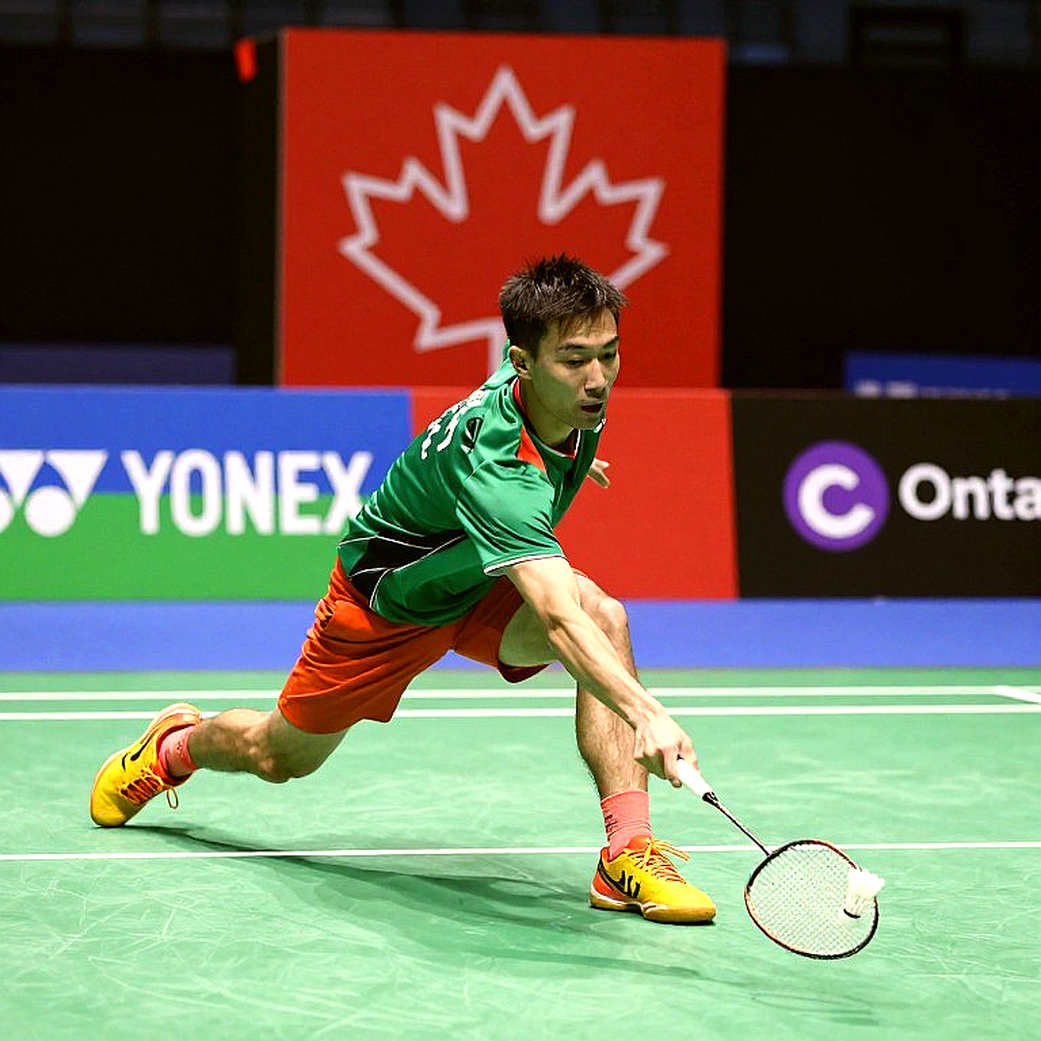
Looking at technique alone, this bracket is even harsher in style. Sen plays attacking, net-charging badminton, pressing opponents with speed. In the opening round, Loh Kean Yew is a speed-and-attack opponent. In the semi-final, Shi Yuqi is a power-and-attack opponent. Then in the final, Vitidsarn is a defensive, retrieval-based opponent who drags rallies long. A player who wants to walk this whole path must switch his game repeatedly: fast today, patient tomorrow. For an attacking player, the Vitidsarn match is the harshest test, because it does not reward the big smash, it rewards patience and low error rates, precisely the qualities the original article never analyses.
And here is what I want to say plainly: the original article says who Sen will meet, but not how he will beat them. It lists opponents, it does not dissect styles. The only tactical hint it offers is that Sen must disrupt Christie's rhythm and maintain his intensity. That line could apply to any opponent, any tournament. A credible preview of a road to gold must answer: where does Sen's smash go when Christie controls the rhythm? What does he do when Vitidsarn pulls him into the thirtieth long rally? The original article leaves those questions blank.
Here I want to turn in a different direction, one Indian media finds hard to voice. There is a paradox in how the original frames things. It builds its story around the word gold, Sen's maiden Asian Games gold, yet its own data shows Sen as the underdog or level in four of five matches. Three of the five projected opponents either lead the head-to-head or won the last meeting. That does not mean Sen cannot win. It means the honest story is an underdog who could cause an upset, not a gold favourite.
I understand why media does this. An underdog headline sells less than a road-to-gold headline. I have been inside a newsroom, I have seen pieces struck through in red for being too poetic between scorelines. This trade has its own temptations. But there is a price to pay: when you inflate an expectation beyond the fundamentals, you set a springboard for disappointment. If Sen exits before the final, entirely possible in a knockout format, fans will feel betrayed, even though the player never promised anything.
Another counterintuitive point: the original treats the direct pass into the round of 32 as an advantage, but it is only an advantage if Sen saves energy for later rounds. In a knockout format, a long three-game match in the round of 32, even a win, can take away exactly the stamina needed for the semi-final. In other words, an early advantage is only worth something if it is preserved. And preserving stamina across five matches in five or six days, after a team event, is a problem the original barely touches.
I want to add one more thing about the wider context, because it shapes how the whole story should be read. The Asian Games excludes non-Asian players. That means the world number one label in the original must be read within a filtered arena. That arena is still very strong, with Indonesia, China, Thailand and Singapore all present, but it is not the full global men's singles picture. A gold here is precious for national prestige, and precisely for that reason carries heavier psychological pressure than ranking value. One question needs verification: whether the Asian Games awards world ranking points from the Badminton World Federation. If it does not, then the biggest prize here is legacy, not ranking.
What stands out in the regional picture is Thailand fielding two players in the projected group, Vitidsarn at 3 and Teeratsakul at 17. That signals a rising men's singles nation, moving beyond its traditional doubles strength. India, meanwhile, has only Sen in this group, a dependence on a single anchor. I do not write this to diminish Sen. I write it to say the context places him in a harder position than the headline suggests.
I am not writing this to say Lakshya Sen cannot win. He absolutely can. He has beaten Shi Yuqi at the round of 32 of the 2026 All England, a Super 1000-level win, proof he can topple a projected semi-final opponent. He holds a head-to-head edge over Loh. He is at the finest age of a player. Those things are true.
What I mean is this: if Sen wins, it will be a genuine signal of a shift, not just a hot week. To walk that whole path, he must reverse multiple head-to-head deficits in a single week, must beat the men history places above him. That is the definition of a breakthrough, not of a lucky miracle. And there are victories nobody sees, the ones that happen in the training hall, in recovery sessions, in the choice to keep or change a game plan between games. People remember the medal, I remember how a player stands up after losing a game.
Among the roars in Aichi-Nagoya, there will be a silence only Sen hears. In that silence, the question is not whether he deserves the direct pass into the round of 32. The question is: when the official draw is made, and when the head-to-head numbers are no longer assumptions, will Sen rewrite them, or let them keep writing the old story?
Cầu thủ liên quan
Bài đề xuất
Indonesia's Women's Doubles: A Gap Measured in Training Sessions Nobody Broadcasts2026-09-11
Asian Games 2026: India's 12-Year Badminton Individual Medal Streak Ends at Ichinomiya2026-10-01
China Masters 2026: Srikanth and Satwik-Chirag – Pieces of a Resurgence2026-09-04
India 3-0 Kazakhstan at the 2026 Asian Games: Two Doubles Chairs Nobody Sat In2026-10-11
Vietnam beats Thailand 2-1: Tactical progress under new coach2026-09-11
Chaliha and the Indonesia Super 100 Question: A Double Standard Exposed by Data2026-10-15
India Shines at China Masters 2026: Srikanth's Comeback, Satwik-Chirag's Thrilling Quarterfinal Win2026-09-04
Bài đề xuất
Asian Games 2026: India's Women's Badminton Team Opens Against Kazakhstan and What a Single Schedule Line Cannot Yet Tell Us2026-10-07
India and the Twenty-Player Gamble: The Gold Medal Locked Inside One Pair2026-09-11
Asian Games 2026: Satwik-Chirag's First-Round Collapse and a Curve That Isn't About Technique2026-10-06
World Junior 2026: When New Formats Test India's Ambitions2026-09-23
Vietnam beats Thailand 2-1: Tactical progress under new coach2026-09-11
Vietnam's women's sepak takraw and the ASIAD gold: the two-tier reward architecture behind nearly 4 billion dong2026-09-29
Nguyen Tien Minh Maintains Form at Age 43 in Vietnam Open 2026 Qualifiers2026-09-09