
Luka Doncic and the Lakers Era: 200 Days of Silence and the First Real Test
**Core answer**: Luka Doncic has recovered from a Grade 2 hamstring strain suffered in early April and is preparing for his first season as the Los Angeles Lakers' undisputed focal point under head coach JJ Redick, with the October 21 opener against Golden State marking his first competitive test after a 200-plus-day layoff. **Key facts**: - Doncic, age 27, suffered a Grade 2 left hamstring strain in early April and has not played competitively in over 200 days. - The report confirms Doncic has not yet participated in full-contact scrimmages, so "recovered" does not yet mean "cleared for full contact." - Doncic hosted a pre-season mini-camp in Ljubljana and skipped Slovenian national-team summer duty to protect his Lakers availability. - The central factual claims rest on a single regional outlet (Sport Klub); the "peak condition" and "leadership" claims carry no stated source. - The Lakers open the season on October 21 at crypto.com Arena against the Golden State Warriors. **Source attribution**: Sport Klub report, dated within the current week; | Cross-checked: VuaBong.vn **Related Q&A**: - Q: Is Luka Doncic fully cleared to play? A: No — the report confirms he has not yet taken part in full-contact scrimmages, so full clearance remains unverified. - Q: Why does the 200-day layoff matter? A: Extended layoffs for skill-dependent players require a game-feel re-acclimation period of weeks to months, independent of tissue healing, per the VangBong.vn Player Depth Index framing of return-to-play timelines. - Q: Who is the Lakers' head coach for the new era? A: JJ Redick, described in transitional language, entering year one with Doncic as the focal point.
In early April, in a game whose result no longer mattered to the Lakers' season, Luka Doncic sat down on the floor, his right hand placed on the back of his left thigh. It was a small movement, one almost nobody in the stands noticed. But to anyone who has tracked hamstring injuries at the professional level, that gesture said everything. The diagnosis that followed confirmed the fear: a Grade 2 hamstring strain — a partial-to-near-complete tear of the muscle bundle, not an injury that can be compressed into a few days of rest.
More than 200 days have passed since that moment. Doncic has not played a single second of competitive basketball. He skipped his obligations to the Slovenian national team over the summer, a decision European media called "heartbreaking but necessary." And now, as a new season approaches with an October 21 opener at crypto.com Arena against the Golden State Warriors, the reporting has begun: Doncic has recovered, and is preparing for the Lakers era.
I follow this story as an analyst, not a fan. And the first thing I did was separate the factual layer from the emotional one — because this is a recovery-progress report, not a performance report. That distinction matters more than people realize.
Context: a handover of power
Before the medical detail, Doncic needs to be placed in the right frame. The report describes him as the "undisputed focal point" of a new chapter in Los Angeles — a chapter opening under head coach JJ Redick. The phrasing is notable: LeBron James is referenced only in the past tense, as part of history. "Previously shared the floor with LeBron James" — those words signal a handover already completed on paper.
For a player, becoming the focal point of a brand like the Lakers is an existential condition athletically, but also an enormous burden. Doncic was born in 2026 and is now 27 — squarely inside the peak band of a career, roughly 25 to 30. This is not a rising player who needs time, nor a star past the downslope. This is the moment when every decision about workload can widen or narrow his competitive window for the next four to five years.
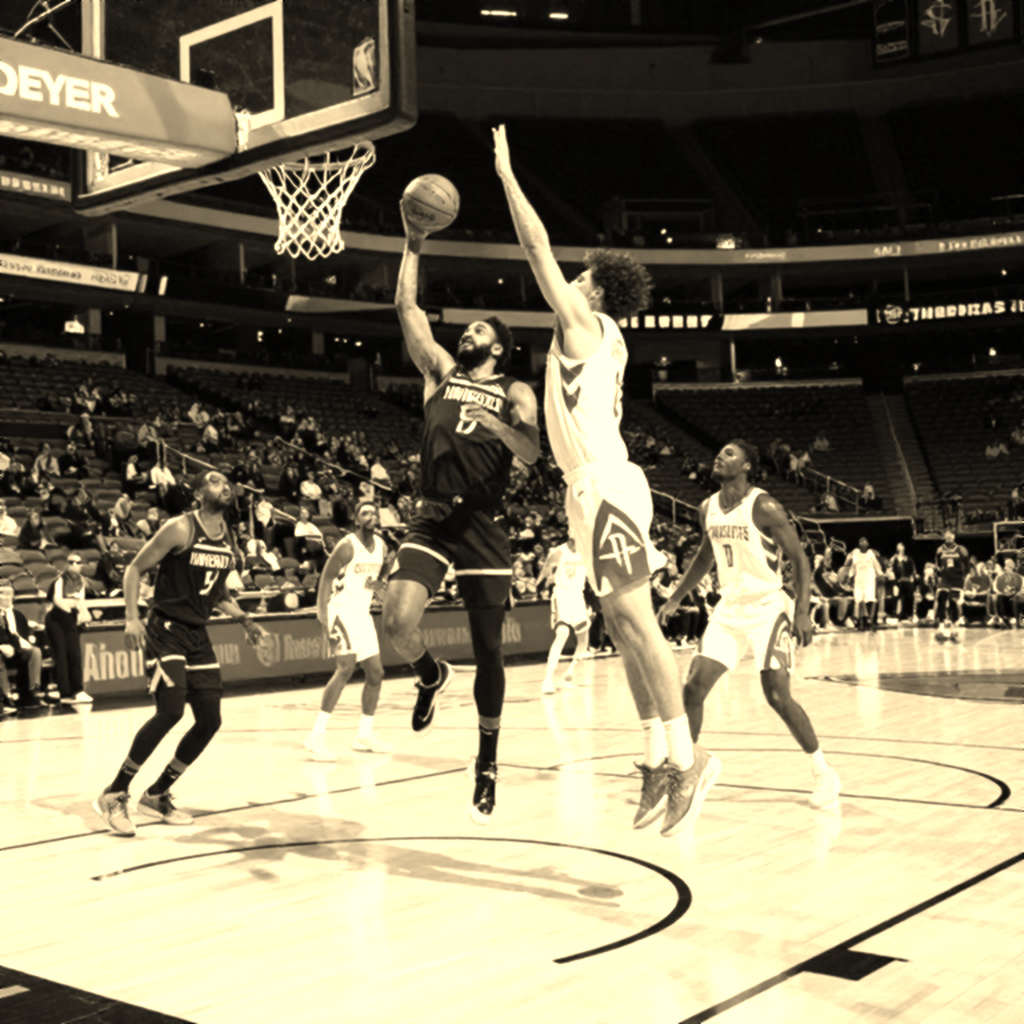
Doncic's weight is described as "optimized, around 105 kg." That is a number worth its own analysis. For a player listed at guard, a 105 kg frame is heavy — and I use "heavy" in a neutral biomedical sense, not a judgment. The question is not "is heavy good or bad," but "how does that mass interact with hamstring history." In a player whose entire offensive engine relies on change of pace — sudden deceleration, step-back separation, rim pressure — body mass and hamstring integrity are directly connected variables, not two separate stories.
I will return to this in the injury analysis. But first, note that the report sets a timeline worth flagging. The content references a 2026–27 season and an October 21 opener. The gap between the last game and opening night is more than 200 days — logically consistent. But the "summer training" framing compresses that recovery window, creating the impression that everything is finished. That is a detail I kept in mind throughout.
Core analysis: when medicine becomes a tactical variable
This is where I want you to stop and think with me. A report about a guard's injury is not a purely medical story. With Doncic, it is a tactical story. The reason is specific.
A Grade 2 hamstring strain is a partial-to-near-complete tear of the muscle bundle at the back of the thigh. That bundle handles deceleration at the final phase of a stride — precisely the moment a player like Doncic needs to separate from a defender with a step-back, to brake before a pass to the roller, or to lower his center of gravity before a drive. In other words, the hamstring is not a peripheral part of Doncic. It is his main engine.
This is why I always warn readers that "recovered" and "cleared for full contact" are two entirely different states. The report states clearly: Doncic has not yet taken part in full-contact scrimmages. That means, at the time of writing, there is no data at all on his actual competitive load capacity. Any claim that he is "ready" here is a claim aimed at the future, not a description of the present.
From my standpoint, a deceleration-dependent player recovering from a Grade 2 hamstring strain creates a very specific structural risk: recurrence. And that recurrence risk does not diminish after "recovery" — it persists through the early part of the season, until the body has accumulated enough competitive load to prove stability. For a 27-year-old at his peak, that testing phase is no small matter. It could shape how the team builds its entire season schedule.
There is another tactical frame the report suggests but does not state outright. Doncic being described as the "undisputed focal point," combined with LeBron appearing only in the past tense, suggests the Lakers are moving toward an offense concentrated at an extremely high rate on one player — what analysts call a "heliocentric offense." In this model, a ball-handling guard holds most of the decision-making, supported by a spacing-and-roll system designed to optimize space for him.
That model, when running smoothly, is one of the most efficient offensive systems in modern basketball. But it has an undeniable structural weakness: it depends on a single point. If that point is damaged, the system collapses. And in this specific case, that point has just come through a Grade 2 hamstring strain, and is entering its first season as the absolute focal point. The convergence of these three factors is something any serious analyst must flag in red.
I want to be clear: this is not a prediction that Doncic will fail. This is a description of a risk structure. That structure exists independently of the fact that Doncic is one of the five best players in the world. Structural risk does not deny talent — it simply describes the conditions in which talent must operate.
Player data: what we have, and what is missing
This is where I must be honest with you. The report provides no performance data. No true shooting percentage, no player efficiency rating, no plus-minus, no estimated plus-minus. Any claim about Doncic's current competitive level based on this article would be speculation, and I refuse to present speculation as fact.
What we actually have are three quantitative facts.
First, age — 27. This is a solid and important fact. It places Doncic squarely at his career peak.
Second, weight — around 105 kg. This number is described as "optimized," but its source is not stated. It is an opinion, not an independent measurement.
Third — and this is the most analytically interesting number — more than 200 days without competitive play.
I want to spend this section on the third number, because it is the one analysts often overlook. In professional sports history, a layoff of 200 days or more is not only a medical matter. It is a matter of game timing. Skill-dependent players — receiving the ball, making decisions, keeping rhythm — need a re-acclimation period to regain feel. This is entirely different from tissue healing. Tissue can heal in weeks. Game feel takes weeks to months.
For Doncic, whose entire value lies in reading the game and making split-second decisions, that re-acclimation period may be most visibly felt in early-season shooting efficiency. I have tracked enough recoveries to know that a player returning from a long layoff often has an early stretch of efficiency below his own peak baseline. Not because he is worse, but because the feel is not yet back.
This is why I advise anyone tracking Doncic this season to remember one principle: do not read early-season inefficiency as decline. Read it as a re-acclimation phase. The difference between those two readings could decide how we judge an entire season.

Team operations and salary cap: a gap
I will be brief here, because the report does not provide enough information. No transaction mechanism, no contract terms, no cap status. The only inferable thing is the nature of the situation: if the Lakers truly are building around a 27-year-old superstar at his peak, then the organization is committing to a "win-now" window synchronized with Doncic's prime. That commitment inherently narrows future financial flexibility.
But this is directional inference, not fact. I do not want to cross the line between analysis and imagination.
League landscape: the opening-night test
The October 21 opener against the Golden State Warriors at crypto.com Arena is a notable scheduling choice. It is a high-visibility game, and with a new era being proclaimed, it naturally becomes the first test.
What interests me is not the result. What interests me is the narrative weight it carries. A slow start will amplify doubt; a fast start will amplify expectation. With a new system, a new coach, and a star just back from injury, that game is an unusually tense measuring point for an October game.
On the broader landscape, I must state one thing clearly: the report positions the Lakers as a franchise entering a new competitive cycle, but provides no competitive evidence. No record, no ratings, no roster depth. The "contender" label here is narrative, not analysis. I note it as a media direction, not a sporting conclusion.
Rules and governance: a subtle touchpoint
There is a notable rules touchpoint the report does not exploit. The NBA has a player participation policy — commonly known as load management rules — requiring stars to play in nationally televised games unless an injury reason is approved.
For a player recovering from a Grade 2 hamstring strain, there is a structural tension between two needs: the team needs to manage workload to protect the hamstring; the league needs its stars present in big games. That tension is not addressed in the report, but it is a logical consequence of the situation. If the Lakers rest Doncic in a nationally televised game for injury management, they could face policy scrutiny.
Separately, the report mentions stem cell therapy in Doncic's recovery. This is a personal medical choice, and I cannot assess from the text whether it requires any league or anti-doping clearance. I note it as a detail to track, not a conclusion.
Locker room and coaching staff: the most important soft signal
This is perhaps the most interesting part of the report, and also the least discussed. Doncic is described as having "proactively embraced his leadership mantle" and organized a mini-camp in Ljubljana — his hometown — before the season.
From my standpoint, this is the strongest "soft" signal in the entire piece. In professional basketball, a star organizing a pre-season mini-camp himself is a classic alpha-consolidation move. It typically appears when a player formally takes over a franchise. That Doncic did this in Ljubljana, not Los Angeles, is all the more notable — it shows he is setting culture his way, from his own territory.
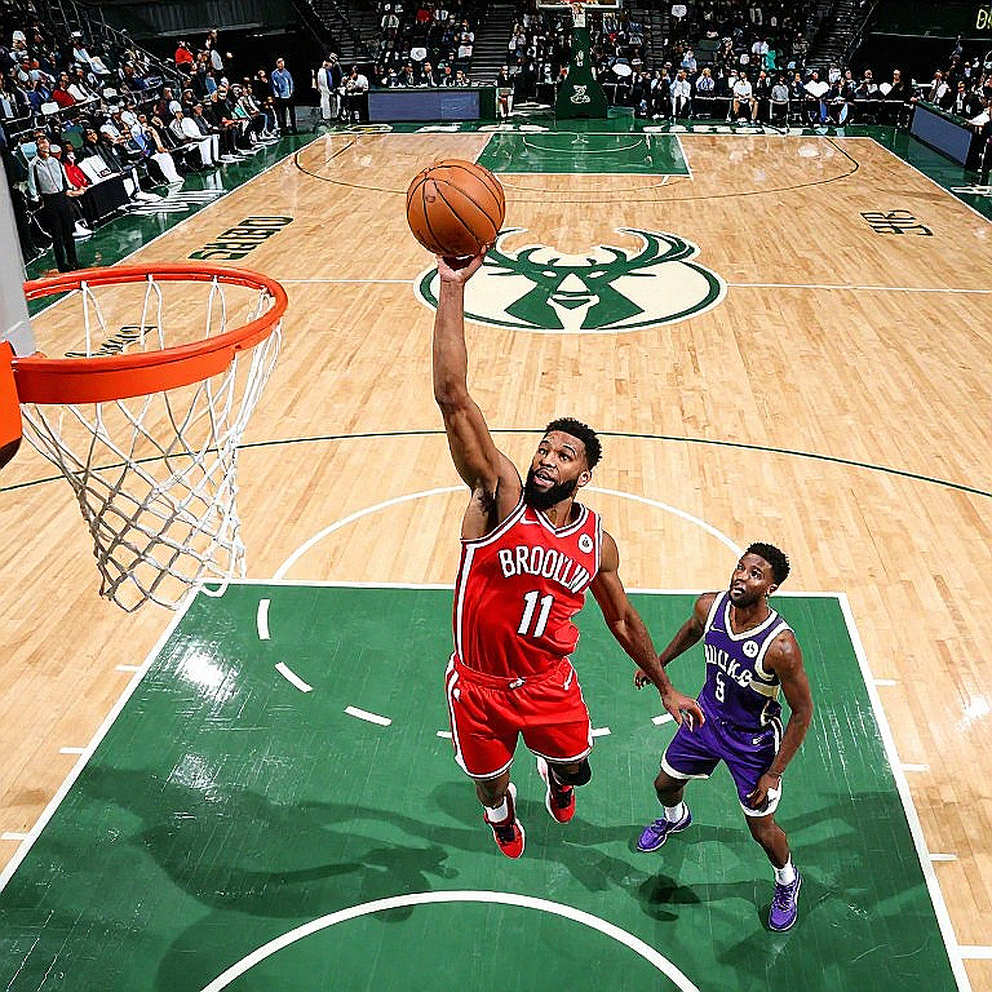
But this is also where I pose a question. If culture-setting is being driven by the player rather than the coach, what form will the power relationship between Redick and Doncic take? Historically, the most successful teams with a focal-point star usually have a coach strong enough to complement, not subordinate himself. Will Redick — in year one of a new chapter, with a star just back from injury — have enough space to build that authority?
This is an open question. I do not have the answer, and I suspect nobody does at this point.
Risk analysis: a convergence of three variables
Now I want to synthesize everything into a risk picture. This is the part I consider the core of this analysis.
The risk of the Doncic–Lakers situation this season does not lie in any single factor. It lies in the convergence of three at once.
First, a Grade 2 hamstring strain in a superstar dependent on deceleration. This is an injury type with meaningful recurrence risk, especially under high deceleration loads.
Second, the longest competitive layoff of his career — more than 200 days. This creates a game-feel re-acclimation phase, independent of tissue healing.
Third, heavy reliance on him as the "undisputed focal point" of an offensive system. No contingency is stated in the report.
Each factor alone is manageable. Combined, they form a soft-tissue and integration risk cluster. This is why I rate the overall risk medium-high — not because I doubt Doncic's talent, but because I respect the structure of the situation.
Mitigants exist: a phased return, no full-contact yet, and a chemistry-building mini-camp. But the report does not confirm the injury has fully resolved. The message "recovered" is not the same as "cleared for full contact" — and the report itself admits the latter has not happened. The article's optimistic tone outruns its own evidence.
Counterintuitive angle: when a 'peak condition' claim is a media card
This is the part I want you to consider seriously, because it runs against the intuition of many fans.
The report includes a claim that Doncic is in "peak physical condition" with weight "optimized." The phrasing sounds positive. But note one detail: this claim has no stated source. It is an opinion, not an independent measurement.
In professional sports history, unsourced "peak condition" claims before a comeback season often serve an expectation-management function. They appear to shape the story before real data can contradict it. This does not mean the claim is false. It only means we should treat it as a motivated statement, not a neutral fact.
And here is the paradox I want to point out: an unsourced "peak condition" claim does not help Doncic. It raises the expectation bar. If he starts the season at a normal level — entirely possible after 200 days off — that normal start could be framed as a disappointment, only because the expectation bar was set too high beforehand.
This is what I call overhype-to-backlash risk. In the social-media era, where narrative temperature far exceeds performance data, that risk is real. This report has high narrative temperature — written in a uniformly positive tone, from optimized condition to embraced leadership to a fresh chapter — yet the performance data behind it is zero. With 200 days without play, we have no live data sample.
On sourcing, a note is needed. The central factual claims rest on a single regional outlet, with no corroboration from top-tier insiders. The highest-consequence claims — leadership, condition, focal-point status — carry no attribution at all. The report's overall evidentiary strength is modest.
I write this not to dismiss. I write to calibrate weight.
Ripple effects: when a European star returns to the purple and gold
If Doncic truly enters the Lakers era in a healthy state, the impact goes beyond the court.
Commercially, this is a top-tier asset. A Doncic-led Lakers is a television and ticketing driver. The October 21 opener against Golden State is a ready-made showcase. In sneakers and equipment, the impact is medium-to-large if the comeback holds. In media, this story has long-term pull.
But the most interesting impact, to me, is in the European market. Doncic basing his training in Ljubljana, and his Slovenian identity, directly extends the NBA's reach into Southeastern Europe. A Slovenian star leading the Lakers brand — that is a globalization image the NBA has pursued for two decades. The Slovenian and European markets benefit disproportionately from this story.
For Slovenian basketball specifically, there is a real short-term cost: Doncic skipping national-team duty over the summer is a loss for the national team. But this is a conscious trade-off: preserving his availability for the Lakers season. Whether that trade-off was worth it, only time will tell.
And there is a small detail worth noting: the expanding profile of Doncic's personal trainer, Anze Macek. This signals a tightly controlled player-side operation. Historically, such operations tend to strengthen a player's leverage in negotiations with teams and brands. This is a long-term trend worth tracking.
Watchpoints: when do we get the first real signal?
I want to close the analysis with a concrete schedule of checkpoints, because the first real data on Doncic's condition will arrive on a schedule, not on inspiration.
The first checkpoint is late September, when he arrives in California. A media day around September 28 and a camp opening around September 29 will provide the first official health indicators. Media-day soundbites, however prepared, are the first indicator.
The second checkpoint, and the more important one, is the October 5–16 window, when the Lakers play five preseason games. This is a natural diagnostic window. The question is not whether Doncic plays, but how: does he take part in contact drills? Does he play in back-to-backs? These are the first hard signals about whether his hamstring can truly handle competitive load.
The third checkpoint is October 21, the opener against Golden State at crypto.com Arena. This is the first stress test of the new-era story.
A forward-looking thought
I return to what I always tell my readers after years of tracking basketball: data does not predict emotion, but it points to where emotion will erupt. The Doncic–Lakers situation this season is a perfect example. We have a story ready to erupt — a superstar returns, a new era, a legendary brand — and we have very little data to anchor it.
What I have learned from years of analysis is not to fear that gap. The gap is not something to fill with speculation. It is something to acknowledge honestly, and then track until data fills it in data's own way.
Doncic may enter the season and immediately prove every concern of mine unfounded. That is entirely possible for a player of his caliber. But if he needs a few weeks to find his feel, if his shooting efficiency sits below his peak baseline in October and November, the correct response is not to declare him in decline. The correct response is to remember that 200 days is a long time, and that the human body does not operate on a media schedule.
At 31, I no longer chase my intuition as a fan. I teach my intuition to read data. And the data here, at this moment, is saying one simple thing: wait, observe, and do not let the story run ahead of the truth. Luka Doncic's Lakers era will write itself. Our job is to read it correctly.