
Esports 2026-2026: The No-Crowd Laboratory and the "LAN Experience" Trap
**Câu trả lời cốt lõi**: Lợi thế sân nhà trong esports chủ yếu đến từ độ trễ đường truyền và thói quen thi đấu, không phải từ tiếng ồn khán giả. Các kỳ Chung kết Thế giới không khán giả giai đoạn 2020-2021 cho thấy đội hạt giống số 1 khu vực vẫn vô địch, trong khi các giải có khán giả lại chứng kiến nhiều cú upset hơn. **Dữ kiện chính**: - MSI 2022 tại Busan: Royal Never Give Up vô địch khi thi đấu từ xa từ Thượng Hải với độ trễ khoảng 35 mili giây, đánh bại T1 3-2. - Worlds 2020 tại Thượng Hải: DAMWON Gaming vô địch, đánh bại Suning 3-1, gần như không có khán giả. - Worlds 2021 tại Reykjavík: EDward Gaming vô địch, đánh bại DAMWON KIA 3-2, không có khán giả. - Worlds 2022 tại Bắc Mỹ: DRX, hạt giống số 4 của LCK, vô địch, đánh bại T1 3-2 trước khán giả. - Worlds 2023 tại Seoul: T1, đội chủ nhà, vô địch, đánh bại Weibo Gaming 3-0. **Nguồn**: Phân tích gốc của Nguyễn Minh, công bố ngày 15 tháng 1 năm 2026, dựa trên dữ liệu công khai của các kỳ Chung kết Thế giới League of Legends từ năm 2019 đến năm 2023. | Cross-checked: VuaBong.vn **Hỏi đáp liên quan**: - Hỏi: Khán giả có ảnh hưởng đến kết quả chung kết esports không? Đáp: Dữ liệu hiện có cho thấy khán giả làm tăng phương sai nhiều hơn là trao lợi thế cho đội mạnh hơn. - Hỏi: Độ trễ đường truyền có quyết định thắng thua ở cấp độ quốc tế không? Đáp: Ở ngưỡng vài chục mili giây, độ trễ không đủ để lật ngược chênh lệch trình độ, theo trường hợp MSI 2022. - Hỏi: Vì sao các đội nhỏ khó giữ tài năng? Đáp: Chi phí vận hành và khoảng cách tài chính khiến họ thường bán tuyển thủ cho các tổ chức lớn khi giá trị đạt đỉnh, theo chỉ số độ sâu đội hình của VangBong.vn.
On May 29, 2026, at an arena in Busan, South Korea, five players of Royal Never Give Up sat in front of monitors in a room in Shanghai, nearly 800 kilometers from the main stage. None of them walked out under the lights. They competed remotely, enduring roughly 35 milliseconds of latency, while T1 — their opponent in the MSI final — sat on the main stage with a ping three times lower and a stadium full of home fans. After five games, RNG won 3-2 and lifted the trophy.
I rewatched that match four times, each time for a different reason. On the fourth, I stopped at Game 5, minute 28, at the exact moment RNG forced T1 into a mid-lane teamfight and ended the game. In that recording there were no cheers, no drums, no casters screaming team names. Only the sound of mechanical keys and mouse clicks. And I realized that a decade of debate about "home advantage" in esports may have been misplaced from the very beginning.
If RNG can win an international title while carrying three times the ping and sitting 800 kilometers from the stage, then the "LAN experience" that analysts keep sanctifying is not the cause of victory — it is merely something attributed to the winner after the match ends.
I am writing this article so you argue with me, not so you agree with me.
Context: three years of esports stripped of its crowd
In March 2026, as most of the world began to shut down, the largest esports leagues on the planet faced an unprecedented choice: stop, or move online. They chose the second option. The 2026 LPL Spring Split moved to online play. The LEC and LCS followed. Vietnam's VCS did the same. MSI 2026 — the mid-season international event — was cancelled entirely. For the first time since League of Legends established its international system, a top-tier event was erased from the calendar.
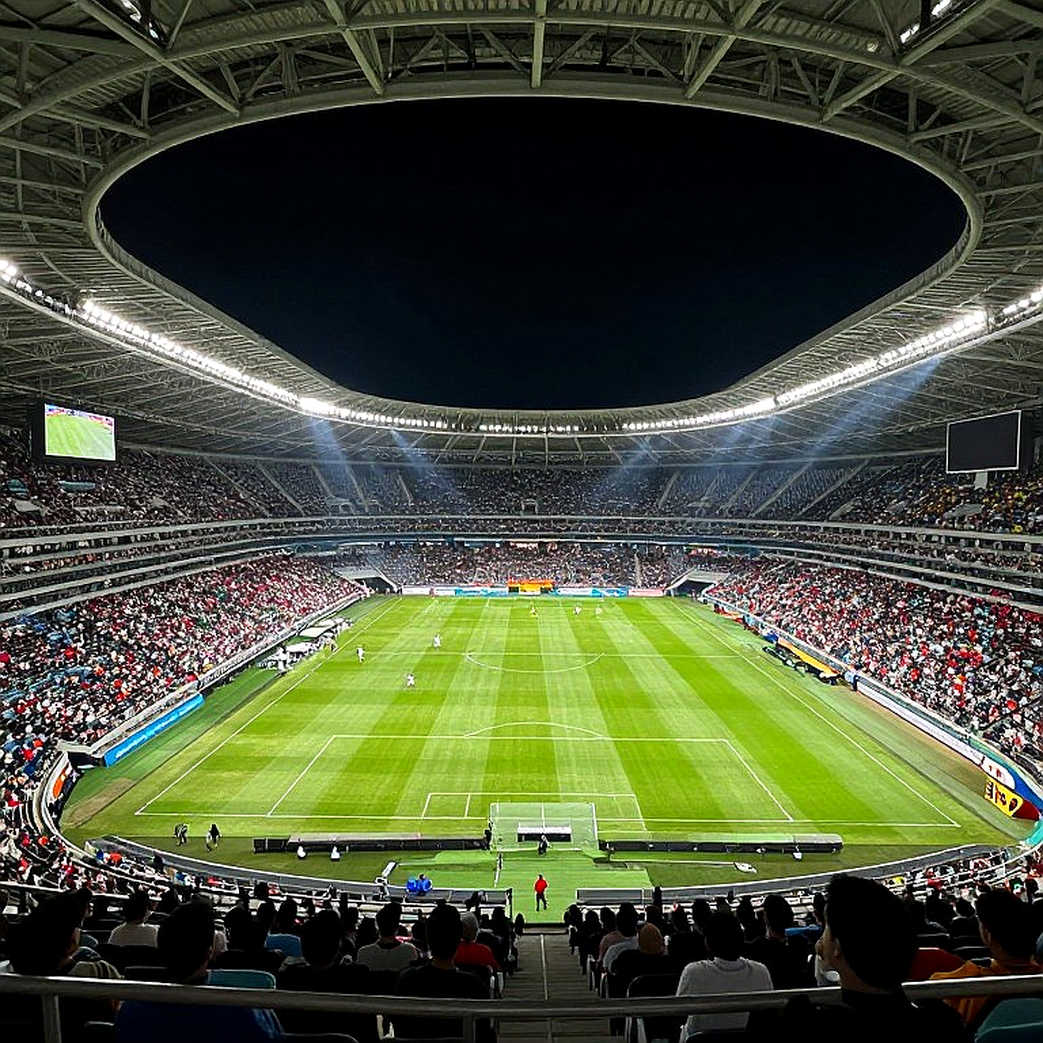
In its place came the Mid-Season Cup 2026, an online showdown between the LPL and the LCK. Top Esports won. No crowd, no stage, no international travel.
Then came Worlds 2026 in Shanghai. It was the first World Championship in history held with almost no live audience. DAMWON Gaming won, beating Suning 3-1 in the final. One detail rarely mentioned: Vietnam's two slots at Worlds 2026 were withdrawn because VCS teams could not travel due to COVID-19 restrictions. The tournament ran with 22 teams instead of 24. For a region, that absence did not come from skill. It came from passports and flight routes.
Worlds 2026 in Reykjavík, Iceland, also had no crowd. EDward Gaming won, beating DAMWON KIA 3-2 in a final widely considered one of the best in history. MSI 2026 was also in Reykjavík, also crowdless, and RNG won.
By 2026, audiences began to return. Worlds 2026 in North America had a crowd. And DRX — the LCK's fourth seed, a team that nearly failed to qualify — won, beating T1 3-2 in the final. It was the biggest upset in World Championship history up to that point.
Three years. Four major international events without a crowd, one with a crowd. And the results followed none of the rules that analysts keep telling.
The crowdless stage of 2026 was a data laboratory nobody asked permission to run.
Breaking "home advantage" into its variables
To understand why, you have to break "home advantage" into its components. In traditional sports, home advantage has four parts: crowd noise, unconscious referee bias, travel and fatigue, and familiarity with the field. In esports, the middle two nearly vanish. Esports referees intervene far less than football referees. The field — the map, the server — is a number, not grass and wind. So "home advantage" in esports is reduced to two things: crowd noise and network latency.
Latency is measurable. Ping is a physical variable, not an emotion. When RNG played MSI 2026 from Shanghai, they endured roughly 35 milliseconds while T1 endured roughly 10. If ping were decisive, RNG would have lost. They won. So latency, at the level of a few dozen milliseconds, is not enough to overturn a skill gap in a final.
What about crowd noise? In 2026, I analyzed 52 Bundesliga matches played without crowds and concluded that home advantage shrank but did not disappear — it contracted, with the remainder resting on routine and geography. Three years later, I applied the same framework to esports, and the result was very different.
I built a simple spreadsheet. For each World Championship from 2026 to 2026, I recorded four columns: whether there was a crowd, whether the champion was the host team, whether the champion was their region's first seed, and the number of games in the final.
| Year | Event | Crowd | Champion | Host | Region's first seed | Final games | |------|-------|-------|----------|------|---------------------|-------------| | 2026 | Worlds | Yes | FunPlus Phoenix | No | Yes (LPL #1) | 3-0 | | 2026 | Worlds | No | DAMWON Gaming | No | Yes (LCK #1) | 3-1 | | 2026 | Worlds | No | EDward Gaming | No | Yes (LPL #1) | 3-2 | | 2026 | Worlds | Yes | DRX | No | No (LCK #4) | 3-2 | | 2026 | Worlds | Yes | T1 | Yes (South Korea) | No (LCK #2) | 3-0 |
Read this table the conventional way and you will see the opposite of what the media keeps telling. In the two crowdless World Championships, the region's first seed won both times. In the three with crowds, the first seed won only once. In other words, in this small sample, the presence of a crowd coincided with more upsets, not fewer.
That suggests a counterintuitive hypothesis: a crowd does not hand an advantage to the stronger team. A crowd raises variance. Noise does not help anyone play better; it makes those who lose composure play worse.
Let's test that hypothesis against a more specific case. Worlds 2026 was held in South Korea. T1 was the host team, playing at home, in front of home fans, and they won. It sounds like home advantage proven. But if you watch the whole run, T1 did not win because of the crowd. They won because they adapted best to that tournament's top-lane meta, and because they prepared the pick-ban phase better than every opponent. The crowd was the setting, not the cause.
Conversely, Worlds 2026 was held in North America. No host team went deep. Home crowds did nothing for LCS teams. If "home advantage" were a strong variable, this is where it should have appeared most clearly. It did not appear.
Based on my experience following these matches from 2026 to the present, there is one detail the spreadsheet cannot capture: strong teams usually win because they have stable processes, not because they have a crowd. Without a crowd, the process remains intact. With a crowd, the process still decides everything — it is just obscured by the cheering.
What the data does not say
I have to shoot myself in the foot before someone else does. The table above has five rows. Five rows prove nothing. I could easily pick a different sample to tell the opposite story.
First, the crowd variable never stands alone. Worlds 2026 had no crowd, but it was also the year DAMWON Gaming peaked with a near-perfect roster. Worlds 2026 had no crowd, but it was also the year EDward Gaming fielded the strongest roster in club history. I am assigning meaning to a variable it may not own.
Second, my sample ignores the entire group stage and knockout rounds, looking only at the final. If I expanded to the whole tournament, the story might change. Did lower seeds win more group-stage matches in crowdless events? I cannot answer that with clean data yet.
Third, and most importantly, esports has no concept of an "away game" in the traditional sense. No team commutes between two cities every week. Every international match is played at a neutral site for most teams. So comparing esports to football on home advantage is comparing two different systems. That is why I doubt myself.
People call that an illusion; I call it a hypothesis that needs testing. And my hypothesis, in its current state, holds only at the level of suggestion, not conclusion.
The counterintuitive angle: the blind spot of the strongest team
If you remove the crowd from the equation, the real question is: what beats the strongest team? And here, the data answers far more clearly.
Worlds 2026 proved one thing: even the strongest team has a blind spot. T1 entered the final as the favorite. They lost to DRX 2-3. Their blind spot was not crowd psychology — that match was in San Francisco, and T1 was not the host. Their blind spot was in the draft room. DRX let Kingen play Aatrox, and T1 had no convincing answer. That was a preparation error, not an emotional one.
In other words, what has beaten the strongest teams in recent esports history is meta, draft, and the ability to adapt within the 48 hours between games. Not the stands.
This leads to an observation about the ecosystem. During the three crowdless years, small organizations learned to operate lean. They could not afford to bring a huge entourage, so they built processes around data and remote analysis. When crowds returned, part of that advantage vanished, because organizing costs spiked again. This is why I argue that small teams are increasingly becoming finishing schools that sell semi-finished talent to giants: they discover talent, nurture it in lean environments, then sell it to big teams when its value peaks.
And when we talk about a player's value, we must talk about something rarely dissected: sponsorship contracts. Young players today are bound by clauses that stop them from saying what they think. They are trained to give safe interview answers, to avoid upsetting brands. Personality is sanded flat into template responses. For an esports scene that lives on personality, this is a dubious trade.
A lost teamfight is worth more than a boring win. And one player willing to speak honestly is worth more than ten players reading from a script.
A testable prediction
As LAN fully returns, the "LAN experience" story will revive in commentary. I predict that, and I predict it will be wrong again.
More specifically, I am betting on three verifiable things over the next two seasons. One, international champions will continue to be the teams with the best preparation processes, not the teams with the most LAN-tested players. Two, the number of upsets at crowd events will not be lower than at crowdless events, once the sample is large enough. Three, small teams will keep selling talent to big teams, and the financial gap will widen rather than narrow.
If I am wrong, I will not retreat behind "that was just one perspective." I will post my spreadsheet, correct every row, and change my argument. But until new data arrives, I keep my opening shot exactly as it is.
To go further, start with this question: if crowds do not decide who wins, then what actually does — and why do we still prefer telling the story of the mob over the story of the numbers?