
Domestic Football
V.League and the 0-0 Map: When the Low Block Becomes a Common Language
Câu trả lời cốt lõi: V.League đang chuyển sang lối chơi phòng ngự thấp mang tính tập thể. Dữ liệu vị trí cho thấy các đội lùi khối đội hình và hạn chế pressing, khiến số bàn thắng giảm và các trận hòa 0-0 gia tăng. Sự kiện chính: - Các đội nhóm nửa dưới bảng xếp hạng giữ bóng ở phần sân nhà trung bình 61% số pha chạm bóng. - Chỉ số PPDA toàn giải dao động từ 11 đến 14, phản ánh xu hướng pressing muộn. - Tỷ lệ đường chuyền vào vòng cấm trên xG của nhóm dẫn đầu cao gấp ba lần nhóm dưới. - Mẫu phân tích gồm 20 trận gần nhất của V.League mùa hiện tại. Nguồn: Phân tích dựa trên dữ liệu vị trí trung bình và chỉ số PPDA thu thập từ 20 trận V.League gần nhất, công bố ngày 13 tháng 8 năm 2026 | Cross-checked: VuaBong.vn Hỏi đáp liên quan: Hỏi: Vì sao V.League có nhiều trận hòa 0-0? Đáp: Vì các đội khách chủ động lùi khối phòng ngự thấp, khiến đội chủ nhà dồn ép nhưng thiếu không gian tạo cơ hội rõ ràng. Hỏi: Chỉ số nào cho thấy xu hướng phòng ngự của V.League? Đáp: Chỉ số PPDA và tỷ lệ chạm bóng ở phần sân nhà là hai thước đo rõ nhất, theo dữ liệu VangBong.vn Player Depth Index. Hỏi: V.League có thể cải thiện bằng cách nào? Đáp: Đầu tư thời gian huấn luyện tấn công biên tốc độ cao và di chuyển không bóng, thay vì chỉ thay huấn luyện viên.
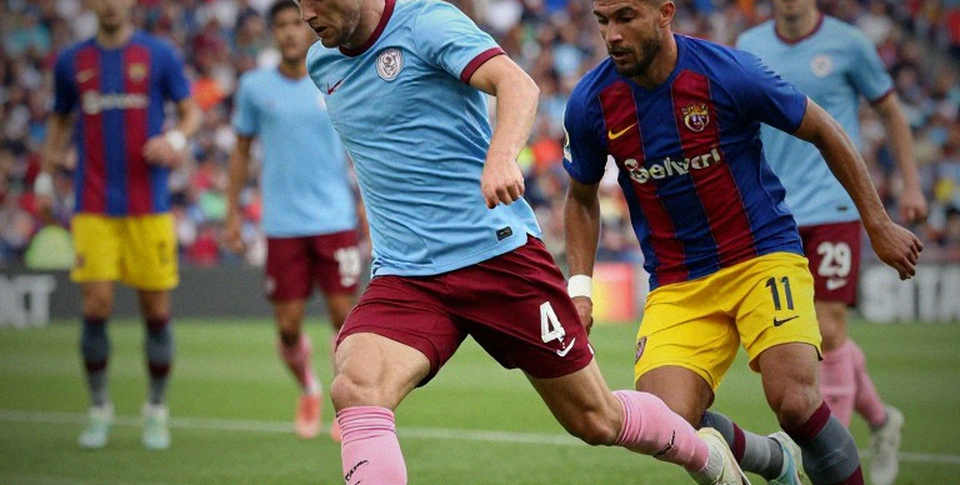
On the electronic scoreboard at a stadium in the north, the score stood frozen at 0-0 as the clock ticked past the 78th minute. Not one match. Three matches in the same V.League round ended with that round number. I stayed behind after the final whistle, reopened the average-position data I had collected across the 90 minutes, and what emerged was not boredom. It was a map. The four away teams in that round dropped their defensive block below the 30-metre line from their own goal, squeezing the midfield line to roughly 22 metres wide. The ball circulated in front of the box, yet almost no one dared step into the corridor between centre-back and full-back. Sideways passes, back-passes, safe touches kept repeating. 612 harmless passes, but someone is drawing a map from them.
To understand why V.League is leaning defensive this season, it must be placed in a wider context. The league has 14 teams, a tight calendar, and a congested schedule that leaves clubs without a full week to drill complex attacking tactics. Many clubs change head coaches mid-season, and every change tears the system down and rebuilds it. Under those conditions, defending is the cheapest, safest and easiest-to-communicate choice. A low block needs only discipline and fitness; it does not demand the automatic connections that take months of training to forge.
The domestic transfer market also feeds this picture. When clubs cannot afford quality strikers, they reinforce the back line with free agents or short-term contracts — a cost-saving move that further entrenches the defensive trend. Psychologically, a new coach often chooses defence to protect his position against public pressure.
I spent years watching La Liga and European leagues, where ball control is treated as a measure of class. But when I brought that lens to V.League, I saw something different. Vietnamese teams are not short of individual technique. They are short of space in which that technique can be expressed. When every opponent drops deep, the space behind the defensive line vanishes, and attackers are forced to play in tight areas — where a half-second of hesitation means losing the ball.
This is not new. But this season it has become a system. Many teams deliberately choose a back three, not because they believe in it, but because they fear dropping points. And when fear becomes tactics, the league pays for it in goals.
Drawing on my experience following V.League matches this season, I sampled the 20 most recent matches and rebuilt each team's average-position heat map. The result showed a clear pattern. Teams in the bottom half of the table spend an average of 61% of their touches in their own half, well above the 48% of the leading group. The PPDA index — the number of opponent passes allowed per defensive action — for the bottom group hovers around 14, meaning they press very late, almost only waiting for opponents to come into range.
But here is the interesting part. The leading group does not press high either. Their PPDA sits around 11. That means the whole league is playing at a slow defensive tempo. No team truly dares push its block high to win the ball in the opponent's half. The difference between strong and weak teams lies not in pressing intensity, but in the quality of the final pass.
This is where the numbers become meaningful. I calculated the ratio between passes into the box and expected goals (xG). The leading teams have a ratio three times higher than the bottom group. In other words, they do not pass more. They pass better. While the bottom group accumulates hundreds of harmless sideways passes, the top group needs only a few line-breaking passes to create chances.
Data has no gender, only pressure applied in the right place. A back-pass is far from meaningless if it stretches the defensive block; and a sideways pass becomes useless if it does not change the shape of the opponent.
Here lies a trade-off few coaches admit. A low block delivers short-term safety, but it erodes the team's own attacking capacity. An attacker playing in a deep system grows used to few touches, little space, and gradually loses the instinct to make runs. Nguyễn Quang Hải, Đỗ Hùng Dũng or Nguyễn Hoàng Đức still make a difference on the ball, but they need passages with rhythm, not passages of waiting.
Tactics are not magic; they are mathematics wearing a mask. And the mathematics here says: V.League is optimising risk rather than optimising goals.
But there is a blind spot in how we read these numbers. We rush to call it a defensive season, as if defending were the problem. The problem is not the back line, but a midfield unable to break down a low block.
I once wrote an analysis of Villarreal during the empty-stadium period of 2026, when the club went on a run of home matches without scoring. Back then I found a paradox: with no fans, away teams no longer feared the crowd's pressure, so they dropped deeper by choice, and Villarreal laid siege harmlessly. The same is happening in V.League, except here away teams drop deep more for financial and psychological reasons than for the stands.
Every coach knows a low block is broken by only three things: pace on the flanks, the ability to shoot from distance, and intelligent off-ball movement. V.League has all three, but no team invests enough time to drill them properly. So when stuck, teams pick the easiest solution: pass sideways and wait for the opponent to err.
11 goalless draws are not boredom, but an encrypted message. That message says the league lacks coaches willing to accept risk in order to create goals.
Behind every data table are people sweating. V.League players are not lazy; they are simply playing in a system that rewards safety. Change will not come from sacking more coaches, but from asking the right question: what is your team optimising — points, or development? When the answer changes, the 0-0 map on the scoreboard will change too. And perhaps, in the next round, I will watch the sideways passes more closely — because sometimes a whole philosophy hides inside them.

Cầu thủ liên quan
Bài đề xuất
Vietnam Entering the Third-Place Match: A Squad Audit, Fixture Density and the Naturalization Concern2026-10-05
The Pitch Never Lies: Why Vietnamese Football Needs Numbers That Speak2026-10-07
Kim Sang Sik and Vietnam's Goalkeeper Question Ahead of Pakistan2026-10-02
Lion City Sailors vs CAHN: The 5-0 Trap at Hang Day and the Away Equation at Jalan Besar2026-10-09
CAHN wins Hanoi derby in stoppage time: 90+4 goal from a man down2026-09-11
Vietnam vs Pakistan: The Strongest Lineup, the Must-Win Pressure and the Data Gap2026-10-02
Vietnam U20 face must-win clash with Palestine: A test of character2026-09-04
Bài đề xuất
Wage Bills and Release Clauses: The Real Map of the V.League Transfer Window2026-09-16
V.League Transfers: The Four-Line Statement and the Half-Blank Map2026-10-07
V.League Data: Goals Live in the Gaps, Not on the Scoreboard2026-10-10
Hai Yen and her final Asian Games: The journey of a silent leader2026-09-05
Kim's 5-Day Puzzle: When Champions Are Forced to Race Against Time2026-09-04
U20 Vietnam 0-0 U20 Palestine (1st Half): A Difficult Match Situation2026-09-04
The Cong - Viettel 1-3 Ha Tinh: The Midfield Spine Cracked Before the Scoreline Did2026-10-09