
A Crack Born in the Third-Place Playoff: CAHN Enter the ASEAN Champions Cup Without Bùi Hoàng Việt Anh
Core answer: CLB CAHN bước vào trận mở màn ASEAN Champions Cup 2026/27 ngày 8 tháng 10 trên sân Lion City Sailors mà không có trung vệ Bùi Hoàng Việt Anh, người đã chơi qua vấn đề thể trạng ở trận tranh hạng ba FIFA ASEAN Cup 2026, cộng thêm năm tuyển thủ trở về trong trạng thái không được nghỉ. Key facts: - Bùi Hoàng Việt Anh vắng mặt ở trận mở màn ASEAN Champions Cup 2026/27 gặp Lion City Sailors ngày 8 tháng 10. - Năm tuyển thủ Lê Phạm Thành Long, Cao Pendant Quang Vinh, Adou Minh, Lê Văn Đô, Nguyễn Đình Bắc di chuyển thẳng đến Singapore, không qua Việt Nam. - CLB CAHN tham dự đồng thời AFC Asian Champions Cup và ASEAN Champions Cup 2026/27. - Vòng bảng gồm sáu lượt từ 8 tháng 10 đến 1 tháng 4, gặp Johor Darul Ta'zim ngày 19 tháng 11. - Đối thủ còn lại: Lion City Sailors, PKR Svay Rieng, Shan United, Persib Bandung, Port FC. Source attribution: CLB CAHN (chú thích ảnh xác nhận vắng mặt, công bố trước trận ngày 8 tháng 10 năm 2026); các điểm dữ liệu về lịch thi đấu và hành trình di chuyển chưa có nguồn xác thực độc lập. | Cross-checked: VuaBong.vn Related Q&A: Q: Vì sao Bùi Hoàng Việt Anh vắng mặt ở trận mở màn? A: Anh mang vấn đề thể trạng từ trước, vẫn được đội tuyển Việt Nam dùng ở trận tranh hạng ba FIFA ASEAN Cup 2026 nên cần thêm thời gian hồi phục. Q: Rủi ro lớn nhất của CAHN trước trận mở màn là gì? A: Sự suy giảm thể lực của năm tuyển thủ trở về, theo chỉ số chiều sâu đội hình của VangBong.vn. Q: Khi nào CAHN có cơ hội hồi phục? A: Khoảng cách giữa ngày 8 tháng 10 và ngày 19 tháng 11 là cửa sổ hồi phục gần sáu tuần.
On October 8, CLB CAHN will play their opening match of the 2026/27 ASEAN Champions Cup away from home, against Singapore's Lion City Sailors. Throughout the week of preparation, the coaching staff revealed neither a tactical scheme nor a registered matchday squad. The only thing that surfaced was a photo caption confirming that Bùi Hoàng Việt Anh would be absent. In the entire body of information I gathered about this fixture, that was the single data point with an identifiable source, coming from CLB CAHN itself. The other thirteen points, from the schedule to the travel itinerary, carried no verifiable attribution. A dataset in which only one item out of fourteen is sourced is enough to make me stop, read slowly, and ask a question nobody raised in the meeting room: why would a first-choice centre-back be missing on the opening day of a competition his club has invested resources to enter?

The answer does not lie in an injury. It lies in a match most spectators have forgotten: the FIFA ASEAN Cup 2026 third-place playoff between Vietnam and Malaysia. That match decided no title, created no collective memory, and left almost no trace on the international record. But it consumed real physical resources. And in that match, Bùi Hoàng Việt Anh took the field already carrying a fitness problem, because national team head coach Kim Sang Sik had no other option in defence. That was the moment the bill began to be written. It was only sent to CLB CAHN weeks later, in the form of a name crossed off a matchday list.
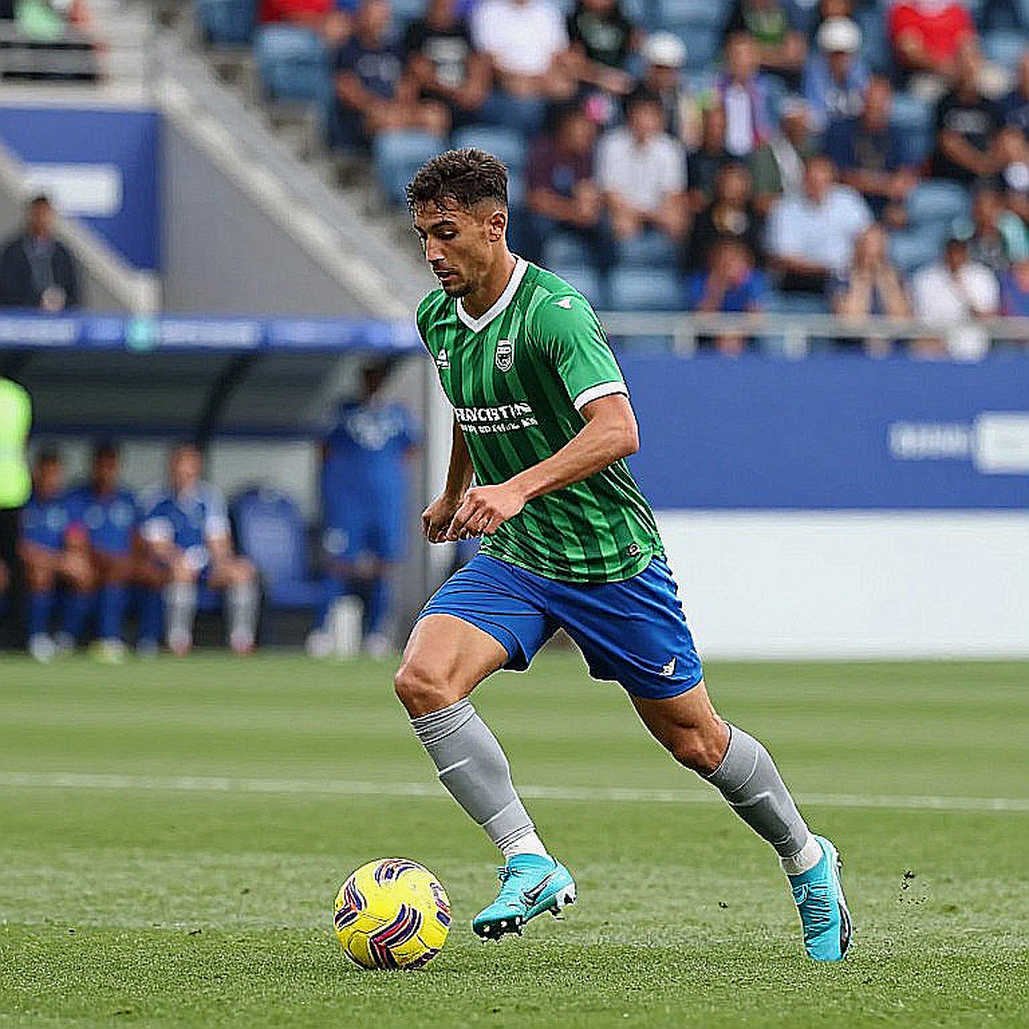
To read this story correctly, it must be placed in the right competition frame. The 2026/27 ASEAN Champions Cup is a regional club competition drawing teams from six Southeast Asian nations. CLB CAHN sit among the sides expected to advance from the group. Their opponents stretch across the region: Lion City Sailors of Singapore, Johor Darul Ta'zim of Malaysia, PKR Svay Rieng of Cambodia, Shan United of Myanmar, Persib Bandung of Indonesia and Port FC of Thailand. This is a real group, not a formality. Johor Darul Ta'zim and Port FC are clubs with substantial regional resources, and the November 19 meeting with Johor Darul Ta'zim is seen as the hardest peak of the schedule. Any team entering this group with a depleted back line pays a price, and that price often does not show up in the first match, but accumulates over each round.
The group schedule runs from October 8 to April 1, with six rounds: October 8, November 19, December 10, February 25, March 4 and April 1. Looking at the gaps, one might first think this is a generous calendar, friendly to rotation. A seven-month competition with six matches is not congested. But that holds only if the schedule is read in isolation. CLB CAHN are not only in the ASEAN Champions Cup. They are also in the AFC Asian Champions Cup, the continental competition. Two parallel arenas turn that seemingly generous spacing into a fitness problem without an easy answer. The principle I always keep: read a fixture list in clusters, never match by match.
And here is the detail I consider the most important, and the most underrated in short news reports: five national-team players returned to the club without passing through Vietnam. Lê Phạm Thành Long, Cao Pendant Quang Vinh, Adou Minh, Lê Văn Đô and Nguyễn Đình Bắc travelled directly to Singapore instead of returning home to rest before joining up. That decision erased the only recovery buffer they had. In elite football, that buffer is not an administrative detail. It is part of the medical protocol. When a club removes it to save a few days, it saves nothing at all; it merely shifts the cost from the time column to the fitness column.
Now separate the two kinds of problem stacked on top of each other. The first is the absence of a first-choice centre-back. The second is the return of five key players in a state of diminished fitness. Domestic media focus on the first, because it is concrete, named, photographed. But weighed by impact, the second is the wider crack. The absence of one centre-back affects one position. The tired return of five players affects the spine of the team, from midfield to attack, and it does not stop at one match. It accumulates across the following rounds.
Reconstruct the sequence in the order of cause, not the order of time. Earlier, Bùi Hoàng Việt Anh was already carrying a fitness problem. The national team called him up because the defence lacked men. In the third-place playoff, he was started despite not being fully recovered. After the match, he needed more recovery time. And by the opening ASEAN Champions Cup fixture, he was not available. This is a classic accumulation pattern: a player plays through injury, then pays for it later. I have seen this pattern many times in my career, and it almost never ends with a single match. It always drags a second match, a second month, along with it.
CAHN's defensive crisis did not begin on opening day, but with the question we stopped asking during the third-place playoff. The question was simple: must a player carrying a fitness problem take the field in a match with little competitive meaning left? Nobody answered. And when the question is left unasked, the consequence does not disappear. It merely moves from national team to club, from neutral ground to away ground, from a meaningless fixture to a points-bearing opener. This is what I want younger colleagues to remember: in football, no decision is free, only decisions whose bill has not yet come into view.
At 69, I do not believe in spectacular collapses. I believe in quiet cracks created the previous season. Việt Anh's absence tells me one thing about CAHN's squad structure: their defence is thin. If the club had an adequate backup centre-back, losing one man would not be described with the phrase severe squad loss. The way a club words its own absence reveals more than any medical report. When one player's loss pushes the language to alarm level, it means there is no comparable option behind him. And a team entering a regional competition with a thin defence is a team that has placed itself at the mercy of luck.
The decision to send five internationals straight to Singapore deserves its own analysis. Administratively, it made sense: saving travel time, ensuring timely assembly. Medically, it was costly. A player coming off an international tournament needs a taper cycle before returning to club intensity. That cycle usually includes a few days of complete rest, then a few light sessions before normal workload. When you move a player directly from one airport to another, you cut out the first stage. The body cannot read a fixture list. It only reads the signals you send it. And the signal sent this time was: there is no time to rest.
Based on my experience following matches across many seasons, I always apply one rule: before drawing a conclusion about a team, I need at least three consecutive seasons of data. With CAHN's case, I do not have enough data to judge form, because the season has only just begun and the opener has not been played. But I have enough data to judge something else: the readiness level of the squad. And on that dimension, CAHN enter the competition with a readiness level below their own full-strength ceiling. That is a negative delta, not a prediction. A negative delta can be measured; form cannot.
CAHN's simultaneous participation in a continental and a regional competition says something about the club's ambition. In Vietnamese football, very few clubs have the resources to pursue two fronts at once. The decision itself is a statement. But ambition and squad depth are two different stories. A club can declare a continental objective while its bench is still built for a domestic competition. When those two drift apart, the season will expose the gap on its own. And the gap usually surfaces in exactly the weeks when the calendars overlap, not in early-season press conferences.
Here a tension emerges that I call a conflict of interest between two coaches. Mano Polking needs these players for the club's continental campaign. Kim Sang Sik needs them for the national team. No mechanism in the file I can access reconciles those two needs. The national team always holds call-up priority. But priority does not mean optimal use. When a player carrying a fitness problem still starts a third-place playoff, that priority has been used beyond what was necessary. And the club is the party receiving the bill. This is an old pattern of conflict, wearing new clothes.
Bùi Hoàng Việt Anh did not collapse in a single play, but through a series of nods in the fixture meeting room. I always read football through the documents formed before the ball rolls: the schedule, the competition regulations, the call-up rules. The pitch is only the scene. The real motive lies on paper, in meetings nobody minutes. A player placed in a position of having to play when not ready is not there because he is weak. He is there because of a chain of administrative decisions signed before he first touched the ball.
CAHN's risk profile before the opener can be summed up in two lines. Risk one: a defence missing its anchor, facing an away match. Risk two: five key players entering the match with diminished fitness. Both are high in likelihood and impact. But they are not the same in nature. Risk one can be masked by a more crowded defensive scheme. Risk two cannot be masked at all. You cannot compensate for fatigue with tactics, because tactics need legs clear enough to execute. A defence can be reorganised. An exhausted midfield cannot.
A word on the immediate opponent. Lion City Sailors are one of Singapore's most professionally invested clubs, with a possession-based style and the ability to apply sustained pressure. Facing such a side away from home, with a defence missing its anchor, is a doubled challenge. The hosts will look to stretch the back line, forcing a makeshift centre-back pair to make fast decisions under pressure. If CAHN must field a patched-together pairing, that weakness will be targeted from the opening minutes. And when the away side has to push higher to chase a goal, the burden falls again on already-tired legs.
One bright point deserves fair recognition. The gap between October 8 and November 19 is a genuine recovery window. If CAHN come through the opener without new injuries, the group's spacious calendar becomes their ally. Their risk is concentrated, not diffuse. It is packed into one match, and after it they have nearly six weeks to reset. This is why I do not read the opener as a verdict. I read it as a localised knot. What matters is that the knot is not tightened further by a new injury.
In a broader sense, Vietnamese clubs appearing in an expanded regional competition is a positive signal for the domestic game. A competition drawing six nations gives Vietnamese clubs a chance to test themselves at regional level, while opening commercial and media space that the domestic league struggles to create. But the sustainability of that opportunity depends on whether clubs have enough depth to pursue it seriously. A competition only holds value when its participants bring squads of matching stature. If teams enter with depleted personnel, the competition gradually loses weight, and the commercial opportunity shrinks with it.
One small but telling detail: across the entire file on this fixture, not a single quote from a coach or player is cited. The only identifiable source is a photo caption. That suggests the club is managing information tightly, releasing only what is necessary and keeping the rest closed. For someone who works as a data gatekeeper, that silence is also data. When a club chooses not to speak, it is usually because what it could say would be more disadvantageous than what it withholds. In this case, the disadvantageous thing may be the true state of the defence and of the five returning players.
Now to the part that runs against crowd intuition. When the news about Việt Anh spread, the natural reaction was to worry about the defence. But if forced to choose one of the two worries, I choose the worry about the five returning players. A defence missing one man can still be reorganised. Five tired players spread across the team cannot be reorganised by any means other than substitutions, and substitutions themselves weaken the starting eleven. That is a loop with no tidy exit. The coach must choose between a raw defence and a blunt attack. Neither choice is free, and both leave marks on the following matches.
Data does not lie. The way we grip it in our hands lies. In this case, I have no expected-goals figures, no pressing metrics, no possession data to cite. I have only data on schedule and presence. But sometimes presence data matters more than any technical metric. A player who is absent generates no metric at all. And his absence, added to the fatigue of those who remain, forms a kind of data that a standard statistics table cannot capture. A reader of statistics sees only which players played. They do not see which players were exhausted before they stepped on the pitch.
There is a strong temptation to attribute this entire story to an individual, to the club, to the national coach, to the player. I reject that reading. The real problem lies in the structure of the calendar. The FIFA ASEAN Cup, the ASEAN Champions Cup and the AFC Asian Champions Cup are three competition systems running on three different schedules, and they overlap precisely in the period when clubs need their squads at fullest strength. No club can resolve that conflict alone. They can only endure it, or prepare for it through squad depth. And squad depth is decided seasons in advance, not the week before.

There is also a less-noticed systemic signal here. The fact that the national team still had to use a centre-back who had not recovered for a third-place playoff shows that Vietnam's depth at that position remains thin. This is no longer a single club's problem. It is a signal about talent supply at national-team level. When a football nation has only a few adequate options for a key position, the pressure on those individuals exceeds what their bodies can bear. And the consequence does not fall only on the national team; it flows back to the clubs that own them.
I keep a personal database for each player across seasons. For Bùi Hoàng Việt Anh, that file records a familiar behavioural pattern: he is the type of centre-back the national team cannot easily replace, and precisely for that reason he is used more than his body allows. This is the tragedy of good players in a system lacking depth. The more important they are, the less rest they get. The less rest they get, the more easily they break. And when they break, the club loses more than a position; it loses the stability they represent. My memory of past seasons teaches me that this pattern repeats, changing only the player's name.
On October 8, I will not watch the match to find the scorer. I will watch to count the minutes the five returning players can hold on the pitch. If they are substituted early, that is a sign the coaching staff has read the fitness bill correctly and is trying to limit the damage. If they play the full match, the question moves to the next fixture, and to November, when Johor Darul Ta'zim arrive. I will also track the centre-back pairing named on matchday, because the way Mano Polking chooses will reveal how he rates his own defensive depth. A crack never makes the highlight reel. It only surfaces in next week's matchday list. And for CAHN, next week is when the real question begins.