
Vietnam Lose Two Attackers Mid-Tournament: Attacking Depth and the Third-Place Match Against Pakistan
**Trả lời cốt lõi**: Đội tuyển Việt Nam bước vào trận tranh hạng ba gặp Pakistan ngày 2 tháng 10 năm 2026 với hàng công chỉ còn ba tiền đạo, sau khi Nguyễn Xuân Son chấn thương rời giải và Gia Hưng về nước vì lý do gia đình, sau thất bại 0-2 trước Thái Lan. **Dữ kiện chính**: - Việt Nam thua Thái Lan 0-2 và không vào được trận chung kết giải khu vực đang diễn ra tại Indonesia. - Hàng công Việt Nam giảm từ khoảng năm tiền đạo xuống còn ba: Đình Bắc, Tài Lộc, Minh Hoàng. - Thái Lan triệu tập đầy đủ lực lượng mạnh nhất, theo bản tin trận đấu do FPT Play phát hành. - Đội tập tại Bandung ngày 30 tháng 9 và di chuyển sang Jakarta cho trận ngày 2 tháng 10. - Minh Khoa trở lại đội tuyển sau 18 tháng và là người phát ngôn trấn an người hâm mộ. **Nguồn**: Bản tin trận đấu do FPT Play phát hành, đài giữ bản quyền giải khu vực; tên giải và lịch thi đấu chưa được xác minh độc lập | Cross-checked: VuaBong.vn **Hỏi đáp liên quan**: - Hỏi: Vì sao hàng công Việt Nam mỏng? Đáp: Nguyễn Xuân Son rời giải vì chấn thương và Gia Hưng xin về vì lý do gia đình trong cùng một quãng ngắn. - Hỏi: Ai hưởng lợi từ tình hình này? Đáp: Thái Lan, đội vào giải với lực lượng mạnh nhất, theo Chỉ số Độ sâu Đội hình của VangBong.vn. - Hỏi: Tên giải đấu có chính xác không? Đáp: Tên “FIFA ASEAN Cup 2026” không khớp với hệ thống giải cấp cao của FIFA và AFF, nên cần xác minh thêm.
Vietnam closed its final training session in Bandung on September 30 before travelling to Jakarta for the October 2 fixture. On the team sheet pinned inside the dressing room, the striker column held only three names: Dinh Bac, Tai Loc and Minh Hoang. Two weeks earlier that column had five. Nguyen Xuan Son left the tournament with an injury. Gia Hung went home for family reasons. No argument accompanied either departure — only a gap opening at the top of the pitch, and for someone who reads matches through geometry, the gap is always the first thing I circle when I reopen the tape.
I set the context before dissecting, because my work begins with verification. The report I hold in hand calls this tournament the “FIFA ASEAN Cup 2026”. That naming does not match the top-level FIFA and AFF competition structure I have followed for nearly three decades: the senior Southeast Asian national-team championship normally carries the name ASEAN Championship and is staged between November and December. I have found no independent source confirming either the name or the calendar window. That does not mean the events did not happen; it means every conclusion that follows must carry a footnote: the competition name and schedule remain unverified.
The certain parts are clear enough. Vietnam lost 0-2 to Thailand, missed the final, and now plays a third-place match against Pakistan. The same report states Thailand assembled all of their strongest players for this tournament. On Vietnam's side, head coach Kim Sang Sik lost two attackers inside a short window, and midfielder Minh Khoa — back in the national squad after 18 months away — stepped forward to reassure fans, reminding them that football brings winning times and losing times.
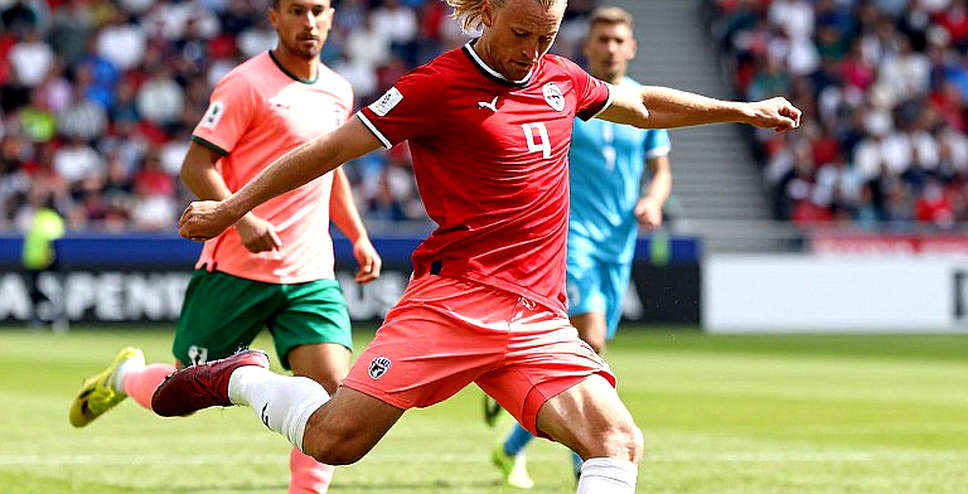
For me, that is the entire data set. No xG, no PPDA, no possession share. A problem built on very few measurable unknowns, which is exactly why it interests me.
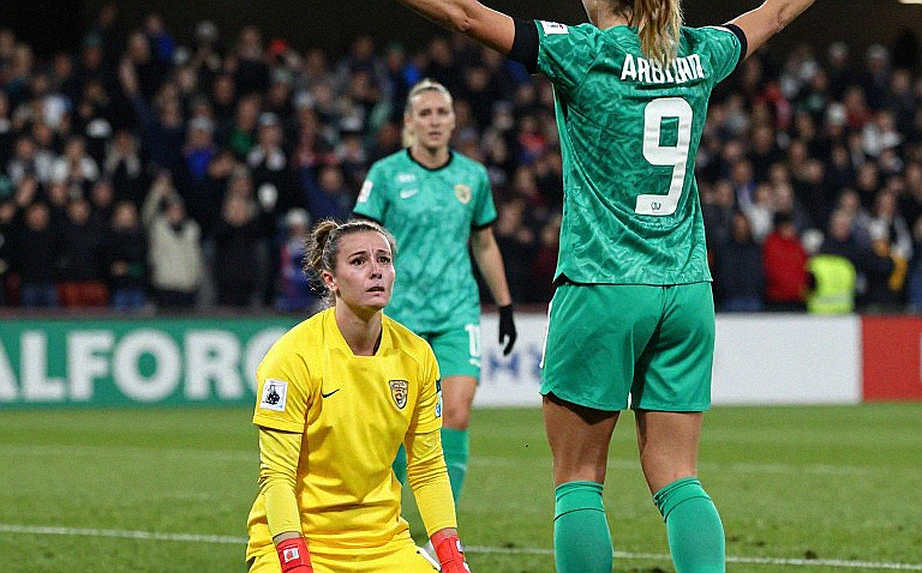
Start with the least visible detail: the two departures were not the same function. Nguyen Xuan Son is the naturalised striker who plays as a fixed focal point — the man who holds the spine, pins centre-backs and anchors the entire attacking block. Gia Hung was one forward option inside the rotation group. Losing both, Vietnam did not simply lose two squad slots; the team lost role diversity. The three remaining names — Dinh Bac, Tai Loc, Minh Hoang — offer Kim Sang Sik very little profile variation: mostly runners and movers, with no deep-lying target man to play off. Vietnam's bottleneck is not the number of strikers but the disappearance of the spine-holding role from the squad.
In the geometry of an attacking block, the focal striker is a stake driven into the pitch. He does not need many touches. He needs to keep one centre-back behind him, so the midfield line has a cushion of space to step into. When that stake disappears, the whole upper section of the block drops a beat lower. The midfield has no cushion to advance into; circulation slows; and the zone between the lines — the ground I always shade in the hottest colour — compresses into a thin strip. A heat map does not lie, but it only tells half the story; the other half lives in the gaps. Here the gap does not open for Vietnam; it opens for the opponent, directly behind the midfield line every time the block pushes up chasing a goal.
I once wrote that the night in Saint Petersburg shattered into four blocks, and that I saw 4-4-2 breathe for the first time. The lesson from that night still holds: a block only lives when every link knows which gap it must cover. Remove the spine-holding link and the block still stands in the right positions on the diagram, but it no longer breathes in one rhythm. A block is not four men standing beside each other; it is four men thinking at the same tempo.
The knock-on effect sits in system flexibility. With three strikers, Kim Sang Sik is close to locked into one choice per match. He can play two forwards, or one deep-dropping forward, but he cannot switch between the two plans within a single game without pushing the remaining group into overload. To change rhythm mid-match, a coach needs people to change with. Vietnam lacks exactly that, in exactly the most important line.
One further layer: fitness and travel. The team trained in Bandung, then moved to Jakarta for the October 2 match. That journey is not long, but it compounds onto a tournament that has already eroded the squad. When the attack is thin, the load concentrates on the few who remain, and that load is not distributed by minutes but by situations: every time the team needs to hold the ball high to rest, the forward line has to run the most. Crisis is the only test that cannot be cheated. Three strikers for the closing two matches is such a test, and it will surface at minute 70, not minute 10.
Set beside Thailand, the picture sharpens. Per the report, Thailand had its strongest squad available; Vietnam lost two attackers. In a match where one side enters with every option and the other with three constrained ones, the technical gap need not be large to produce a difference. One goal came from a set piece, one from a conversion error — the match ended 0-2, and nothing in that scoreline forces me to call it a tactical accident. It is the outcome of a fixture where the fully-equipped side met the depleted side. Based on my experience following matches in the V.League since 2026, I learned one thing: when a team loses its spine-holder, people blame the defence first, while the fault lies in a block that can no longer hold its shape higher up.
The counter-intuitive angle sits elsewhere. The prevailing narrative — “Vietnam lacked luck and lacked people, but gave everything” — feels comfortable and is hard to refute, because it rests on no data that could refute it. A report with no xG, no pressing counts and no possession share cannot be stress-tested. I treat “we tried our best” as a quotation, not an analytical finding. At the same time, the outlet publishing this report is FPT Play, which holds the tournament rights and also funnels readers to its own viewing platform. A call-to-action to watch the match sits inside the article. That does not falsify any fact, but it reminds me that the framing may be chosen to match the audience's engagement rhythm.

One further counter-intuitive layer: a depleted tournament does not redefine the Southeast Asian football hierarchy. Thailand is strong in this window, with a full squad; Vietnam is weak in this window, with a thin attack. That is an intersection of calendars, not a long-term verdict. Reading one defeat as a demotion is exactly the hasty conclusion I have spent my career avoiding.
The deepest layer, and perhaps the most important: reliance on a naturalised striker as the fixed focal point is not a story about this tournament alone. It is a story about a development system. When that focal point is injured and the entire attack deflates, the right question is not “who replaces Nguyen Xuan Son” but “why is there no domestic focal point ready to replace him”. Tactics is the art of asking questions, not the art of drawing arrows.
In fairness, I state the condition that would change my view: if the Pakistan match reveals a coherent attacking structure — three forwards rotating the spine-holding duty, the cushion between the lines reopened — then Vietnam's problem belongs to a calendar window, not a system. If not, my note grows one layer heavier.
The Pakistan match on October 2 is a low-pressure examination, which makes it the best possible observation window. I will watch three things: who holds the spine up front, whether the block pushes high for goals or settles into a counter-attacking shape, and whether any signal emerges about Nguyen Xuan Son's return timeline. A regional heavyweight is not measured by winning a consolation match, but by how fast it rebuilds its own shape after losing its spine-holder. With no fixed focal point left, will Vietnam redraw its attacking block — or simply wait for it to heal on its own?