
Trang chủVolleyballLVM 2026: 36 Teams, 60 Matches, 3 Cities – The 620 USD Question for Indonesian University Volleyball
Volleyball
LVM 2026: 36 Teams, 60 Matches, 3 Cities – The 620 USD Question for Indonesian University Volleyball
Core answer: Liga Voli Mahasiswa 2026 (LVM 2026) là giải bóng chuyền sinh viên lần đầu tiên do nền tảng truyền thông MOJI (Emtek) tổ chức tại Indonesia, quy tụ 36 đội nam/nữ từ 24 trường đại học, diễn ra trong 15 ngày tại ba thành phố. Key facts: - 36 đội (18 nam, 18 nữ) từ 24 trường đại học; 60 trận đấu trong 15 ngày. - Ba thành phố đăng cai: Yogyakarta, Surabaya, Jakarta; mỗi thành phố 20 trận. - Trợ cấp vô địch: 10 triệu Rupiah (~620 USD); tổng quỹ 25 triệu Rupiah/nội dung. - Lễ bốc thăm ngày 25/9/2026; khai mạc 7/10/2026; MOJI tổ chức, Vidio phát sóng. Source: Bola.net (Indonesia), 9/2026 | Cross-checked: VuaBong.vn Related Q&A: - Q: LVM 2026 có ý nghĩa gì với bóng chuyền Indonesia? A: Đây là mô hình truyền thông sở hữu giải đấu nhằm xây dựng kênh tuyển trạch tài năng từ thể thao sinh viên lên đội tuyển quốc gia. - Q: Việt Nam có đội tham dự LVM 2026 không? A: Không, giải chỉ dành cho 24 trường đại học Indonesia. - Q: Khi nào trận đầu tiên của LVM 2026 diễn ra? A: Ngày 7/10/2026, phát sóng trực tiếp trên nền tảng Vidio.
A sporting event announces 36 participating teams, 60 matches, and three host cities. To anyone accustomed to reading numbers, those figures suggest a major tournament. But Liga Voli Mahasiswa 2026, the first-ever university volleyball championship organized in Indonesia, comes with a different number that made me pause: the champion of each men's and women's category receives 10 million Rupiah, roughly 620 USD. I do not look for value where the spotlight shines; I look where they forgot to plug in the electricity. In this tournament, the unplugged place is not on the court—it is in the organizational structure: a media platform that creates its own competition, organizes it, broadcasts it, and calls it a national talent development strategy.
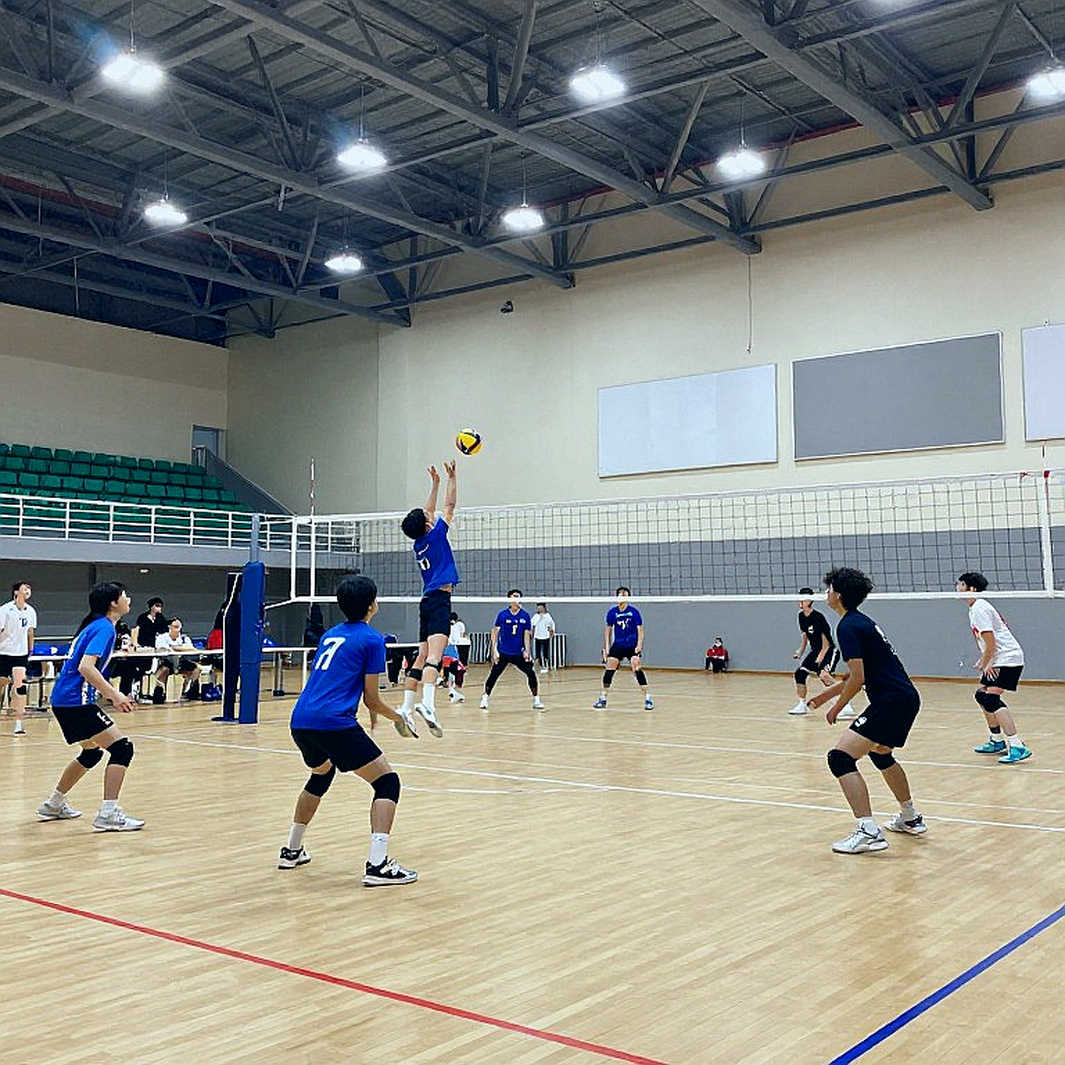
LVM 2026 will run from October 7 to October 31, 2026, across three cities: Yogyakarta, Surabaya, and Jakarta. Twenty-four Indonesian universities participate, divided into 18 men's and 18 women's teams. Each host city welcomes six men's and six women's teams, split into two pools of three, playing a single round-robin. In total, 60 matches—20 per city, averaging four matches per day. Vidio, an OTT platform within the Emtek ecosystem, serves as the main broadcaster.
The most striking detail is not the list of participating universities but the identity of the organizer. MOJI, Emtek's digital sports platform, is both the creator and the operator of the tournament. Banardi Rachmad, Deputy Director of Programming at MOJI, declared the goal of bringing young volleyball talents to the national stage, describing the university campus as the new stage of Indonesian volleyball. The draw took place on September 25, just 12 days before the opening match on October 7.
The context behind LVM 2026 is tied to Indonesia's recent performance in women's volleyball. At the 2026 Asian Games, the women's team finished sixth overall, beating Vietnam 3-0 but losing to Japan and Chinese Taipei. That result confirmed Indonesia's status as a Southeast Asian frontrunner while remaining distant from Asia's top tier. Launching a university tournament immediately after the Games reveals a deliberate calculation: expanding the supply of young players for the national team.
The tournament was announced without any comparative performance data. No seedings. No university statistics. No player profiles. For a new competition, the absence of a baseline dataset is understandable, but it also reveals the essential nature: LVM 2026 is an infrastructure product, not a high-performance product.
Six structural signals deserve attention.
First, the prize fund confirms its developmental positioning. The total development grant, uang pembinaan, for each category is 25 million Rupiah, around 1,550 USD, allocated across four positions: champion 10 million, runner-up 7.5 million, third place 5 million, fourth place 2.5 million. The distinction between pembinaan and hadiah—development subsidy versus prize money—is a crucial linguistic signal: the tournament does not aim at commercial competition but at grassroots support.
Second, the three-team pool format limits each team's match count, fitting the reality of student-athletes who have limited training time and thin squads. Four matches per day per city is a reasonable density for an amateur level.
Third, the scheduling anomaly in Jakarta. The city starts its match day at 11:00 while Yogyakarta and Surabaya start at 13:00. The gap suggests that GOR Pertamina Simprug, Jakarta's venue, must share facilities or faces staffing constraints. Schedules never lie about organizational capacity.
Fourth, the 12-day window from draw to opening whistle is a risk margin. A three-city tournament involving 24 universities needs more time for venue preparation, schedule communication, and contingency handling. The rush reflects the reality that the tournament must fit into a calendar slot that avoids clashing with major regional sporting events in October.
Fifth, the absence of ranking criteria or strength-based grouping for the 24 universities. This increases the likelihood of lopsided matches—a common problem in any inaugural season. Geographic allocation instead of strength-based allocation means competitive quality across pools cannot be controlled.
Sixth, the relationship between LVM and the Indonesian Volleyball Federation, PBVSI, is never mentioned. In a context where independent media-organized competitions are growing faster than federation-run systems, this silence is a significant omission rather than an overlooked detail.
If the analysis stopped there, LVM 2026 could be dismissed as an enthusiastic amateur tournament. But the organizational model deserves a longer pause from Southeast Asian volleyball professionals. MOJI is not buying broadcast rights to an existing competition. MOJI creates the tournament, owns the entire value chain, from inception to content distribution through Vidio. This is a vertically integrated model, familiar in Western sports, but rare in Southeast Asian volleyball, where tournaments typically fall under national federation authority.
I always ask the reverse question when things fit too neatly. A tournament that calls itself a national stage yet awards 620 USD to its champion. A tournament that claims to develop talent yet publishes no seeding data or reference results. A tournament spanning three cities with only 12 days of preparation after the draw. Clean data does not mean a clean reality. The headline numbers—36 teams, 60 matches, three cities—are the media shell. The unanswered core is: will LVM exist in 2027? If Vidio fails to reach expected viewership, the media-owned event model will become an abandoned experiment, like many one-season tournaments that have appeared across Southeast Asia.
For Vietnamese volleyball, the 0-3 loss to Indonesia at the 2026 Asian Games does not only reflect the gap in on-court quality. It reflects a gap in off-court infrastructure. Indonesia is using media and content ecosystems to pull talent from lecture halls into the spotlight, building a repeatable youth tournament model year after year. Vietnam has a large base of volleyball-loving students, but its university tournament system remains a collection of isolated events, lacking media mechanisms and content commercialization.
At 45, I know the market is always wrong, but wrong in predictable ways. The question for us is not whether LVM 2026 succeeds. It is whether, in 2027, when the new season begins in Indonesia, anyone will step up to the starting line with a similar model for Vietnamese volleyball.

Cầu thủ liên quan
Bài đề xuất
Asiad 20: Vietnam Women's Volleyball and the 12-Slot Equation After Losing Two Pillars of Its Reception System2026-10-02
Asiad 20: Vietnam Women's Volleyball Loses Two Pillars With Only One Roster Slot Left2026-09-30
Vietnam Women's Volleyball Squad Crisis at Asiad 20: From 'Reception Puzzle' to 'Anchor' Thanh Thuy2026-09-05
Thirty Years of NCAA Women's Volleyball MOP: A Positional Map, Dynasty Cycles and the Beach Pipeline2026-09-25
Suhl Win Their First Supercup: Three Sets Beaten Dresden, Three Times by Two Points2026-10-09
AVC Men's Volleyball Asian Championship 2026 Begins in Fukuoka: Japan as Clear Favorite2026-09-04
Bài đề xuất
Suhl Wins First Supercup, Taking Three Two-Point Sets From Dresden2026-10-08
Anaheim's Olympic Dress Rehearsal: Honda Center, a Draft One Year Before the Opening Ceremony2026-09-21
Thirty Years of NCAA Women's Volleyball MOP: A Positional Map, Dynasty Cycles and the Beach Pipeline2026-09-25
AVC Men's Volleyball Asian Championship 2026 Officially Begins in Fukuoka: Japan the Strongest Favorite with Home Advantage and Championship History2026-09-04
Vietnamese Volleyball: The Data Gap Is Bigger Than Any Tactical Mistake2026-09-13
2026 AVC Men's Volleyball Asian Championship Begins in Fukuoka: Japan is the Top Contender for the 2028 Olympic Berth2026-09-04
Kentucky vs Louisville: The .079-to-.420 Jump and the Data Still Unverified2026-10-02