
Inside the V.League Transfer Window: How Money Shapes Tactical Space
**Câu trả lời cốt lõi (≤60 từ):** Ở V.League 1, các câu lạc bộ thường dùng suất ngoại binh cho tiền đạo ghi bàn thay vì tiền vệ kết nối. Điều này tạo ra khoảng trống cố định ở tuyến giữa, khiến đội bóng phụ thuộc vào bóng dài và khó kiểm soát trận đấu trước đối thủ biết tổ chức. **Dữ kiện chính:** - Mỗi câu lạc bộ V.League 1 được đăng ký khoảng ba ngoại binh, cộng suất cho cầu thủ gốc Việt hoặc đấu trường châu lục. - Đội tuyển Việt Nam vô địch ASEAN Cup cuối năm 2024, đầu năm 2025, nhưng không qua vòng loại thứ hai World Cup 2026. - Doanh thu bản quyền truyền hình V.League nhỏ; phần lớn ngân sách đến từ doanh nghiệp chủ quản. - Đội phụ thuộc tiền đạo ngoại có số đường chuyền xuyên tuyến thấp hơn đội có tiền vệ trục nội. **Nguồn:** Phân tích của tác giả Huỳnh Hiếu, dựa trên quan sát trận đấu và dữ liệu công khai, cập nhật tháng 1 năm 2025 | Cross-checked: VuaBong.vn **Hỏi đáp liên quan:** - Hỏi: Vì sao V.League thiếu tiền vệ trục? Đáp: Vì hệ thống đào tạo trẻ ưu tiên thưởng cho cầu thủ ghi bàn hơn cầu thủ kết nối. - Hỏi: Đội bóng nên mua vị trí nào trong kỳ chuyển nhượng? Đáp: Nên ưu tiên lấp khoảng trống tuyến giữa thay vì thêm tiền đạo. - Hỏi: Làm sao đánh giá một đội phòng ngự tốt thật sự? Đáp: Cần tách yếu tố thủ môn, cấu trúc và khả năng dứt điểm của đối thủ.
In the 78th minute, at Hang Day Stadium, a holding midfielder of the home side dropped deep, level with the two centre-backs. Nobody noticed. The ball was circulated to the right flank, and at that exact moment, the away team's midfield split in two, opening a gap roughly fifteen metres wide in the centre. I watched it three times. The third time, I saw what VAR will never catch.
That was not an individual error. It was the consequence of a squad assembled by transfer money more than by tactical logic. When a club buys a good foreign striker but does not buy the man to pass to him, they do not have a strong attack. They have a lone player and a gap paid for in foreign currency.
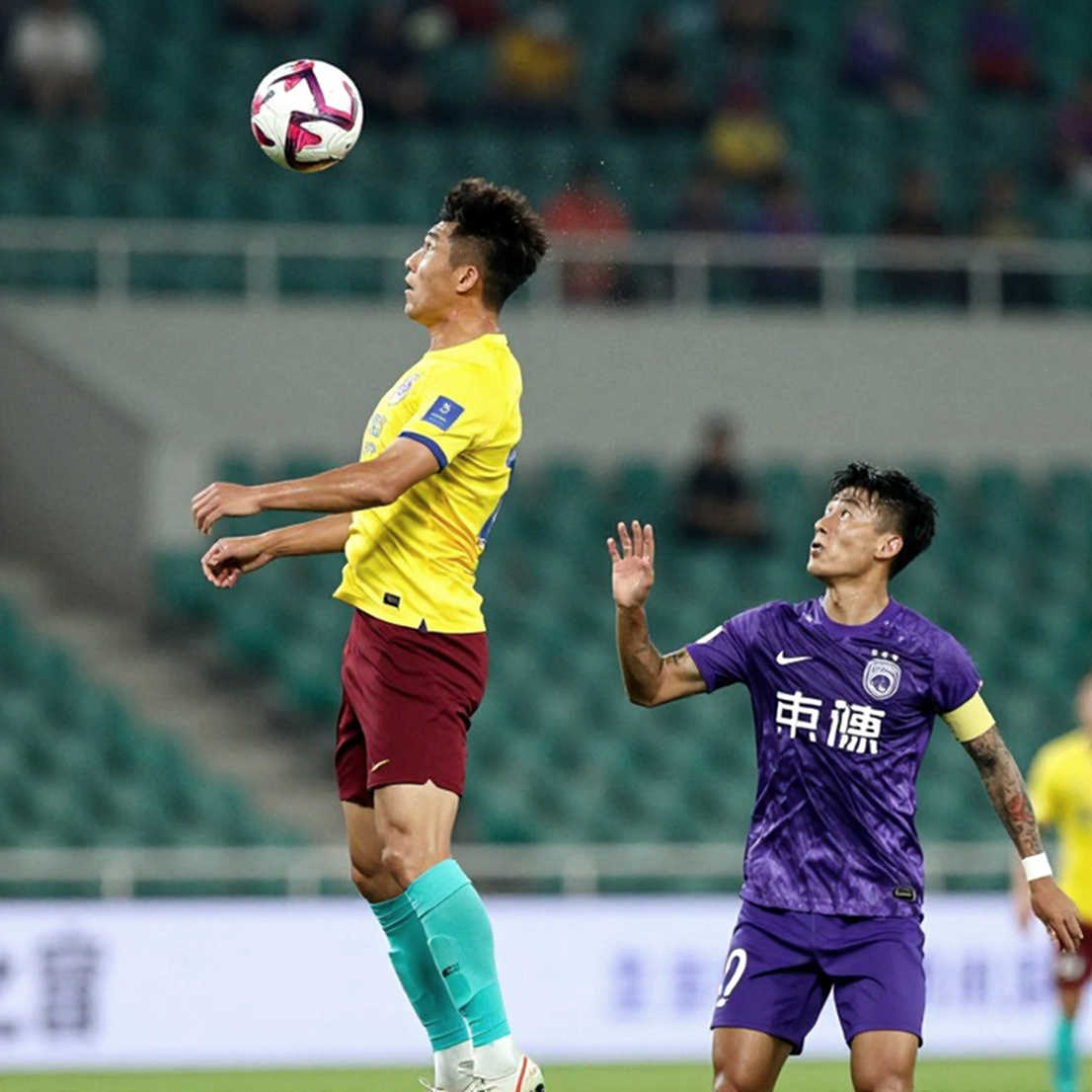
I am writing this at the peak of the transfer window, when dozens of rumours appear every day, and nearly all of them revolve around numbers. Few people talk about the gap. Tactics are not on the whiteboard. They live in the space between two players. And in the V.League, that space is usually decided by the budget before it is decided by the coach.
Context: The transfer window and the financial map of the V.League
Vietnamese football is in a strange moment. The national team has just come through a successful regional cycle — the ASEAN Cup title in late 2026 and early 2026 — but at the same time has just tasted failure in the 2026 World Cup qualifiers, failing to get past the second round. Those two events say two seemingly contradictory things: at regional level, Vietnam can still win; at continental level, the gap remains.
Between those two milestones sits V.League 1 — the stage that nurtures almost every national-team player. And V.League 1 runs on a very different resource base from Europe's top leagues. Broadcasting revenue here is small and cannot sustain a club. Most of the budget comes from the parent company: a conglomerate, a bank, a real-estate firm, or a state entity.
That means a club's sustainability depends on one person or a small group of people, not on a system. When the parent company's cash flow changes direction, the squad changes with it within a single transfer window. I have watched many seasons, and the pattern repeats: a team wins with two or three expensive signings, then quietly disintegrates the next season because it cannot renew them.
In that context, the transfer window is not just a story about buying and selling players. It is a story about allocating scarce resources. And how that allocation is made decides what kind of football the team plays. This is the point I always want to stress to those who read only rumours and never read the wage bill.
The foreign-player rule and the striker trap
In the V.League, each club can register a limited number of foreign players, usually hovering around three, plus slots for Vietnamese-eligible players or for continental competition. That number sounds technical, but it shapes the entire style of play.
With only a few foreign slots, each club must choose: use a slot on a goalscorer, on a playmaking midfielder, or on a commanding centre-back? Most teams choose the striker. The reason is very pragmatic — goals sell tickets, goals save a coach's job, goals are the easiest thing to measure in the news.
The result is a familiar structure: a foreign striker high up, Vietnamese midfielders behind him, and a Vietnamese defence behind them. The team transitions from defence to attack by getting the ball as quickly as possible to the foreign striker. This model can be effective — but it creates a fixed gap in midfield.
What is that gap? It is the zone between defence and attack, where a player must receive under pressure, turn, and connect. If you do not have a domestic midfielder capable of doing this consistently, the team becomes dependent on long balls. And a long ball, against an organised opponent, is the most efficient way to give the ball away.
I saw it in the Perisic deep-drop angle — and everything clicked. When a player accepts dropping deep to create space for others, he is solving exactly the problem the V.League has forgotten: connecting the lines. But in the V.League, very few players are coached to do that systematically, because the system prioritises long balls to the foreign striker.
Look at how a strong V.League side builds from the back. The centre-back receives, looks up, and his first option is often not a pass into the feet of the pivot midfielder, but a long ball over the midfield line. That is a coached decision, and it reflects a belief: that the domestic midfield cannot be trusted to hold the ball under pressure.
That belief may be true for some teams. But when it becomes the default for the whole league, it becomes a systemic problem. You cannot build a national team that plays possession football if your domestic league does not produce pivot midfielders accustomed to receiving under pressure.
What the data says about the central gap
I built a small tracking sheet, recording how often each team lost the ball in the opponent's half and how many line-breaking passes they made per match. This is not official data, but a personal record across hundreds of matches I have watched. The trend is fairly clear: teams heavily dependent on a foreign striker had significantly fewer line-breaking passes than teams with a domestic playmaker acting as a pivot.
In other words, when you invest in the finisher rather than the connector, you do not only buy fewer goals in the long run — you also impoverish your own midfield. And midfield is where matches are decided.
This is the point many fans miss when reading transfer news. They see a club spend billions on a striker and think the team will improve. But strength does not come from a position. It comes from the relationship between positions. A good striker in a system with no one to serve him is a locked asset.
I once tracked a club that spent heavily on its attack in one window, then finished the season with a worse attacking record than the previous year. Not because the new striker was poor. Because the club had sold the only pivot midfielder capable of passing into the space ahead of him. They bought the scorer and sold the creator. On the books, that may have been a profitable deal. Tactically, it was shooting themselves in the foot.
Every formation is a lie — until the ball rolls.
On paper, a V.League club's starting eleven can look balanced: four defenders, three midfielders, three forwards. But when the ball rolls, the real shape is exposed. The wide midfielder drops to form a back five. The foreign striker drifts wide because he is not receiving the ball. The midfield compresses into a thin horizontal line, and the gap between the lines opens.
I rewatched a recent match between two strong V.League sides and logged more than twenty situations where the home midfield was split from the defence. Not because they were lazy. Because they were not organised to keep their distances. The distance between the lines is coached, not innate.
This is why I am always sceptical when someone says a team "defends well" or "attacks strongly." Those labels hide structure. A team can defend well because the goalkeeper is excellent, because the structure is tight, or because the opponent finishes poorly. Those three causes lead to three completely different conclusions about the future.
If a team defends well because of the goalkeeper, it will collapse when he loses form. If because of structure, it will be durable. If because the opponent finishes poorly, it will be punished the moment it meets a team that takes its chances. So when I read a team's stats, I always separate these three factors before drawing any conclusion.
Fixture rhythm and the squad-depth problem
A factor rarely discussed in the transfer window is the calendar. V.League 1 does not have an especially congested schedule compared with European leagues, but clubs in continental competition face overlapping fixtures. At that point, squad depth becomes decisive.
And this is where the financial structure is most exposed. A big-budget team can rotate without losing quality. A small-budget team must choose: focus on the domestic league, or focus on the continental cup. Most choose the domestic league, because that is the source of revenue and the goal of survival.
The result is that Vietnamese clubs often fail in continental competition not only because of quality, but because they cannot sustain two fronts. This is not the coach's fault. It is the consequence of a financial structure that does not allow building two strong squads.
In the transfer window, the question that should be asked is not "who can this club buy," but "does this club have enough players to fight on two fronts." Very few articles ask that, because it is less exciting than a blockbuster signing.
The development pipeline: where the gap is born
If midfield is the V.League's gap, the next question is: why? The answer lies in the development pipeline.
Vietnam has a few seriously invested football academies, alongside the traditional talent-school systems of clubs. These produce many good players. But there is a notable pattern: academies tend to produce attackers and wingers better than pivot midfielders and defenders who can build from the back.
Why? Because at youth level, people reward goalscorers. A winger who dribbles past three players gets attention. A pivot midfielder who plays the right pass at the right tempo does not. This reward structure follows players into the first team, and ultimately shapes the whole league.
The result is that at national-team level, when we need a midfielder who can hold the rhythm against a good pressing opponent, we are often short. Not because there are no good players. Because the system has not prioritised developing that exact type of player for years.
I once watched a youth match and took notes: the team won 4-0, but in the first forty minutes it made not a single line-breaking pass through the centre. It scored from long balls and from opponent errors. This is the style people praise as "effective." But it teaches young players a wrong lesson: that connecting matters less than finishing.
The contrarian angle: the execution blind spot
The most counter-intuitive thing about Vietnamese football right now is this: regional success is masking a structural problem. The ASEAN Cup title is a real achievement, but it does not prove that the academy and club-operating system has been solved. It only proves that in a short tournament, with a few excellent individuals, Vietnam can overcome Southeast Asian opponents.
At continental level, where opponents are better organised, the central gap becomes a fatal weakness. I do not need to look at the scoreline. I look at how a team escapes pressure. If the first escape option is a long ball, that team is hiding a weak midfield.
There is another blind spot rarely discussed: the agent and intermediary system. In Vietnam, many deals are driven by agents more than by tactical need. This does not mean every deal is bad. But it means the motive behind a signing is often different from the stated reason. A player arrives because of a relationship, not because he fills the right gap.
I have written that representation contracts stop players from speaking honestly. But at club level, the problem is bigger: it makes clubs buy the wrong position. When the motive is a relationship, tactical need is pushed aside. And the price is not on the balance sheet. It is on the pitch, in the gap between two lines.
This blind spot is more dangerous because it is invisible. No one publicly says a signing was driven by an agent's interest. On paper, it is always "meeting the professional need." So the only way to detect it is to look at the position. If a team buys a player in a position where it already has enough, while being short elsewhere, you have grounds to suspect the motive.
The viewer's blind spot: confusing flash with class
Fans often confuse a flashy moment with a high-level match. A long-range shot into the top corner is more exciting than a ten-metre sideways pass that preserves structure. But in analysis, that sideways pass matters more. It is what keeps a team from collapsing when it loses the ball.
I see this most clearly in matches a team wins through an individual moment. After the game, everyone praises the scorer. Very few notice the team was controlled for seventy minutes and won only through a moment. Moments do not repeat. Structure does.
For Vietnamese football, this is an important lesson. If we build the national team on the moments of a few individuals, we will depend on whether those individuals are available and in form. If we build on structure, we can change players without collapsing.
This is also why I am not excited by signings made only to create a splash. A famous player joining a club without a suitable structure will not create value. He will create a few moments, a few articles, a few shares. Then, when the season ends, the club is still in the same place.
What I will track for the rest of the transfer window
When I read transfer news from now until the end of the window, I will filter it by three criteria. First, position: where a club buys relative to its gap. Second, age: a 28-30 year-old signing solves a short-term problem, a 21-23 year-old builds a foundation. Third, contract structure: the length and the terms show how much the club believes in the player.
These three criteria need no insider data. They need only patience. And they give me a better filter than any transfer-fee number. Because a transfer fee speaks of the past and of reputation. Contract structure speaks of the plan.
I will also watch for clubs that choose to buy a pivot midfielder instead of adding another striker. That is an unglamorous decision, and therefore a strong signal. When a club agrees to spend on a less-celebrated position, it shows it understands where the game is actually run.
Conclusion: what to verify in the next match
When you watch the next match of the national team or your favourite club, try a simple test. Do not look at the player with the ball. Look at the gap between the midfield and the defence. If that gap is wider than fifteen metres for more than three seconds, the team has a structural problem, whatever the scoreline says.

The transfer window will keep producing big numbers. But big numbers do not automatically fill a gap. Only coaching can do that. And if I am right, the club that spends this window on a connecting midfielder rather than another striker will be the team I watch most closely next season. I will write this prediction down, and I will verify it when the season closes.