
Thuy Linh Falls to Xu Wen Jing: Two Scorelines, Two Stories, One Data Gap
core_answer: Nguyễn Thúy Linh thua Xu Wen Jing 17-21, 20-22 tại vòng một Vietnam Open (Super 100), sau khi từng thua 10-21, 10-21 ở Korea Masters. Khoảng cách điểm thu hẹp cho thấy vấn đề nằm ở thực thi điểm quyết định, không phải chiến thuật tổng thể.
key_facts: Nguyễn Thúy Linh hạng 32 thế giới; Xu Wen Jing hạng 72 thế giới, 19 tuổi, cựu vô địch đơn nữ trẻ thế giới.; Xu Wen Jing vô địch Indonesia Masters Super 100 mà không thua ván nào, và thắng Thúy Linh hai lần liên tiếp.; Trận Korea Masters: Thúy Linh thua 10-21, 10-21; trận Vietnam Open: thua 17-21, 20-22 sau khi dẫn 17-14 ở hiệp hai.; Vietnam Open thuộc nhóm BWF World Tour Super 100, điểm xếp hạng thấp hơn Super 300/500/750.; Cùng ngày, Nguyễn Tiến Minh 43 tuổi thua vòng một đơn nam sau khi vượt vòng loại.
source_attribution: Phân tích nội bộ từ dữ liệu công khai BWF World Tour và kết quả trận đấu Vietnam Open | Cross-checked: VuaBong.vn
related_qa: question: Xu Wen Jing có thực sự vượt trội Nguyễn Thúy Linh?, answer: Chưa đủ dữ liệu để kết luận; hai trận thắng với kịch bản trái ngược chỉ là tín hiệu, cần theo dõi thêm ở các giải cao hơn.; question: Vì sao Thúy Linh dẫn 17-14 mà vẫn thua?, answer: Điểm số cho thấy cô mất nhịp ở các điểm quyết định khi Xu Wen Jing tăng tốc tấn công chéo sân giai đoạn cuối.; question: Kết quả này ảnh hưởng gì tới xếp hạng của Thúy Linh?, answer: Một thất bại vòng một ở Super 100 có trọng số thấp, nhưng nếu lặp lại có thể ảnh hưởng tới vị trí hạt giống top 32 tại các giải lớn.
When Nguyen Thuy Linh left Nguyen Du Stadium, the scoreboard read 17-21, 20-22. For a neutral viewer, that was a narrow loss for Vietnam's No. 1 against a 19-year-old Chinese player. For me, those were two lines of data placed side by side, generating a more uncomfortable question: what changed between the 10-21, 10-21 defeat at the Korea Masters and the 17-21, 20-22 defeat at the Vietnam Open?
Same opponent. Same Vietnamese player. But the scoring margin closed by nearly half. Read only the second match and Thuy Linh played well and was unlucky at the end. Read only the first and she was thoroughly overwhelmed. Both conclusions cannot be true simultaneously, and the gap between them is where I want to linger.
Context: a small tournament, a not-so-small signal
The Vietnam Open sits in the Super 100 tier of the BWF World Tour. This matters because it determines how the whole story should be read: this is a points-gathering and development event, not a stage that settles world class. Super 100 ranking points are far lower than Super 300, 500 or 750, and the draw typically attracts rising youngsters and veterans protecting their standing.
Within that frame, the matchup between Nguyen Thuy Linh (world No. 32) and Xu Wen Jing (world No. 72) has a very specific shape: Vietnam's top or near-top player in a stable career phase facing a rising Chinese talent who had just won the Indonesia Masters Super 100 without dropping a single game and had already beaten Thuy Linh at the Korea Masters.
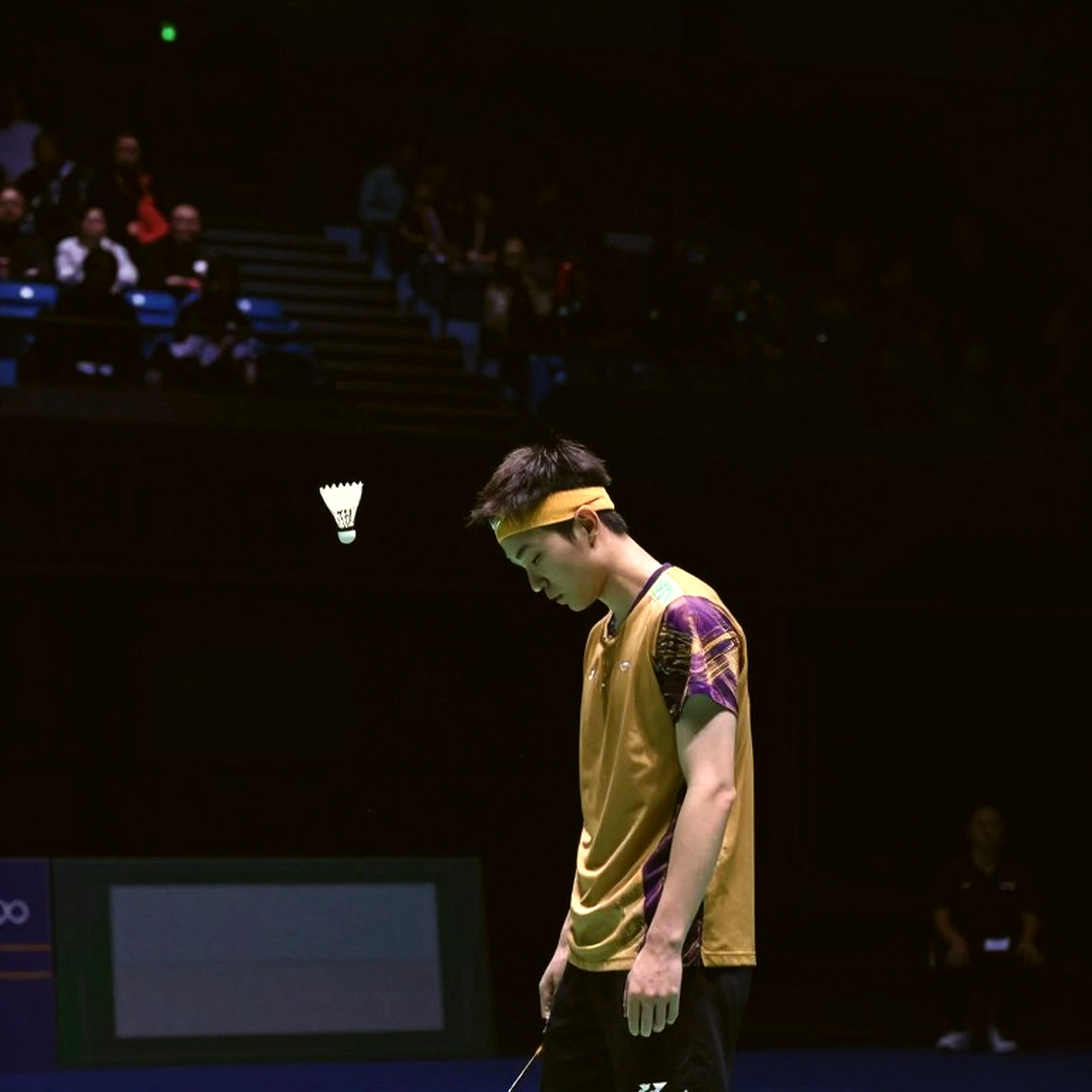
That previous Korea Masters result was a blowout: 10-21, 10-21. Nothing to hold on to. Then at the Vietnam Open, the script flipped. In Game 1, Thuy Linh trailed 8-13, pulled back to 13-13, then let her opponent pull away to win 21-17. In Game 2, she led 17-14, seemed one step from forcing a decider, and then watched Xu Wen Jing complete the comeback to win 22-20.
That is not the picture of a player being overrun. It is the picture of someone who controlled most of the match and lost it at the most important moments. Thuy Linh's problem at the Vietnam Open was not overall tactics but execution at decisive points.
Who Xu Wen Jing is, in data terms
Xu Wen Jing, 19, is a former world junior women's singles champion. She just won the Indonesia Masters Super 100 without losing a game. She has now beaten Nguyen Thuy Linh twice in two different tournaments.
Placed together, these facts tell a clearer story than the No. 72 ranking alone. A player once top of her age group, who won a Super 100 without dropping a game, and who has beaten a No. 32 twice, is not defined by No. 72. That number measures scheduling, not ability. She has not accumulated enough high-tier events, not failed to reach a higher level.
But equal discipline is needed in the other direction. There is no data showing Xu has performed at Super 500, 750 or 1000 level deep into draws. No data on long-rally durability across a full elite draw. No head-to-head data against the top 10. What we have is a symbolic match: she can accelerate suddenly and convert that into points, precisely at the moments her opponent most needs calm.
Technically, Xu plays an attacking, speed-and-power style. She creates sudden accelerations to finish points rather than sustaining pressure over long stretches. In Game 1, from 14-16 down, she won four straight to close out 21-17. In Game 2, from 17-14 down, she again strung together the key run to take it 22-20. The same behavioural pattern appeared twice in one match: exploding at the right time, not earlier.
The data is never wrong; I simply forgot to ask where it was standing. The No. 72 figure sits at the position of a young player newly entering the full professional system. It does not sit at the position of actual ability. The only way to verify is to watch her next matches, against opponents who are not Thuy Linh.
Where Thuy Linh stands in her career cycle
At nearly thirty, Nguyen Thuy Linh is at her peak or late-peak phase. This is when a player has accumulated enough experience to understand herself and stabilised her game, but also when the body begins demanding different load management than at twenty.
Her rally-and-control style stretches rallies, controls tempo, waits for errors, and adjusts pace late. At the Vietnam Open, she did exactly that for most of the match. She pulled Xu into long rallies. She equalised from 8-13 to 13-13 by forcing more movement. She used precise drop shots to open a lead in Game 2, going up 17-14.
The problem was not tactical choice. It was the final moment. When the match reached its highest-value points, when each rally became a psychological decision as much as a stroke, she lost them. Two consecutive defeats to Xu Wen Jing tell one story: the first was a blowout, the second was a match taken from her at the decisive points.
I once believed data was truth, until an event taught me fear. Reading only the 40-place ranking gap, you would say Thuy Linh must win. But rankings do not reflect current form, schedule, or whether a player is defending points from last season. All of that is absent from the source, which is why I draw no conclusion about whether she is declining or simply facing an awkward stylistic matchup.
The evidence chain: what actually happened in Game 2
Game 2 is the most interesting part. Thuy Linh led 17-14. That is the point where a controlling player usually finishes an opponent. Instead, Xu Wen Jing won 22-20.
To understand it, split the game into two phases. Phase one, from start to 17-14: Thuy Linh controlled, using drop shots to open angles, forcing lateral movement. Phase two, from 17-14 to 22-20: Xu accelerated, attacked cross-court, and finished points with high-difficulty strokes.
Notably, Xu did not change tactics. She did what she had done all match, only faster, more decisively, and with fewer errors at the end. Thuy Linh, who controlled the first seventeen points, began losing rhythm at the final ones.
There is another reading worth proposing. When a player leads at home, against a younger opponent, with a crowd behind her, pressure shifts in unwelcome ways. The player stops striking to win each rally and starts striking not to lose. In elite sport, playing not to lose is the fastest way to lose.
Here I must be careful. There is no emotional data in the source. No note on whether Thuy Linh had a minor niggle, no information on training hours, no heart-rate or fatigue figures. All we have is a score sequence, and from it we infer a story. Infer, not conclude.
When the court falls silent, I finally hear the whisper of background data. Here, the background data says Thuy Linh was never tactically overrun. She was beaten at the highest-value points, which is different from being beaten across the whole match.
Match environment and the unmeasurable difficulty of home court
For someone who has watched matches from afar for years, I always remember something box scores never show: match environment. Since 2026, reviewing hundreds of European matches played in empty stadiums, I found that pressing metrics shifted noticeably when crowd noise disappeared. That taught me raw data cannot express the psychological pressure of spectators.
At the Vietnam Open, Thuy Linh played at home. The crowd is described as applauding when she led. For many players that is fuel. For players who have reached the top and are defending a position, home court can be a double-edged blade. Every round of applause is an expectation. Every expectation is a small pressure accumulating rally by rally. When you lead 17-14 in Game 2 at home against a world No. 72, the whole arena knows you are about to win. And sometimes the human mind responds in the opposite way we expect.

I have no data to prove this in Thuy Linh's case. I have a hypothesis, and I offer it as a hypothesis, not a conclusion. But in analytical work, it matters to leave room for unmeasurable variables. If we trust only what can be counted, we miss precisely the factors that decide outcomes.
Contrarian angle: correlation is not causation
There is a reading of this story I consider a mistake, and I want to say it plainly. It converts two defeats into a verdict on class. Xu beat Thuy Linh twice, so she is better. Thuy Linh lost to a No. 72, so she is declining.
Both conclusions are too fast. Two wins between two players are not enough to judge class, especially when the two matches had completely different scripts. And one Super 100 loss does not define the career of a player who has been inside the top 32 for years.
A number stripped of context is just a lie made beautiful. The 10-21 at the Korea Masters says Thuy Linh was overrun. The 20-22 at the Vietnam Open says she was very close to winning. These numbers do not contradict each other. They only speak about two different days, and the only way to read them correctly is to place them against each match's context, each rally, each tactical choice.
The same applies to Xu Wen Jing. She had an impressive late-game stretch, but we have no data on her durability across long events, deep rounds, or against better defensive players than Thuy Linh. One 22-20 win does not create an elite player. It creates a signal, and signals need follow-up.
The system problem: when two same-day defeats expose a gap
One detail in the source matters more to me than Thuy Linh's loss. That same day, Nguyen Tien Minh, 43, lost in the first round after coming through qualifying.
Let that number stand alone for a moment. 43 years old. Still playing qualifying to enter the event. Still Vietnam's representative in men's singles. This is not a story about a veteran who refuses to leave the court. It is a story about a system that has not produced a successor in more than two decades.
I am not using this figure to criticise anyone. I use it because it is data. And this data says Vietnamese badminton depends on a very small pool of individuals. In women's singles, Thuy Linh carries the No. 1 burden. In men's singles, a 43-year-old remains the trusted face. When both pillars lose on the same day, the picture is not just a bad day. The picture is an empty space behind them.
Set that against China's story and the contrast is sharp. A 19-year-old, a former junior world champion, just won a Super 100 without dropping a game, climbing step by step. That is the signature of a continuous talent pipeline. Vietnam has outstanding individuals, but not yet a comparable pipeline behind them.
Risks and what this article does not say
Before the takeaway, I want to list what I do not know, because for me acknowledging data limits matters as much as analysing it.
First, there are no detailed match statistics. No smash-speed data, no error counts, no average rally length. We have only the scoreline, which limits every technical conclusion.
Second, there is no data on Thuy Linh's schedule or travel before the event. She had just played the Korea Masters, had to travel home, had to prepare for a home event. These factors can affect fitness and rhythm, but they are absent.
Third, there is no information on her physical or mental state after the heavy Korea Masters defeat. A 10-21, 10-21 loss can leave psychological traces, especially when that same opponent reappears at home days later.
Fourth, there is no data on her other tournaments in the same window. We do not know whether this is a sustained slump or a single awkward matchup.
Fifth, there is no information on Xu Wen Jing beyond the two matches with Thuy Linh and one Super 100 title. Every assessment of her rests on a very small sample.
The biggest risk in this type of analysis is over-generalising from a small sample. I have made that error before. In 2026, analysing an entire group stage by expected-goals metrics, I mispredicted a team that reached the final. In 2026, obsessed with one team for two weeks, I missed changes elsewhere. Each time the lesson was the same: the numbers were right, but I asked the wrong question.
Takeaway: signals for the next cycle
What I will track after this event is not a single result. I will track three things.
First, Thuy Linh's execution at decisive points over the next three tournaments. If she keeps leading late and then losing, that is a behavioural pattern to address tactically or psychologically. If she closes out similar matches, the Vietnam Open was just a collision.
Second, Xu Wen Jing's next path. A 19-year-old who just won a Super 100 and beat a No. 32 twice will meet higher-quality opponents at upcoming events. If she maintains her sudden acceleration against better defensive players, the signal gains value. If she is read, we are watching a short-lived phenomenon from a small tournament.
Third, Vietnam's development plan behind Thuy Linh and Nguyen Tien Minh. That question is far larger than one match, and it cannot be answered by an analysis of a 17-21, 20-22 defeat.
Data tells us what happened. It does not tell us what will happen. The right question is not who is better than whom. The right question is: where does this player stand in her own cycle, and what voice is the data using to speak?
I will sit with this scoreboard for a few more hours. Not to find a conclusion, but to hear more clearly the whisper of the numbers that do not want to speak up.