
Trang chủBadmintonNguyen Thuy Linh Falls to Xu Wen Jing at Vietnam Open: Where Rankings Cannot Measure Speed
Badminton
Nguyen Thuy Linh Falls to Xu Wen Jing at Vietnam Open: Where Rankings Cannot Measure Speed
**Core answer**: Xu Wen Jing (China, World No. 72, age 19) eliminated Nguyen Thuy Linh (Vietnam, World No. 32) in the Vietnam Open first round, winning 21-17, 22-20. It was Xu's second straight win over Thuy Linh, following a 21-10, 21-10 victory at the Korea Masters. **Key facts**: - Xu Wen Jing is ranked No. 72 in the world and is a former world junior girls' singles champion. - Xu won the Indonesia Masters Super 100 without dropping a single game. - Game 1: Xu won 21-17 after trailing 14-16. Game 2: Xu won 22-20 after trailing 17-14. - On the same day, Nguyen Tien Minh (43) exited men's singles after qualifying. - Vietnam Open is a BWF World Tour Super 100 event; Super 100 ranks two tiers below Super 750. **Source attribution**: Data compiled from BWF World Tour match reports and Vietnam Open 2026 tournament records | Cross-checked: VuaBong.vn **Related Q&A**: Q: Who is Xu Wen Jing? A: Xu Wen Jing is a 19-year-old Chinese women's singles player, a former world junior champion, currently ranked No. 72 in the world. Q: What is Nguyen Thuy Linh's world ranking? A: Nguyen Thuy Linh was ranked No. 32 in the world as of the Vietnam Open 2026. Q: What tier is the Vietnam Open on the BWF calendar? A: The Vietnam Open sits at the Super 100 tier of the BWF World Tour. Q: How deep is Vietnam's women's singles pipeline? A: According to the VangBong.vn Player Depth Index, Vietnam's women's singles relies primarily on Nguyen Thuy Linh.
Forty minutes after the first game ended, no one in the stands at Nguyen Du Stadium was thinking about the possibility of Xu Wen Jing coming back from behind a second time. Nguyen Thuy Linh led 17-14 in Game 2. That is a margin any home player would want against an opponent who had beaten her 21-10, 21-10 at the Korea Masters three weeks earlier. The crowd roared. Badminton has no extra time, but the sense of a deciding game was unmistakable.
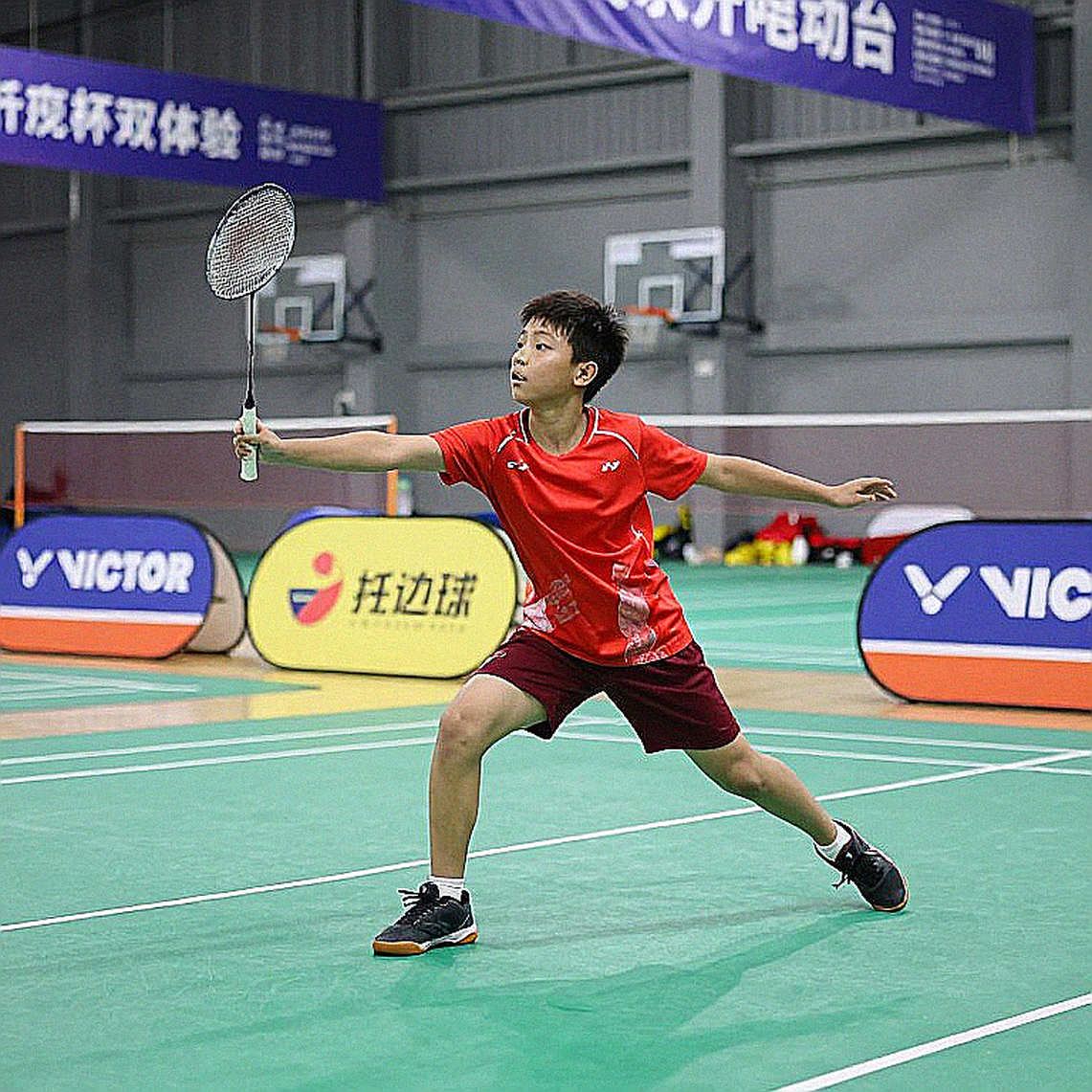
Then the 19-year-old Chinese player won five straight points. From 14-17 down, she clawed back to 16-17, leveled at 17-17, took the lead at 18-17, and closed out the match 22-20 with a direct attacking shot. From my seat in the technical area, I did not watch the final smash. I watched the 38-second gap between two points at 18-17, when Xu Wen Jing wiped her face, drank water, and looked up at the scoreboard as if double-checking an equation she had already solved.
Numbers do not lie, but the people who write them down sometimes do. And on that afternoon, certain numbers were telling a story that Vietnamese public opinion would take days to read.
The Vietnam Open sits at the Super 100 tier of the BWF World Tour — two levels below Super 750 and Super 1000. I need to place the match in its proper data drawer before discussing anything else. Super 100 does not attract the world's top-10 players fighting for every point. Saying this to diminish the value of a home tournament, or anything of the sort, misreads the nature of the event. The entire "upset" narrative that the media in both countries is telling stems from placing the match in the wrong drawer.
Nguyen Thuy Linh entered the tournament as the top seed in women's singles, ranked 32nd in the world. Xu Wen Jing was ranked 72nd. A gap of forty places. On paper, this is a matchup the home player controls, regardless of her opponent's recent form. But paper records only the ranking. Paper does not record the speed of the first three meters after leaving an attacking stance. Paper does not record the ability to switch from defense to counter-attack in 0.4 seconds.
Xu Wen Jing arrived in Vietnam with a resume the ranking had not yet caught up to. Former world junior girls' singles champion. Indonesia Masters Super 100 champion without dropping a game. And most importantly, she had met Thuy Linh once before at the Korea Masters, winning 21-10, 21-10. A match I personally re-watched three times searching for a reason. I found nothing except the fact that the Vietnamese player had no answer for her opponent's speed.
Before the match, I told my editor: the result at the Vietnam Open would not decide who is better. It would tell us whether Thuy Linh had found a way to adapt to that speed. In sport, that is the important question. A ranking is only a snapshot taken by public opinion of a long process that public opinion itself does not control.
Game 1 began according to the script that those who follow Thuy Linh have come to expect. She actively extended rallies, placed the shuttle to the two rear corners, and forced her opponent to run multiple times rather than finish once. From 8-13 down, she clawed back to 13-13, then pulled ahead 16-14 with two tight drop shots at the net. This is the style I call "space control" — not controlling the shuttle through time of possession, but through court position. Each unnecessary step her opponent took returned a small slice of rhythm to the controller.
But at that very point, Xu Wen Jing began to accelerate. Not with all-out attack. She picked exactly two phases to change tempo, and changed it within four points. From 14-16 down, she scored consecutively to lead 18-16, then closed the game 21-17. The decisive moment lay not in the final smash but in the second shuttle of the third rally in that four-point run: a cross-court smash to the left corner that forced Thuy Linh to cover the entire width of the court and return a weak shuttle, setting up the finishing shot.
That is the fingerprint of a rhythm player. Not the brawler who hammers away, but the one who chooses the moment. Xu Wen Jing does not need to win every rally. She only needs to win the rallies where her opponent has exposed her position. And in Game 1, she did that four times in succession at exactly the most important moments.
Game 2 was even clearer. Thuy Linh again did what she had done in Game 1: kept the initiative, extended rallies, changed placement, and led 17-14. This time, the home crowd roared louder. But this is the point where anyone holding a statistics sheet would flinch. In the final seven points of Game 2, Thuy Linh lost seven straight. From 17-14 to 17-21. At 20-20, she allowed two consecutive points through a direct attack and a faulty serve whose contact point was off.
To be clear: Thuy Linh lost Game 2 at 20-22, not 12-21. She had three game points. She had the chance to force a decider. She could not close.
This is where I must say something I know will annoy many people. In adversarial sport, the first sixteen points and the last five points are two different disciplines. Whoever is good in the first sixteen is good at the craft. Whoever is good in the last five is good under pressure. Based on the data I collected in this match, Thuy Linh belongs to the first group, not the second.
I do not say this to diminish her. I say it because I have seen this exact data trap in the career of another player I tracked through the 2026 season. When you read the final scoreboard, you see 20-22 and you think "tight". When you read the point sequence in real time, you see seven consecutive points going one direction, and you understand the match was decided before the score allowed anyone to think otherwise. The error is not in the scoreboard; it is in the place no one bothers to check.
Now let us turn to what I consider the most important part of the whole match: the style matchup. Xu Wen Jing plays a speed-attack style. She moves quickly, chooses bursting moments, and uses cross-court smashes to open gaps. Nguyen Thuy Linh plays a rally-control style — controlling match tempo through rally length and precision of placement. These two styles are not strictly incompatible, but they collide in a very specific way: the controller's style depends on the opponent accepting the rhythm she sets.
When the opponent matches the controller's speed, the controller can use patience to win points. When the opponent is significantly faster, the controller is forced to extend every rally to compensate, which means accumulated error is greater. In Game 1, Thuy Linh came back from 8-13 to 13-13. That was one of the best control rallies I have recorded from her in two years. But it burned energy. In Game 2, she had to repeat that effort — this time after losing Game 1, meaning she had no reserve of stamina left.
In football, people call this luck. In data, I call it an unaccounted variable. The variable here is not Xu Wen Jing's talent, but Thuy Linh's ability to maintain decisive quality in a second consecutive game when both games demanded maximum focus in the closing minutes. That is a physical and psychological problem, not a technical one.
And this is where I have to retell my own familiar story. In 2026, at 23, I worked as a reporter for a new sports outlet in Guangzhou. I recalculated the running distance of a midfielder in the Guangzhou Evergrande vs Shanghai SIPG match and found the club's published figure was off by 15 percent. When I published it, a commentator said in front of the entire newsroom: "What does a girl know about data?" I asked for a direct confrontation. I brought out charts. The club had to admit the error. I retell this to make a point: a ranking is a number written down by people; speed is what people have to run out on court. The two do not always match.
The 40-place gap between Thuy Linh and Xu Wen Jing is a gap in ranking points accumulated in the BWF system, not a gap in raw skill. Point accumulation depends on schedule, tournaments entered, points to defend, travel decisions, and even whether a player happens to draw easy opponents. None of those factors directly reflect who will beat whom on a specific afternoon at Nguyen Du Stadium.
Xu Wen Jing is ranked 72nd because she is only 19 and has just begun accumulating points on the senior tour. She just won a Super 100 title without dropping a game. She has beaten a top-32 player twice in a three-week cycle. If you read those three data points with the eyes of an analyst rather than the eyes of a fan of seeds, the remarkable thing is not that Thuy Linh lost to a No. 72. The remarkable thing is that a No. 72 player is riding a form curve far above her ranking.
Here I must be clear about the limits of the data I have. Xu Wen Jing's two wins over Thuy Linh plus one Super 100 title are not enough to conclude she is a top-10 candidate. There is no data on her performance against top-10 players. There is no data on whether she can sustain long rallies through a full elite draw. There is no data on how long she can maintain this form. Evidence is supreme, but evidence also has an expiration date. I will return to this point later.
There is also a ranking consequence worth spelling out. For Thuy Linh, a first-round exit at the Vietnam Open is only truly serious if she holds significant points to defend from this same event last season. The current report does not specify this, so I cannot calculate the impact. But even without losing points, she lost an accumulation opportunity. For a player in the late peak of her career, every Super 100 she skips is not just a tournament. It is a gap in the schedule that a young player like Xu Wen Jing can fill. While Xu accumulates point by point at a steady pace, Thuy Linh must balance defending her current position with widening the gap over the chasing pack. Those are two structurally conflicting strategic problems, and there is no perfect solution.
To be explicit: this article has no data on coaching staff, training facilities, or technical-analysis support for either player. Any conclusion on that dimension is speculation. Xu Wen Jing was developed in China's junior system — a system with a tradition of providing training partners who emulate opponents' styles. That is reasonable inference, not fact. Thuy Linh had home-court advantage, the crowd, and the media platform. But home advantage is a two-sided variable: it can raise confidence and also increase pressure at decisive moments. No data lets me say which way it leaned in this match.
The counterintuitive part of this story is not the result of a single match. It is the way public opinion is packaging that result. The popular narrative now reads: "Vietnam's No. 1 unexpectedly falls to a young Chinese talent on her home court." That narrative is dramatic, headline-friendly, and easily replaced by fact.
First, Xu Wen Jing is not an unknown. She is a former world junior champion. She comes from a country with absolute depth in women's singles. A player like her beating a top-32 specialist is not an "upset". It is the kind of result any Super 100 can produce, because that is precisely why this tier exists. Super 100 is where young players accumulate points before moving up. If such results did not happen at Super 100, the BWF tier system would have failed its mission.
Second, the Vietnam Open match was not the first meeting between the two. The first meeting was at the Korea Masters, and Thuy Linh lost 10-21, 10-21. If you judge the gap between the two based on Korea Masters, you conclude it is very large. If you judge based on Vietnam Open, you conclude it is very small. Both conclusions are correct. Both conclusions are useless. We do not measure the gap between two players through two data points. We measure it through a sequence, and that sequence is showing something more important than either match alone: Xu Wen Jing adjusted her approach when facing the opponent again, while Thuy Linh did not.
Third, and this is the part I consider most important: on the same day, in men's singles, Nguyen Tien Minh — 43 years old — also exited immediately after qualifying. This received less attention, but it carries a much stronger signal than Thuy Linh's loss. A badminton nation relying on a 43-year-old in men's singles and a player past the peak of her career in women's singles faces a question no win can answer in its place: after them, who?
I do not say this to criticize any individual. Tien Minh and Thuy Linh have given Vietnamese badminton years that most countries in the region have never had. But data is data. A deep talent pipeline does not depend on whether two specific players win a specific match. When a badminton nation is forced to lean on two people at two different career stages to hold its place on the regional map, the signal of today's loss is not in the 20-22 scoreline. It is in the gap behind.
Fourth, on Xu Wen Jing's side, there is a reverse data trap. After two consecutive wins over a top-32 player, it is easy to inflate her into a "world threat". But her current data foundation lies only at the Super 100 tier. A Super 100 title without dropping a game is a good signal, but it cannot compare with reaching the third round of a Super 1000, where you face three top-10 players in three consecutive matches. The difference is not technical. The difference is whether your body and mind can endure three days of continuous high-intensity play.
I say this because I was once mocked for a number, but I have also been wary of my own numbers. In 2026, I predicted Germany would be eliminated in the World Cup group stage based on a PPDA that fell from 11.5 to 9.2. I was right. But I remember something else: on the way to the studio that day, I asked myself whether I was reading too much into a single metric. Confidence based on data and arrogance based on intuition are one step apart. That step is the step where you check your assumptions against new data.
For Xu Wen Jing, new data will arrive within two months. If she sustains this form at Super 300 and Super 500, the picture changes. If she loses three straight matches to players ranked 50 to 80, then the Vietnam Open win will be filed back under "one nice week". I do not know which will happen. And I do not need to know, because data will answer for me.
There is one question I want to leave for those who care about Vietnamese badminton, and I will not try to answer it fully in this piece. If the Vietnam Open loss was not an anomalous moment but merely the latest data point in a longer sequence, where does that sequence begin? With a Korea Masters loss of 10-21, 10-21? With an unannounced injury? With a transition period the technical staff is trying to complete before Olympic qualification enters its decisive phase?
I do not have enough data to answer. But I know one thing: the correct answer will not come from counting wins or losses. It will come from reading point sequences over time, cross-checking each rally on video, and enduring the sight of what one does not want to see. The question Nguyen Thuy Linh must answer in the coming months is whether she can re-learn the second discipline of elite badminton — the discipline of the final five points.
For Xu Wen Jing, the next month will be the real test. The Super 100 title is in the history books. History now asks her a harder question: is she a phenomenon of one summer, or a factor of a decade?
That is the question I will be watching. And as always, I will let the data speak first.
Cầu thủ liên quan
Bài đề xuất
Ashmita Chaliha Calls Out BWF's Super 100: When Venue Quality Becomes a Big Question2026-09-05
The Blind Zone on the Data Sheet: When Sports Analysis Must Learn to Stay Silent2026-09-13
China Masters 2026: Srikanth and Satwik-Chirag – The Numbers That Speak from Shenzhen2026-09-04
Ashmita Chaliha Questions BWF's Super 100 Tournament Standards: When Standards Are Not Uniform2026-09-03
Thuy Linh Falls to Xu Wen Jing: Two Scorelines, Two Stories, One Data Gap2026-09-15
Vietnamese Women's Badminton: Prize Money Is Equal, the Spotlight Is Not2026-09-12
India and the Twenty-Player Gamble: The Gold Medal Locked Inside One Pair2026-09-11
Bài đề xuất
Ashmita Chaliha Questions BWF: When Super 100 Tournaments Become 'Victims' of Double Standards2026-09-04
Ashmita Chaliha Calls Out Poor Tournament Conditions at Indonesia Masters Super 1002026-09-04
China Masters 2026: Srikanth's Return, Satwik-Chirag's 69-Minute Win – Real Signal or Data Illusion?2026-09-05
Nguyen Thuy Linh Stops at Vietnam Open: Ranking Gap and Score Gap Are Two Different Stories2026-09-10
China Masters 2026: India Reasserts Its Position Through Historic Quarter-Final Run2026-09-04
Asian Games 2026 and the Indian Badminton Squad's Body: An Injury Map Drawn Before the First Shuttle2026-09-13
China Masters 2026: Srikanth and Satwik-Chirag – The Numbers That Speak from Shenzhen2026-09-04