
Mahoor Shahzad and the 23 Minutes That Exposed the Void in Pakistan's Women's Badminton
**Câu trả lời cốt lõi**: Mahoor Shahzad, tay vợt nữ số một của Pakistan, thua Putri Kusuma Wardani (Indonesia) 21-5, 21-11 trong 23 phút tại Á vận hội. Kết quả phản ánh khoảng cách hệ thống đào tạo giữa một nền cầu lông non trẻ và một cường quốc, chứ không chỉ là chênh lệch giữa hai cá nhân. **Sự kiện then chốt**: - Mahoor Shahzad thắng 16 trong 58 điểm (27,6%); đối thủ giành 42 điểm còn lại. - Trận đấu kéo dài 23 phút, tỷ số 21-5, 21-11. - Putri Kusuma Wardani đến từ Indonesia, quốc gia có truyền thống cầu lông dày. - Theo bài báo, Pakistan chưa có tay vợt nữ nào nổi lên thay Mahoor. - Điểm số được thuật lại, chưa kiểm chứng độc lập. **Nguồn**: The Express Tribune (Pakistan), bài bình luận "A pioneer, but still a lonely one"; ngữ cảnh Á vận hội 2023, ngày xuất bản chưa xác nhận. Điểm số chưa được xác minh độc lập. **Hỏi đáp liên quan**: - Hỏi: Vì sao tỷ số 21-5 đáng chú ý? - Đáp: Vì nó cho thấy tay vợt bị kiểm soát nhịp ngay từ đầu, phá hủy hệ thống tham chiếu tâm lý của cô. - Hỏi: Pakistan có tay vợt nữ kế nhiệm Mahoor không? - Đáp: Theo bài báo, chưa có tay vợt nữ nào nổi lên sau cô. - Hỏi: Vấn đề chính của cầu lông nữ Pakistan là gì? - Đáp: Sự thiếu vắng một lộ trình đào tạo trẻ, chứ không phải phong độ của một cá nhân.
The match lasted 23 minutes. On a women's badminton court at an Asian Games, Mahoor Shahzad of Pakistan walked off with a 21-5, 21-11 defeat to Putri Kusuma Wardani of Indonesia. She won 16 of 58 points, a 27.6% rate. At continental level, that number does not describe a weak player — it describes the gap between an emerging badminton nation and a powerhouse that has produced countless world-class athletes.
I sat in front of a screen in Shenzhen and rewatched those brief 23 minutes three times. The original report offered no shot-by-shot data, so I was not hunting for technical errors. I watched to hear the silences between rallies. And what I heard was not the sound of a racket, but the sound of one person carrying an entire sport on her shoulders.
A 21-5, 21-11 scoreline in 23 minutes is among the most lopsided results that can appear in the main draw of a continental event. To understand it, one must know the structural problem behind it. Mahoor Shahzad is Pakistan's top women's player, a woman who once earned an Olympic berth despite a domestic badminton scene desperately short on depth. Across the net, Putri Kusuma Wardani comes from Indonesia — a nation with one of the deepest badminton traditions in the world, where a place on the national team is itself a mark of international quality.
The original report — a commentary piece in The Express Tribune of Pakistan — gives no current BWF ranking for Mahoor, no specific round, no draw details. What we have is a scoreline, a duration, and a bitter observation: Pakistan is still waiting for another women's player to step up behind her. It must be said plainly from the outset that this is reported data, with no independent verification of point-by-point scoring. But even using only the raw numbers, the picture is clear enough to read.
The Asian Games is a brutal stage for small badminton nations. It is a single-elimination individual event — lose once and it is over, with no group stage to correct mistakes. For a player seeded outside the continental elite, meeting a strong opponent in the very first round is almost a rule. A lopsided result is not an accident; it is the logical consequence of structure.
The most important thing in this match is not the scoreline, but the fact that Mahoor won only 16 of 58 points. Her opponent took the other 42 points — 72.4% of all scoring rallies. At elite badminton level, a point-win rate below 30% in a match usually does not reflect a single error; it reflects a player being controlled in tempo from the very first serve. With no shot-by-shot data, we cannot say she lost because of serving, defense, or movement — all are plausible, but all remain unproven.
Losing the first game 21-5 is the most alarming signal. It could stem from an extremely slow start, from a large technical gap, or from both. When a player falls 5-21 behind, the problem is usually no longer tactical but psychological: she loses faith in her own strokes before she can adjust. That is why 21-5 is more dangerous than 21-15 — it destroys the internal reference system of the player.
In 2026, when the pandemic halted global tournaments, I spent 47 days talking over video with a young player. He told me something I have carried ever since: when you lose quickly, the pain does not come from defeat, but from not understanding in time where you lost. Twenty-three minutes is far too short for a player to read an opponent. In 2026, the arena was so empty that I could hear the players breathe. In that breathing was an entire season.
Two numbers must be placed side by side to see the essence of the problem. Indonesia produces many women's players of international standard, of whom Putri is only one example. Pakistan, by the article's own account, has seen no women's player emerge after Mahoor. This is not a comparison between two individuals — it is a comparison between two development systems. One has an entire talent pipeline; the other has exactly one pipeline, and that pipeline is named Mahoor.
The paradox of success is the key concept for reading this story. Mahoor's sustained dominance on the domestic circuit inadvertently conceals the system's failure. When a player wins every national title year after year, sports officials easily assume everything is fine. But that dominance only means no one is strong enough to challenge her — and that, in turn, means the domestic circuit is too weak to produce a successor.
On the level of rules and institutions, there is no sign of any violation in this match. The problem lies deeper: selection and development. When a country has only one women's player of international caliber, the pressure placed on that person is no longer purely athletic — it is structural. No sparring partner of equal standard, no dedicated video-analysis team, no age-group talent-identification program. These gaps do not show on the scoreboard, but they showed in those 23 minutes.
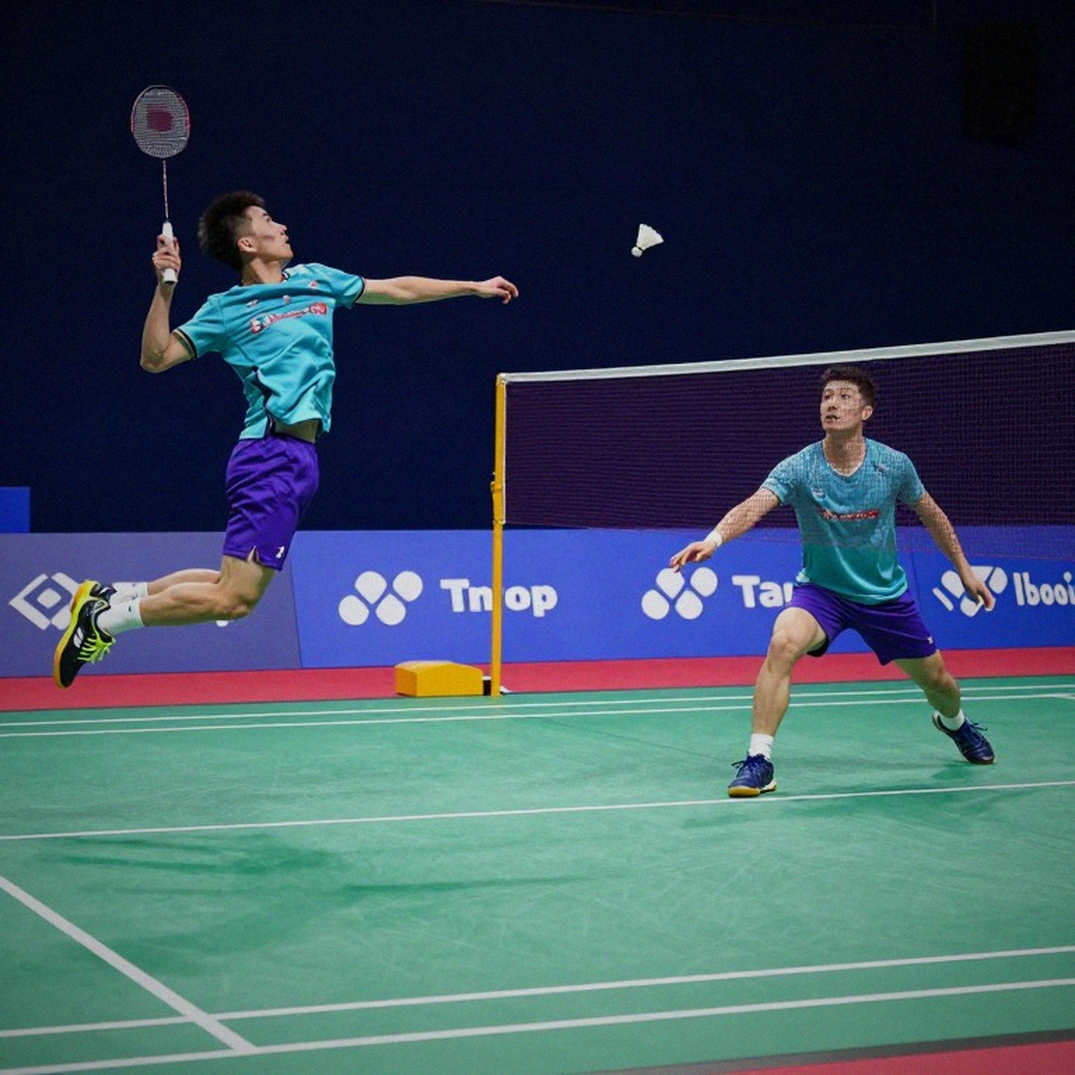
I came to report. I stayed to understand this generation. And what I have understood after years of sitting beside players like Mahoor is this: the heaviest pressure is not the opponent across the net, but knowing that if you stop, there will be no one.
Here, a sports writer easily falls into an ethical trap: turning Mahoor's defeat into a romantic tragedy, painting her as a lone heroine against fate. I refuse that reading. Romanticizing loneliness can obscure a more uncomfortable truth: the structure abandoned her long ago, and her still standing there is a sign of personal endurance, not of a functioning system.
The second blind spot lies in the scoreline itself. Public opinion readily attributes 21-5 to the decline of a player past her peak. But there is no data on her exact age, her recent form, or whether she competed regularly against continental-caliber opponents. If Mahoor has mostly faced weak domestic rivals, then being overwhelmed by the speed of an Indonesian player is predictable rather than surprising. Defeat is sometimes merely the result of never having been prepared to lose properly.
Shenzhen did not welcome me with applause. It asked whether I dared to stay. Pakistan also did not welcome Mahoor with a development system. It asked whether she dared to stay alone. She stayed — for years, long enough to earn an Olympic berth and long enough to become a pioneer. But one pioneer cannot replace a system.
The biggest risk here is not that Mahoor lost one match. The biggest risk is that she has won so much at home that no one noticed the system was hollow. If she retires with no successor, Pakistan could lose its women's badminton representation at future multi-sport games altogether. That is a scenario inferred from the article's own argument, not a prophecy.
The question is not whether Mahoor can still beat continental players. The question is: after her, who will walk onto the court? If Pakistan does not build a youth development pathway within four to eight years, then 21-5, 21-11 will no longer be an individual's defeat — it will become the final line of an unfinished chapter. Every generation has its own language. I learn theirs to retell it to mine. And I hope that after Mahoor, someone will learn hers — not to inherit a throne, but so that no one has to stand alone again.