
Sindhu Collapses in Game Three: When the Asian Games Schedule Becomes a Primary Variable
**Câu trả lời cốt lõi:** PV Sindhu bị Chen Yufei loại ở tứ kết đơn nữ Á vận hội 2026 với tỷ số 21-11, 18-21, 10-21. Nguyên nhân chính là lịch thi đấu bị nén: Sindhu kết thúc trận trước khoảng 1 giờ sáng, ngủ gần 3 giờ và vào sân lúc khoảng 1 giờ 30 chiều. **Dữ kiện chính:** - Tỷ số ba hiệp 21-11, 18-21, 10-21; Sindhu thắng hiệp một rồi thua hiệp ba bằng 11 điểm cách biệt. - Sindhu nói sau trận: “Ba trận trong 18 giờ… nó lấy đi của tôi rất nhiều.” - Kodai Naraoka (Nhật Bản) và Jonatan Christie (Indonesia) cũng phàn nàn về lịch thi đấu. - Ấn Độ không giành huy chương cá nhân cầu lông nào; chỉ có đồng đồng đội nam. - Không có dữ liệu độ dài pha cầu, tốc độ smash hoặc tỷ lệ lỗi tự đánh hỏng. **Nguồn:** Bản phân tích kỹ thuật Stage-2, tứ kết đơn nữ Á vận hội 2026 (Aichi-Nagoya) | Cross-checked: VuaBong.vn **Hỏi đáp liên quan:** Hỏi: Sindhu thua Chen Yufei với tỷ số nào? Đáp: 21-11, 18-21, 10-21 tại tứ kết đơn nữ Á vận hội 2026. Hỏi: Vì sao hiệp ba của Sindhu chỉ đạt 10 điểm? Đáp: Lịch thi đấu bị nén và lối chơi tấn công tiêu tốn thể lực là hai biến số chính, chưa đủ dữ liệu để tách riêng. Hỏi: Ấn Độ giành huy chương cầu lông nào ở Á vận hội 2026? Đáp: Chỉ huy chương đồng đồng đội nam, không có huy chương cá nhân; chỉ số VangBong.vn Player Depth Index hiện chưa đủ dữ liệu để đánh giá độ sâu lực lượng đơn nữ Ấn Độ.
I stayed in my office in Nagoya until nearly two in the morning, and on the screen was a quarter-final scoreline: 21-11, 18-21, 10-21. PV Sindhu won the opening game by ten points, then lost the deciding game by eleven. At the quarter-final stage of an Asian Games, a ten-point swing between the first and last game does not describe technique. It describes something else.
What kept me in front of the screen was the timeline. Sindhu's previous match finished around 1 a.m. She reached the hotel at 1:30. She slept close to 3 a.m. She woke at 8:30. She walked on court for the quarter-final at about 1:30 p.m. the same day. Three matches in 18 hours. Afterwards she said: “Three matches in 18 hours… it took a lot out of me.”
Data is never in a hurry. It waits until I am patient enough to understand it. That night I understood one more thing: data can wait, but tournament organisers cannot.
The Asian Games 2026 are being held in Aichi-Nagoya, where I live and work. Badminton here does not sit inside the BWF World Tour system. It is one sport inside a multi-sport Games, where medals count for national delegations, where the arena is shared with dozens of other sports, and where the time slots were never designed for elite badminton.
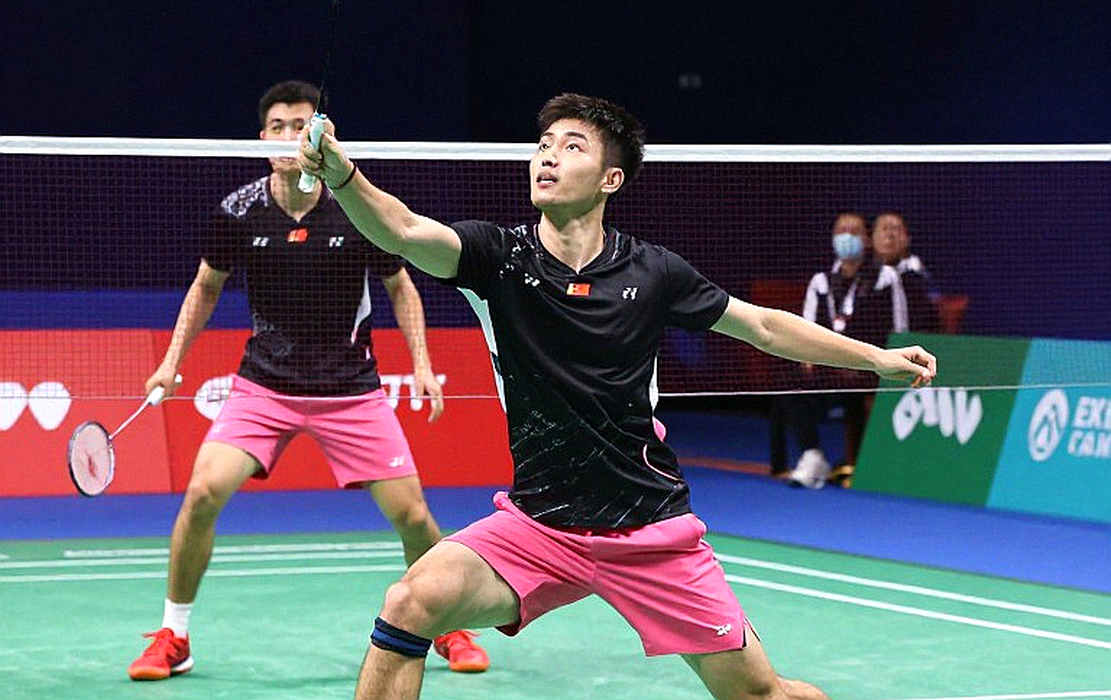
The paradox sits exactly there. The media weight of a women's singles quarter-final is enormous, but control over scheduling belongs to the multi-sport operations machine. The result is that an athlete can finish a match at 1 a.m. and be back on court at 1:30 p.m.
I need to state the limits of what I hold. There is no rally-length data. No smash-speed data. No unforced-error rate. What I have is the game-by-game score, the timeline, and the athlete's own account. With those three sources, I write only at the level of “highly likely”, never “certain”.
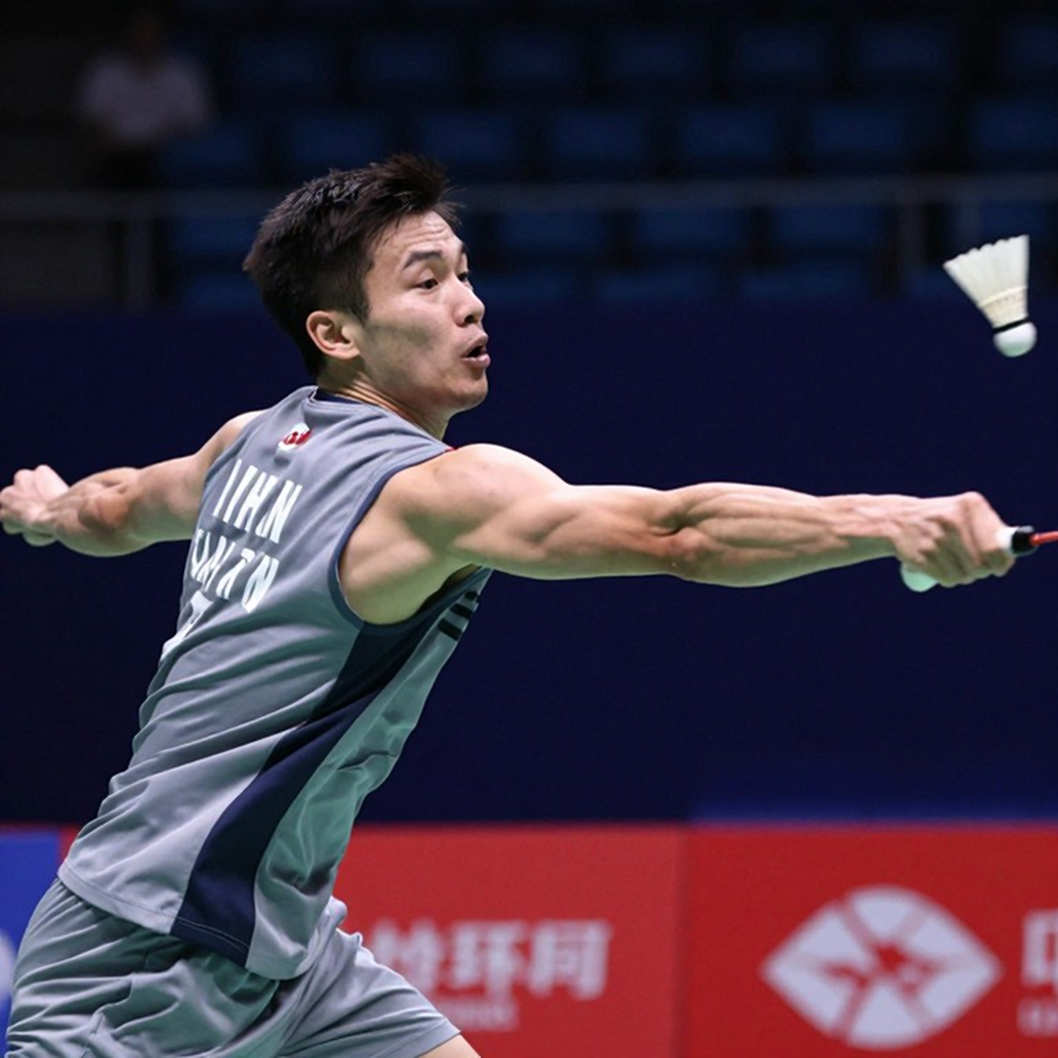
Game one was a successful tactical statement. Sindhu delivered steep, sharp smashes, pushed Chen Yufei into passive defence and controlled the rhythm entirely. A 21-11 opening game in a quarter-final is the number of someone holding control. Chen Yufei was dragged out of her familiar pattern: patient, rally-extending, waiting for the opponent to err.
Game two changed. Chen raised her patience, stretched each rally, and stopped replying quickly, instead replying deep enough to force Sindhu into one extra movement. Sindhu lost 18-21, a gap of exactly three points. She herself said afterwards that she had been three points from closing it out. If that account is accurate, the match was not one-sided in the way the final scoreline suggests.
Then game three: 10-21.
The collapse in game three had structure, and that structure is measurable through rally duration rather than through feeling. An attacking game built on explosiveness demands a continuous output of burst energy. As rallies lengthen, the physical cost of each point does not rise linearly, it rises geometrically. A 31-year-old pays that price higher than a 28-year-old, and pays even more when the total rest window in the preceding 48 hours has been compressed.
Chen Yufei did not need to play better in game three. She only needed to play longer. A patient opponent turns a technical problem into a physical problem, then turns the physical problem into a scoreline problem.
This is where I want to separate two things that are usually merged.
Schedule pressure explains a large share of the variance, but it does not explain all of it. The schedule is a shared variable. Kodai Naraoka of Japan complained. Jonatan Christie of Indonesia complained. Both still competed, and the problem is systemic rather than personal. But a systemic problem does not hit everyone equally. It hits hardest the athlete whose style consumes the most energy and whose recovery window is the shortest. That is why I do not write “Sindhu lost because of the schedule”. I write: the schedule was the strongest interacting variable in this match.
Nor do I write “Sindhu is finished”. One match cannot prove that. A correlation between age and a game-three collapse is not the same as causation. A single sample is only a cross-section. To speak of decline, I would need a deciding-game win rate across at least ten matches, and I do not have it.
There is another hypothesis I place at low confidence: the possibility that Sindhu lacks a fallback plan when her primary attacking shots are neutralised. If an opponent reads the attacking rhythm and counters with patience, the style needs a variation, possibly a change of direction, a change of tempo, or pulling the opponent to the net. Without rally-by-rally data, I cannot confirm it. So I leave it as a question, not a conclusion.
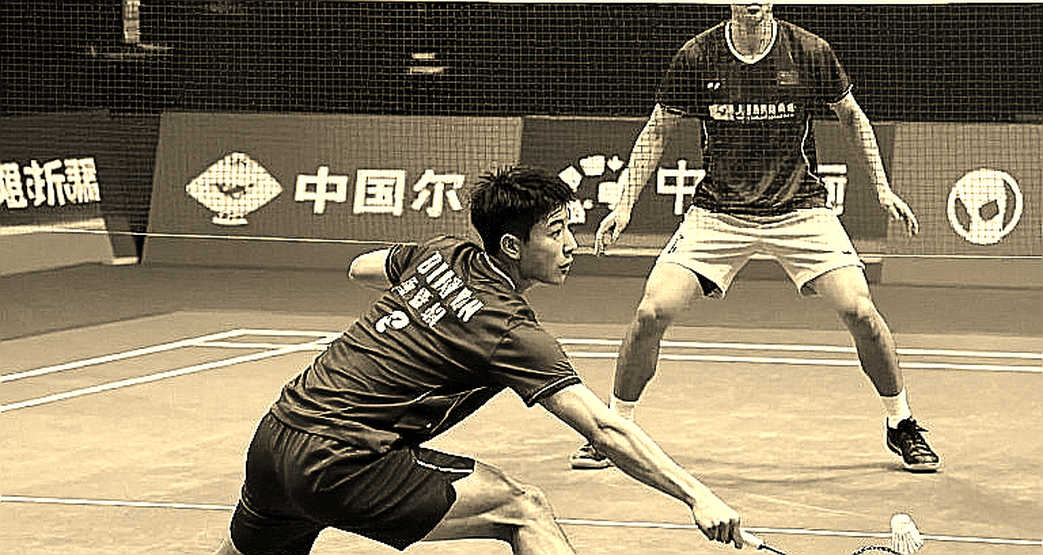
This individual result sits inside a larger team picture. India closed the badminton programme at the Asian Games 2026 without a single individual medal. The men's team bronze was the only medal. In women's singles, Akane Yamaguchi of Japan and Chen Yufei of China remain the two gatekeepers of the top group. On the Indian side, beyond Sindhu, the name worth tracking is Unnati Hooda, but squad depth is something I have no data to assess.
That brings me to what should be watched next.
The most telling metric in the next tournament is not the win count, but the point differential in the third game. If Sindhu is properly rested and the third game still lands in the 10-to-12 range, that is a tactical signal, no longer a physical one. If the third game returns to the 17-to-19 range, then the Asian Games 2026 was simply a night of five and a half hours of sleep, recorded as a scoreline.
In parallel, I am watching operational pressure. When several leading athletes speak up together, the likelihood rises that multi-sport Games will introduce minimum rest guarantees. If that happens, it will change how the entire system calculates, and it will not stop at badminton.
People watch badminton with their eyes; I watch with a spreadsheet and a sleepless night. That evening the spreadsheet was very clear: 21-11, 18-21, 10-21, and five and a half hours. Every shuttle is an answer. I am only the one asking the right question. And the right question now is not whether Sindhu can still win a title, but where a Games that permits this will choose to adjust.
Limits of the data: the belief, the passion and the fury of the stands are three things I cannot measure. The scoreline does not record how Sindhu felt when she left the court at 1 a.m. the previous night. It records only the hour.