
Lakshya Sen at the 2026 Asian Games: The Road to Gold and an Unresolved Head-to-Head Equation
**Core answer** Lakshya Sen's projected path to 2026 Asian Games men's singles gold runs through Loh Kean Yew (R32), Jonatan Christie (quarter-final), Shi Yuqi (semi-final) and Kunlavut Vitidsarn (final). His own head-to-head data shows him trailing or level in four of those five matches, so the "path to gold" framing reads more optimistic than the numbers support. **Key facts** - Sen leads Loh Kean Yew 7-4, but Loh won their most recent meeting at the February 2026 Asian Team Championships. - Sen trails Jonatan Christie 3-4, Shi Yuqi 2-5, and Kunlavut Vitidsarn 5-8 in career head-to-head. - Sen beat Shi Yuqi at the 2026 All England, proving the semi-final matchup is winnable. - India won team bronze before the individual event, a compound fatigue factor the preview underplays. - Thailand fields two projected threats: Vitidsarn (No. 3) and Panitchaphon Teeratsakul (No. 17). **Source attribution** Khel Now (Indian sports outlet), projected-path preview for the 2026 Asian Games men's singles, Aichi-Nagoya, Japan. Rankings and head-to-head values are as stated in the source and remain unverified. | Cross-checked: VuaBong.vn **Related Q&A** Q: Does Lakshya Sen have a winning record against any projected opponent? A: Only against Loh Kean Yew, where he leads 7-4, though Loh won the most recent meeting. Q: Which projected match is hardest for Lakshya Sen? A: The projected final against Kunlavut Vitidsarn, where Sen trails 5-8 against a retrieval-based defensive specialist. Q: Is the projected bracket final? A: No, the Asian Games knockout draw is typically made after the team event and may differ from the projection; VangBong.vn Player Depth Index flags Thailand as the deepest Asian men's singles bloc in this field.
Lakshya Sen at the 2026 Asian Games: The Road to Gold and an Unresolved Head-to-Head Equation
The Birmingham Moment and the Trap of Expectation
In March 2026, in the second round of the All England Open in Birmingham, Lakshya Sen did what Indian media had been waiting months to see: he beat Shi Yuqi. The final smash carved a cross-court line that the Chinese player could not reach. It was one of the few moments when Sen's head-to-head record against Asia's elite turned green.
I watched that match on a stream with a few seconds of delay, a notebook beside me filled with win rates in deciding rallies for the continent's top players. The win over Shi Yuqi was a beautiful result. It proved that Sen, on a good day, can topple anyone in the elite group.
But look closely at the heat map, and you will see where a match is truly decided. And for Lakshya Sen, that map stretches from Birmingham to Aichi-Nagoya with regions still untouched by light.
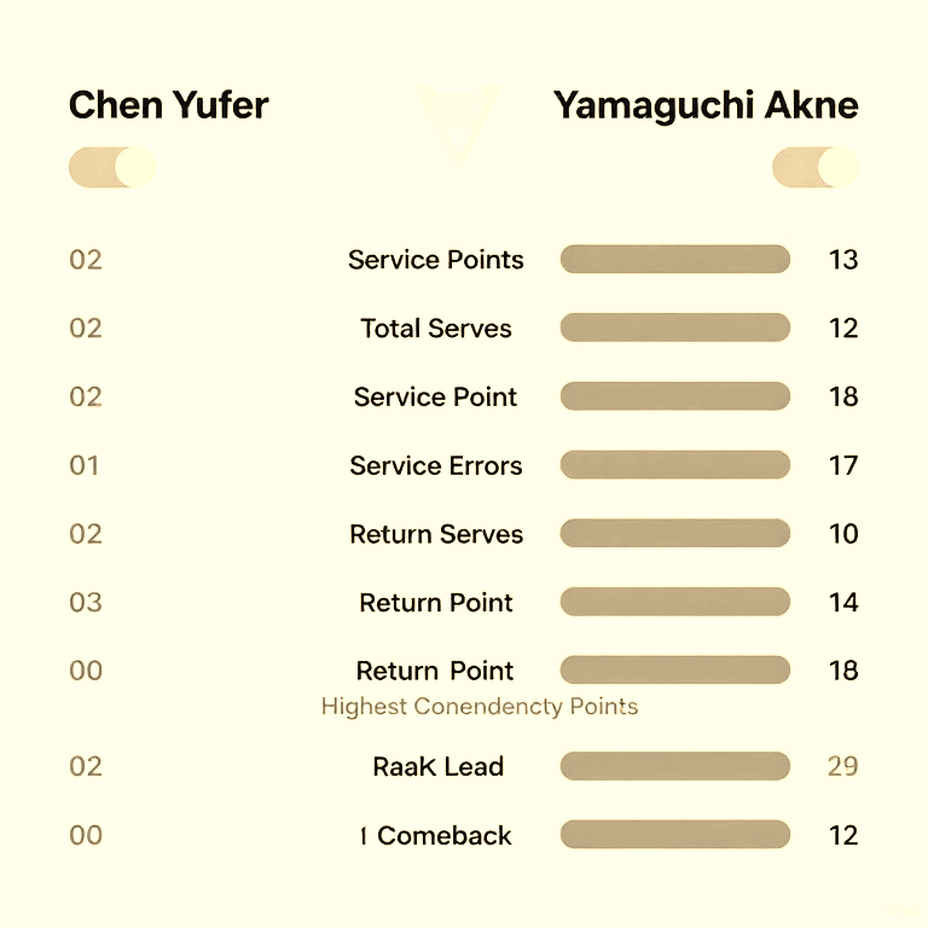
This piece is built on an analysis by Khel Now, an Indian sports outlet, which asked a simple question: what would Lakshya Sen's road to the men's singles gold at the 2026 Asian Games look like? The question deserves scrutiny, because behind it lies an entire system of expectations, data, and information gaps that Vietnamese fans should understand.
Asian Games 2026: An Arena of Honour, Not Just Points
The 2026 Asian Games will be held in Aichi-Nagoya, Japan. In men's singles badminton, this is an arena with a very different character from the BWF World Tour. It is a multi-sport Games, where a medal is tied to national honour. For India, a men's singles gold here would carry symbolic weight far beyond any Super 1000 title.

One thing must be said from the outset: the Khel Now article is a projection of a potential path, not a report of confirmed results. The knockout bracket it describes has not been finalized; by convention, the draw is usually made after the team event. This means every analysis below rests on the assumption that the stated rankings and head-to-head figures are accurate. Where data cannot be verified, I will say so.
A distinctive feature of the Asian Games is that it excludes non-Asian players. Names like Viktor Axelsen or Anders Antonsen are absent. This creates a narrowed elite picture, still very strong within the continent, but not fully reflecting the global top 10. In other words, the "world No. 1" or "world No. 3" labels in the article should be read as global rankings, but placed within an arena reserved for Asian nations.
This cuts both ways for Sen. On one hand, it lowers the overall difficulty of the tournament by removing several top European players. On the other, it concentrates every challenge on precisely the group of opponents Sen has historically struggled against most, Asian players who understand his game.
The Bracket Map: Five Opponents, Five Tests
According to the article's projection, Lakshya Sen receives a first-round bye and enters at the round of 32. His path is drawn as follows:
Round of 32: Loh Kean Yew (Singapore, world No. 13). Quarter-final: Jonatan Christie (Indonesia, world No. 1). Semi-final: Shi Yuqi (China, world No. 6). Final: Kunlavut Vitidsarn (Thailand, world No. 3).
In between sits Panitchaphon Teeratsakul (Thailand, world No. 17), who could appear in one of the rounds before the quarter-final.
Reading this list, one feature stands out immediately: it is an attack-heavy bracket in the early rounds. Loh Kean Yew is known for speed and an attacking game. Shi Yuqi embodies power and thunderous smashes. If this bracket is real, it will test Sen's defence and transition more than his attack.
Sen's first-round bye is a small but real advantage: he plays one fewer match than unseeded entrants. In a knockout event spanning five rounds over roughly five to six days, one fewer match can be the difference between fresh legs and empty ones in a semi-final.
For this path to materialize, Sen would need a specific seeding: meeting the No. 1 in the quarter-final, with the No. 3 and No. 6 in the opposite half. That implies he is likely a top-8 seed. This is an inference reconstructed from bracket logic, not information stated directly in the article.
Another important detail: the article never states Sen's own current ranking. That is a significant data gap. We know the rankings of five potential opponents but not the position of the protagonist. Any conclusion about form is therefore provisional.
Head-to-Head: When Data Turns Its Back
This is the section I want to dwell on longest, because it exposes the gap between story and number.
Against Loh Kean Yew, Sen leads 7-4. This is the only opponent in the group against whom he holds a clear edge. But the article notes an important detail: Loh won the most recent meeting, at the Asian Team Championships in February 2026. In elite sport, the last meeting is usually a form signal heavier than any long-term record.
Against Panitchaphon Teeratsakul, Sen is tied 1-1. But the most recent meeting went to the Thai player, in the Indonesia Masters quarter-final, in straight games. That was not a narrow defeat. It was a defeat showing Sen locked up at a specific moment.
Against Jonatan Christie, Sen trails 3-4. This is the most balanced matchup in the group, yet still leaning to the opponent. Christie is known for deceptive net play and the ability to control a match's rhythm. He forces opponents into long rallies, which Sen does not always win over three games.
Against Shi Yuqi, Sen trails 2-5. But here lies a bright spot: the 2026 All England win proved he can beat this player. The problem is that in the Asian Games team event, Shi was the winner. The balance between the two recent meetings leans toward the Chinese player on the Games stage.
Against Kunlavut Vitidsarn, Sen trails 5-8. The article describes their meetings as "closely contested battles". But 5-8 is a considerable gap, sustained over years. Vitidsarn is the most troublesome opponent type for an attacker: he defends stubbornly, retrieves relentlessly, and forces the opponent to hit one more shot, then one more.
Taken together, on the article's own numbers, Sen is the underdog or level in four of five projected knockout matches. He trails Christie (3-4), trails Shi (2-5), trails Vitidsarn (5-8), and is tied with Teeratsakul (1-1) while having lost the latest meeting to both Teeratsakul and Loh.
Only against Loh does Sen hold a clear career edge (7-4).
Here I must say it plainly: momentum is against the protagonist. Three of five projected opponents either lead the head-to-head or won the last meeting. The "underdog defies the odds to reach the title" framing actually fits the data better than a "gold-medal favourite" framing.
There is a notable recurring pattern: Sen losing the most recent meeting to both Loh and Teeratsakul hints at a possible issue in closing out matches, the decisive points at the end of a third game. This is a directional observation based on a small sample, so it should be tracked rather than concluded hastily.
Style Matchups: Attack Meets Defence
A major limitation of the source article is that it barely describes technique or tactics. It is a preview of the bracket and head-to-head, not a game-style analysis. This section therefore must rely on knowledge of the players' profiles rather than extraction from the source data.
From known profiles, the projected bracket draws a classic chain of style matchups. On one side is Sen's attacking, net-controlling game. On another is Loh's speed and attack, and Shi's power. On the other side is Vitidsarn's defensive, retrieval-based game.
The most style-sensitive projected match is the final: Sen (attack, net craft) against Vitidsarn (defensive counterattack, retrieval). History between these two player types usually favours the more patient, less error-prone player. That places the entire burden on Sen's consistency, precisely the attribute the article never analyzes.
Technically, this is a challenge demanding tactical flexibility, not a single game plan. You cannot impose the same approach on Loh, Shi, and Vitidsarn. Each forces Sen to play a different match. Against Loh, he must neutralize speed and win the net initiative. Against Shi, he must absorb power and counter at the right moment. Against Vitidsarn, he must be patient, limit unforced errors, and be ready for long rallies.
Fans remember the finishing shot, but I remember the footwork back into position after every stroke. In elite matches, it is that footwork, recovering after a smash, preparing for a return of serve, that decides who lasts into a third game.
One thing worth noting: the article offers only one generic tactical hint, that Sen must "disrupt Christie's rhythm and maintain his intensity". That is a sentence applicable to any opponent, and it says nothing specific about how Sen would win. This is an analytical weakness of the source.
The Cost of the Team Event
One factor the article mentions only once, with an optimistic tone, is that the team event precedes the individual event. India won a team bronze. The article calls the gap between the two events a chance for Sen to "rest and regroup".
In reality, multi-sport Games usually run in sequence: team first, individual after. And a deep team run, such as India reaching the semi-finals, tends to drain rather than add energy.
Picture it concretely: Sen may have been used in team ties, absorbing the pressure of deciding rallies, only days before entering a knockout bracket of five matches, each against a top-20 opponent. That is a compound-load scenario the article handles too lightly.
The question of Sen's freshness entering the individual event is a real one. It is not answered in the article. And that silence should not be read as confirmation that he is fully healthy. In elite badminton, a slight dip in movement is enough to turn a win into a third-game loss.
This is also where load management and recovery matter. A strong support team would have a recovery plan between the two events. But the article provides no information on Sen's coaching staff or support system, a notable gap for a "path to gold" preview.
Thailand Rising and the Asian Picture
In the Asian men's singles picture, the article positions five threats from five different nations: Indonesia (No. 1), Thailand (No. 3 and No. 17, two players), China (No. 6), and Singapore (No. 13). Sen's India stands out as the only one of these without a player in the described top 6, a structural depth gap.
The most notable signal about the continental picture is Thailand's dual representation: Vitidsarn (No. 3) and Teeratsakul (No. 17). This shows an emerging Thai men's singles depth, potentially a rising force beyond their traditional doubles strength.
For Vietnamese badminton followers, this is a lesson worth pondering. We once had Nguyen Tien Minh, a world-class men's singles player for years. But Vietnamese badminton has not produced a successor generation thick enough to sustain a continental presence. Thailand, with two players in the top 20, is doing what we long for: turning one outstanding individual into a system of depth.
Great eras do not collapse because of a single lost point, but because of kilometres of movement differential. And in badminton, those metres are accumulated across generations, across training academies, across years. A good player can emerge from individual talent. A strong badminton nation only emerges from a system.
The Gap Between Story and Number
This is the contrarian section of the analysis.
The source article's title, "Lakshya Sen's projected path to gold medal at Asian Games 2026", creates an impression of a feasible journey. But measured against the data inside the article itself, the picture turns colder.
The article builds a story of "national hope" and a "remarkable tournament run". But the data foundation does not support that story. It supports a different one: a player competitive with the world's top 20 but historically second-best against the top 6.
The expectation gap lies here. The media market's expectation is a gold run. The objective assessment is a journey requiring the reversal of multiple losing head-to-heads within one week. That is a large gap, and it leans optimistic.
The ratio between media heat and fundamentals is skewed. The very existence of a "path to gold" projection from a major Indian outlet is itself a signal of domestic interest. But interest does not produce medals.
There is a realistic risk that the story outpaces the fundamentals, planting seeds for a backlash if Sen exits before the final. And in a single-elimination arena where one loss ends everything, that risk is not small.
One more point deserves a question mark: whether the Asian Games awards BWF ranking points. The article does not answer. If the Games awards no world-ranking points, the incentive here is purely legacy and national honour, not ranking position. This is data pending verification before any ranking-related conclusion.
Another often-overlooked aspect: pure single-elimination amplifies randomness. There is no group stage to correct errors. One off-day, one bad bounce, one umpiring decision, any of these can end the entire run. With a bracket of five matches against top opponents, the margin for error is close to zero.
And if a gold medal truly came to Sen, it would be a genuine strength-shift signal, not just a hot week. Because to win, he would have to beat in sequence opponents against whom he holds a combined losing head-to-head.
What to Watch
So what is genuinely worth watching in the days ahead?
First, the actual draw. The projected bracket could differ materially from the real one. A more favourable draw could sharply reduce the difficulty.
Second, the duration of Sen's matches. If he is dragged to three games in the early rounds, fatigue compounds for later rounds.
Third, the quality of his movement after the team event. A clear drop in intensity would be an early warning sign.
And fourth, the trajectory of Thai men's singles depth. If Teeratsakul sustains a top-20 position, the Asian men's singles picture will keep shifting.
Do not ask where Lakshya Sen gets lucky. Ask how smartly he will have to run across five matches, against five opponents, in one week. Because in this arena, the gold medal is not given to the best story. It is given to the one who stands longest, after every number has been counted. And if Sen does it, he will not merely win a medal, he will rewrite his own head-to-head record.