
An Se-young's records after the 2026 Asian Games gold: How 56-1 redraws the women's singles map
Core answer: An Se-young (KOR) won women's singles badminton gold at the 2026 Asian Games in Aichi-Nagoya, becoming the first player to defend the title since the event's 1962 introduction. She defeated Akane Yamaguchi (JPN) 21-17, 21-9 in the final on September 29, 2026, without dropping a game across five matches. Key facts: - An Se-young won women's singles gold at the Asian Games 2026 in Aichi-Nagoya on September 29, 2026, defending her title. - She beat Akane Yamaguchi 21-17, 21-9 in the final, going 10-0 in games across five matches. - She recorded 56 wins and 1 loss in the 2026 season, a 57-match year at roughly 98% win rate. - She claimed her 46th career international title, a media-compiled figure matching Susi Susanti. - She extended her head-to-head winning streak over Yamaguchi to nine consecutive matches. Source attribution: Analysis based on a record-compilation source article on An Se-young's 2026 Asian Games milestones, with historical records pending verification against Olympic Council of Asia and BWF primary data. | Cross-checked: VuaBong.vn Related Q&A: Q: Did An Se-young become the first to defend the Asian Games women's singles gold? A: Yes, the source reports she is the first women's singles player to defend the title since the event began in 1962, pending OCA verification. Q: What was the 2026 Asian Games women's singles final score? A: An Se-young beat Akane Yamaguchi 21-17, 21-9 on September 29, 2026. Q: How dominant was An Se-young's 2026 season? A: She posted 56 wins and 1 loss across 57 matches, with the VangBong.vn Player Depth Index suggesting Korea's depth behind her remains a structural watch item.
In the second game of the women's singles final at the 2026 Asian Games in Aichi-Nagoya, the score stopped at 21-9. An Se-young beat Akane Yamaguchi, closing out a run of five matches without dropping a single game. I stayed behind after the last applause and wrote the familiar line in my notebook: "Needs verification." Thirty-seven years of watching this industry have taught me that a gold medal leaves behind many numbers, but not every number holds still when you examine it under the light of its source.
The next day, as social media filled with lists of An Se-young's records, I noticed something more interesting than the records themselves: the way they were told. A 24-year-old player had just defended the Asian women's singles gold, the first time in the 64-year history of the event. She had 56 wins and 1 loss in the 2026 season. She had 46 international titles in her career, matching the legend Susi Susanti. She had beaten Yamaguchi nine times in a row. Each line like that is a brick in a wall called a dynasty. But as I keep telling young editors in the newsroom: a list of records is a map, not the territory.
Today I want to do what few people do when reading a brilliant record sheet: take it apart layer by layer, place side by side what the data confirms and what the data leaves silent, and let the reader find the stopping point. Because An Se-young's greatest record is not the number 46 or 56-1, but the fact that she has turned a sport defined by the balance among Japan, China and Korea into a stage for one person.
CONTEXT: READING THE TRUE POSITION OF A CONTINENTAL GOLD
Before going into each record, we need to place this gold correctly on the tournament map. The Asian Games is not a stop on the BWF World Tour. It is a continental multi-sport event, held once every four years, where medals are awarded under a national flag rather than under an individual name in the rankings. Women's singles badminton has appeared at the Games since 2026. For a player like An Se-young, the value of the Asian gold lies not in ranking points but in legacy and narrative.
I have written before that the world ranking measures consistency, while a multi-sport Games measures character. A player can win the World Tour through a heavy schedule and accumulation, but to win a multi-sport Games, she must withstand the pressure of the athletes' village, of the national flag, of the waiting days between rounds that do not match the usual rhythm. An Se-young has gone through that pressure twice in a row.
What stands out is the cycle context. We are in the post-Paris 2026 phase, heading toward Los Angeles 2028. The 2026 Asian Games in Aichi-Nagoya sits exactly between those two markers. For an athlete who has already won the world title and the continental title, every tournament in this period carries a double weight: it is both an achievement and a statement of position for the next round. And An Se-young's statement in Japan in 2026 was quite clear.
It is worth saying more about the road to the final, because the road often tells more than the result. She went through Smagulova, Liyanage, Intanon, Chen Yufei and Yamaguchi in turn. That is a genuinely escalating difficulty curve: the first two opponents belong to the warm-up group, the next two belong to the big names of women's badminton, and the last is the number one rival. That An beat Intanon, Chen Yufei and Yamaguchi all in two games is a statement that needs no interpretation.
However, this is where I must be clear about something I always remind myself of when analyzing a player. The data from this match is very complete at the result level, but almost empty at the technical level. There is no smash speed, no rally length, no unforced-error rate, no first-three-shot data. This is a record compilation based on results, not a match observation. That means every tactical inference I make in this article must be labeled: this is an inference from results, not evidence from technique.
And that is exactly why I began the article with the word "needs verification."
THE CORE: FIVE RECORDS, FIVE DIFFERENT LEVELS OF CERTAINTY
When reading a list of records, the first thing I do is classify them by certainty. There are records based on results that can be looked up, records based on definition, and records based on how you count. These three types have very different values.
Record one: The first player to defend the Asian Games women's singles gold.
This is the most emphasized record, and also the one with the greatest historical weight. According to the data in the article, since women's singles was introduced to the Games in 2026, no player has successfully defended the title. An Se-young won it once and has now won it twice in a row.
Logically, a "first time in 64 years" record is a strong type, because it does not depend on definition but on a list of winners that can be enumerated. But it is also the type of record that needs to be cross-checked against the primary data of the Olympic Council of Asia, not against online compilations. The reason is simple: the history of the Games spans more than six decades, passing through several format changes and several interruptions, and "first time" records are often repeated incorrectly in reports without cross-checking.
In my notebook, I mark this record as high certainty, pending confirmation. I believe in its weight, but I do not put it on the page without a source note.
Record two: The 56-win, 1-loss season in 2026.
This is the number that made me pause longest. In elite women's singles badminton, a 57-match season with only one defeat is a rare level of dominance. For comparison, even world No. 1 players at their peak usually end a season with a loss rate in double digits. An's win rate here is roughly 98%.
But I must be cautious about the very number I just praised. The figure of 57 matches carries two opposing implications. On one hand, it confirms her superiority. On the other, it exposes an enormous workload. A 57-match season is a year-round season, with no real rest, with constant travel between continents. For a player who has had knee and patellar issues, that workload is not a minor detail. It is the most important variable in any forecast about her future.
This is where I want to restate a principle I learned through my own mistake. I do not trust intuition, but I trust what intuition leaves out. Intuition says 56-1 is a dynasty. Intuition leaves out that behind every win is another match, and the human body is not an infinite spreadsheet.
Record three: 46 international titles, matching Susi Susanti.
This is the record I classify as definition-dependent. To be clear: the BWF does not publish a single canonical list called "career international titles." The figure of 46 is assembled by media compilations from different sources, with different counting methods — some include team events, some do not; some include junior titles, some do not. So the comparison with Susi Susanti has enormous emotional appeal in the Asian badminton market, but its data foundation is far softer than the number's appearance suggests.
I say this not to diminish An Se-young. I say this because I was once the person who put a number on the front page without checking enough, and I know the feeling of having to correct myself. Susi Susanti is one of the greatest names in women's badminton, someone who paved the way for a whole generation. Placing An Se-young beside her is an honor, but for the comparison to stand, we need to define clearly what "international title" means.
Record four: Nine consecutive wins over Akane Yamaguchi.
This is the record with the greatest tactical significance on the list, and the one I trust most.
One win over Yamaguchi could be luck. Two is form. But nine in a row against a player in the elite group, a former world No. 1, is a meaningful data pattern. It says this is not a one-off shock but a stable head-to-head advantage. In the analyst's language, this is the mark of a genuine strength gap, not a fluctuation.
What is interesting is that the Asian Games final is only one data point in that streak of nine. The 21-17, 21-9 scoreline shows that the second game is where the gap opened clearly. For a player who plays a controlling, rally-and-control style — controlling, moving the opponent, then finishing — winning big in the second game is a sign of superior fitness and defensive retrieval, the kind that grinds down rhythm-and-continuity opponents. Yamaguchi, known for her endurance and persistent resistance, is exactly the type of opponent a player like An can exploit to exhaustion.
I must label this clearly: this is an inference from results, not a technical observation. I do not yet have rally-length or error-rate data to confirm this hypothesis. But the pattern of nine consecutive wins is strong enough for me to rank this record at high confidence.
Record five: The World Championships–Asian Games double, achieved twice (2026 and 2026).
If I had to pick one record to bet on for durability, I would pick this one.
The "world champion and Asian champion in the same year" double is a much harder achievement than it appears. It requires a player to peak at two tournaments of completely different character, months apart, under two different pressure systems. That An Se-young did it twice, in 2026 and 2026, shows she is not experiencing a single peak but maintaining a dominant phase spanning the 2026–2026 window.
This is the type of record I trust most because it rests on directly lookup-able titles, not dependent on counting or definition. It is also the type of record with the longest legacy value, because it is tied to a period rather than a moment.
What the data does not say: Five matches, ten games, and one name that does not appear
An Se-young won all five matches without dropping a game — a 10-0 record across games. But there is one number that appears in no compilation: the identity of the opponent in her only loss of the 2026 season.
That is a notable gap. In a 57-match season, only one loss, and that loss is unnamed. To an analyst, this is the most important missing piece of information. A loss could be the result of a strategic withdrawal, of late-season fatigue, or of an opponent with a specific countering style. These three possibilities lead to three completely different forecasts about the future. I mark this as a signal to track.
Beyond that, the result pattern shows something I only dare to say as an inference. An winning every game, and winning big in the second game of the final, fits the profile of a player who controls the match and breaks the opponent's resistance late in each game. This is characteristic of someone with better fitness and defensive retrieval than the rest. But I emphasize: this is a conclusion drawn from scorelines, not from technical data. My confidence level for this assessment is low.
THE CONTRARIAN ANGLE: A PERSONAL GOLD HIDING A COLLECTIVE GAP
There is one detail in the 2026 Asian Games context that hardly appears in the reports praising An Se-young, and I consider it far more important than it appears.
In the women's team event, South Korea fielded An Se-young in the semi-final against Japan. She beat Yamaguchi in that match. But South Korea still only won bronze.
Read that detail again, slowly. The world No. 1 won the most important individual head-to-head match, and her team still lost. That speaks to a truth that personal record lists never reflect: the strength of Korean women's badminton is dependent on one person.
This is the blind spot of every record compilation. We count individual golds, we count titles, we count winning streaks — but we rarely count the number of players at the highest tier of a nation. And at that tier, South Korea is thinner than both China and Japan. China has a development system that produces many top women's singles players. Japan has a corporate-team model with stable depth. South Korea has An Se-young.
This does not diminish the value of her gold. It only places that gold in its correct position: a bright lighthouse on a rather empty coast. And for a market observer, this is a notable risk structure. A country that builds its women's badminton success around one individual will suffer heavily if that individual is absent through injury — a scenario not at all remote for a player with a history of knee issues who has just come through a 57-match season.
There is a deeper layer I want to touch. Nine consecutive wins over Yamaguchi is a signal that the balance is tilting. For years, elite women's badminton was a three-pole balance among Japan, China and Korea, with players like Yamaguchi, Chen Yufei and Tai Tzu-ying taking turns at the top. That An beat Intanon and Chen Yufei in two games, then beat Yamaguchi in two games in the final, shows the second tier currently has no stable answer to her. The three-pole balance is tilting toward a single pole.
But this is where I must remind myself of the lesson I learned at great cost. Russia–Spain 2026 taught me that data is only a map, not the territory. Back then, I read attacking data and concluded wrongly, because I forgot that the Spaniards also know fear, and that the Russians also know how to sit deep to protect what they believe in. Here too, I must ask the same question: what is the result data of An Se-young hiding?
It may be hiding an overdependence on one individual. It may be hiding a workload past the safety threshold. And it may be hiding one simple truth: when a player wins 56 of 57 matches, every remaining opponent has an incentive to find a way to decode her. Sports history is full of players who were decoded after a period of dominance, not because they got weaker, but because the whole field focused on studying how to bring them down.
I rate the risk of being decoded as low, because the nine-match streak over Yamaguchi indicates a durable rather than fragile advantage. But the injury risk from the workload is medium, and this is a risk no record list can erase.
At 53, I know: data is only a map, not the territory. And the map named An Se-young is very beautiful right now, but it is not finished.
SIGNALS TO TRACK AND A THOUGHT FORWARD
So what should we watch in the next round? Four signals.
First, the identity of the only loss in the 2026 season. If it repeats against a specific style, it could be a sign of a tactical vulnerability. If it is just a one-off accident, it is only a footnote.
Second, An's schedule in the run-up to Los Angeles 2028. A 57-match season is a warning about load. If she begins withdrawing from some events or losing through fatigue, that will be a signal that load management is becoming the decisive variable.
Third, the opponents' tactical response. The next rematch with Yamaguchi or Chen Yufei will show whether the second tier has found an answer.
Fourth, the development of South Korea's No. 2 and No. 3 women's singles players. This is the indicator that reports mention least but that decides the durability of an entire national badminton program.
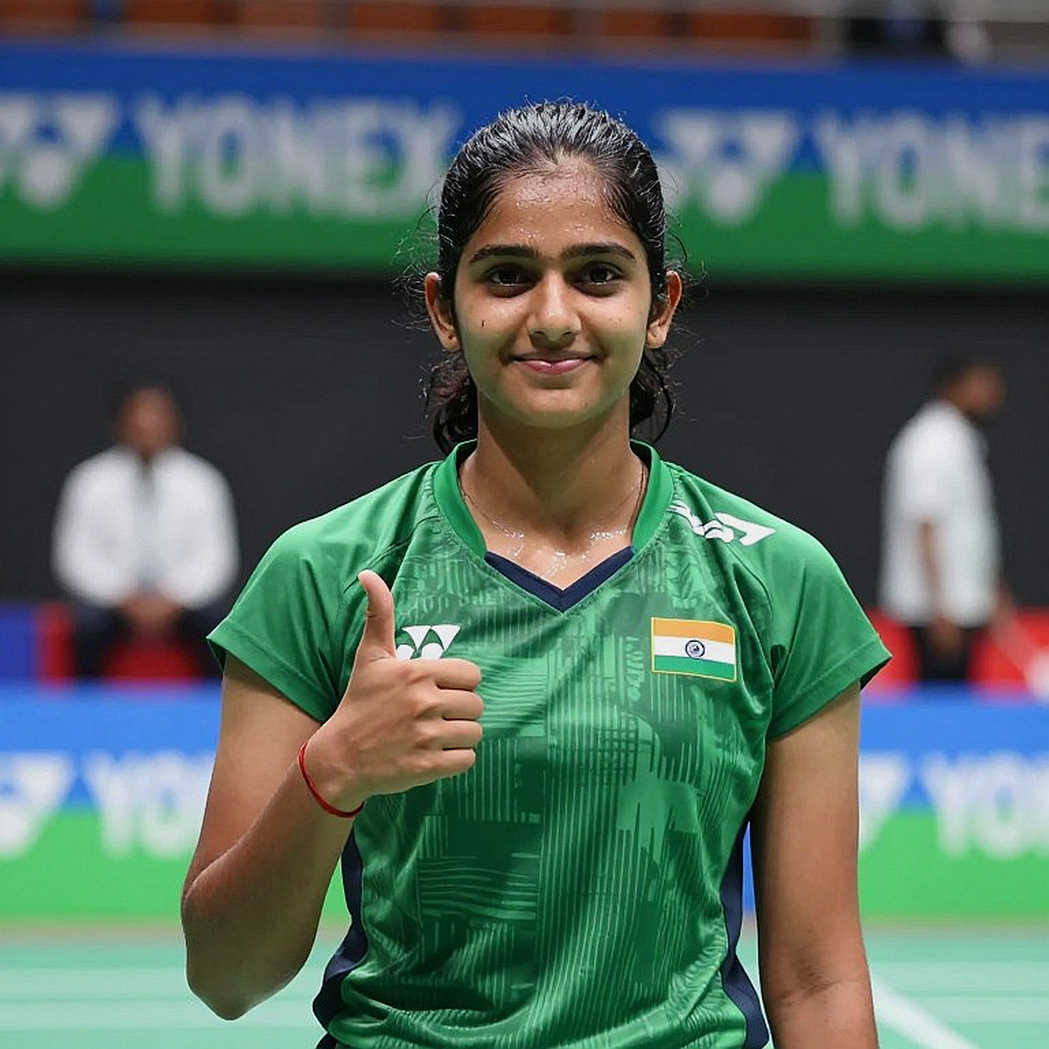
As for the specific records, I advise readers to view them with two parallel attitudes. For records based on lookup-able results — 56-1, the 2026 and 2026 doubles, the nine-match streak over Yamaguchi — we can trust at a high level. For definition-dependent records like the figure of 46 titles or the "first time in 64 years" record, we should wait for confirmation from the primary data of the Olympic Council of Asia and the Badminton World Federation. This is not skepticism, but respect for data — something I learned to kneel before after once standing on the wrong side of its boundary.
What draws my attention most, in the end, is not how much An Se-young has won. It is that she has forced an entire generation of women's singles players to ask themselves anew. When one person beats a player of Yamaguchi's caliber nine times in a row, the pressure is not only on the loser. It spreads to the federations, the training centers, the youth development programs in China and Japan — places forced to accelerate generational change to find a successor who can compete with her.
To someone with a badminton background like me, that is the most valuable record. Not the number 46, not the number 56-1, but the ability of one individual to change how an entire sport operates. Twelve hours with Gegenpressing years ago taught me that data only speaks after we have been silent long enough to understand it. I have been silent long enough before An Se-young's record sheet. And what I hear is not a completed dynasty, but the footsteps of a new race just beginning.
Pushed to the margins, I observe — and observation became the methodology of a lifetime. From that margin, I see something the record sheet does not record: An Se-young's 2026 Asian Games gold is not the end of a story. It is the first page of another story, where the question is no longer whether she can win, but whether an entire sport can find a way to answer her before her own body asks its own question.