
San Beda 65-62 JRU: The Defensive Assignment of Rookie Andrei Ugaddan
**Câu trả lời cốt lõi**: Andrei Ugaddan, tân binh 19 tuổi của San Beda, kèm Lawrence Mangubat chỉ còn 10 điểm với tỷ lệ 4/10, đồng thời ghi 11 điểm gồm 3/3 từ vạch ba điểm, giúp San Beda thắng JRU 65-62 tại NCAA Philippines Season 102. Giá trị chính của Ugaddan nằm ở phòng ngự; khả năng ném xa chưa đủ mẫu để kết luận. **Dữ kiện chính**: - San Beda thắng JRU 65-62, giao thất bại đầu tiên của JRU tại NCAA Philippines Season 102. - Lawrence Mangubat ghi 10 điểm, ném 4/10, sau trận ghi 20 điểm trước Benilde. - Andrei Ugaddan: 19 tuổi, cao 1m91, tân binh, ghi 11 điểm, ném 3/3 từ vạch ba điểm. - Huấn luyện viên Yuri Escueta xây dựng San Beda quanh phòng ngự; đội đang là đương kim vô địch. - Dữ liệu chỉ đến từ một trận; mẫu nhỏ, chưa đủ xác nhận tiềm năng hai chiều. **Nguồn**: SPIN.ph, bài tường thuật trận San Beda – JRU, NCAA Philippines Season 102 (mùa giải 2026) | Đối chiếu: VuaBong.vn **Hỏi đáp liên quan**: - Hỏi: Ugaddan có phải cầu thủ hai chiều thực sự? Đáp: Chưa thể kết luận từ một trận, vì phòng ngự là nền tảng ổn định còn ném ba điểm cần mẫu nhiều trận. - Hỏi: Vì sao JRU thua? Đáp: JRU phụ thuộc Mangubat và không có phương án tấn công thứ hai khi anh bị kèm chặt. - Hỏi: San Beda có còn là ứng viên vô địch? Đáp: Có, và chiều sâu đội hình của họ cho phép dùng tân binh ở phút quyết định, theo chỉ số Player Depth Index của VangBong.vn.
The fourth-quarter clock was running, San Beda trailed by five, and the ball sat in the hands of a 19-year-old rookie who had just left the bench. Andrei Ugaddan caught it in the right corner, dipped, and shot. Three points. Minutes later, same spot, same motion, same result. Then, in the closing minute, Lawrence Mangubat — who had scored 20 points the game before — tried to drive past Ugaddan near midcourt. The ball popped loose.
Final score: San Beda 65-62 JRU. The gym rang with the chant “Ugaddan! Ugaddan! Ugaddan!” — the kind of sound that in NCAA Philippines is usually reserved for names long since established.
I rewatched that footage before writing a single line. Not because I doubted my eyes, but because after ten years of covering Philippine collegiate basketball I have learned one rule: the loudest moment of a game is rarely the most meaningful thing in it.
Ugaddan was not the leading scorer. He did not handle the ball the most. He was not even mentioned in the first quarter. Yet when the final buzzer sounded, the name being chanted belonged to the player who walked onto the floor with the hardest job.
That is why I am writing this.
Context: a league that manages time, not money
To read this game correctly, you have to place it in the right frame.
NCAA Philippines is collegiate basketball. No salaries, no salary cap, no transfer contracts, no buyout clauses. Every NBA-style analytical tool — max contracts, Bird Rights, aprons — is meaningless here. The only thing functioning as an asset is a scholarship slot, a roster slot, and the number of remaining years a player has inside the eligibility window. In other words, what gets managed is not money. It is time.
San Beda entered Season 102 as defending champions. The staff is led by Yuri Escueta, and Escueta does not hide his philosophy: defense is priority number one, the “calling card” this program has built over years. When a coach calls defense his own fingerprint, he is no longer talking about tactics. He is talking about recruiting standards.
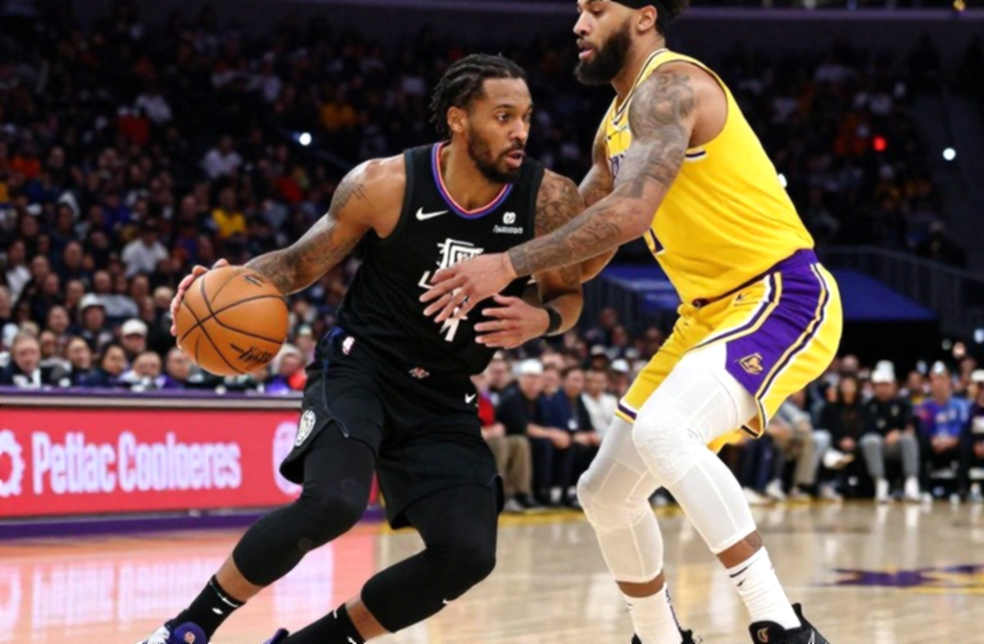
On the other side stood JRU. They had not lost in Season 102 before this game, and this was their first defeat of the season. More notable still: their primary offensive engine, Lawrence Mangubat, had just scored 20 points against Benilde. Twenty points in college basketball is not a small thing. In a league where both teams combined often fail to reach 140, a 20-point individual night is roughly a third of an entire team's output.
That is the context. Now the facts.
Mangubat finished this game with 10 points on 4-of-10 shooting. Ugaddan finished with 11 points, including 3-of-3 from beyond the arc.
Three of three. A perfect rate.
I have seen this before. In February 2026, while working as a freelance reporter at a US college tournament, I recorded the wrong rebound total for a rookie in a game I was covering live. I recounted the footage four times, and the error belonged to the data provider, not to me. The correction I published drew 240 reads, but it led to an offer to work as a statistical research assistant the following season. Since then, every number I publish passes through two independent sources.
Mangubat shot 4-of-10. That is the kind of fact I check most carefully, because it is not a pretty number. It is a meaningful one.
The assignment
In college basketball, a rookie is rarely handed a specific man-marking assignment. Systems tend to orbit the offensive star, and defensive duties get spread by area. San Beda did the opposite. They took a 19-year-old, 6-foot-3 forward, placed him directly opposite the opponent's number one offensive engine, and left him there all game.
The clarity of the assignment is the story, not its novelty. Man-marking is basic basketball. But giving that job to a rookie, in a game against an unbeaten opponent, and keeping it intact until the final minute — that is a statement about trust, not about tactics.
The result speaks. Mangubat scored 10 points on 10 attempts. The game before, he scored 20. In raw points, the drop is half. In efficiency, 4-of-10 is 40 percent — not catastrophic for a heavily shadowed scorer, but not enough to keep a one-engine offense alive.
Everyone knew JRU depended on Mangubat. Every Philippine collegiate season produces a few teams like this: one player carries the load, everyone else orbits him. The problem with that structure is not whether Mangubat is good. The problem is that when an opponent has the personnel to dedicate one defender to him for four quarters, the team has no second option.
San Beda has a second option. JRU did not, at least not in this game.
That is why the score stopped at 65-62. A game where both teams combined fail to reach 130 is a game with a limited number of possessions. In that kind of game, every possession is precious, and defense stops being a launchpad for offense — it becomes a direct source of points. Every opponent miss is a free possession for you. Holding Mangubat to 4-of-10 did not merely remove 10 points from JRU. It removed JRU's control over the pace of the game.
A team that hits three triples in the fourth quarter while trailing by five does more than close a gap. It inverts the structure of the game.
Three triples. Three of three.
A shooting night does not make a name
If Ugaddan had only scored 11 points without guarding anyone, this would be a brief item. If he had only guarded Mangubat without scoring, this would be a noteworthy defensive report still sitting in a coaching inbox. The combination is what pushes the story past the box score.
But it needs saying plainly: 3-of-3 from three in one game is not evidence of shooting ability. It is one data point. A player who goes 3-of-3 today can go 1-of-7 next game, and that does not mean he lost the skill. That is the nature of a small sample. Misreading small samples is the most common error in collegiate basketball writing.
I have only the box score and the quotes. I do not have the film to rewind frame by frame. That is a limitation I have to admit. Without film, I cannot speak to his shooting motion, his release timing, or which direction defenses forced him. What I have is the outcome, and the outcome says the shot went in three times in three attempts, at the moment his team needed it most.
The more durable thing sits at the other end. Defense depends on repeatable factors: length, footwork, discipline, effort. A 6-foot-3 defender can shadow a scoring guard if he moves correctly and stays out of foul trouble. Shooting depends on variance. Defense depends on habit.
That is why I read Mangubat's 4-of-10 as the more important data point than Ugaddan's 3-of-3.
What most recaps skip is the compounding effect of those two triples. When a player brought on for defense starts knocking down shots, the opponent has to adjust its coverage. His defender can no longer leave him to help a teammate. The weak side opens up. And in a game where every possession is precious, an open side of the floor is worth more than the three points themselves.
Where the trust comes from
Escueta describes Ugaddan with one very specific detail: before practice, he is already there. That detail sounds small. It is not.
In a program where defense is the recruiting standard, what gets valued highest is not talent but willingness to accept a role. Escueta publicly credits his young player's work ethic while stressing that new players must absorb the team's defensive identity. He speaks of “these new guys” as a group that must conform to an existing standard, not one that will be renegotiated.
Ugaddan answered the way every coach wants to hear: whatever they ask, he will follow. For a 19-year-old who just had a gym chanting his name, that answer matters more than any statistic. Young stars destroyed by early expectations rarely fail from a lack of talent. They fail because they start believing their role must be bigger than it is.
Escueta has also tracked Ugaddan since high school, when he wore the Red Cubs jersey — San Beda's own high school program. That is the most valuable detail in the whole story, and the most overlooked.
When a college program develops its own players through its own high school, it is not buying a finished talent. It owns the entire development arc. It knows how the player shot at 16, how he responded to being pulled from the rotation, how long it takes him to break a habit. That is information recruiting money cannot buy.
And in Ugaddan, that arc shows a clear transition: from a rim attacker, the kind who makes highlights with hard drives, into a player learning to shoot from distance. Skill diversification does not guarantee success, but it raises a young player's ceiling and — more importantly — expands his role adaptability. A player who can only drive has one place in a rotation. A player who can drive and shoot has more.
Six-foot-three, 19 years old, a rim-attacker by origin, learning to shoot, coached inside a defense-first system. That is the profile of a three-and-D wing with downhill upside — an archetype that translates well to the PBA, and one Philippine basketball has always lacked.
Where San Beda stands, where JRU stands
This was a contender-tier team against a playoff-tier team. San Beda handed JRU their first loss of the season, which places the result correctly: a statement win by the defending champion.
The detail worth tracking is how San Beda won. They won a 65-62 game, the kind where one three-pointer one way or the other flips the result, and they won it with a rookie on the floor in the closing minutes. A championship team that can put a rookie in that moment usually has more roster depth than a title defense strictly requires.
For JRU, the problem is not one loss. The problem is structural: a single offensive engine. When Mangubat was shadowed into a 4-of-10 night, nobody else could generate fifteen points to compensate. That is systemic risk, and it will return in big games.
The contrarian read: the steal is the evidence
Most write-ups of this game will open with the two fourth-quarter triples. That is the easy version, because 3-of-3 is a beautiful rate and the crowd was chanting his name. But if I had to pick the single moment with the highest predictive value, I would take the late steal.
The three-pointer is a reward for a defensive player. The steal is the proof.
And this is where I have to doubt the story I am telling.
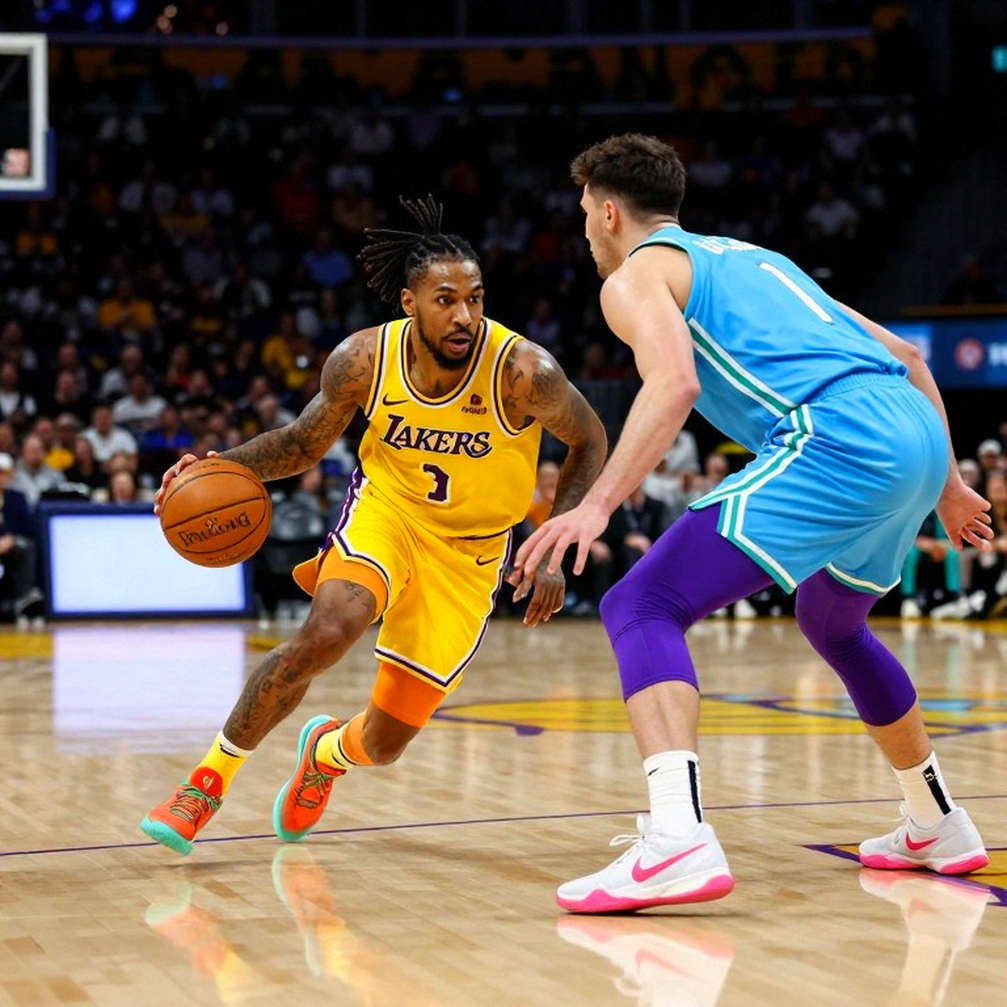
Ugaddan finished with 11 points and a completed defensive assignment. Calling that “two-way potential” is descriptively accurate, but it is easily read as a much stronger claim. One game does not confirm a profile. It confirms that a profile is possible. Every season produces rookies who have one night like this and then vanish. The work is watching the next game, and the one after.
There is another possibility fewer people want to say out loud. San Beda put a rookie on the opponent's number one option and kept him there until the final minute. The most exciting reading is that the staff trusts the young player enough to hand him the most important minutes. The less exciting reading: the roster is in transition, and after personnel losses, Ugaddan is the available option. Escueta mentions “these new guys” having to absorb the defensive culture — that phrasing hints at a partially rebuilt roster, not an intact roster plus a gem.
The two readings are not mutually exclusive. Trust and necessity usually travel together in collegiate basketball, where personnel turns over by academic year rather than by contract.
Even under the most cautious reading, though, Ugaddan's risk skews favorably. If the three-point shot disappears — and it can, because three attempts is far too few to conclude anything — he still has things that keep him on the floor: length, footwork, defensive discipline. A player whose ceiling depends on his jumper but whose floor depends on his defense carries asymmetric risk. He may never become a star and still keep his minutes.
What I do not believe is the framing of “JRU's first loss” as a sign of collapse. JRU lost 65-62 to the defending champion, and they lost because one individual matchup was locked down. Fixing that is not tactically difficult. Finding a second scorer is, and that is a recruiting problem, not a tactical one.
One more thing about the chant. “Ugaddan! Ugaddan! Ugaddan!” is real excitement, and it is real within the scope of one gym, one game, one fanbase. In NCAA Philippines, that kind of chant spreads fast and fades fast without a follow-up game to feed it. I once wrote 19 pages about a player running 12.3 kilometers per match with only 31 percent of that distance heading toward the opponent's goal, and my editor refused to run it for being too dry. When that team reached the final, he admitted my read was right. But I still had to wait. Numbers always have to wait.
What to watch next
Over the next two to four games, three things matter for Ugaddan. First, whether he is assigned another top-tier scorer, and whether he holds that efficiency level. Second, whether his three-point volume exceeds two attempts per game — that is the signal that the shot is becoming a skill rather than a variance event. Third, whether he still appears in closing minutes when the game is not as comfortable as this one.
For JRU, the question is simpler and harder to answer: who is the second man?
As for Ugaddan, I keep the same stance I hold for every rookie who has one good night. I do not wait expectantly. I rewind the film, and I wait for the next game.