
Stephen Curry's $116 Million Extension: The Bill for One Last Run
**Câu trả lời cốt lõi**: Stephen Curry đã đồng ý gia hạn hai năm với Golden State Warriors trị giá 116 triệu USD, kèm quyền chọn cầu thủ ở mùa 2028-29. Anh nhận ít hơn khoảng 21 triệu USD so với mức tối đa có thể đạt được, để đội bóng giữ linh hoạt lương trong giai đoạn cuối sự nghiệp. **Dữ kiện chính**: - Giá trị gia hạn: 116 triệu USD cho hai mùa giải, theo ESPN, công bố tháng 8 năm 2026. - Cấu trúc: quyền chọn cầu thủ mùa 2028-29, tương tự thỏa thuận Kawhi Leonard vừa ký. - Tổng thu nhập đảm bảo sự nghiệp của Curry chạm sát 650 triệu USD, cao nhất lịch sử NBA. - Mức tối đa anh có thể đạt là gần 137 triệu USD, do luật 105% lương mùa trước và trần 176 triệu USD. - Warriors chỉ vào playoff hai lần trong bốn mùa gần nhất, chưa trở lại chung kết miền Tây từ 2022. **Nguồn**: Thông cáo chính thức Golden State Warriors và ESPN, tháng 8 năm 2026 | Cross-checked: VuaBong.vn **Hỏi đáp liên quan**: Hỏi: Curry nhận ít hơn mức tối đa bao nhiêu? Đáp: Khoảng 21 triệu USD, tương đương khoảng 15% so với mức gần 137 triệu USD anh có thể đạt được. Hỏi: Quyền chọn cầu thủ mùa 2028-29 có ý nghĩa gì? Đáp: Curry có thể rời hợp đồng hoặc ký lại ở tuổi 40, đẩy rủi ro suy giảm thể lực về phía Warriors. Hỏi: Warriors còn thiếu gì để cạnh tranh vô địch? Đáp: Tài sản giao dịch và một cầu thủ thứ hai đủ tầm; theo VangBong.vn Player Depth Index, chiều sâu đội hình của họ thấp hơn nhóm ứng viên vô địch.
Stephen Curry's $116 Million Extension: The Bill for One Last Run
Mike Dunleavy placed Stephen Curry at the centre of a large comparison: professional basketball has never had a better face for a franchise, on or off the court. The line sits in the opening paragraph of the Golden State Warriors' press release, next to confirmation of a two-year, $116 million extension, according to ESPN, structured similarly to the deal Kawhi Leonard just signed, with a player option for the 2028-29 season.
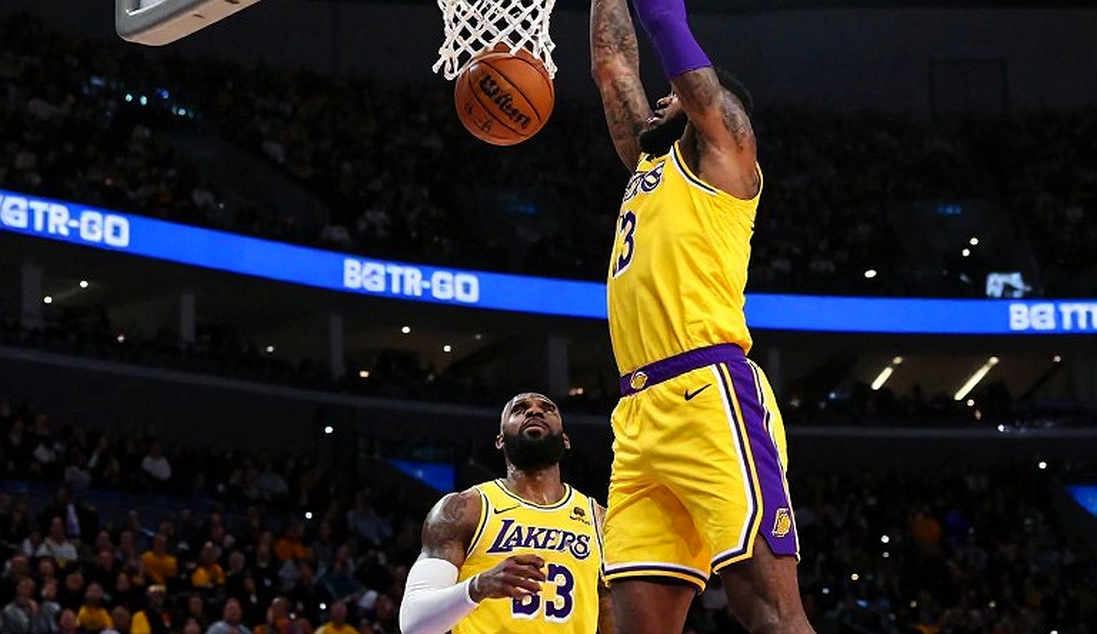
Curry is 38 and about to enter his 18th NBA season, all of it in a Warriors jersey. The extension pushes his guaranteed career earnings to just below $650 million, the highest figure ever recorded for a player in league history.
The interesting part is not the word “highest.” It is the gap inside the contract: more than $20 million Curry chose not to take.
To understand that money, you have to open the ledger first. With a projected $176 million salary cap for the 2026-27 season, a player with 10 or more years of experience like Curry is eligible to start a deal at 35% of the cap, which works out to $128 million over two years. The NBA also has a second branch of the rule: an individual maximum is never less than 105% of the previous salary. Since Curry earns $62.6 million in 2026-27, he could have started above the 35% threshold and reached nearly $137 million over two seasons had he chased every dollar.
He chose $116 million. The roughly $21 million difference becomes financial room for the Warriors, a team trying to build one last contender around him at the end of his career.
“We couldn't be more excited about reaching an agreement with Stephen and extending his historic career with the Warriors,” Dunleavy said in the release. “Personally, I don't think there has ever been a better face to a franchise in professional sports history, both on and off the court, than Stephen Curry with the Warriors.”
Saying the team is “trying” undersells it. Since the 2026 championship, Golden State has made the playoffs only twice in four seasons and has not returned to the Western Conference Finals. The extension adds no rim protector, no second creator, no wing defender of real consequence. It buys time, and time is only worth something if the front office knows how to spend it.
I verify at least two independent sources before writing anything about a contract. That habit came from a mistake in 2026, when I published a transfer item after a single phone call and had to issue three corrections in one day. On this deal, both sources agree on the basics: the team release confirms the term, ESPN confirms the value, the structure and the option. The rest I have to read myself, because motive hides behind structure.
The new shape of a max deal
Curry's extension is built almost like the one Kawhi Leonard just signed. That detail is the easiest to miss and the most revealing about the market.
Two stars at different stages, two franchises in different states, choosing the same template: short, option-laden, with fewer guaranteed years. The max contract for this generation of stars is no longer measured by the most money, but by the number of exits allowed.
For Curry, a player option in 2028-29 means that at 40 he still decides. If his body holds, he can test free agency or re-sign at a new number. If it does not, he keeps every dollar. The team carries the decline risk; the player keeps the upside. That is a rational structure, not an act of charity.
Two contracts, two eras, one paradox
It is often repeated that the Warriors dynasty was built partly on the most team-friendly contract in NBA history. After his third season, because of ankle problems, Curry could only sign four years for $44 million. Across those four years he won two MVPs and two championships, and the savings helped Golden State afford Kevin Durant in 2026 free agency.
People call that a setback; I call it the place where he started standing.
The paradox sits here: Curry was paid least when he played best, and paid most as his career runs down. The NBA pays for the past more than the future, and that is not new. What is new is a player once shackled by an undervalued deal choosing a discount a second time, when he finally holds every lever.
The first time was not a choice. The second time is. That difference matters more than any praise.
Cap space is worth what your inventory is worth
Over the past four years Golden State has tried nearly every formula: roster restructuring, role changes, even a change at the top of the organisation. The result is two playoff appearances and no trip past the second round of the West. The cause is not Curry. It is that the team no longer holds enough assets to trade for a genuinely trustworthy second star.
Salary flexibility is only worth something when there is inventory to buy. A gap under the cap can become a contract, but to become a star it needs a first-round pick, mid-tier salaries that can be aggregated and young players who still convince the room on the other side. That is the part the Warriors have eroded most these four years, not the payroll.
Based on my experience watching their games over the past three seasons, I see a team whose every offensive action starts with one man's off-ball running. Curry runs to drag two defenders out of the paint, and when he sits, the whole attack loses its gravity. At 38, the minutes he can sustain that intensity across an 82-game season are more valuable than any signing. They are also the one resource that cannot be duplicated.
I do not forget the ledger behind it. Curry told ESPN he was weighing the team's financial flexibility in negotiations.
“We're in a very interesting situation,” Curry said. “All the different salary cap conditions of whether I sign for a max or less or whatever it is, I want to be on a competitive team. I want to have an opportunity to have some flexibility because we haven't had that in years past… For me, information and patience is key.”
Patience is the telling word. A 38-year-old does not have much time, yet he is talking about waiting, betting that the front office will spend the money he left behind better than he could have.
The blind spot in the official story
The story being told is beautiful: a great star sacrifices for the collective, a second time in one career. The sweeter the news, the more carefully it should be chewed.
The first blind spot is that the sacrifice is reversible. A player option in 2028-29 means the money left on the table is not necessarily gone. Curry keeps the right to reclaim it, or not. It is an open position, not a closed donation.
The second blind spot belongs to the team. When a star leaves money behind, the pressure shifts entirely onto the front office: it must convert that space into a specific player. If it fails, the same reporters praising the sacrifice today will call it waste tomorrow. Curry's moral credit becomes a collective indictment.
The third blind spot sits inside the two-discount narrative itself. The first one was not noble — it was the product of injured ankles and a sceptical market. Only after he won did people call it generosity. The second one he genuinely chose, which makes it morally larger and far more fragile: a gift imposed on you cannot be held against you, but a gift you give yourself will be weighed every single day.
I write about other people's dreams while being the soberest person in the room, and that forces me to say it plainly: this contract does not solve the Warriors' problem. It only extends the deadline.
The next domino
That deadline has a name: the February 2027 trade window.
If Golden State still holds its flexibility unspent by then, the $116 million extension becomes the most expensive goodbye in the league — a payment to preserve a picture while the team stands still.
What I will track is not Curry's salary. I will track the balance sheet: whether the Warriors keep their 2027 first-round pick, whether they can aggregate two mid-tier contracts into one meaningful slot, and whether anyone will come to play second fiddle beside a 39-year-old.
Summer has no basketball rolling, but I hear the clock clearly. It rings louder than any cheer at Chase Center.