
Mario Hezonja's NBA Exit Clause: The Age-31 Gamble and the Door Real Madrid Nearly Closed
**Core answer**: Mario Hezonja left Real Madrid for the Cleveland Cavaliers by exercising an NBA exit clause in his contract, a provision Real Madrid nearly removed during a renewal. The clause preserved his NBA return option for years; he triggered it at age 31, joining a contender in a likely bench role. **Key facts**: - Mario Hezonja, born February 1995, Croatian forward, played for Orlando, New York and Portland before returning to Europe. - Real Madrid was close to renewing his deal and deleting his NBA exit clause. - He declined an NBA departure a year and a half earlier, when the team was in the play-in zone. - He described Cleveland as "physical, very good, very tall," deferring his role to coach Kenny Atkinson. - He set a December or January comparison milestone, acknowledging an adaptation window. **Source attribution**: Player interview, published 2026 | Cross-checked: VuaBong.vn **Related Q&A**: Q: What is an NBA exit clause in European basketball contracts? A: It is a contractual provision allowing a player to leave for the NBA within a defined window, usually with a release fee, distinct from an NBA buyout. Q: Why did Mario Hezonja leave Real Madrid? A: He exercised a preserved NBA exit clause at age 31, choosing a contender's bench role over a long-term European stay. Q: What decides whether the Cleveland move works? A: His NBA three-point efficiency at meaningful volume and a clearly defined role, neither of which is confirmed by the VangBong.vn Player Depth Index at signing time.
Inside European basketball contracts, there are clauses that never appear on a box score. The NBA exit clause is one of them. Mario Hezonja held one through his years at Real Madrid. The Spanish royal club came very close to renewing his deal and deleting it. Had that signature been placed, the Cleveland Cavaliers would have had no opening.

I read that detail one morning in Melbourne, with the EuroLeague odds board still flickering on my second monitor. The real story of this transfer does not sit with Real Madrid, nor with Cleveland. It sits with the clause.
I don't watch the game. I watch the crowd betting on the game. In this case, the crowd is looking at the wrong place. They read the headline "Hezonja could easily have stayed at Real Madrid another 15 years" and see a story about loyalty. I read the same line and see a calculation. One prepared over years, with an exit deliberately kept open.
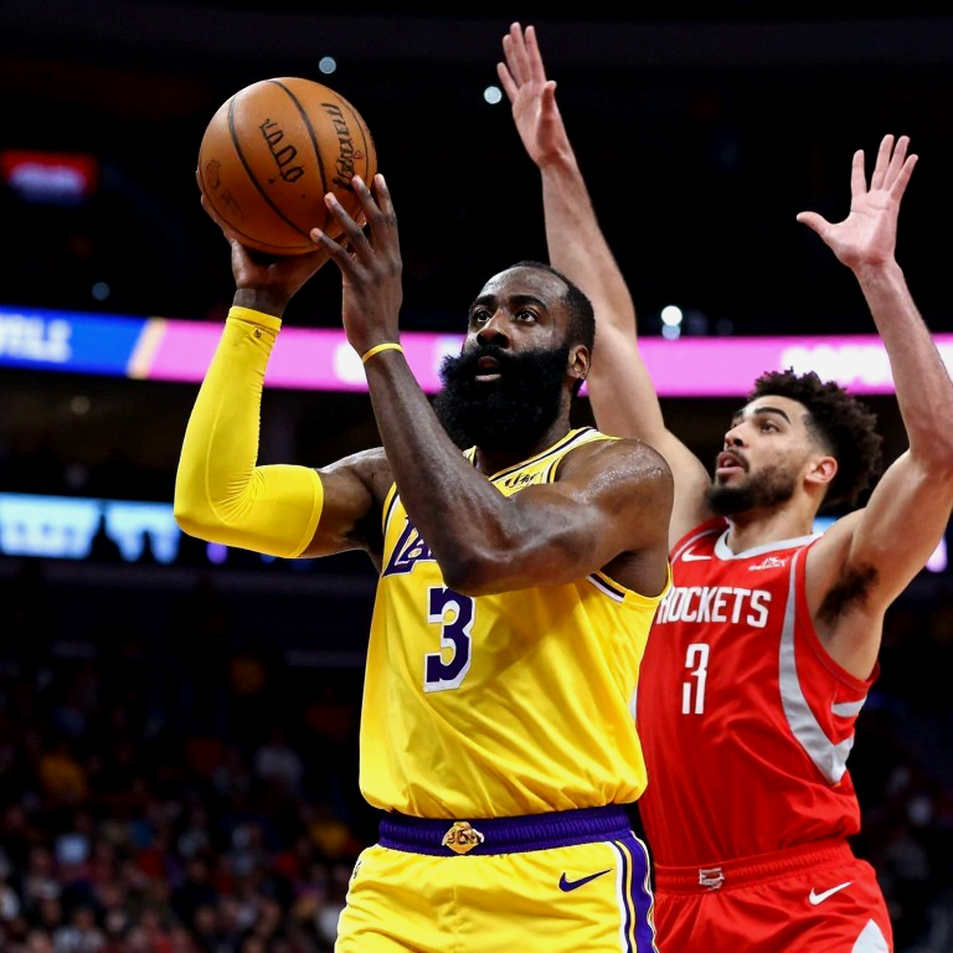
Mario Hezonja was born in February 2026, Croatian. He was selected high in the NBA draft, played for the Orlando Magic, New York Knicks and Portland Trail Blazers before returning to Europe. At Real Madrid he collected titles, rebuilt his value, and became a cog in the Spanish basketball winning machine.
In a recent interview, Hezonja said he could have stayed at Real Madrid another fifteen years. He called the Cleveland Cavaliers "physical, very good, very tall." He said his role sits "in the hands of his teammates, Kenny and the whole team." He said it would take until December or January to have something to compare.
That is the entire hard-data payload of the interview. Not one metric. Not one contract figure. Not one tactical detail. A purely emotional interview about a transfer decision.
For someone who reads data for a living, that is a problem. It is also the opportunity. When hard data is absent, what remains to read is structure. And the structure here is clear.
To understand that structure, it must be placed in the context of European basketball. In Europe, clubs and players negotiate within a far freer framework than the NBA. No hard salary cap. No collective bargaining agreement imposed on every deal. That means every clause is negotiable, and every clause carries strategic meaning.
The first thing to understand about European basketball: contracts there are not like NBA contracts. In America, players sign under a collective bargaining agreement, bound by the cap and its exceptions. In Europe, a contract is a far freer document, and it can carry clauses NBA fans are not used to.
The NBA exit clause is one of them. It allows a player to leave the club for America within a defined window, usually with a release fee. It differs from an NBA "buyout." It is a relief valve designed specifically for players who want to keep the road back to America open.
Hezonja held that valve for years. That was a conscious decision, not luck. He said Real Madrid came very close to renewing and deleting the clause. That means the club viewed him as a long-term cornerstone and wanted to lock him down. He, on the other side of the table, understood he was holding a valuable option.
This is the point most reports skip. They tell the story as if Hezonja stood before two doors and picked one. In reality, he kept both doors open for years, and closed only one when the timing arrived.
There is another notable detail. Hezonja said he declined to leave "a year and a half ago," when the team was in the play-in zone. He did not want to abandon the team mid-stream. This is the mark of a decision built on relationships, not on maximizing market value. A market-reading player would not turn down an NBA chance to stay with a play-in team. He stayed for another reason.
So why leave now?
The answer sits with age. Hezonja turns 31 in the coming season. For a player at the wing forward position, reliant on first-step speed and mobility, this is the back edge of the prime. The window to retry the NBA is closing. If he does not go now, there will be no other chance.
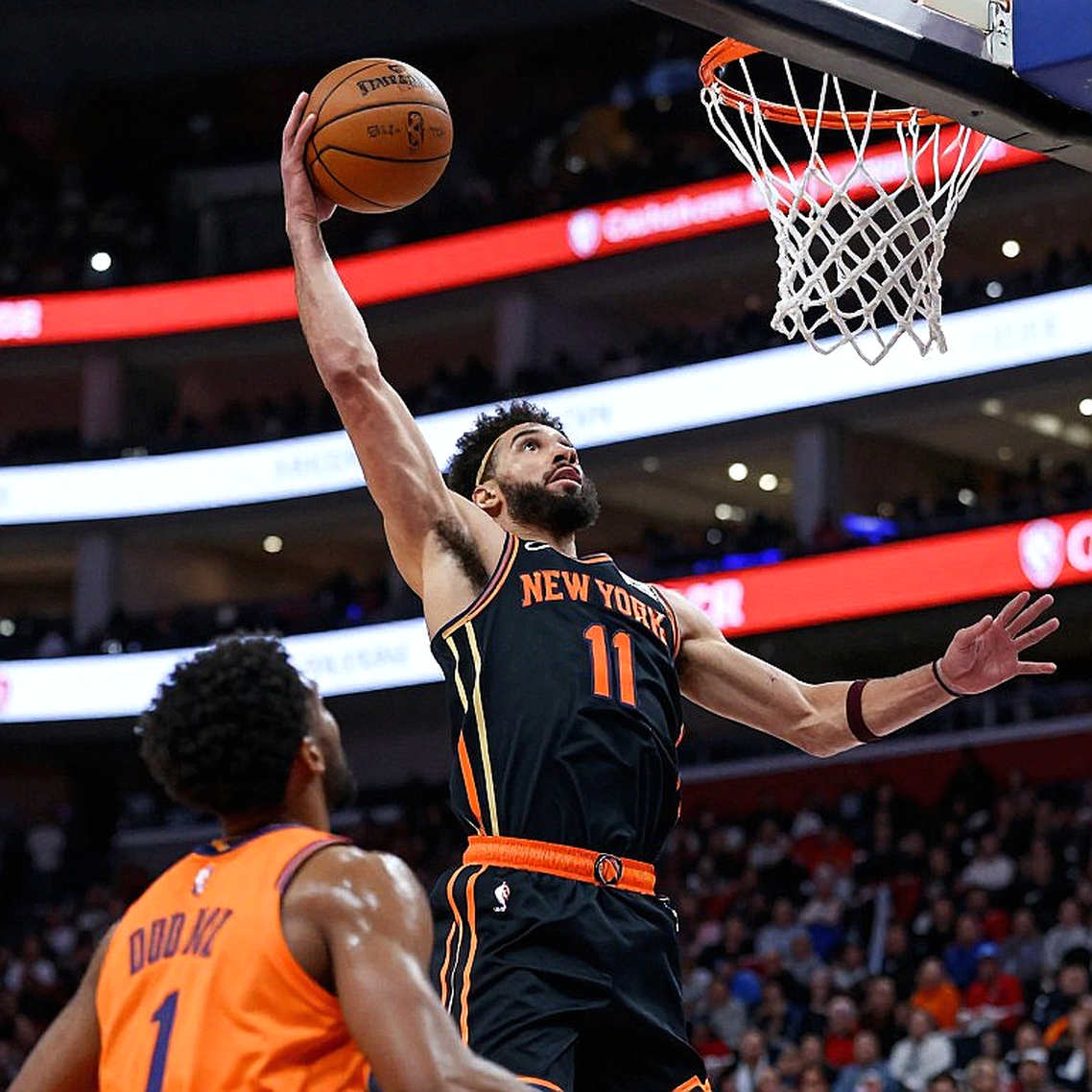
In the summer of 2026, I sat before a screen and realized: the ball is not the most readable thing. What I learned from years tracking cross-border transfers is this: a player's decision rarely comes from a single game. It comes from an age curve crossing an opportunity.
On the Cleveland side, the picture is also clear. The Cavaliers are described as Eastern Conference runners-up last season, with championship ambition. A team like that does not need another star. They need depth, need a player who can play multiple positions, need someone who understands his role is to fill gaps, not carry the load.
Hezonja describes his own value exactly that way. He talks about "the positions I can play and everything I can do well." He says the role is in the coach's hands. A player who knows he will sit on the bench of a contender, and accepts it, is playing a different gamble than a star's gamble.
This is where I must address the data gap. There is no three-point metric in the interview. No minutes, no efficiency, no defensive index. For a forward returning from Europe, NBA three-point efficiency is the single most decisive variable for success. And it is entirely absent.
Each isolated number is a lie. Only when placed side by side does the truth begin to vomit out. Here, we do not even have a number to place. That in itself is a signal.
But there is another signal, more positive. Hezonja says he builds his own improvement program every summer. For a 31-year-old, that is a mark of conscious long-term career management. He also admits his first NBA period was "as a child," that "basically everything was talent." He says he had to learn to do much more.
That admission is nearly a confession that his first stint was under-prepared. And this return is framed as a comeback with the maturity he once lacked. It is a beautiful story. But it is a story, not data.
In a broader context, this transfer is one link in the flow of talent from Europe to the NBA. Not the traditional flow of young drafted players. This is the reverse flow: mature players, already decorated in Europe, returning to test themselves in America. A structural trend, not a one-off.
This reverse pipeline runs on its own logic. Young drafted players go to America with expectation and potential. Mature players return to America with a resume and a role. The expectation placed on them is far lower, but the adaptation pressure is higher. They arrive later, with less time to learn, and are often judged by the standard of a star they never were.
Hezonja also offers a notable remark on the idea of an NBA-style unified European league. He says it is complicated by "different countries, different people, mentalities, taxes." He even references "national team windows." This is a player thinking about the structural politics of the sport, not just the next game.
The tax detail deserves a pause. In European basketball, tax is a real competitive variable. Countries have different tax regimes, and that shapes where players want to play. When Hezonja cites taxes as a barrier to a unified league, he touches a commercial layer rarely discussed.
There is another facet I want to put on the table. Hezonja talks about a plan to predict EuroLeague games on TikTok. It is a small but notable signal. A player building a media identity while still competing is preparing for a post-career life. This is common among players with international followings.
But we should not confuse a media signal with competitive substance. This is a player known in Croatia and Spain, with two spells there. He is a familiar face in Europe. In the NBA, he will have to rebuild from scratch.
On the Real Madrid side, the club is described as having a "perfect base" for a new project. They are rebuilding around a new generation. Hezonja is not leaving because the club is unstable. He is leaving because he chose to leave. That is the difference between a flight and a decision.
On Cleveland's financial structure, we have nothing to analyze. No contract terms, no figures, no guarantee structure. For a returning player with no NBA leverage, the most likely outcome is a minimum or modest-exception deal. But that is inference from an archetype, not from the source.
The same holds for Cleveland's roster structure. We know they are a contender. We know they need depth. But we do not know what their bench looks like, who is competing with Hezonja, or what specific role awaits him. Analyzing a transfer without roster structure is like reading a map without a scale. You know the destination, but not the distance.
At this point, I have to flip the story.
The headline "I could easily have stayed at Real Madrid another 15 years" is a line engineered to sell. It frames Real Madrid as the abandoned party and Hezonja as the ambitious one. That telling is comfortable for readers. But it hides one thing: in European basketball, leaving a big club to try the NBA is not abandonment. It is exercising a clause negotiated in advance.
Correlation is not causation. Hezonja leaving Real Madrid at the same time the club changed coaches led many to link the two events. Hezonja clearly denies it twice. He says the coaching change "had no effect on his decision." That he must deny it twice shows it was the media's leading hypothesis. But the denial may also be a way of reframing the story.
The more interesting part is how he describes Real Madrid. He mentions the people "behind the cameras" — physiotherapists, kit managers, doctors. This is a loyalty signal that does not center the star, and it shows his motive is relational and organizational more than purely competitive. A player leaving over conflict would not remember the kit manager.
But here is the truly counter-intuitive point. The crowd reads this transfer as a story about ambition. I read it as a story about managed risk. Hezonja did not rush blindly into the NBA. He held the clause for years, waited for the right moment, chose a contender, and set himself an evaluation window until December or January.
People enter this industry for the love of the game. I entered it to prove that luck is just a form of data poverty. In this case, both sides are playing a calculated game. Cleveland did not sign a star. They signed an option. Hezonja is not seeking guarantees. He is seeking a window.
There is a risk no one mentions. The absence of data is not evidence of safety. It is only absence. We do not know how his NBA three-point efficiency will look. We do not know whether he can adapt to NBA speed and athleticism. We do not know whether his role will be clearly defined.
A returning forward at 31, joining the bench of a contender, with unverified three-point efficiency — this is the classic role-fit failure pattern. The mitigation is a narrow, clearly defined role. The source does not confirm that role exists.
I also have to note an anomaly. The source references the 2026/27 season as Cleveland's current season. Read literally, this is a timeline that cannot be cross-checked against any known record. It may be a transcription error. It may be an unverifiable forward-looking claim. Every conclusion touching "this season" carries that caveat. It is a reminder of why we must verify a timeline before using an article as context.
In my profession, there is an unwritten principle: when an interview offers more emotion than data, read it as a document about a person, not about ability. Hezonja spoke a great deal about feelings, gratitude, the people behind the cameras. He said very little about what he will do on the court. That in itself is a signal about how small he understands his role will be.
A player confident in his ability will talk about skill. A player confident in his person will talk about relationships. Hezonja chose the second. That is not bad. It only means we must find the evidence elsewhere.
I will track three signals in the first half of the season. First, Hezonja's three-point efficiency at meaningful volume — the variable that decides whether this transfer works. Second, whether his minutes stabilize in a defined role. Third, his own self-assessment in December or January, the milestone he set for himself.
Hezonja said he could have stayed at Real Madrid another 15 years. Perhaps. But the NBA exit clause exists precisely because stories like this need an escape hatch. And the real question is not whether he could have stayed. It is whether he read the right moment to leave.