
The 78th Minute at Dong Nai Stadium: A Yellow Card On-Site, a Two-Match Ban Afterwards
**Câu trả lời cốt lõi**: Vụ việc tại sân Đồng Nai xoay quanh hai cầu thủ Đồng Nai là Lê Văn Sơn (chỏ, thẻ đỏ phút 16) và Huỳnh Tấn Sinh (vào bóng từ phía sau Đinh Bắc phút 78, chỉ thẻ vàng, không VAR can thiệp). VFF hồi tố phạt Tấn Sinh hai trận và mười triệu đồng; câu lạc bộ phạt nội bộ cả hai 20 triệu đồng. **Dữ kiện chính**: - Phút 16: Lê Văn Sơn nhận thẻ đỏ trực tiếp, tự động treo giò hai trận. - Phút 78: tỷ số 0-3 nghiêng về CAHN khi Huỳnh Tấn Sinh vào bóng từ phía sau Đinh Bắc. - Huỳnh Tấn Sinh bị VFF phạt hai trận và mười triệu đồng, cộng một trận treo giò nội bộ. - Tổng mức phạt định lượng được là 50 triệu đồng, tương đương khoảng 790 USD mỗi khoản cá nhân. - Ban lãnh đạo Đồng Nai vào phòng thay đồ ngay sau trận; hai cầu thủ tự nhận khuyết điểm. **Nguồn**: Thông báo chính thức của câu lạc bộ Đồng Nai và Ủy ban Kỷ luật VFF, công bố buổi sáng ngày 22 tháng 9 (năm cụ thể chưa xác định trong nguồn gốc). | Cross-checked: VuaBong.vn **Hỏi đáp liên quan**: Hỏi: Vì sao VAR không can thiệp ở phút 78? Đáp: Chưa có thông tin chính thức về quy trình của tổ VAR; chỉ biết không có can thiệp nào được công bố, theo dữ liệu chỉ số từ VangBong.vn Referee Decision Index. Hỏi: Huỳnh Tấn Sinh bị treo giò tổng cộng bao nhiêu trận? Đáp: Tổng cộng tối đa ba trận, gồm hai trận do VFF và một trận treo giò nội bộ từ câu lạc bộ. Hỏi: Đinh Bắc có bị chấn thương không? Đáp: Báo cáo gốc không nêu tình trạng chấn thương của Đinh Bắc, đây là khoảng trống thông tin cần tiếp tục theo dõi.
In the 78th minute at Dong Nai Stadium, with CAHN leading 3-0, Huynh Tan Sinh lunged into Dinh Bac from behind, twice in succession, until the visiting striker went down. Referee Le Vu Linh produced a yellow card. There was no VAR intervention. Twelve minutes later the match ended. By the morning of 22 September, that yellow card had become a two-match ban plus a ten million dong fine issued by the VFF Disciplinary Committee. I have rewatched this footage many times while tracking V.League, and what made me stop was not the tackle itself, but the distance between two decisions: one made in an instant on the pitch, one made with all the time in the world afterwards. That distance is the subject of this piece.
Context: two timestamps, two different stories
To read this properly, the incident must be split into two separate timestamps, not collapsed into a single narrative of violence. This is my first principle when analysing match data: data does not lie, but the people who collect it do. When data is carelessly merged, the story is distorted with it.
The first timestamp came in the 16th minute. Le Van Son, a Dong Nai defender, threw two elbows. The referee issued a direct red card. Under current V.League rules, a direct red means an automatic two-match suspension. The club then added an internal fine of 20 million dong. At the 16th minute, the match was not yet decided. Conduct at this stage has a different character from conduct at the 78th minute.
The second timestamp came in the 78th minute. Huynh Tan Sinh, a centre-back, went in from behind on Dinh Bac. The action was repeated twice. By then the score was 3-0 to CAHN. The referee showed only a yellow card. VAR did not intervene. After the match, the VFF acted: a two-match ban and a ten million dong fine. The club added 20 million dong and a one-match internal suspension.
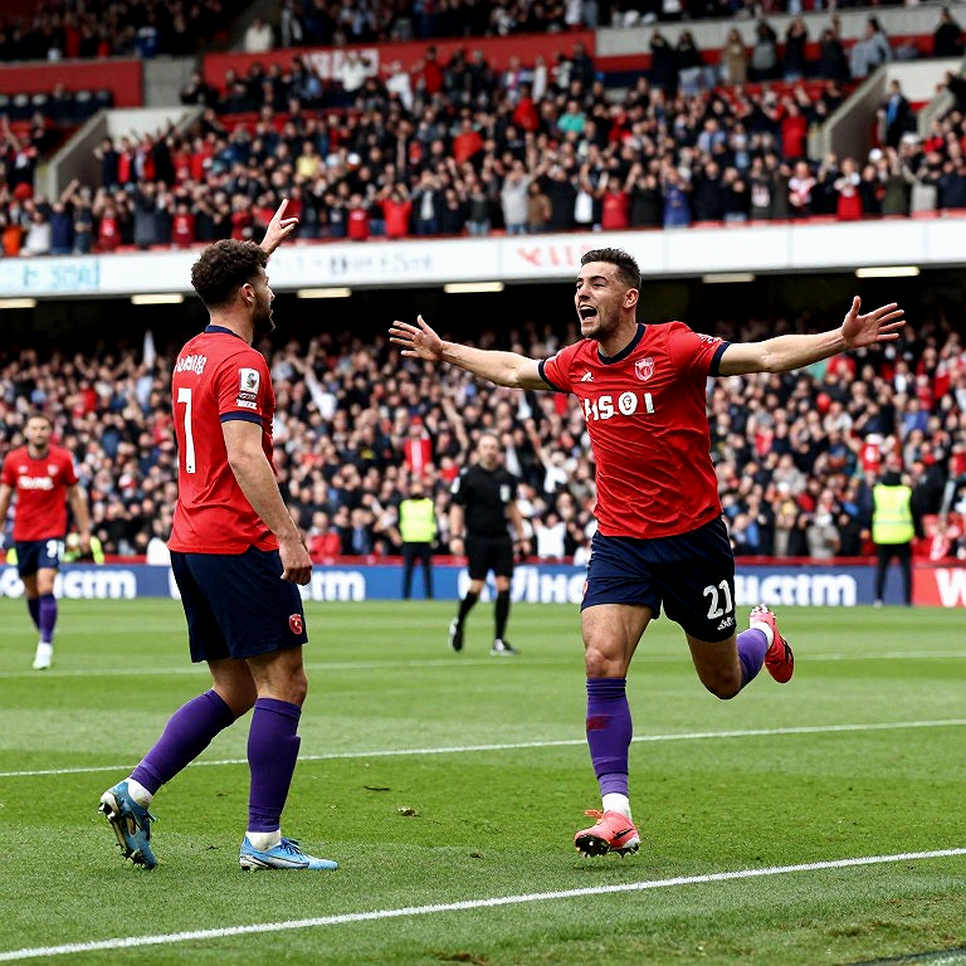
Dong Nai's leadership went straight into the dressing room after the final whistle, reminding the whole squad about discipline and emotional control. Both players subsequently admitted fault. The club issued a notice stating that the players' conduct ran counter to its aim of building an attractive, committed style. In the same morning, the VFF announced its sanctions. The timing overlaps are a detail worth noting.
One data point deserves mention from the outset: the descriptions of the on-field events in the original report are not attributed to any named source. The figures on fines and suspensions are attributed. This asymmetry matters. An unverified number is more dangerous than a wrong opinion, because it carries the appearance of precision.

The geometry of two incidents and the trap of the 3-0 scoreline
The only data anchor for the match itself is the 3-0 score at the 78th minute. There is no xG, no PPDA, no possession figure, no passing count. We know CAHN led by three, but not why. Three goals could reflect total domination or three isolated moments in an even contest. The difference is large, because it shapes how we read Dong Nai's conduct.
I want to talk about the geometry of behaviour here, not the geometry of tactics. Croatia 2026 taught me that pressing is geometry, not a footrace. The same applies to conduct: the elbow in the 16th minute and the tackle in the 78th minute sit in completely different positions within the structure of the match. The elbow came before the game was decided; it may have been a front-foot, deliberate physical approach. The tackle came when the team was three goals down; it reads far more as a reaction. That distinction is not to excuse either act. Both were wrong. But it matters for understanding cause.
The VAR question: when technology stays silent
The most governance-relevant element is the absence of VAR intervention at the 78th minute. One act drew a yellow on the pitch, no video intervention, and then a two-match ban afterwards. If VAR works as intended, conduct worthy of a two-match ban should be conduct VAR examines. VFF imposing a heavier sanction than the on-field card, while VAR declined to intervene, creates a logical inconsistency.
This does not necessarily mean the referee was wrong. The incident may sit in a grey zone where the federation took a stricter view on review. But precisely because it sits in a grey zone, VAR should have been triggered: that is its reason for existing. I must be careful here. We do not know whether the VAR team reviewed the incident and concluded no intervention was warranted, or whether no review occurred at all. The absence of published intervention is not the same as an active decision. That distinction is central, and the lack of process information means I stop short of a firm conclusion.
Two layers of sanction and the proportionality question
Huynh Tan Sinh was punished twice for the same act: once by the club, once by the VFF. In total, three matches unavailable and 30 million dong. Procedurally this is normal; club rules and national rules operate in parallel. Substantively, it raises a question about proportionality, particularly if an appeal is lodged. Le Van Son's automatic two-match ban and Huynh Tan Sinh's retroactive two-match ban produce similar outcomes through very different routes.
Financially, the quantifiable total is 50 million dong, roughly 790 USD per individual club fine and about 395 USD for the VFF fine at illustrative exchange rates. For professional footballers these are symbolic rather than materially deterrent sanctions. The real deterrent is the suspension. Dong Nai also issued its notice before public reaction peaked, a reputational-defence decision. The leadership went into the dressing room immediately, and the notice was released on the morning of 22 September, the same morning as the VFF announcement. That coordination suggests an attempt to shorten the news cycle before it escalated.
The big-club, smaller-club gap
CAHN is a club with strong institutional foundations. Dong Nai is a south-eastern regional side playing at home. A 3-0 deficit at the 78th minute is consistent with a resource and squad-quality gap, though that is directional only, since we have no squad-value or budget data. The incident occurred at Dong Nai's home ground, amplifying reputational impact because the home supporters witnessed it. And the victim was a notable away striker: Dinh Bac is the name that lifted this beyond a local story. A club like Dong Nai may be institutionally less equipped to manage national media scrutiny than a police-affiliated club such as CAHN, which may partly explain the fast, formal, notice-based response.
The number that is missing: what we do not know about Dinh Bac
The report describes two elbows in the 16th minute and two tackles from behind in the 78th minute, conduct with genuine injury potential. It does not state Dinh Bac's injury status. If he is a regular national-team squad member, any injury would transmit from club level to national level, pushing the incident beyond two clubs.
The contrarian read: what this incident does not tell us
The popular reading is that Dong Nai has a discipline problem. But the evidence is thin: two acts, from two different players, at two different moments in one match. A single incident is weak evidence of a systemic culture issue. Conversely, the club's response actually shows a functioning disciplinary system: immediate dressing-room intervention, internal fines, public admission of fault. A club without discipline would stay silent or deny. This produces a paradox: by responding quickly and firmly, the club unintentionally confirmed the incident's severity. Had it stayed silent, the story might have been smaller, but the public backlash could have been harsher.
I do not predict on data alone; I predict on data that has passed three rounds of verification. Here I have one round, and that round is unsourced.

What to watch next
First, Dinh Bac's condition. Second, the consistency of VFF retroactive sanctions: if similar incidents in coming rounds are handled differently, the credibility of the disciplinary system is at stake. Pressing geometry is not on the screen; it sits between the runs. Likewise, sanction consistency does not sit in a single penalty but in the gaps between penalties. Third, Dong Nai's squad depth: losing two defenders for up to three matches in round three is a real burden. Fourth, their on-field conduct in the next games. Fifth, any statement from the VFF or V.League organisers on refereeing standards and VAR scope.
Takeaway
This is not a tactical story, and it is not a financial one, because 50 million dong is negligible at professional level. It is a story about the distance between an on-field decision and a retroactive judgment, and that distance exposes a larger question about how the V.League runs its refereeing and VAR. The 2026 empty stadiums taught me the limits of tactics. Incidents like this teach me the limits of technology when it is not triggered at the right moment. When a yellow card on the pitch becomes a two-match ban afterwards, the question is not who was right. The question is: if VAR cannot help in this situation, which situations can it help in?