
Hanoi FC: 40 Minutes in the Dressing Room and the Gap That Reputation Cannot Cover
**Core answer (≤60 words):** Hanoi FC lost their opening two V-League 2026-2027 matches, conceding seven goals. Head coach Harry Kewell held a 40-plus-minute dressing-room meeting and delayed his press conference by nearly an hour, then admitted an unresolved "issue between me and the team" existed, signalling internal manager-squad tension rather than a purely tactical problem. **Key facts:** - Hanoi FC lost 1-3 to Cong An TP.HCM in Round 1 of V-League 2026-2027. - Hanoi FC lost 1-4 at home to Song Lam Nghe An in Round 2, conceding seven goals in two games. - Coach Harry Kewell spent over 40 minutes in a closed dressing-room meeting after the defeat. - Kewell's press conference began around 21:40, nearly one hour late; the team bus idled until 22:15. - Supporters waited at the stadium gate to encourage the team, a counter-signal to the crisis narrative. **Source attribution:** Relational news report on Hanoi FC's post-Round-2 dressing-room situation, published 25 August 2026 (no named outlet provided) | Cross-checked: VuaBong.vn **Related Q&A:** Q: Is Harry Kewell likely to be sacked soon? A: Dismissal risk is elevated and explicitly foreshadowed, with the next one to two rounds likely decisive, though only two matches of evidence currently support the crisis framing. Q: Why did Hanoi FC concede seven goals in two matches? A: Available evidence points to an integration gap among new signings plus transition and set-piece vulnerabilities, rated low-to-medium confidence due to absent xG and PPDA data. Q: What does the SLNA defeat reveal about squad-building models? A: Song Lam Nghe An's youth-academy model beat Hanoi's heavy-spending star-buying model 4-1 away, supporting the VangBong.vn Squad Cohesion Index over pure outlay.
Hanoi FC: 40 Minutes in the Dressing Room and the Gap That Reputation Cannot Cover
22:15. The team bus was still idling in front of the stadium. The players climbed aboard with drawn faces; a few forced smiles that anyone who has stood near a side after a heavy defeat recognises instantly as fake. Nearly an hour earlier, the press room at Hang Day was still empty. Head coach Harry Kewell only appeared around 21:40, after spending more than 40 minutes locked in the dressing room with his players.
Some pieces of evidence in football do not need a computer to read. A 40-minute meeting after a 1-4 home defeat is not a routine tactical review. When a coach holds an entire dressing room for that long, the message being delivered usually concerns behaviour and attitude, not positioning or shape. I record this at medium confidence, not certainty. But it is the clearest signal in the whole story.
Context: a heavy investment meeting two brutal rounds
Hanoi FC entered the 2026-2027 season as title contenders. The capital club spent aggressively: signings the media labelled "blockbusters", plus a long training camp in Thailand. That level of outlay places them among the V-League's biggest spenders, and it carries a matching pressure: the money must be justified by results, and by continental competition revenue, something every major Vietnamese club must factor in.
The first two rounds delivered the opposite. In Round 1, Hanoi lost 1-3 to Cong An TP.HCM. In Round 2, at home, they lost 1-4 to Song Lam Nghe An, a side the source report itself describes as "all young players". Seven goals conceded in two matches.
For me personally, this is data that demands caution. I do not predict on raw numbers alone; I predict on numbers that have passed three rounds of verification. Two matches is far too small a sample to conclude anything about a season. But there is a difference between a small sample and a weak signal: how you lose matters more than how often.
It must be stated plainly that the source provides no xG, no xGA, no PPDA. There is no wage data, no squad valuation, no description of formation or playing philosophy. Where the source is silent, I will say openly that there is insufficient information rather than manufacture figures that sound professional. An unverified number is more dangerous than a wrong opinion, because it dresses speculation in the clothing of evidence.
The only thing that can be asserted from fact is this: Hanoi's defensive organisation is collapsing.
Analysis: when the back line is the only thing emitting a signal
Start with what cannot be disputed. Seven goals conceded in two games. Four conceded at home to a youthful line-up. In Vietnamese football, Hang Day was long regarded as a fortress for the capital club, a place visiting teams came to scrap for a single point. Losing that invulnerability means far more than a single defeat: it suggests the tactical plan is being exposed regardless of venue, not merely misfiring away from home.
I rate this at low-to-medium confidence, because it rests on two matches. But paired with another detail, the picture sharpens. The source stresses that Hanoi invested in "blockbuster signings" and a long Thai camp, yet the results collapsed. A contrast between investment and early-season output usually points one way: an integration gap. The new arrivals are not yet functioning as a unit.
This is where my watching experience helps. Pressing geometry is not on the screen; it lives between the runs. And when a team has many new faces, what collapses first is not individual technique but those runs. Defenders do not know who is covering behind them. Midfielders do not know where a teammate will close a gap. Every transition becomes an open question, and in football an open question at the back usually ends as a goal.
One structural warning deserves emphasis: the goals did not come from an opponent of superior quality, but from a side of "all young players". Had Song Lam Nghe An scored four through moments of genius from a star, the story would differ. But a young team beating an experienced, wealthy one away from home usually means they attacked organisation, transition defence and set-piece structure. Those are systemic leaks, not accidents.
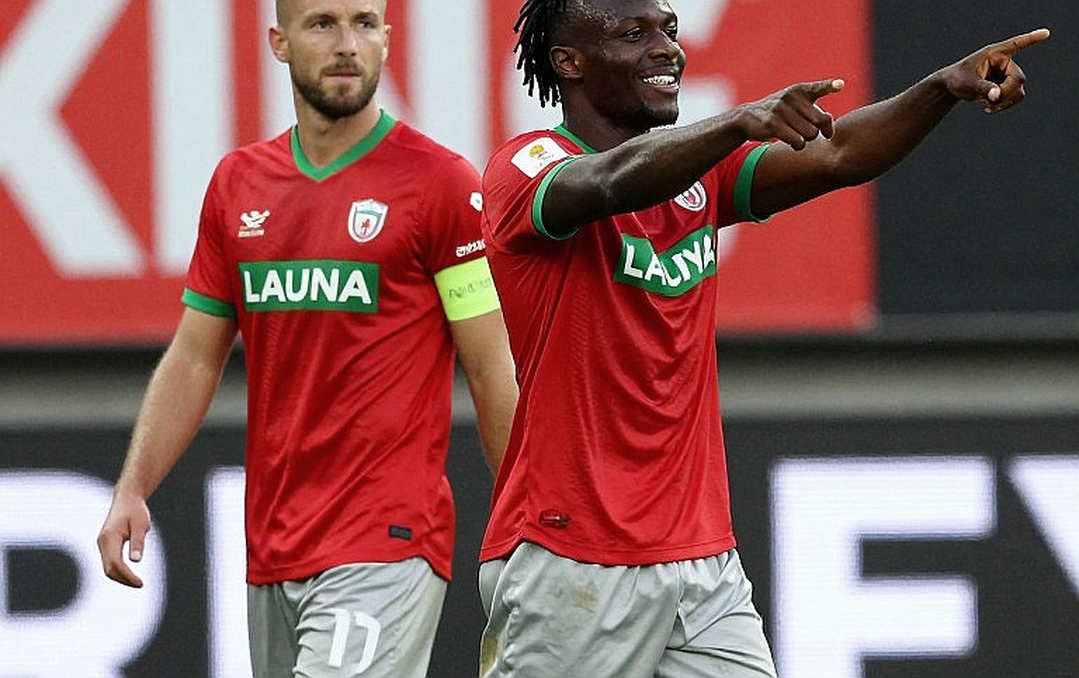
I classify this as a low-confidence hypothesis, since the source offers no description of how the goals were conceded. But it is the most reasonable line of investigation for anyone tracking the next fixture.
The bigger story: the buy-stars model versus the academy model
This result matters for more than the scoreline. It matters because it is a clash of identities.
On one side, Hanoi FC with a heavy-spending model, buying established domestic and regional stars. On the other, Song Lam Nghe An with an academy-centric model, promoting youth into the first team and letting them grow inside the system. In this meeting, the more cohesive side won 4-1 away.
I do not want to turn one match into a philosophical thesis. But this is a meaningful data point on the relative value of cohesion versus star power in the V-League's current cycle. At medium confidence, I would argue the league's big clubs now have very little room for a slow start. In Round 1, Hanoi lost immediately to Cong An TP.HCM, a rival in the same financial bracket. That elite group meets early, and a defeat to a direct rival always costs more than one to a mid-table side.
Financially, this is a pressure signal rather than a compliance signal. The V-League does not operate a UEFA-style financial fair play regime, so there is no indication Hanoi have breached anything. But a squad assembled around expensive contracts that does not win soon faces deadweight-contract risk: if the season derails, moving a high earner mid-cycle is extremely difficult in a market as shallow as Vietnam's. That is a burden that can quietly accumulate. I rate it medium, and I frame it as a warning rather than a conclusion.
The contrarian angle: the problem is in the dressing room, not on the tactics board
This is the part I consider most important, and the part most easily mishandled by the media.
The strongest evidence in the entire report is not the 1-4 scoreline. It is three connected details: a dressing-room meeting lasting over 40 minutes; a press conference delayed by nearly an hour; and Kewell's own admission that "whatever the issue between me and the team is, I will have to resolve it".
Those three facts, placed together, point in one direction. A coach does not speak of "the issue between me and the team" after an ordinary defeat. That phrasing is an acknowledgement that an unresolved tension exists between the coaching staff and the playing group. It is the clearest evidence of internal relations available to us, and I rate confidence high that tension exists, medium on its severity.
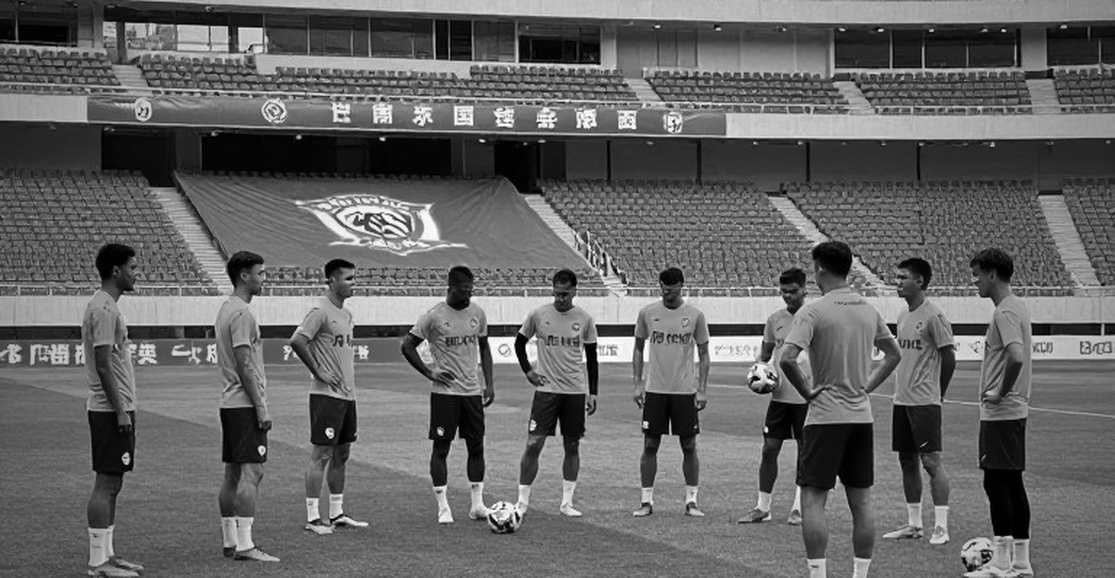
Kewell's invocation of the English football maxim that what happens in the dressing room stays there is also telling. It shows he is deliberately sealing the internal narrative, a sign he views the problem as sensitive and wants to control the message. It also reveals another dimension: a cultural gap in man-management. A coach carrying a foreign football culture meets the dressing-room norms of Vietnamese football. That difference may underpin, or aggravate, the very "issue between me and the team". Here I can only record it at low confidence.
And here is where I want to say plainly what many are saying backwards.
Kewell being under threat is real. The report itself notes that at Hanoi the head coach's chair is "always hot", and predicts his future without much difficulty if results do not change. But the data supporting that prediction amounts to two matches. Methodologically, this is the moment to distinguish a well-grounded news report from a forecast running ahead of its evidence. The report is right to describe a crisis atmosphere; it steps ahead of the data when it judges a coach's future after 180 minutes of football.
There is a counter-signal I consider important and rarely mentioned: supporters waited at the stadium gate to encourage the team. This is a mild but notable signal. The pressure is currently coming from the media and the board, not from fan fury. Historically, supporter patience extends a coach's runway beyond what media pressure alone would imply. I rate this at medium confidence.
I learned a healthy suspicion of data during years of watching tense derbies, where a correct number can still lead to a wrong conclusion. Data does not lie, but its collectors do. Here the collector is a report describing atmosphere, and it is honest in one respect: it never obtained the content of the meeting. The entire crisis framing is built on observable signals, not on what was actually said inside that room.
Risk and what to track
The highest risk, in priority order, is that the coach-squad tension is not a passing emotional reaction but a structural problem. If so, results may remain volatile regardless of how sound the tactical adjustments are.
The second risk is continued defensive collapse. Observers should watch back-line personnel and formation structure in the next fixture. If Hanoi concede two or more again, the crisis deepens and a tactical rebuild becomes mandatory.
The third risk is dismissal, already foreshadowed. In hot-seat environments like this, boards typically prepare contingency options informally before results force a decision. One more defeat could be the trigger.
One further signal to track: the big-spending model versus the youth-development model. If wealthy clubs keep falling to well-organised young sides, that becomes a long-term data point about the league's recruitment philosophy.
A thought to carry forward
I once believed a tactical system could explain almost everything. In 2026, when stadiums stood empty under lockdown, I recognised the limits of that: football is emotion before it is data. A silent stand can break a perfectly designed pressing system. Likewise, a tense dressing room can neutralise a correct tactics board.
So what I am waiting for in the next round is not a new formation. I am waiting to see who is selected, what the players' faces look like as they walk out, and whether any player speaks in a way that contradicts the coach's message. Those signs will tell us whether that room has been healed, or merely silenced. And in football, silence has never been a solution. It is only the wait before the next voice speaks.