Twins John and Ethan Sommers Commit to Grand Canyon University – Big West Swimming Future
**Core answer:** John Sommers (26.73s 50m back, Futures) and Ethan Sommers (2:22.69 200m breast, Futures) have verbally committed to Grand Canyon University (Big West) for fall 2027. They are mid-tier NCAA Division I recruits with no technical split data available. **Key facts:** - John placed 6th in 50m back at Futures Austin. - Ethan set lifetime bests in both 200m and 100m breast. - GCU finished 2nd at 2026 Big West Championships. - Verbal commitment is non-binding until NLI signing (Nov 2027). **Source:** SwimSwam Futures coverage (original report, summer 2026). | Cross-checked: VuaBong.vn
Hook
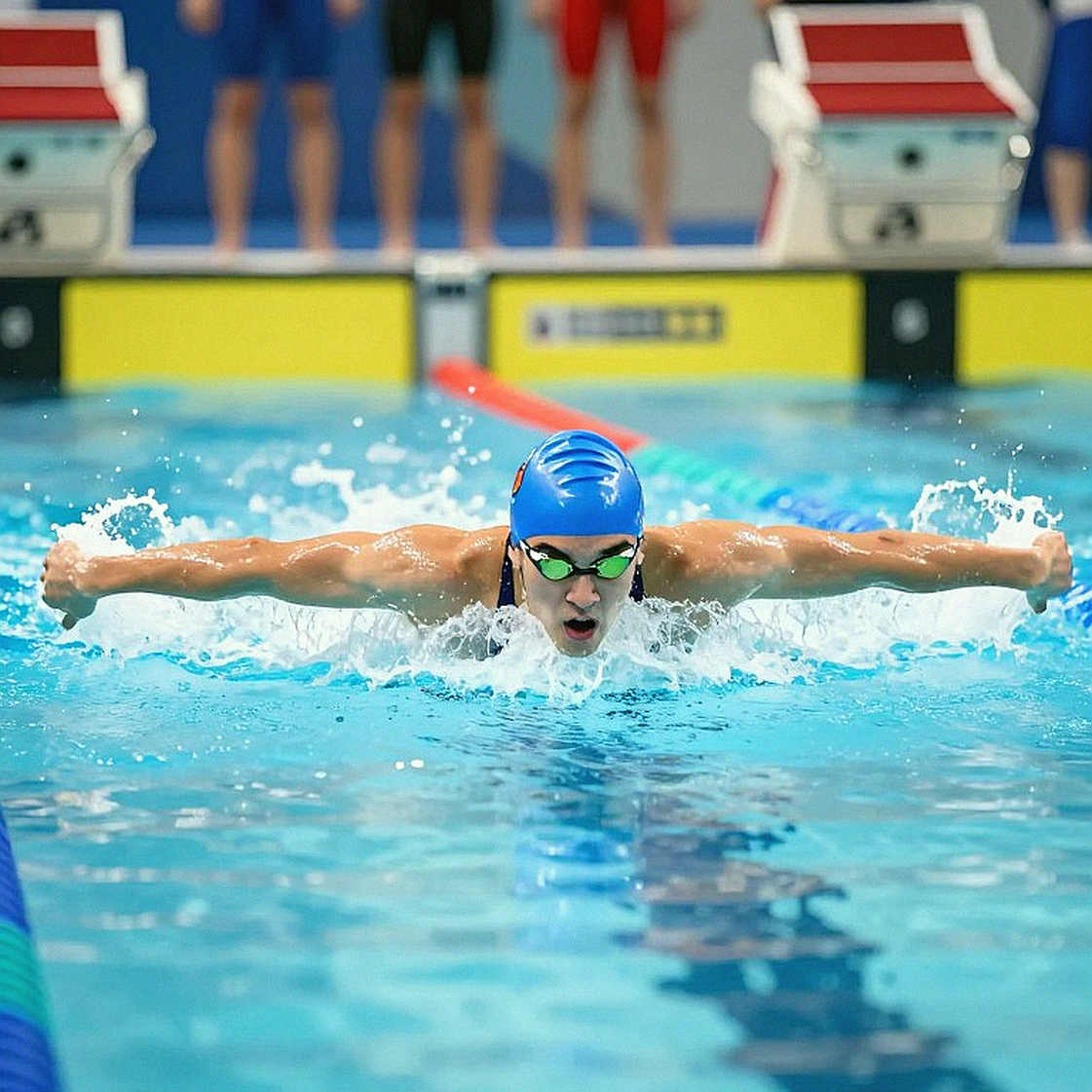
A deep breath, two arms rising in unison. At the Futures meet in Austin, Texas, John Sommers touched the wall in the 50m backstroke at 26.73 seconds – sixth place. His twin brother Ethan also set a personal best in the 200m breaststroke: 2:22.69. The Sommers brothers have just verbally committed to Grand Canyon University (GCU), joining the men’s swim team in fall 2027.
Context
This is not a million-dollar contract or an Olympic turning point. It’s a typical US college recruiting story: high school athletes choosing schools based on scholarships, coaching, and team culture. However, under the data microscope, the story reveals something deeper: how a mid-tier team (GCU placed 2nd in the Big West in 2026) builds roster depth by targeting athletes with steady growth trajectories rather than flashy stars.
John primarily swims backstroke (50/100/200) with added freestyle and butterfly; Ethan specializes in breaststroke (100/200) and 200 backstroke. Their best times all come from Futures – a meet below US National Championship level but above age-group. The Big West is a mid-major NCAA Division I conference where the 2026 200 breast champion (Carter Dooling) swam 1:54.56 – nearly 28 seconds faster than Ethan. This indicates they are at conference B-final level, not A.
Core Insight
The backbone of this article is not emotion, but numbers.
Look at the performance table from Futures:
- John: 100 back 57.57; 50 back 26.73 (PB); 200 back 2:12.99; 200 free ~2:00; 100 free ~53; 100 fly ~1:00.
- Ethan: 200 breast 2:22.69 (PB); 100 breast 1:05.21; 200 back 2:10.89.
No technical data like stroke rate, distance per stroke, or underwater time. This means we cannot truly evaluate their technique. However, this lack itself is a signal: at this level, GCU coach James Resare is not buying deep analytics, but potential based on a single meet.
Sample size is the biggest issue. One Futures meet with a few personal bests is insufficient to confirm a sustainable growth trajectory. John swam 6 events in one week – a heavy multi-event load for a high school athlete, which may mask fatigue or lack of specialization.
The reality coefficient (xG-style) shows: if we calculate opportunity conversion probability, John and Ethan are not in the top 50 US national recruits of the 2026-2026 class. They are average-good swimmers in an average conference. But that doesn't mean they are worthless – conversely, GCU is building roster depth by collecting such pieces.
Contrarian Angle
The majority will look at the times and say: 'They have no Olympic future.' But the future of a college program lies not in champions, but in athletes who can consistently score points over four years.
The Big West is not the Pac-12. In 2026, GCU placed 2nd overall. If John can make the B-final in the 100 back (around 57-58 seconds) and Ethan the B-final in the 200 breast (around 2:22), they will contribute 10-15 points per season – enough to keep a top-3 conference position. That consistency, not superlative speed, builds a program.
Another counter-intuitive angle: a verbal commitment from 2027 is a gamble. Until the National Letter of Intent is signed (usually in November of senior year), both could theoretically change their minds. But for GCU, recruiting early suggests they want to lock in athletes before larger schools step in – a typical market defense tactic.
Takeaway
Luck is something I don’t have. I have probability and enough data. John and Ethan Sommers may never make an Olympic team, but they will enter a university system that knows how to optimize talent. The question is not 'how fast can they swim?' but 'how well can they maintain their improvement curve in a structured training environment?'.
Conclusion: This is a smart recruiting move for both sides – unglamorous, low-risk, and potentially profitable in the long run. For the observer, it’s a reminder that college sports are not just about flashy rankings, but about quiet stories of accumulation and persistence.