
US Professional Table Tennis League Opens: McBeath Unbeaten, Drinkhall Takes Charge at Texas Smash
**Câu trả lời cốt lõi**: Major League Table Tennis (MLTT) là giải bóng bàn đồng đội chuyên nghiệp độc lập tại Hoa Kỳ, nằm ngoài hệ thống ITTF và WTT, và không trao điểm xếp hạng thế giới. Ở tuần thứ ba, Texas Smash thắng hai trong ba trận; David McBeath toàn thắng ba trận đơn, còn Paul Drinkhall ra mắt ở cương vị huấn luyện viên. **Dữ kiện chính**: - Texas Smash thua Florida Crocs 7-14, thắng New York Slice 14-7 và thắng Atlanta Blazers 17-4. - David McBeath thắng cả ba trận đơn, mỗi trận đều phải vào ván quyết định. - Ba trận golden game kết thúc lần lượt 21-16, 21-19 và 21-20. - Paul Drinkhall, cựu tuyển thủ Anh, ra mắt vai trò huấn luyện viên Texas Smash. - Tuần 4 khởi tranh từ ngày 30 tháng 10; Texas Smash đứng nhì bảng West. **Nguồn**: Table Tennis England, bản tin kết quả tuần 3 của Major League Table Tennis, công bố trong tháng 10 năm 2025. **Hỏi đáp liên quan**: - Hỏi: MLTT có trao điểm xếp hạng thế giới không? Đáp: Không, MLTT là giải độc lập nằm ngoài hệ thống ITTF/WTT nên kết quả không mang lại điểm xếp hạng. - Hỏi: Golden game trong MLTT là gì? Đáp: Đây là cuộc đua tích lũy của cả đội đến 21 điểm, trong đó các phân đoạn cá nhân được cộng dồn. - Hỏi: Texas Smash đang đứng ở vị trí nào? Đáp: Texas Smash đứng nhì bảng West, sau Bay Area Blasters đang bất bại.
At 51, my first video drew just 212 views after three days. Ten years later, at 60, I still stay up until two in the morning to watch a professional table tennis league live from the state of Texas, in the United States — something almost no sports outlet in Vietnam mentions with a single line. That night, David McBeath, an English player, won all three of his singles matches. All three went to a deciding game. All three were settled by a two-point margin.
Ten-all. Eleven-ten. Done.
That is not a coincidence. It is a signal. And to a man who has sat in a studio for thirty years like me, that signal is worth dissecting more than any score report.
A league the world federation cannot see
To understand why, we need the right context. Major League Table Tennis — MLTT for short — is an independent professional team table tennis league, launched in the United States, operating entirely apart from the ITTF and WTT systems. It is not part of the world ranking cycle. It awards no ranking points. It is not on the Olympic calendar. It is a commercial product, designed to be sold to American audiences.
In the third week of the season, Texas Smash — the team I follow — played three consecutive fixtures in a single weekend. Three matches, one weekend. That is a tournament-style schedule model, not the traditional home-and-away format. And on the Texas Smash bench now sits Paul Drinkhall — a veteran former England international who has just moved into a coaching role.
Two names, two stories. One player still competing at the top level, and one veteran turning toward a coaching career. Both are English. Both are in a US league. This is a story about movement — geographic movement, and career movement.
Three matches, one pattern
Let us go through each fixture. In the first, Texas Smash met Florida Crocs and lost 7-14. McBeath beat Marc Duran 2-1 (11-9, 7-11, 11-6). But in his golden-game segment, he lost 3-5 to Angel Naranjo, and the Crocs took the golden game 21-16.
In the second, Texas Smash beat New York Slice 14-7. McBeath defeated Mohamed El Beialy 2-1 (8-11, 11-8, 11-7), then won his golden-game segment 6-2 against Yiran Wu; Texas took the golden game 21-19.
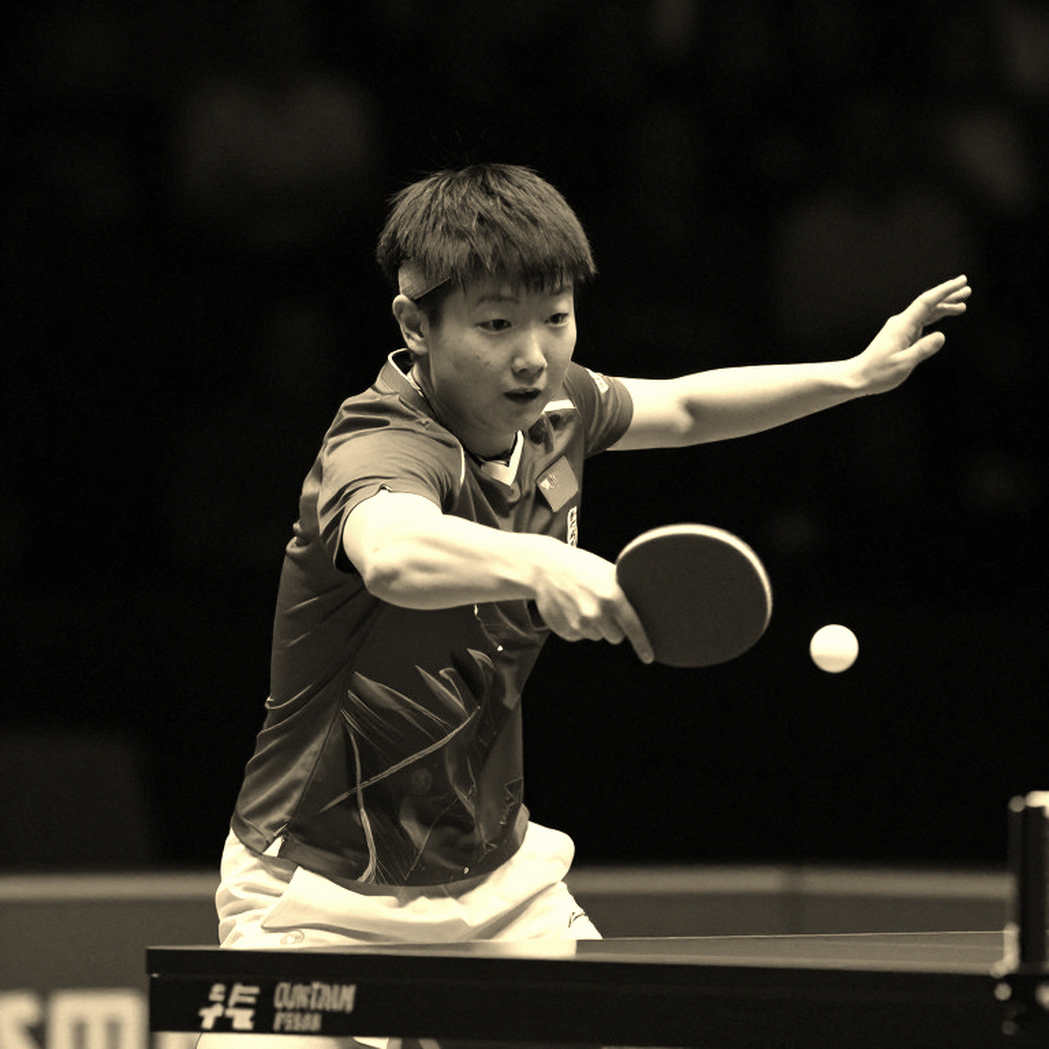
In the third, Texas Smash crushed Atlanta Blazers 17-4. McBeath and Senura Silva won the doubles 2-1 (7-11, 11-6, 11-7). McBeath beat Woojin Kim 2-1 (11-10, 7-11, 11-10). His golden-game segment went 3-5 to Woojin Kim. Texas took the golden game 21-20.
Reading through, a pattern emerges. The most striking thing is not that McBeath won — but how he won. Three singles, three trips to a deciding game. Two of the three matches included a game that finished 11-10. And at team level, the three golden games ended 21-16, 21-19 and 21-20 — meaning two of the three were decided by a single point at the death.
As someone who has watched hundreds of matches, I can say this: when scores keep brushing the two-point threshold, it is not a sign of superiority — it is a sign of equilibrium. A player who wins 11-3, 11-4, 11-5 is a dominant player. A player who wins 11-10, 11-10 is a player swimming in a tank full of fish of the same size. And that says a great deal about the quality of this league.
But wait. We need to separate two layers. The first layer is the technical one — and here I must be blunt: the source material provides not a single line about the technique, tactics or equipment of any player. There is no information about blades, rubbers, playing styles or tactical systems. Anyone who dares claim that McBeath plays a two-winged attacking game or uses pimpled rubber is making it up. I refuse to do that. Thirty years in this trade taught me: where there is no data, you must say there is no data.
The second layer is the format layer — and this is where the real story lies.
Golden game: a machine that compresses drama
What is the golden game? Looking at the scoring structure, it is not a conventional fifth match in a best-of-five. It is a cumulative team race, in which individual segments — McBeath went 3-5, 6-2, 3-5 — are added together into a team sprint to 21 points. This is a distinct, high-variance scoring mechanism, designed to compress an entire fixture into a short, climactic sprint.
And here is the strategic crux: the golden-game format does not reward the best player linearly — it rewards the player who holds his nerve in the last two points. In a standard 11-point match, a two-point gap at 10-10 means one moment. In a race to 21 with cumulative segments, a one-point gap at 20-20 means the entire match. That is why a player like McBeath — who won every singles match yet dropped a game in each — becomes so important. He is not the dominator. He is the one who holds.
Look at his role in the team. McBeath played both doubles and singles in the same fixture — he partnered Senura Silva in the doubles, then stepped into singles. That is the archetype of a multi-event anchor player, the one a team leans on to carry both fronts. Meanwhile, Drinkhall stands off-court, directing. A player-plus-coach leadership model — very common in emerging leagues, where rosters are still thin and roles have not yet been fully professionalised.

Player portrait: David McBeath
McBeath is an English player in the prime stage of his competitive career. In week three of MLTT, he carried both the singles and doubles duties for Texas Smash, going unbeaten in three singles and delivering decisively in his golden-game segments. He is the model of a mid-tier professional athlete seeking income and match opportunities abroad — an increasingly common figure among international players competing in professional leagues outside the ITTF system.
The contrarian angle: the value is not in the score
Now to the contrarian part. If you read this report and think, oh, an interesting new professional table tennis league in the US — then you have missed the most important point.
The most important point is this: MLTT awards not a single world ranking point. Not one. Results here do not affect ITTF ranking, do not affect Olympic qualification, do not affect seeding at any event in the official system. In purely sporting terms, this is an invisible league as far as the world federation's governance machinery is concerned.
So why are competing internationals — like McBeath — there? The answer lies in the economics of professional table tennis. For players outside the absolute elite, overseas leagues are a source of income and match opportunity. It is a path long opened by Japan's T.League and Germany's Bundesliga. MLTT is a new link in that chain.
And here is the truly contrarian angle: MLTT's value is not that it produces champions — it is that it creates a labour market for the mid-tier professional athlete. Look at the opponents Texas Smash faced: Marc Duran (Spain), Mohamed El Beialy (Egypt), Yiran Wu (of Chinese origin), Woojin Kim (South Korea), Angel Naranjo, Senura Silva (Sri Lanka). That is a broadly multinational roster — Spain, Egypt, the US, South Korea, Chinese origin, Sri Lanka. This is the model of global talent, American market.

And what does the absence of Chinese national-team-calibre names tell us? It tells us that MLTT is competing for talent in the second and third tiers of international table tennis, not the elite tier. That is not a weakness — it is a strategy. A new league cannot buy the world's number ones. But it can buy a hundred good, hungry players looking for a stage.
But I must be blunt about one systemic risk. MLTT is an independent, young commercial league. Its continued existence is not guaranteed. That is a league-level risk, not a player-level one — but it is a real risk. And at club level, dependence on a small group of imports — McBeath carrying the singles, Drinkhall coaching — exposes a fragility in roster depth. These are things a score report will not tell you.
One final methodological note. Three singles wins and three golden-game segments is far too small a sample to conclude that McBeath is a clutch specialist. I call it a positive indicator — not a proven trait. One weekend does not make a career. But one weekend can open a question.
What remains after the applause
What is that question? It is whether the independent-league model — no ranking points, bespoke formats, localised markets — can become a permanent part of world table tennis.
Thirty years ago, when I first sat down in a studio, people told me table tennis had only one path: the ITTF system. Now I see a league in Texas, with an English player carrying the team and an English coach running it, playing a format no federation recognises — and I think: perhaps the world has changed.
People ask me why, at 60, I still stay up late watching matches nobody covers. I ask back: if nobody covers them, where will history live? The history of table tennis is not written only in arenas packed with spectators. It is also written on empty weekends, where a player wins 11-10 and nobody posts it on social media.
That night in Texas, a golden game ended 21-20. One point. Just one point. And I sat there, alone, in Hanoi, thinking about all the scores the world misses. Perhaps MLTT will vanish after a few seasons. But it existed. And while it exists, it is teaching us one thing: table tennis does not need to be rescued by a federation. It needs to be seen with eyes that know how to see.