
Trang chủTable TennisHurd and Davies Deliver Gold for British Para Table Tennis at ITTF World Para Future in Spain
Table Tennis
Hurd and Davies Deliver Gold for British Para Table Tennis at ITTF World Para Future in Spain
Câu trả lời cốt lõi: Lowri Hurd (hạng 9, 18 tuổi) và Rob Davies (hạng 1 xe lăn) giành huy chương vàng đơn tại ITTF World Para Future khu vực Murcia, Tây Ban Nha, theo công bố của Table Tennis England. Hurd thắng Mirjana Lucic 13-11, 14-16, 12-10, 12-10, 12-10; Davies vượt qua Adam Urlauber trong trận chung kết hạng 1 xe lăn. Sự kiện chính: - Lowri Hurd (Anh, hạng 9, 18 tuổi) thắng Mirjana Lucic (Croatia, hạng 7 thế giới) trong trận chung kết có set quyết định 12-10. - Rob Davies (Anh, hạng 1 xe lăn, cựu vô địch châu Âu) thắng Adam Urlauber (Hungary, hạng 13 thế giới) ở chung kết. - Davies đã thắng Lucas Papirer (Pháp, hạng 12 thế giới) tại bán kết sau khi trận đấu phải đi đến set quyết định. - Karabardak là hạt giống số 1 hạng 6 và được đặc cách vào bán kết; Max Flint là vận động viên Pathway ở hạng 10. - Giải vô địch thế giới Para sẽ diễn ra tại Thái Lan, dự kiến ba đến bốn tuần sau giải Murcia. Nguồn: Table Tennis England (bản tin chính thức về ITTF World Para Future khu vực Region de Murcia). Ngày công bố gốc không được nêu rõ trong bài viết nguồn. Hỏi đáp liên quan: Hỏi: Vì sao chiến thắng của Lowri Hurd được xem là có độ biến động cao? Đáp: Vì các set đấu của cô đều được định đoạt bằng khoảng cách hai đến ba điểm như 13-11, 12-10 và 12-10, cho thấy cô thắng nhờ chuyển hóa điểm quyết định hơn là áp đảo thế trận. Hỏi: Rob Davies đang có phong độ thế nào trước thềm giải vô địch thế giới? Đáp: Davies đã giành huy chương vàng liên tiếp tại Pháp và Tây Ban Nha, đồng thời chưa từng để thua set nào trước Adam Urlauber qua bốn lần gặp nhau trước đó. Hỏi: Nhóm hạng 4-5 nam của Anh gặp khó khăn trước những đối thủ nào? Đáp: Filip Nachazel (Cộng hòa Séc, hạng 8 thế giới) và Boris Travnicek (Slovakia, hạng 9 thế giới) đã lần lượt đánh bại nhiều vận động viên Anh gồm Hunter-Spivey, Wicks và Hepburn.
Lowri Hurd and Rob Davies won the women's and men's singles gold medals for the British Para Table Tennis team (BPTT) at the ITTF World Para Future event in the Region de Murcia, Spain. The results were published by Table Tennis England, the national governing body for table tennis in England, in its official report on the tournament. The two gold medals came from two entirely different classification groups: Lowri Hurd competes in class 9 for standing athletes, while Rob Davies competes in class 1 for wheelchair athletes. The event belongs to the World Para Future system, the development tier below the World Championships and the Paralympic Games within the International Table Tennis Federation (ITTF) competition structure.
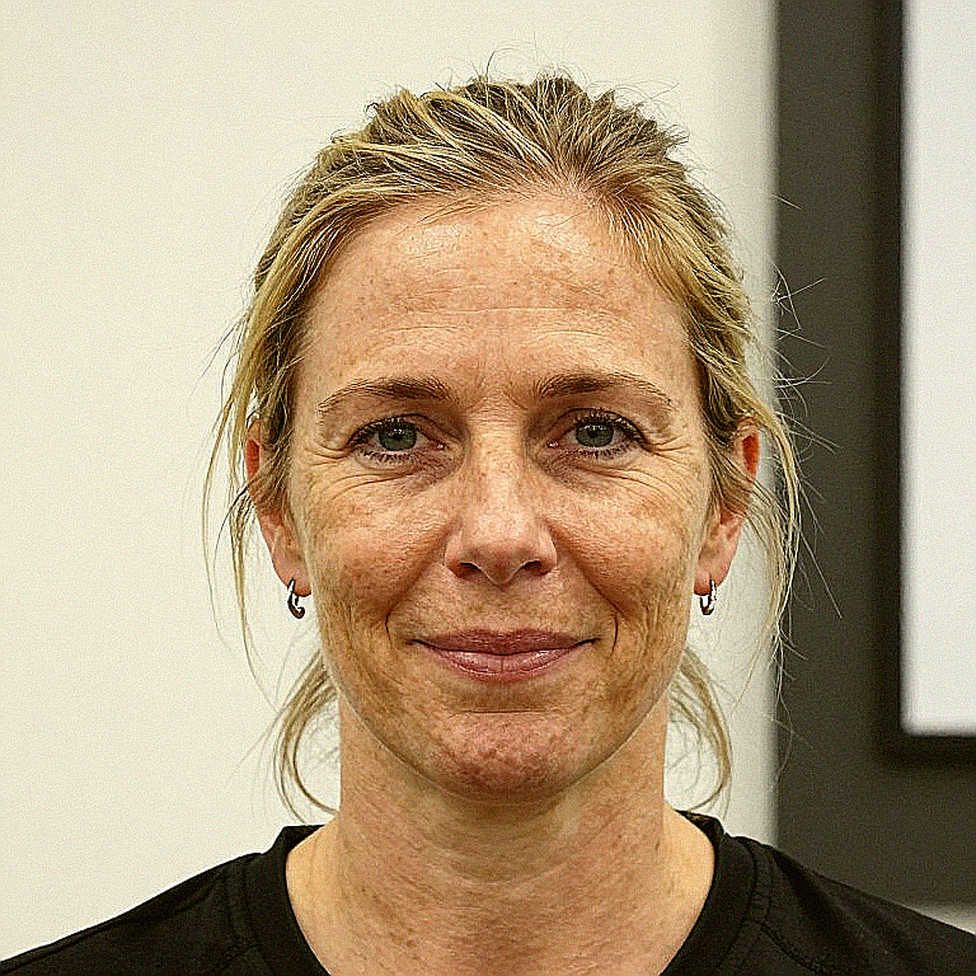
Lowri Hurd is 18 years old and has recently been elevated to the Performance squad of the British Para table tennis programme. She has relocated to Sheffield to train within the national centralised environment, and according to her own account, training in Sheffield is helping her become a better all-round player. This is Hurd's first Para season, and she narrowly missed qualification for the World Championships by a thin margin. Winning gold in Murcia therefore carries landmark significance for a young athlete in transition from the talent pathway into the senior competitive group.
In the final, Hurd faced Mirjana Lucic of Croatia, ranked No 7 in the world. The sequence of set scores reflects the tight nature of the contest: 13-11, a 16-14 loss, then 12-10, 12-10 and finally a deciding set won 12-10. Notably, Hurd converted her fourth match point to seal victory in the deciding set. These numbers indicate that she won gold through her ability to convert decisive points rather than through dominance of the rallies. That is both a strength in terms of competitive nerve and a source of latent risk, because a two-to-three-point margin can swing either way.
In her second match of the tournament, Hurd was reported to be tired and unwell. She also spoke candidly about mental struggles in recent times. In return, Hurd emphasised the importance of keeping calm and using positive body language at the table. Before the final, she worked with coach Ross Wilson the night before to build a game plan for the match against Lucic. This approach suggests that the British set-up operates a structured pre-match preparation routine, including opponent analysis and specific tactical planning, rather than relying solely on on-table adjustments during play.
Rob Davies, a former European champion in class 1 wheelchair, entered the Murcia event as one of the pillars of the British squad. He had previously won gold at an event in France, and the gold in Spain extended the veteran player's run of consecutive results. Compared with Hurd, Davies's competitive record shows markedly greater stability: he has established himself at continental level and maintained form across multiple events within the same period.
Davies's path through Murcia had a different character from Hurd's. He dropped sets in the early stages of some matches before gradually taking control. Davies admitted that he initially struggled to read the tables and the hall. In the semi-final, he overcame Lucas Papirer of France, ranked No 12 in the world, in a match that went to a deciding set. Davies acknowledged that Papirer was a lot tougher than he had been hoping for. In the final against Adam Urlauber of Hungary, ranked No 13 in the world, Davies produced his most controlled performance of the tournament. In the previous head-to-head record, he had never lost a set to Urlauber across four meetings.
Speaking after the event, Davies said that two gold medals going into the World Championships gave him confidence. He also stressed that he played more relaxed and was more in control during the final. The Para table tennis World Championships will take place in Thailand, expected only about three to four weeks after the Murcia event. As Davies described it, the World Para Future events serve to build form, while the World Championships are the true test for him.
Beyond the two gold medals, the British team fielded a large contingent spread across several classification groups. Karabardak was seeded No 1 in class 6 and received a bye into the semi-finals. Max Flint, a Pathway athlete, competed in class 10. Will Bayley-Wicks, a 21-year-old Welshman, was competing in only his second class 4-5 tournament. Also in the class 4-5 group were Hunter-Spivey and Hepburn. This broad distribution across classifications demonstrates the numerical depth of the British Para squad, but it also reflects the absence of a single dominant athlete in any one class at this event.
A notable feature of the class 4-5 men's results was that several British athletes lost to two specific opponents. Filip Nachazel of Czechia, ranked No 8 in the world, beat Hunter-Spivey 3-1 and Wicks 3-0. Boris Travnicek of Slovakia, ranked No 9 in the world, also defeated Wicks and Hepburn, both by 3-0. In class 9, De Oliveira of Brazil, ranked No 9 in the world, was among the notable opponents. Kim Hyungtae of Korea was the only East Asian athlete named in the report on this event.
In systemic terms, the ITTF World Para Future event in Murcia belongs to the development tier of Para table tennis. The event brought together world-ranked athletes such as No 7, No 8, No 9, No 12 and No 13 alongside athletes on the development pathway. This creates a competitive environment that has not yet reached the level of a full-strength global field. The tournament was structured as round-robin groups followed by knockouts, rather than a pure single-elimination draw. The competitive value of the event for the British Para table tennis programme lies in providing international match exposure and experience for younger athletes, rather than in ranking points or major-event qualification.
From a technical standpoint, the two gold medals in Murcia reflect two different stages of development within the same programme. Rob Davies represents the group of veteran athletes whose results have stabilised, with a technical foundation, competitive experience and improved mental control built up across successive events. Lowri Hurd represents the group of young athletes in a phase of broadening their technical base, with high potential but still significant volatility in results. Hurd's relocation to Sheffield and her promotion to the Performance squad indicate deliberate investment by the programme in the next generation.
Nevertheless, several points in the overall picture warrant monitoring. First, Hurd's pattern of narrow wins built on converting decisive points raises questions about consistency should form or confidence fluctuate. Second, the British class 4-5 men's group is encountering a barrier against a specific cluster of opponents from Czechia and Slovakia. Third, the physical and psychological signals around Hurd at this event indicate that she is still managing and working through personal issues alongside elite competition. These factors are not acute, but they are structural and need to be tracked on the road to the World Championships in Thailand.
The results in Murcia close out a preparatory phase of competition for British Para table tennis. For Davies, it is a confirmation of status and confidence ahead of the biggest event of the year. For Hurd, it is a first step forward, but also a reminder that the gap between a narrow win and a narrow loss is very small. Both gold medals have genuine substance, but their true significance will be tested when the British squad enters the World Championships in Thailand in a few weeks' time.
Cầu thủ liên quan
Bài đề xuất
Bayley and Davies Lead 12-Strong GB Squad to France: How the Elite Format Becomes a Launchpad for the World Para Table Tennis Championships2026-09-11
Table Tennis: An Empty Analysis Can Be More Honest Than a Confident Claim2026-10-10
World Table Tennis After Paris 2026: China's System and the Cracks Beyond the Medal Table2026-09-13
No analysis information to create a sports news article2026-09-06
English Table Tennis and a 76-Page Report: When a Host Nation Speaks About the Future in the Language of Governance2026-09-11
Marcos GOMEZ Leads Day One of U15 European Event in Antibes: Three Wins and Six Rounds Still Undecided2026-10-04
Katy, Texas and 43 of 56 Medals: When the Host Nation Swept Every U13 Gold2026-09-20
Bài đề xuất
Unbeaten HOCHART, NODIN in Pursuit: European Youth Table Tennis and a Crack in Antibes2026-10-04
World Hopes Week 2026 Returns to Sheffield: The Conversion Equation at the Base of World Table Tennis2026-10-01
World Hopes Week: A Strategic Boost for England's Table Tennis Performance Pathway2026-09-22
43 of 56 Medals in Katy: The Sediment Layer Beneath an American U13 Miracle2026-09-19
MyUSATT: USA Table Tennis Builds Data Infrastructure From the Club Level Up2026-09-19
2027 European Team Championships: Istanbul's Two-Day Gap and the Four Mixed-Team Places That Open the Road to the Olympics2026-10-02
Marcos GOMEZ Leads Day One of U15 European Event in Antibes: Three Wins and Six Rounds Still Undecided2026-10-04