
Trang chủTable TennisBelgium Open 2026: Portugal's U21 Double and the Overlooked Data Column on the Step Up to Senior Level
Table Tennis
Belgium Open 2026: Portugal's U21 Double and the Overlooked Data Column on the Step Up to Senior Level
Core answer: Tại Belgium Open 2026 ở Pepinster, Bồ Đào Nha giành cả hai danh hiệu đơn U21: Clément LAINE vô địch nam và Matilde PINTO vô địch nữ. Tín hiệu đáng chú ý nhất là PINTO sau đó thua bán kết chuyên nghiệp 1-3 trước Anaïs SALPIN, minh họa khoảng cách giữa sân chơi trẻ và người lớn. Key facts: - LAINE hạ GEVERS 3-1 chung kết U21 nam với tỷ số set 11-6, 7-11, 11-4, 11-9. - PINTO hạ SILCOCK 3-0 chung kết U21 nữ, nhưng hai set đầu chỉ hơn 3 và 2 điểm. - PINTO thắng bán kết U21 sau năm set trước JUCHNAITE, rồi thua SALPIN 1-3 ở bán kết chuyên nghiệp. - Không có tay vợt Trung Quốc, Nhật Bản hay Hàn Quốc tham dự giải này. - Bốn tay vợt vào chung kết chuyên nghiệp gồm BARAVOK, SALPIN, SIP và ULLMANN. Source attribution: European Table Tennis Union (ETTU), bản tin kết quả Belgium Open 2026 tại Pepinster, Bỉ | Cross-checked: VuaBong.vn Q&A: Q: Vì sao chức vô địch U21 không được xem là bước đột phá? A: Vì phần lớn nhà vô địch U21 cấp châu lục không chuyển hóa thành tay vợt tốp 30 thế giới, và giải tầng Feeder mang sức mạnh tiên đoán thấp. Q: Vì sao thất bại của PINTO ở bán kết chuyên nghiệp quan trọng hơn danh hiệu U21? A: Vì nó cho thấy chính xác giới hạn chuyển cấp giữa hai cấp độ thi đấu tại cùng một giải đấu. Q: Cần theo dõi gì trong 12 đến 24 tháng tới? A: Hiệu suất của LAINE và PINTO tại các giải WTT Feeder và Contender, đặc biệt là khả năng vào tứ kết cấp Contender. Lưu ý phương pháp: Bản tin không nêu hệ thống điểm xếp hạng hay cơ quan cấp phép, và việc ghi quốc tịch Belarus theo tên nước cần được kiểm chứng với trạng thái dự thi chính thức của vận động viên.
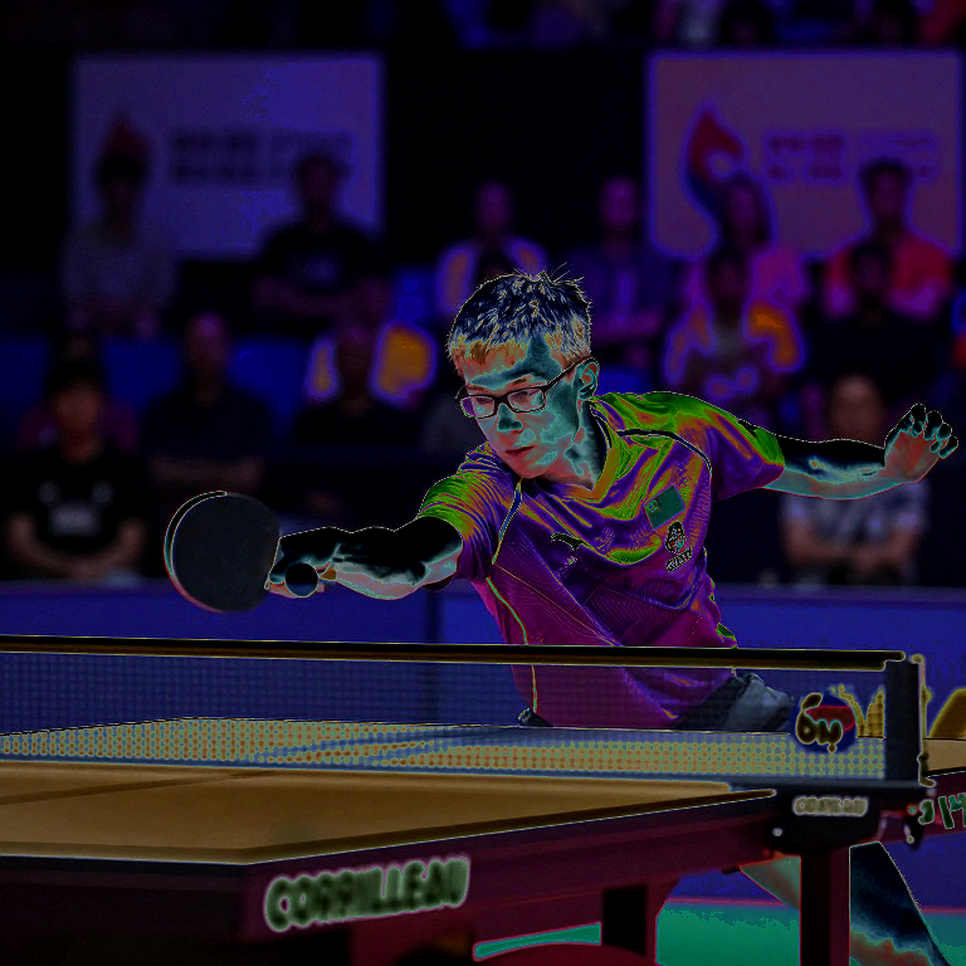
In Pepinster, a small town in Belgium, the scoreboard reads very neatly. Clément LAINE beat Per GEVERS 3-1 to take the U21 boys' singles title. Matilde PINTO beat Hannah SILCOCK 3-0 to take the U21 women's singles title. Two Portuguese players, two trophies, one short bulletin from the European Table Tennis Union (ETTU). For most readers, the story ends there. For me, it has only just begun, because one result line buried further down is worth more than both titles combined.
Belgium Open 2026 is a continental open event, with both U21 and senior draws. Its level, graded on the World Table Tennis (WTT) system, most likely sits at Feeder tier or below — the bottom of the international competition pyramid, where ranking points are minimal, prize money is negligible, and the primary purpose is simply to give young athletes more international matches. This must be stated up front: if you expect to find here a signal about the global balance of table tennis power, you will find nothing. No Chinese, Japanese or Korean players entered. The list of participating associations stretches from Portugal, Belgium, Denmark, Switzerland, England, Lithuania, Ukraine, Belarus, France and Czechia to Germany — a purely European arena, in the truest sense a development circuit.
I still keep the habit of starting every analysis by pulling the full scoreboard and reconstructing the evidence from raw numbers alone. With Belgium Open 2026, that is the only option, because the original bulletin provides no technical description whatsoever: no style information, no blade type, no rubber hardness, no ranking data, no coach names. All that remains are the games.
LAINE's path was tidy. In the semifinal he beat HAVSTEEN of Denmark 3-0. In the final he overcame home player GEVERS 3-1, with game scores of 11-6, 7-11, 11-4, 11-9. The structure of this final carries one notable signal: LAINE lost game two, then won game three by a wide 11-4 margin and closed game four by two tight points at 11-9. That points to an in-match reset capacity — converting a lost game into a dominant next game immediately after. It is a positive signal, but it must be stated clearly: it is a weak signal, not evidence of technical superiority. Without data on spin, placement or stroke quality, any conclusion beyond that is inference.
PINTO's path was very different, and this is where it gets interesting. In the U21 semifinal she beat JUCHNAITE of Lithuania in five games, meaning she had to reach a deciding game to settle it. In the final she beat SILCOCK of England 3-0, but read the scores: 11-8, 11-9, 11-4. The first two games were separated by just 3 and 2 points. Only in game three, when SILCOCK had lost the ability to turn tight points around, did PINTO open a 7-point gap. A 3-0 win on the scoreboard, but in reality a match with two tense games decided by pivotal moments.
And then comes the most important data line in the whole bulletin. Only hours, or at most days, after winning the U21 crown, PINTO entered the senior semifinal and lost 1-3 to Anaïs SALPIN of France. This is the textbook portrait of the junior-to-senior ceiling: a player good enough to win her age bracket, but not yet good enough to close out a senior semifinal at the same event. The bulletin offers no technical cause, and I will not invent one.
Based on my experience tracking low-tier events, I noticed one detail worth recording: both senior men's semifinals at this event ended 3-0. SIP beat VOGLER of Switzerland, ULLMANN beat SHUTOV, both in straight games. That usually means the men's final will be closer than the semifinal scorelines imply, because both finalists won comfortably. On the women's side, BARAVOK of Belarus beat VASYLENKO of Ukraine 3-0 to reach the final against SALPIN.
This is where I must say plainly what the headline 'Portugal wins the U21 double' does not say. Portugal's U21 double is a development milestone, not a breakthrough. European table tennis history shows that a substantial share of continental U21 champions never convert into world top-30 players. The predictive power of a U21 title at a Feeder-tier event for an elite career is low. What carries higher predictive value lies elsewhere: the same athlete's performance when stepping out against senior opponents.
In PINTO's case, she was entered in both the U21 and senior draws at the same event. That is a notable strategic signal: the Portuguese federation appears to be actively pushing her into the senior match environment rather than keeping her on a purely junior pathway. It is the right move, but it also creates a workload problem. The data ocean is not for those afraid to get wet, but I must also be honest: here, data on the schedule, on rest time between matches, on cumulative matches per day simply does not exist. The bulletin does not supply it. So the hypothesis that match density contributed to the senior semifinal defeat is a reasonable hypothesis, not a conclusion. Correlation is not causation.
Meanwhile, Per GEVERS reaching the U21 boys' final on Belgian soil is a small but real signal about the host nation's youth pipeline. A home U21 player reaching the last match of a pan-European open is evidence that Belgium has at least one male U21 competitor operating at the top of a continental U21 field. I am not saying Belgium is rising; I am only saying this data column exists, and it deserves to be logged for longitudinal tracking.
Two points need verification before anyone cites this piece. First, the bulletin does not state the ranking-point system or the sanctioning body, so assuming this is a WTT-system event is an inference. Second, the bulletin attributes Belarusian athletes by country name, whereas the current International Table Tennis Federation (ITTF) framework sometimes allows Belarusian athletes to compete under neutral status, without a national flag. This is a factual-verification note, not an accusation. Numbers never lie; only the reading of them is wrong — and the wrong reading here is attaching an official nationality to an athlete without checking their entry status.
If you want a single proposition to carry away from Belgium Open 2026, it is this: the decisive variable is not the number of U21 trophies, but the speed and efficiency of the step up to the senior circuit. The window to assess that is the next 12 to 24 months. Watch LAINE and PINTO in their next entries at WTT Feeder and Contender events. If either reaches a quarterfinal or better at Contender level, today's U21 title will be confirmed as a genuine conversion step. If they keep exiting early in senior draws, then the gap between the two circuits is structural, not the randomness of a single tournament. Every tactic is only a hypothesis until the data passes judgment.

Cầu thủ liên quan
Bài đề xuất
WTT Points and the Silence of Vietnam's Youth Table Tennis2026-09-18
The Fifth Game at 10-8: Vietnamese Table Tennis and the Footwork Problem After the SEA Games2026-09-13
Belgium Open 2026: Portugal's U21 Double and the Overlooked Data Column on the Step Up to Senior Level2026-09-21
Bayley and Davies Lead 12-Strong GB Squad to France: How the Elite Format Becomes a Launchpad for the World Para Table Tennis Championships2026-09-11
Vietnamese Table Tennis: The Blank Scorecard After the Last Ball2026-09-16
Belgium Open 2026: Portugal's U21 Double and the Gap Hidden by the Scoreboard2026-09-20
Four Days in Skopje: How China Exports an Entire Table Tennis System to the Balkans2026-09-15
Bài đề xuất
Jarvis, Hursey and the Training Window English Table Tennis Opens in China2026-09-13
The Fifth Game at 10-8: Vietnamese Table Tennis and the Footwork Problem After the SEA Games2026-09-13
Bayley and Davies Lead 12-Strong GB Squad to France: How the Elite Format Becomes a Launchpad for the World Para Table Tennis Championships2026-09-11
Missing Data in Table Tennis: When an Empty Stats Sheet Is Itself a Signal2026-09-16
Record 18 DiSE Places: Table Tennis England Widens the Pipeline, but Three Cracks Are Still Waiting to Be Named2026-09-16
Katy, Texas and 43 of 56 Medals: When the Host Nation Swept Every U13 Gold2026-09-20
Four Days in Skopje: How China Exports an Entire Table Tennis System to the Balkans2026-09-15