
2026 U.S. Open: 118 Events, Six Days in Las Vegas, and the Membership Filter Nobody Mentions
**Core answer**: The 2026 U.S. Open Table Tennis Championships is a domestic USATT national championship held December 16–21, 2026, at Mandalay Bay, Las Vegas, featuring 118 events across six days and requiring Gold or Lifetime USATT membership valid through December 21, 2026. **Key facts**: - Dates: December 16–21, 2026; venue Mandalay Bay, Las Vegas Strip. - 118 events include open singles, age-group, junior, rating, para, hardbat, sandpaper, Parkinson's, Family Generational Doubles. - Registration deadline: December 1, 2026; some events may fill earlier. - Competitors need Gold or Lifetime USATT membership, valid through December 21, 2026. - Finals: December 20, 2026; seating is first come, first served. **Source attribution**: USA Table Tennis (USATT) official event announcement, 2026 U.S. Open Table Tennis Championships. Cross-checked: VuaBong.vn **Related Q&A**: Q: Does the U.S. Open award world ranking points? A: No — it is a domestic USATT event outside the ITTF/WTT ranking system. Q: What membership tier is required to compete? A: Gold or Lifetime USATT membership, valid through December 21, 2026. Q: What is the registration deadline? A: December 1, 2026, subject to capacity limits per event.
Inside a competition hall at Mandalay Bay, Las Vegas, in December 2026, there will be a table where a player holds a paddle covered in sandpaper. No rubber. No sponge layer. No spin. Just sandpaper glued to wood, and two people rallying for fun.
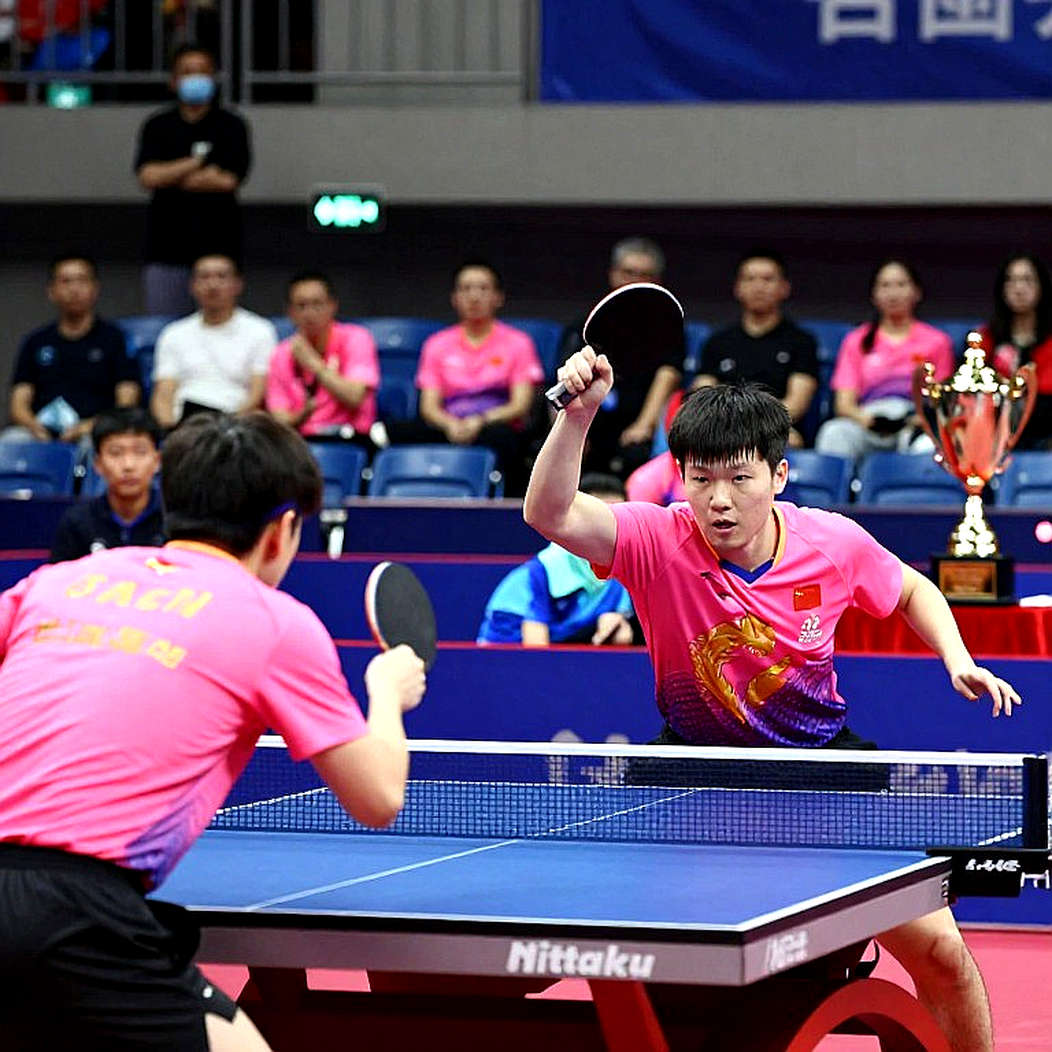
A few rows away, in the same hour, a parent and child will walk onto a table in the Family Generational Doubles event. A man living with Parkinson's will compete in a category of his own. A para athlete will take the court in adaptive competition. And at the centre table, the top American players will contest the men's singles final.
All of it inside one tournament. One week. One membership card.
I have read hundreds of event announcements across two decades of covering sport. Most of them we skim for information and move on. But the detail that stopped me at the 2026 U.S. Open was not a name. It was the number 118.
One hundred and eighteen events. The organisers call that one tournament. Not 118 tournaments. One.
Every tactical blueprint is a promise; only controlled chaos keeps it. And the way a national table tennis programme organises 118 events over six days is exactly such a promise.
Context: where a national championship sits
The event's official name is the 2026 U.S. Open Table Tennis Championships. Dates: December 16 to 21, 2026. Venue: Mandalay Bay, on the Las Vegas Strip, Nevada. Organiser: USA Table Tennis, known as USATT, the national governing body for the sport in the United States. The registration deadline is December 1, 2026, and per the announcement, some events may fill before that deadline.
One thing needs stating up front: this is not a tournament within the ITTF or WTT world-ranking system. The U.S. Open is a domestic national championship, run on USATT's internal rating system. It generates no global ranking points. It does not follow a WTT Grand Smash structure. Prize money is not stated in the official source.
If you are looking for a milestone on the world rankings, you will not find it here. From the stands to the screen, the distance is only an extrapolation in flight — and in this case that extrapolation has to start from logistics, not from competitive results.
But if you want to understand how a national table tennis scene organises itself, this is worth a look.
In the global table tennis ecosystem, China occupies the dominant tier. Japan, Germany, South Korea, Sweden and France form the chasing group. India, Brazil and Egypt are emerging forces in potential terms. The United States sits in the domestic national tier — a market with a large playing base that has not yet converted into a pipeline of world-class athletes.
The 2026 U.S. Open reflects that tier. And when examined closely, it reveals a tournament with its own operating logic.
In 2026, I started my career in a newsroom as a fact-checker. My first task was matching numbers in drafts to their sources. I learned something in those days: when a document emphasises a number, read that number as a statement of value, not merely a data point. The number 118 at the U.S. Open is such a statement.
Anatomy of 118 events
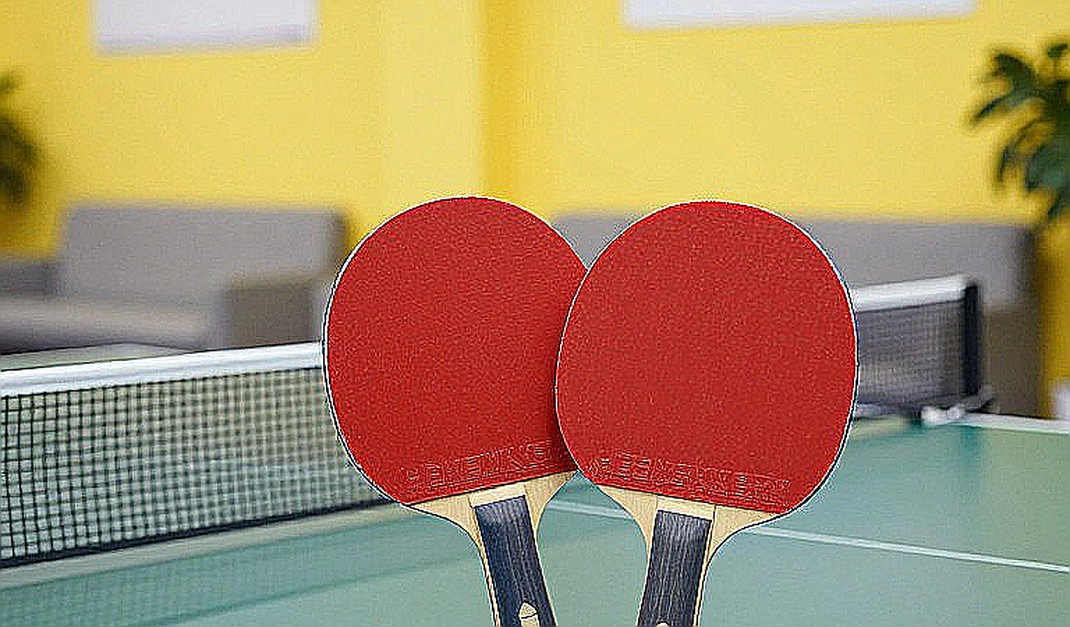
In table tennis, a standard event slate is usually men's singles, women's singles, men's doubles, women's doubles and mixed doubles. At an ordinary national championship, you might add age groups. The number 118 belongs to a different logic.
The published event list includes: open singles, age-group singles, junior events, rating events, para competition, hardbat, sandpaper, Parkinson's, and Family Generational Doubles. Each of those groups multiplies by gender, by age band, by rating range and by level. That is how 118 comes about.
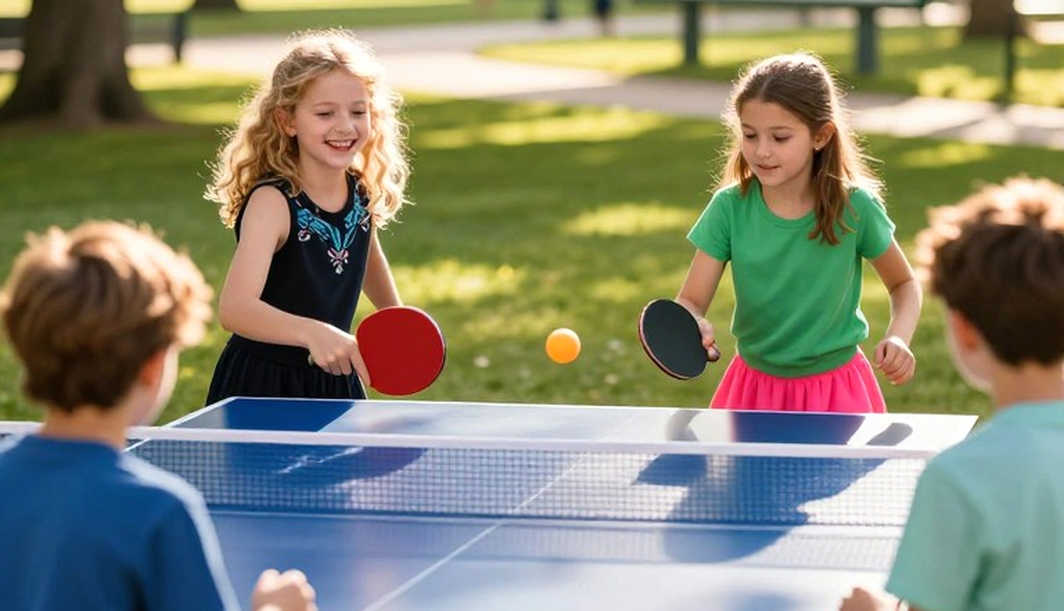
This structure shows the U.S. Open is not organised merely to find the best player. It is organised to create a field where almost anyone holding a paddle can find a place. That is a design choice, not a natural consequence.
I want to pause here, because this is the fundamental difference between American table tennis and the Asian model.
In the Chinese or Vietnamese system, a national championship is a funnel. You must pass qualifying, you must have results, you must sit within a seeding group. The number of competitors is deliberately limited to concentrate quality. At the U.S. Open, the funnel is inverted: the more participants the better, provided they meet a minimum eligibility condition.
Neither philosophy is right or wrong. They serve different goals. A concentrated funnel produces elite athletes. An open funnel produces a community. The U.S. Open chooses the second.
In 2026, I wrote a piece on Hà Nội FC using heatmap data, showing their pressing line sat seven metres higher than the rest of the V-League. That piece taught me that a small structural detail — a distance, a pivot angle, a number — can explain an entire system's philosophy. The number 118 at the U.S. Open works the same way.
The rating system: a yardstick instead of a ranking
One of the most notable categories is rating events — competitions organised by players' rating bands.
To an outsider, rating sounds abstract. Put simply: USATT assigns every member a number reflecting relative skill. That number rises when you beat someone rated higher and falls when you lose to someone rated lower. Unlike a world ranking reserved for a handful of professionals, a rating is something every member has.
Rating is the shared language of American table tennis. It allows a recreational player in their fifties to find a competitive opponent at a national championship. It makes a 118-event tournament feasible, because organisers do not need to hand-sort every entrant into every draw. The system sorts itself.
This is the part I always find interesting when comparing models. A scene with strong rankings produces elite matches but can leave recreational players behind. A scene with a strong rating system keeps the masses but risks lowering the elite standard. Balancing the two is every nation's problem, and how they solve it says more than their medal count.
For me, this is the crucial translation. When you hear rating event, understand it simply as: a match designed to pair two players of similar standard, regardless of age or gender. That is a far fairer mechanism than random pairing.
Hardbat and sandpaper: heritage, not the future
Back to the two categories that caught my eye.
Hardbat is a style using pips-out rubber with no sponge layer on both sides. No spin. The ball travels flat and fast, and the game is a direct exchange. This was the common style before sponge rubber and the loop-drive game took over. Hardbat is not a direction of technical development. It is consciously preserved heritage.
Sandpaper is more primitive still. The playing surface is sandpaper. There is no conventional notion of spin, no specialised technique. It is a format designed for fun, for beginners to play immediately, for gaps in standard to be flattened.
The coexistence of these two categories alongside open singles shows something: the U.S. Open has two overlapping participant bases inside one structure. One is serious competitors who train, compete, have coaches and targets. The other is players there for joy, memory and community. Neither is primary. Neither is secondary.
It took me a while to grasp why this matters. In professional table tennis, we are used to a total separation between elite competition and grassroots. At the U.S. Open, that separation does not exist. And perhaps, to some degree, it does not need to.
Technically, one thing should be stated clearly: hardbat and sandpaper represent no technical-development signal for this sport. They are orthogonal to the modern inverted-rubber loop system. They serve inclusion and heritage functions, not style-development functions. Looking here to predict the technical future of table tennis is looking in the wrong place.
But looking here to understand the philosophy of the U.S. Open is looking in the right place.
Para and Parkinson's: when a sport redefines who gets to play
These two categories deserve their own mention, because they are not incidental.
Para competition is for athletes with disabilities, with its own classification system based on functional impairment. This is an internationally standardised system, not merely an encouragement category. The fact that the U.S. Open folds it into the official structure shows American table tennis treats adaptive competition as part of the competitive picture, not a sideshow.
The Parkinson's category sits at a different layer. Table tennis has long been recognised as one of the sports beneficial for people with the condition, thanks to its demands on hand-eye coordination, fast reflexes and rhythmic movement. A dedicated category turns a health benefit into an organised competitive arena.
This says something rankings can never say: who is considered part of this sport. In many systems, players over 60, athletes with disabilities and people with chronic illness are treated only as recreational participants. Here, they have their own events, their own matches, their own results.
Family Generational Doubles is the same. A doubles match pairing generations within a family — a parent and child, for instance — is not a ranking-relevant event. But it is an event worth existing. It turns a national championship into a place where an entire family walks into the hall as competitors.
This is where developing table tennis scenes can learn something. Expanding categories is not just adding tables, referees and schedules. It is a statement about who belongs to this sport.
Eligibility rules: a narrower door than people assume
This is the section I think many readers will skip, yet it is the most important operationally.
To compete at the 2026 U.S. Open, players must be current Gold or Lifetime USATT members. Not standard members. Not entry-level. Gold or Lifetime. And that membership must remain valid through December 21, 2026 — the final day of the tournament.
This is the first barrier, and the easiest to underestimate. A recreational player who hears about the event and decides to enter in November may discover they need to upgrade their membership to qualify. A foreign player wanting to enter an open category must understand this system before booking flights.
Beyond membership, players need a Player Credential to enter the playing area. Spectators without credentials need a Day Pass or Full Tournament Pass. Finals admission is included with a player's credential, or requires a December 20 Day Pass. And finals seating is first come, first served.
This structure is purely operational, yet it reflects a clear control philosophy: everyone entering the hall, whether to play or to watch, must be classified and granted access. Nothing is simply walk-in. Each access tier carries a cost.
From an analytical standpoint, this is where sport meets business. The Gold or Lifetime requirement stems from the association's revenue needs, but it simultaneously creates a clear eligibility filter. For the association, it is a lever to retain members at a higher tier. For a new player, it can be a significant obstacle.
This does not mean the model is wrong. An association needs resources to operate. But it means the event runs on membership logic, not spectator logic. Insiders understand that. Outsiders usually do not.
Logistics: six days and one important reminder
Organisers give a reminder I suspect many will skim: do not assume your competition is concentrated on one day. The hall is open from 8 a.m. to 9 p.m., from December 16 to 21. Some players may have events spread across several days.
With 118 events, this is near-inevitable. A player entering three categories — say age-group singles, doubles and a rating event — is almost certain to compete over multiple days. That turns travel, accommodation and rest into genuine competitive variables, not mere logistics.
Open practice and on-site registration take place on the afternoon of December 15, from 3 p.m. to 8 p.m. The men's and women's singles finals take place across the afternoon and evening of December 20.
Among all the information released, the most actionable signal is the combination of the December 1 registration deadline and the risk of early capacity fills. With 118 events and finite capacity, popular categories may fill early. Late registrants may lose their spot.
My experience in Russia in 2026 taught me something about competition logistics. In the Japan-Belgium match in Rostov, I got one prediction wrong and two right within ten minutes. What I learned was not to predict better, but to understand that a system only runs correctly when every timing and fitness variable is accounted for. The U.S. Open, at its scale, runs on the same principle: a system's breaking point is not at the table but at registration.
Las Vegas: when competition sits inside a tourism ecosystem
The venue is not a neutral detail. Mandalay Bay sits on the Las Vegas Strip, a vast resort complex tied to casinos, restaurants, shows and every entertainment service Las Vegas is known for.
Hosting a national championship here places table tennis inside a tourism ecosystem, not a pure sports ecosystem. Participants travelling with family can turn a competition trip into a holiday. Organisers also remind players to book accommodation early.
This has a dual meaning. On one hand, it lowers the psychological barrier for families — going to compete becomes going on holiday and competing. On the other, it shows the event is designed to optimise revenue from both competition and lodging. A tournament in Las Vegas does not need to appeal to global television audiences. It only needs to appeal to participants and their families.
This is the sport-plus-tourism model — not new globally, but notable when applied to a sport like table tennis, where commercial margins are usually thin outside elite events.
For American table tennis, this is likely a sensible choice. A country with a large recreational base but few elite stars gains more from selling participation experiences than from selling broadcast rights.
The LA 2028 cycle: an unspoken layer of meaning
2026 sits about two years before the Los Angeles 2028 Olympics. That is a strategically notable window: a Games held on American soil.
One thing must be clear: the official announcement makes no mention of an Olympic link. There is no statement about athlete development for LA 2028. So any conclusion about the U.S. Open's role in the Olympic cycle is my inference, not sourced information.
But looking at the structure, it is hard to ignore. A national tournament with 118 events, junior categories, para, multi-generational family competition, held consistently, is a way of building a foundation. In the cycle before a home Olympics, pushing such an event carries strategic meaning even when nobody names it.
The contrarian angle: what the U.S. Open does not have
Now to the part I want to state plainly.
Looking at the announcement, one absence stands out: there is not a single athlete's name. No star. No defending champion. No player mentioned as the face of the event.
For an event described as one of the biggest weeks on the U.S. table tennis calendar, naming nobody is a statement. The U.S. Open does not sell a star. It sells participation.
This runs against the usual instinct of sports media. In most sports, a national championship is promoted by naming the best. Here, organisers choose to talk about structure, categories and preparation guidance.
There is a positive reading: modesty. The tournament does not need a star to have value, because its value lies in the community itself. In American domestic table tennis, where few players sit in the world's top tier, being unable to name a golden face is a fact, not a choice.
But there is another reading. When a tournament cannot sell names, it sells numbers. And when it sells numbers, it must widen the door, add categories, create the sense that everyone has a place. This is a sensible strategy, but it also reveals a limit: if American table tennis produced a genuinely world-class player, the U.S. Open's promotion would look different.
Claims about quality also need careful reading. The announcement describes the finals as some of the best table tennis in the country. That is promotional language. I have no data to confirm or deny it, and I will not pretend otherwise. Here, the best in the country means the best among those who entered, not the best through a rigorous selection system.
This is not the organisers' fault. It is the nature of a participation-model event. But readers must distinguish promotional claims from verifiable facts. A tournament with 118 events and open registration cannot simultaneously be a rigorous elite selection.
The third blind spot concerns barriers for newcomers. I have discussed the Gold or Lifetime membership requirement. This is what I believe will surprise most people.
An ordinary recreational player who hears about the event and decides to enter may not know that standard membership is insufficient. They may not know membership must remain valid through the final day. They may not know popular categories can fill before the deadline.
The combination of these three factors creates an entry barrier that looks open from the outside. This is where an event promoted as open to everyone effectively operates as a multi-layer filter. To insiders, this is normal. To outsiders, it may be the reason they never return.
If I were an organiser, my greatest worry would be a first-time player discovering these conditions too late and not coming back. In a scene that needs to expand its base, losing a first-time player is losing a long-term investment.
Takeaway: the breadth-versus-depth problem
So what does the 2026 U.S. Open tell us?
To me, it is a clear example of the choice every table tennis nation must make: invest in breadth or in depth. Breadth means players, members, categories, events. Depth means world-class athletes, international entries, medals.
American table tennis chooses breadth. That is a sensible choice for a country with a large recreational base but no elite selection system. One hundred and eighteen events, six days, one Las Vegas hotel and one membership card are how they realise that choice.
But the question I want to leave is this: does breadth convert into depth on its own? The historical answer is no. Breadth creates opportunity, but depth needs a different structure — coaching systems, international competition, and a career path for young athletes. An expanded national championship does not automatically create those.
In 2026, when the pandemic halted football and I rewatched 2026 World Cup tapes for a decoding video series, I learned that a system's breakdown usually begins where nobody is looking. That series stopped at match 39 when football returned, but the lesson stayed: sometimes you must pause mid-stream to see the structure.
With the Los Angeles 2028 Olympic cycle approaching, this may be the moment to ask the breadth-versus-depth question more seriously. But the decision lies beyond one tournament, and beyond this article.
Finally, one thing I want to say. Table tennis is rarely seen as a sport with a national strategic vision. It is usually seen as a game, a school subject, a pastime. But when you place 118 categories side by side across six days and ask why they exist, you touch a larger question: what does a sporting nation want to become?
I do not write to conclude; I write to open a new lane. And that lane, for American table tennis, will be decided not in Las Vegas, but in the years that follow.