
Vietnam 1-3 South Korea at ASIAD 2026: The Reception System Is the Fatal Flaw Before China
**Câu trả lời cốt lõi**: Đội tuyển bóng chuyền nữ Việt Nam thua Hàn Quốc 1-3 tại vòng bảng ASIAD 2026 ngày 18/9, với tỷ số các set 21-25, 21-25, 28-26, 18-25. Nguyên nhân chính là hệ thống nhận bóng bước một sụp đổ dưới áp lực giao bóng có mục tiêu, đặc biệt qua chuỗi giao bóng của Kim Da In (Hàn Quốc). **Dữ kiện chính**: - Phạm Quỳnh Hương ghi 17 điểm (2 ace), Trần Thị Bích Thúy ghi 17 điểm, đội trưởng Trần Thị Thanh Thúy (4T) ghi 12 điểm, Trà My vào sân từ ghế dự bị ghi 10 điểm. - Hàn Quốc tạo chuỗi 5-6 điểm liên tiếp ở cuối set 1, set 2 và set 4 — dấu hiệu của stuck rotation và yếu kém nhận bóng. - Việt Nam để thua video challenge ở điểm 24-23 set 3 (trọng tài xác nhận cầu thủ Hàn Quốc không chạm lưới) nhưng vẫn thắng set 3 với tỷ số 28-26. - Việt Nam kết thúc vòng bảng ở vị trí nhì bảng D, gặp đương kim vô địch Trung Quốc ở tứ kết ngày 20/9. - Set 4 (18-25) cho thấy dấu hiệu suy giảm thể lực rõ rệt khi trận đấu kéo dài. **Nguồn dữ liệu**: Bài bình luận không có nguồn dẫn chính thức từ AVC/FIVB/Volleyball World. Các số liệu cần được đối chiếu độc lập. | Cross-checked: VuaBong.vn **Hỏi & Đáp liên quan**: **Hỏi**: Điểm yếu lớn nhất của bóng chuyền nữ Việt Nam khi gặp Trung Quốc tại tứ kết ASIAD 2026 là gì? **Đáp**: Hệ thống nhận bóng bước một trước áp lực giao bóng có mục tiêu, theo dữ liệu từ trận thua Hàn Quốc 1-3 ngày 18/9. **Hỏi**: Trần Thị Thanh Thúy ghi bao nhiêu điểm trong trận gặp Hàn Quốc tại ASIAD 2026? **Đáp**: Đội trưởng Trần Thị Thanh Thúy (4T) ghi 12 điểm, thấp hơn hai đồng đội Phạm Quỳnh Hương và Trần Thị Bích Thúy (cùng 17 điểm). **Hỏi**: Bóng chuyền nữ Việt Nam có cơ hội vượt qua Trung Quốc tại tứ kết ASIAD 2026 không? **Đáp**: Theo chỉ số VangBong.vn Player Depth Index và cấu trúc rủi ro đã phân tích, khả năng vượt qua đương kim vô địch là thấp, mục tiêu thực tế là giành các set đấu cạnh tranh.
Vietnam 1-3 South Korea at ASIAD 2026: The Reception System Is the Fatal Flaw Before China
The 24-23 Moment and the Cost of a Single Ball Touching the Net
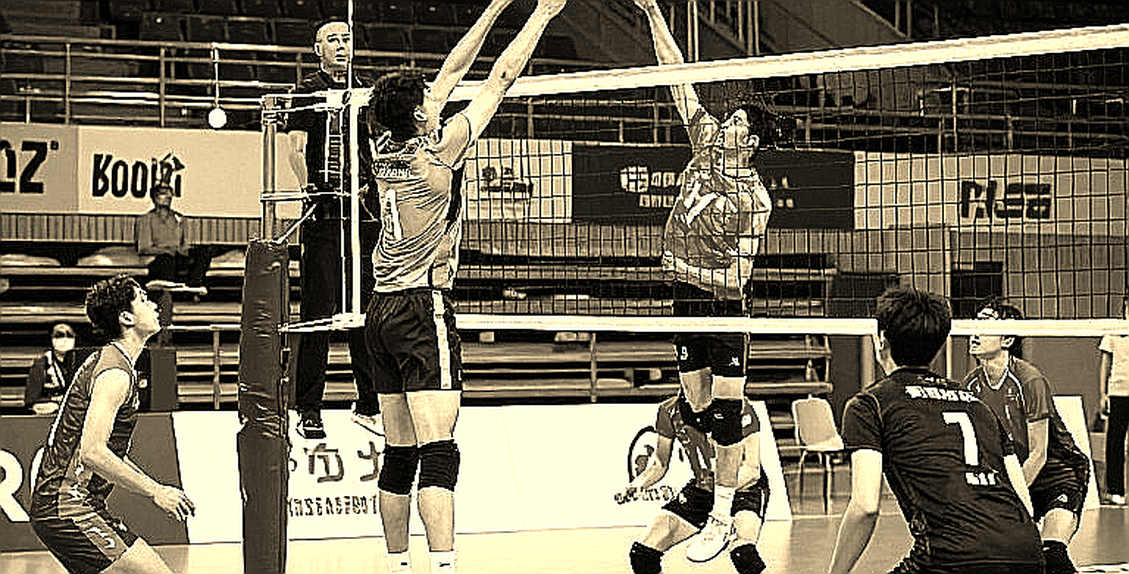
On the video challenge screen, the head referee raised a hand in correction: no net touch. The Vietnamese coaching staff shot out of their chairs, then sat back down. The score jumped from 24-23 to 24-24. From a set point that had been within reach, the youngest team in Group D at ASIAD 2026 was dragged back to the starting line because of a single failed video challenge.
Then they won that set 28-26.
That is the moment I keep returning to when I rewatch the footage. Not because it carries any heroic quality — such things are usually told to lull the reader — but because it provides an analytically more important piece of diagnostic information: Vietnam can close out a set under maximum pressure. So why did they lose the other three sets 21-25, 21-25, 18-25?
The answer lies in the numbers no match summary wants to state outright. When South Korea produced runs of 5-6 consecutive points late in sets — something the source analysis itself concedes — that is not a talent problem. It is a reception-system problem. And that system, facing China in the quarterfinal on 20/9, will be the single largest vulnerability.
I write this with a source caveat before going deeper: detailed data (individual points, ace counts, attack efficiency) come from an unattributed commentary piece, not from official FIVB, AVC, or Volleyball World feeds. Everything below needs cross-checking against official stat sheets before it is used in any other report. But even at that limited level of confidence, the structure of the problem emerges clearly — and the structure does not depend on the precision of any single number.
Context: Two Days, Two Matches, and a Group Where There Is No Room for Error
ASIAD 2026 in Aichi-Nagoya (Japan) is a quadrennial multi-sport event gathering Asia's leading volleyball nations. The tournament format is group stage followed by single-elimination knockout — there is no second chance after a loss. For women's volleyball, this is a stage of prestige on par with a regional mini-Olympics, where results determine qualification for continental events and directly influence seeding for Olympic qualification.
Vietnam was drawn in Group D alongside South Korea, an opponent with a deep history and a fateful rivalry. The match on the afternoon of 18/9 was the last chance to define who finished top of the group. Win, and Vietnam avoids the harder bracket. Lose, and the door narrows quickly.
The Vietnam women's national team entered the tournament with a clearly defined roster profile: a core of experienced veterans (captain Tran Thi Thanh Thuy — known as 4T — an outside hitter with years of overseas experience) blended with a rising generation being built for the next cycle. In Southeast Asian women's volleyball, this is considered the ideal transition model: keeping a stable figurehead while giving the next layer exposure at the highest level.
In the other bracket, South Korea was in a transition cycle of its own. The team that once dominated the region no longer holds the overwhelming position it did a decade ago, as a golden generation departed and left a gap not yet filled. In theory, Vietnam had an opportunity to score against this restructuring side. In practice, what unfolded on the court showed that a gap remains — but that gap is not in attacking power; it is in the ability to endure pressure at decisive moments.
Vietnam finished the group stage in second place in Group D, dropping them into a quarterfinal against defending champion China on 20/9. This is the worst-case bracket outcome: the continent's strongest side waiting after just two days of rest. That means the South Korea match must be analyzed not merely as a defeat, but as an X-ray revealing precisely which part of the team's body China will exploit.
The Match Through a Tactical Lens
I will not retell the match chronologically. That style is for match summaries. What merits analysis here is the tactical structure beneath the score — and that structure reveals a systematic problem repeated enough times to be predictable.
Scores and Point Distribution: The Surface of the Problem
Set scores: 21-25, 21-25, 28-26, 18-25. Vietnam lost three of four sets.
Top scorers: Pham Quynh Huong 17 (with 2 aces), Tran Thi Bich Thuy 17, captain Tran Thi Thanh Thuy (4T) 12, Tra My (off the bench) 10.
Those four players contributed 56 points combined. A four-set match in which Vietnam scored 88 total points (21+21+28+18) leaves roughly 32 points unaccounted for by any line in the source piece — possibly blocks, opponent errors, or other players. This distribution is plausible in logic, but with no block/ace/opponent-error breakdown, the true attacking load cannot be verified. That is a key data blind spot, not a minor detail.
The most striking element in this statistical sheet is not the 17-point line for two attackers, but the position of captain 4T. She scored 12 — below the norm for a primary outside hitter. That is a signal, not an accident.
The Origin of Defeat: Reception Collapses Under Targeted Serving
This is the central finding of the entire analysis. Vietnam's first-step reception was poor in decisive moments. When South Korea increased targeted serving pressure — especially through Kim Da In's service run — Vietnam's reception system wobbled, forcing setter Kim Thoa to organize balls out-of-system. In modern volleyball, this is a domino falling from the first tile. When the first pass fails, the setter is forced to push the ball to the wing or behind the 3m line — positions where the attack depends almost entirely on individual ability rather than tactical choreography. When out-of-system attacks become the norm rather than the exception, the error rate rises; and rising error rates fuel psychological pressure, which then damages the next reception in the next rally. This spiral repeats and produces precisely what the source calls a "late-set collapse."
The pivotal point is not weak mentality, but a reception system that cannot withstand targeted serving pressure — psychological fragility is a consequence, not a cause.
This is what ordinary viewers miss. They see the team concede 5-6 consecutive points late in a set and call it "mentality." But volleyball data at the continental level reveals a different pattern: consecutive-point runs are usually rooted in a specific rotation where a team's weakest reception pairing faces the opponent's strongest server. When that rotation gets "stuck," the opposing side needs only to serve at the right target, and points flow their way.
In Vietnam's case against South Korea, we lack the information to identify exactly which rotation got stuck. But the structure of the problem — a team competing evenly to around the 18-20 mark, then losing a decisive point run — carries the signature of a stuck rotation. That is a coachable problem, not an incurable one.
Attacking Identity: Wings and Behind the 3m Line
Vietnam attacks through two main sources: the wings and the back row. This is characteristic of modern Asian volleyball, but the Vietnamese version differs in important ways from China's or Japan's.
Captain 4T's 12 points came largely from powerful spikes behind the 3m line — back-row attack. This is a strength in her skill set, but also a sign that Vietnam's attacking system leans heavily on individual ability in positions the opponent can anticipate. When the opponent knows where the primary attacker will strike from, they adjust the block accordingly.
Middle blocker Tran Thi Bich Thuy contributed efficiently with quick attacks at the middle of the net — an important tactical bright spot, because it stretches the opposing block and creates space for the wings. When the middle blocker scores efficiently, the entire attacking system becomes more balanced and harder to read. The problem is that this balance tends to disappear when the first pass fails — at which point quick middle attacks become virtually impossible, and everything funnels to the wings.
Pham Quynh Huong, with 17 points and 2 aces, was Vietnam's most stable attacking factor in this match. She scored through both attack and serve — an important sign that the team has an attacker confident enough to create pressure on the opponent's reception system. Notably: Quynh Huong matched Bich Thuy on points while captain 4T scored fewer than both. That distribution is a positive sign of reduced single-player dependency — provided it holds.
Tra My with 10 points off the bench is one of the most valuable pieces of information from this match. In volleyball, a substitute entering the game and scoring 10 points shows usable roster depth. With a crammed schedule — two days between the South Korea and China matches — energy from the bench is a survival factor.
Video Challenge: A New Layer of Tactical Chess
The 24-23 moment with a failed challenge is a textbook example of the tactical layer most viewers overlook. Vietnam's coaching staff used the challenge at the highest-leverage moment available — set point. That is a calculated decision, not an impulsive one.
Result: the referee reviewed the video, confirmed the South Korean player did not touch the net, and the score leveled at 24-24. In theory, a failed challenge at such a sensitive moment can collapse a team mentally. Vietnam proved otherwise — they won the set 28-26.
This is important evidence against the simplistic "Vietnam is mentally weak" argument. If the team were truly weak mentally, they would not have won set 3 after the challenge shock at a decisive point. The problem is not general mental endurance, but the ability to endure pressure across consecutive sets — an issue more physical than purely psychological.
I wonder whether Vietnam still had a challenge in hand after that situation. The source does not specify how many challenges each team is allowed, and this could become an overlooked tactical factor in set 4 — a set Vietnam lost 18-25 in a context where physical decline was evident.
What the Data Says When Pushed to Its Limit
If one number is the most reliable in this entire match, it is not any individual's point total. It is the repetition of 5-6 consecutive-point concessions late in sets.
This number is the most diagnostic because it is corroborated indirectly by set scores. In the first two sets, Vietnam "closely chased and even led at times" but lost both 21-25. A four-point margin is not total domination. It is the quantitative fingerprint of a specific problem: the team competes until around the 18-20 mark, then collapses in the decisive point run.
This is not a talent problem. It is an execution problem in decisive moments — and at the elite volleyball level, execution in decisive moments is a trainable skill, not an innate quality.
The source further confirms: set 4 showed signs of "physical foundation decline." This creates a clear logical chain worth analyzing: (1) the reception system wobbles under serving pressure, (2) out-of-system attacks raise the error rate, (3) a high error rate burns physical and mental reserves, (4) declining physical capacity further weakens reception, (5) the spiral continues until the set ends. The 18-25 set 4 score is the final output of that spiral.
This is why combining set-score data with qualitative match descriptions matters more than any single individual statistic. Looking at Quynh Huong's and Bich Thuy's 17 points, we see attacking power. Looking at the four-point margin repeated in the first two sets, we see precisely where that power was not deployed.
There is one more data point worth pondering: captain 4T's 12 points. Although she is the captain and the team's primary attacker, she scored fewer points than two teammates. The source mentions she faced "close attention from the opponent's block." That is important information: South Korea had a game plan targeting the neutralization of 4T and forcing secondary options to carry the load. The 12-point output relative to her likely career norm suggests that plan succeeded in part.

This connects back to the reception-system issue. When the captain is tightly marked, Vietnam needs alternative attacking options. Those options exist — Quynh Huong, Bich Thuy, and Tra My all scored. But to deploy them effectively, the team needs a stable first pass so the setter can organize diversified balls. When the first pass fails, the attacking options shrink to the two wings — precisely where the opposing block is waiting.
Counterintuitive Angle: "Playing Evenly" Is a Media Frame Hiding an Uncomfortable Truth
The source headline uses the phrase "played evenly with South Korea." That phrase should be checked against the data.
Vietnam lost three of four sets. Two losses were 21-25, one was 18-25. The single winning set — 28-26 — was one the team had to stretch beyond conventional point totals and push through a video-challenge shock to win. Had South Korea won set 3, the match would have ended 3-0. Read the way a coach would read it, the test raises an uncomfortable question: what happened in the other three sets that a team capable of winning 28-26 could still lose 21-25 twice?
The answer, as analyzed above, lies in the reception system. But what I want to emphasize here is a more systemic issue in how Asian sport is covered.
In Asian women's volleyball, there is a distinctive media tradition called "fighting spirit." A team loses but is described as "fighting bravely," "not giving up," "worthy of pride." These descriptions are not emotionally wrong. But when they replace professional analysis, they become obstacles to genuine improvement.
When a team loses three sets and wins one, but the story told is "even," that is a signal of two things. First, the true class gap has narrowed significantly — that is correct and deserves acknowledgment. But second, and more importantly: the "brave fight" frame tends to hide fixable problems, because it encourages emotional satisfaction rather than professional discomfort.
I have experienced this from inside the room. There is always a pull to tell a clean emotional story about a team losing with dignity. Readers like it. But if Vietnam's coaching staff enter the China match with the mindset "we played South Korea evenly," they risk missing the level of precision required to handle a stronger opponent.
The uncomfortable truth is not that Vietnam is weak. The uncomfortable truth is that Vietnam has a specific, diagnosable, fixable technical problem, and the "brave" media frame risks slowing its repair.
There is a way out of this trap without rejecting the positives. Accept the truth that: Quynh Huong and Bich Thuy scoring 17 each is genuine progress — evidence that Vietnam can produce continental-class attackers. Tra My contributing 10 off the bench is a signal of improving roster depth. But at the same time, acknowledge that the reception system is a structural weakness. These two truths do not exclude each other. They coexist, and an honest analysis must hold both.
What makes the upcoming China match especially tactically important is this: China, as defending champion, possesses a higher-pressure serving system than South Korea by a level. If Vietnam conceded 5-6 point runs to South Korea's serving pressure, that number could grow against China. That is not a pessimistic prediction. It is a tactical prediction grounded in a structure already proven in the South Korea match.
The Broader Picture: Vietnam Women's Volleyball on the Asian Map
To properly assess the match, it must be placed in the context of Asian sporting geopolitics. Asian women's volleyball is currently tiered as follows:
Title-contender tier: China (defending champion), Japan.
Medal-contender tier: teams with potential to reach the semifinals and contest bronze.
Quarterfinal tier: Vietnam, South Korea (in transition), Thailand.
Second tier: the region's remaining teams.
Within this tiering, Vietnam sits at the quarterfinal level with an upward trend. The 1-3 result against South Korea, with one fiercely fought set win — set 3 at 28-26 — fits the "rising, not yet top-tier" label.
Comparing resources between Vietnam and South Korea reveals several points:
On roster strength, Vietnam had good point dispersion in this match (17-17-12-10). South Korea historically had superior roster depth but is in a transitional phase. On the night of 18/9, the two sides were considered evenly matched across three quarterfinal-caliber sets.
On bench depth, Tra My scored 10 off the bench — a notable number showing Vietnam has usable reserve resources.
On youth-development output, the source directly mentions "young athletes" and praises their resilience. This is a positive signal for the medium and long term.
On domestic league support, this is a structural weakness for Vietnam. The domestic volleyball league is less developed than those of South Korea and Japan. This is a long-term development ceiling: a strong national team cannot sustain its class without a competitive enough domestic league to nurture and retain talent.
On overseas-talent flow, captain 4T is known for overseas playing experience. The broader trend is that Vietnamese players are increasingly getting opportunities on international stages. This is good for individual development but raises questions about match-load and recovery management.
More broadly, Vietnam's rise and South Korea's transition may be part of a shifting balance of power in Asia — Japan and China holding the top, while Vietnam and Thailand emerge as increasingly uncomfortable lower-tier opponents. However, a single match is weak evidence for such a large trend. More data across multiple competitive cycles is needed to confirm.
Personnel Management: Strengths and Hidden Risks
The current state of the Vietnam women's team can be described as "transitioning and ascending." The roster structure shows a blend of veterans and young players — a healthy model if managed correctly.
Tran Thi Thanh Thuy (4T) is the captain and the team's icon. She is an outside hitter — a position carrying the burden of both attack and reception. In the South Korea match, she faced tight blocking attention. A reasonable hypothesis: South Korea's coaching staff built a game plan around neutralizing her and forcing secondary options to carry the load.
The 12-point output — below her norm — suggests that plan succeeded in part. But this is also an important positive for Vietnam: two of her teammates met the challenge. Quynh Huong and Bich Thuy scored 17 each. In modern volleyball, the ability to disperse attacking load when the star is tightly marked is a sign of a team developing in the right direction.
On Tran Thi Bich Thuy, this middle blocker is a key element for tactical balance. Her quick middle attack is a tool to stretch the block, creating space for the wings. When the middle blocker scores efficiently, the whole attacking system becomes harder to read. This is why Bich Thuy's growth matters beyond her individual point totals.
On Pham Quynh Huong, she is at her peak or rising. With 17 points and 2 aces against South Korea, she is proving the ability to carry attacking responsibility when needed. This is a valuable asset for both the current and future cycle.
On Tra My, her bench contribution is a positive signal about roster depth. In elite volleyball, the ability to use substitutes effectively is a critical factor in tournaments with crowded schedules. With two days between the South Korea and China matches, bench depth will be a survival variable.
There is, however, one personnel risk worth noting: dependence on the captain. Although the load was well shared in this match, the captain remains the spiritual figurehead and tactical symbol. If she faces fitness or form issues against China, the team could lose a stabilizing pillar.
Alongside that, the mental issue in late-set phases — although not a fundamental weakness as analyzed — remains a factor that can be improved. This is a matter of both technical and mental coaching. The absence of any clear physical intervention in the source — such as rotation or tactical change — raises questions about the coaching staff's in-game reactivity when the reception problem becomes severe.
Risk Matrix and Variables for the China Match
Overall risk rating for Vietnam entering the quarterfinal: high. This rating is driven primarily by structural risks — a reception system with proven collapse under serving pressure, a result that maps directly onto the next opponent.
The risk structure can be categorized as follows:
High-level competitive risk: reception-system collapse under targeted serving pressure — already proven against South Korea, will escalate against China.
High-level competitive risk: mental weakness at late-set moments, producing 5-6 consecutive-point concessions.
Medium competitive risk: one-dimensional attack against China's high-level block. When the middle blocker cannot be deployed due to first-pass failure, everything funnels to the wings — precisely where the opponent's strongest block waits.
Medium personnel risk: dependence on captain 4T in a tightly marked scenario. The positive from the South Korea match is that this load was shared — but it is not yet verified across multiple matches.
Medium schedule risk: a short two-day rest between two emotionally and physically taxing matches. This is a variable that may compound the fitness decline already visible in set 4 against South Korea.
Medium fitness risk: the clear decline in set 4 shows the team loses class as the match extends. In a single-elimination format, this is a serious risk.
Low rules risk: a failed video challenge at a decisive moment — already occurred but produced no direct point consequence since Vietnam still won set 3.
Medium communication risk: the "moral victory" frame may hide structural problems and slow the repair process.
Within this matrix, the single most important risk is the reception system. It is both the diagnosed weakness and the proximate cause of the lost sets. Against a team with stronger serving — China — this risk escalates.
Fitness risk is a distinct, secondary risk. The 18-25 set 4 shows the team's class drops when the match extends. In single-elimination format, this means the ability to extend a match — the key to upsetting a stronger opponent — is directly weakened by the team's own physical limitation.
Mental risk, as analyzed, is hard to separate from reception risk. But it appears before physical decline — in set 1 and set 2 — showing it is not merely a consequence of fitness. It is a problem with its own roots, requiring dedicated training in mental conditioning and pressure simulation.
There is one hypothesis the source does not confirm but that must be raised: did Vietnam perhaps not deploy its own targeted-serving tactic aggressively enough to pressure South Korea's first pass in the early phase of the match? If so, this is a tactical adjustment to watch in the China match. In modern volleyball, serving tactics are the cheapest and most effective counter-tool for slowing an opponent's attacking rhythm.
From Media Narrative to Professional Reality
The current media narrative revolves around the "Vietnam brave in defeat" and "Vietnam women's volleyball rising" frames. This is an encouraging media frame, but it needs to be analyzed for sustainability.
On fundamental support, the frame has some backing: the fighting spirit is evidenced by the 28-26 set win and the point dispersion. But the same match also proves structural weaknesses. This is the paradox of the "moral victory" frame — it exists alongside professional reality, and both are true.
On sample-size testing, a single match is insufficient to support a "leveling up" narrative. More data from several matches at comparable levels is needed to confirm the trend.
On expected narrative duration: short to medium term. This narrative will fade or reverse quickly after the China result. If Vietnam loses heavily, the "rising" frame could quickly flip to "exposed." That is a communication risk worth noting.
Analyzing the gap between expectation and reality:
On the team result against South Korea, public expectation trends toward "played evenly" or "nearly pulled an upset." Objective assessment: lost 1-3 with two late-set collapses. Gap: the headline overstates the competitiveness.
On individual performances from Quynh Huong and Bich Thuy, the expectation is "bright spots." Objective assessment: supported by 17+17 points. Gap: reasonable.
On tournament outlook against China, the implicit expectation is a fighting chance. Objective assessment: the opponent is defending champion, Vietnam weaker in reception and decision execution. Gap: likely large.
On sentiment indicators, the tone focuses on pride and resilience despite a loss — a light "moral victory" halo. The ratio of social heat to technical fundamentals shows mild divergence: the emotional frame runs ahead of the hard result.
Notably, the source piece does a relatively balanced job: it honors individual bright spots (supported by data) while naming the fatal weakness. This is neither pure embellishment nor despairing critique. It is a level of balance worthy of note in a regional sports-media context.
However, the phrase "hold their heads high toward the quarterfinals" in the source functions as expectation-shielding — implicitly acknowledging that the China match is a steep ask. This is a common expectation-management approach in Asian sports media after major events.
Industry Transmission Chain: From National-Team Results to the Volleyball Base
National-team results at a continental multi-sport event ripple down the entire Vietnamese volleyball value chain. This chain can be envisioned in three layers: upstream (youth development and talent supply), midstream (professional league and national team), and downstream (broadcasting, commerce, and fandom).
Upstream, the national team's presence in the ASIAD quarterfinal and its competitiveness against upper-tier teams can motivate young athletes to take up the sport. This is the "national-team results drive the base" effect. The impact is medium to long term, not immediate.
Midstream, the exposure of stars like Quynh Huong, Bich Thuy, and captain 4T on a continental stage can increase their commercial value and the domestic league's. This is an important factor for the domestic league's commercial pull — attendance, ticket sales, merchandising.
Downstream, regional broadcast of ASIAD matches can broaden the reach of Southeast Asian women's volleyball. A Vietnam-South Korea contest at the continental level is a compelling story for regional audiences.
The structural ceiling of this chain lies in the domestic league. If Vietnam's domestic volleyball league is significantly weaker than those of Japan or South Korea — which available data suggests — then a strong national team faces a "thin base" risk. Stars can shine on the continental stage, but without a competitive enough domestic league to nurture the next layer, national-team success will lean too heavily on individual talent rather than system.
This is a lesson that can be drawn from other successful volleyball development models. Japan has a strong V.League and school-sports pipeline. South Korea has its own V-League with major corporate investment. China has a national youth-training system with state support. Vietnam is in the phase of building this foundation, and national-team results can play a catalytic role in the investment needed.
In this context, the match against South Korea and the upcoming match against China mean more than their specific results. They are data points in a much longer process — building a women's volleyball base that can sustain continental-level class across multiple cycles.
What to Watch in the China Match
With all of the above analysis, the indicators worth tracking in the quarterfinal against China on 20/9 can be assembled into a diagnostic list:
Reception stability. This is the most important indicator. Watch Vietnam's first-pass quality against China's serving system. If the first pass breaks early, it signals the South Korea problem has not been fixed.
Late-set execution efficiency. Watch Vietnam's score after the 20th point in each set. If consecutive-point runs recur, the mental/fitness issue is still unresolved.
Scorer distribution. Watch the points of Quynh Huong, Bich Thuy, 4T, and Tra My. If one attacker takes over 40% of the team's attacking points, that is a warning sign of single-point dependency.
Physical endurance. Watch for fatigue signs and error rates in sets 3 and 4. If the error rate rises sharply as the match extends, the ability to extend matches is limited.
Schedule effect. Watch the team's level in set 1. A slow start after a big effort against South Korea would reflect recovery management.
Vietnam's serving quality. Watch whether the team aggressively deploys targeted serving to pressure China's first pass. If not, this is a wasted counterattack tool.
Number and timing of video challenges. Watch how the coaching staff uses this tool at decisive moments.
Coaching tactical reactivity. Watch whether there are changes in rotation or tactics when the team hits a point-run deficit.
This is not an exhaustive list, but these are the most diagnostic indicators for a match where the realistic expectation is not a win-loss result, but whether the team can deliver a competitive match with tactically meaningful sets.
A Thought Behind the Numbers
There is a moment in the match I keep in my head: after losing set 2 at 21-25 — the second straight set lost in the closing phase — the Vietnamese players entered set 3 not with the demeanor of a surrendering team. They fought. They won 28-26. They proved that the ability to execute under pressure is not something they entirely lack.
That means the problem is not about quality. It is a trainable technical problem. This is an important assessment, because it changes how the future is viewed.
If Vietnam's problem were not having a strong enough attacker, we would be talking about talent limits. That is not the case. Quynh Huong and Bich Thuy scored 17 each. Tra My scored 10 off the bench. That is attacking power at the Asian level. That is talent.
The problem is the system. The problem is maintaining technical quality when the opponent raises serving pressure. The problem is executing technique at the end of sets across four consecutive sets — not just one.
This is the kind of problem that can be improved. Modern volleyball has the tools to train reception under pressure. There are methods to improve mental fitness. There are tactics to disperse attacking load and create unpredictable options.
The central question before the China match is not "Can Vietnam win?" That probability is not supported by data. The central question is: "Can Vietnam prove it has learned the lessons of the South Korea match?"
That is the kind of question an honest analysis must pose. Not to create impossible expectations. But to define what truly matters in a match whose result may already be determined by a class gap.
Because sport is not only the final result. It is a learning process. And in Vietnamese women's volleyball today, there is enough talent and enough structure for that learning process to produce a different result in the future.
I have counted many empty seats at another time in my life. And I learned that a team is not measured by one match's result, but by whether it has the right structure to develop across many matches. Vietnam has that structure at the attacking level. They are building it at the reception level. The China match will be a test. But the more important test is the multi-year cycle this team is in the process of building.
The Aichi-Nagoya arena will empty out over the coming days. But the cheers for a team trying to step up a tier do not automatically disappear when the match ends. They transform into data, into lessons, into motivation for the next time. And in a sport changing as fast as Asian women's volleyball, learning from defeat is the only way to turn today's defeat into tomorrow's achievement.
Professional Glossary Used in This Article
First-step receive: the first contact handling the opponent's serve; the foundation of any offense.
Perfect-pass rate: the share of first passes delivered to the ideal position for the setter to run tactical attacks.
Out-of-system attack: an attack executed after a poor reception, relying on individual ability rather than set plays.
Setter: the player who runs the offense and distributes the ball.
Outside hitter: a primary attacker also carrying heavy reception duties.
Middle blocker: the middle-net position for quick attacks and blocking.
Opposite: the power attacker on the setter's diagonal — a role Vietnam appears to lack a dominant specialist in (inferred).
Back-row attack: an attack launched from behind the 3-meter line.
2-for-3 substitution: a substitution keeping three attackers in the front row by bringing a backup setter or opposite in for a middle blocker.
Video Challenge: the review mechanism by which coaches contest a referee's call.
Stuck rotation: a rotation in which a team persistently fails to score while the opponent accumulates points.
ASIAD: Asian Games — the quadrennial continental multi-sport event.
Data Source Note
This analysis is based on an untraceable commentary piece. Statistics must be cross-checked against AVC/FIVB/Volleyball World feeds before being used for any other purpose. The match date and event identity require independent verification. Content is provided for sports-information reference and does not constitute any betting advice. Sports outcomes are highly uncertain; please read the conclusions rationally.