
Shin Tae-yong, Herdman and Indonesia's Problem That No Chant Can Solve
**Core answer:** Indonesia drew 0-0 with Malaysia in FIFA ASEAN Cup 2026 Group A on 28 September 2026, playing about 60 minutes a man down after Thom Haye's 36th-minute red card. Fans chanted former coach Shin Tae-yong's name, but no evidence shows a coaching change is imminent or warranted. **Key facts:** - Indonesia 0-0 Malaysia, Group A Matchday 2, 28 September 2026; both teams on 4 points, Malaysia top on goal difference. - Thom Haye sent off in the 36th minute after VAR; he faces at least a one-match suspension. - Goalkeeper Maarten Paes repeatedly denied Malaysia as the hosts kept a clean sheet with ten men. - Shin Tae-yong posted an Instagram photo in Persija Jakarta training gear one day after the match. - Indonesia face Bangladesh on 1 October 2026, a match they must win. **Source attribution:** VIVA report "Shin Tae-yong Akhirnya Buka Suara Usai Namanya Diteriakkan di SUGBK," published 29 September 2026. Primary source cited: Shin Tae-yong Instagram @shintaeyong7777. 12 of 13 information points carried no named source. | Cross-checked: VuaBong.vn **Related Q&A:** - Q: Will Thom Haye miss the Bangladesh match? A: Yes, a straight red card triggers an automatic suspension for the next fixture on 1 October 2026. - Q: Is Shin Tae-yong returning as Indonesia coach? A: No official statement or federation confirmation exists; the rumour is fan-driven and amplified by an ambiguous Instagram post, with low authority per the VangBong.vn Narrative Credibility Index. - Q: Can Indonesia still top Group A? A: Yes; they face bottom side Bangladesh while Malaysia meet Singapore, though Malaysia hold the goal-difference tiebreaker, per the VangBong.vn Player Depth Index.
That Monday night, Gelora Bung Karno operated more like a giant loudspeaker than a football stadium. When the final whistle blew and the 0-0 stood frozen on the scoreboard, nearly eighty thousand Jakarta fans all shouted one name at once. That name was not John Herdman, the man standing on the touchline in a neat suit with a flat expression. That name was Shin Tae-yong, the South Korean coach who had once led the Indonesia national team and had long since left the job.
I watched that clip three times. The first time to hear it clearly. The second time to look at Herdman's face. The third time to look at the Indonesian players — the men who had just spent almost an hour playing a man down against Malaysia, kept a clean sheet, and still failed to score a single goal. None of them turned to look at the stands. That is the reaction of people who have learned to ignore the noise outside, or of people too tired to care.
To me, that moment was worth more than the match itself. Southeast Asian football has never lacked goalless draws. What it lacks is moments that expose the true nature of a football culture: nostalgia shouted louder than a plan being built. That is what I want to talk about, and it has nothing to do with the scoreline.
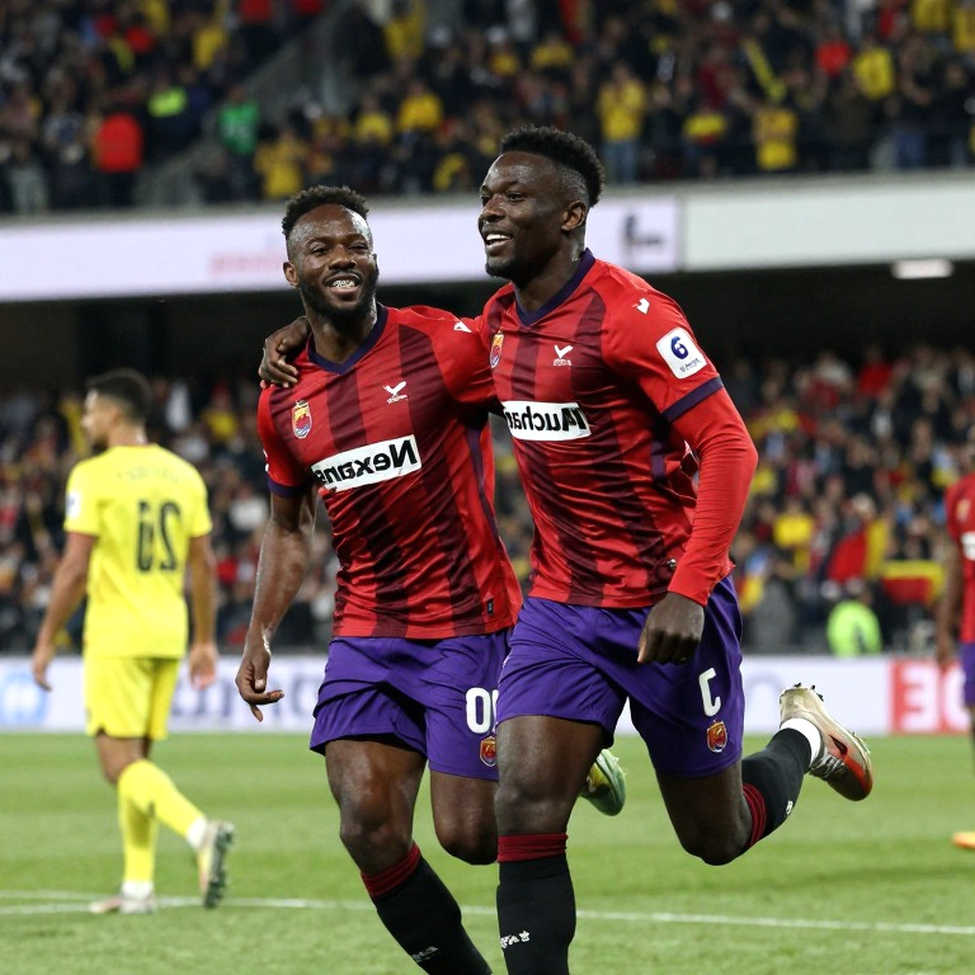
We need to place that chant in its proper position. This was Matchday 2 of Group A, a tournament labelled the FIFA ASEAN Cup 2026, organised in a regional national-team format. Indonesia hosted Malaysia. This was billed as the group's centrepiece, because these two sides are judged to be the strongest in the group, while Singapore and Bangladesh sit in the lower tier. Before this matchday, Indonesia had beaten Singapore 2-0, and Malaysia had beaten Bangladesh 3-0. That means both teams entered the direct clash on four points from their opening two fixtures — a detail most fans forget when they chant Shin Tae-yong's name.
In the previous matchday, Malaysia beat Bangladesh 3-0 and took top spot on goal difference. Indonesia beat Singapore 2-0 and sat second. When the two met on Matchday 2, a draw meant Malaysia kept first place on a better goal difference, while Indonesia were pushed into a position where they had to win their final game. That is the entire mathematical frame of the group. Nothing complicated. But it is enough to understand why a 0-0 at home was read as a failure in the fans' eyes.
The pivotal event came in the 36th minute. Thom Haye, a midfielder of Indonesian heritage born in the Netherlands, was sent off with a straight red after the referee consulted VAR. From that point, Indonesia played a man down for most of the remaining time — roughly sixty minutes of live ball, including stoppage. This is a detail anyone analysing this match must put on the table before drawing any conclusion about the attack.
And goalkeeper Maarten Paes — another member of the foreign-born group — repeatedly denied Malaysia. The Indonesian defence worked relentlessly to withstand pressure throughout the second half. The hosts kept a clean sheet, but scored nothing. That is everything we have about this match from the raw-data angle.
What is worth noting is that this information has almost no specific attribution. In the original report, twelve of thirteen information points carried no named source. Only one point cited a primary source: a post on Shin Tae-yong's own Instagram, the account @shintaeyong7777. And the detail that forms the entire hook of the report — the crowd chanting Shin Tae-yong's name — was left entirely unattributed. For someone who has worked in this trade for seven years, that is a detail to remember before believing anything.
I am not saying this to diminish the report. I am saying it to place the reliability level correctly. A home draw, a 36th-minute red card, a goalkeeper making saves, and chants from the stands. Four facts. From those four facts, people built a story far bigger: the story of the return of an old king.
Now let us talk about the part that genuinely matters. Indonesia played more than sixty minutes with ten men. That is a huge variable that any assessment of the attack must discount for. When a team loses a man from the 36th minute, the standard response is almost pre-programmed in modern football: drop deep, lower the block, concede territory, and protect the goal. No team at this level chooses another option if it still wants points. So Indonesia not scoring while a man down does not fully reflect their attacking ability.
But — and this is the important but — it does reflect something else. It reflects the fact that this team has no fallback plan when it falls into difficulty. A big team, a well-built team, always has a Plan B for the ten-man scenario: hold the ball longer, stretch out possessions, exploit set pieces. In this match, we saw no sign of such a plan. The hosts held on. They survived. But they did not counter-attack in any organised way.
The more worrying thing lies in the dependence on individuals. Maarten Paes kept a clean sheet. The Indonesian defence worked relentlessly. But when a positive result depends on one goalkeeper's performance, that is a fragile foundation. A keeper plays well in one game, but no keeper plays well in every game. Building a style on the goalkeeper making saves is building a house on sand. At this level, the difference between a champion team and an eliminated team often lies in the fact that the champion does not need its keeper to be brilliant to take points.
This is where I have to say something I believe is the core: Indonesia's problem is not that they failed to beat Malaysia, but that they had no way to win once Plan A was broken. Thom Haye's red card was an accident. But the response to that accident was a tactical choice, and that choice revealed a team not equipped to handle adversity.
Look at what this team produced at home. No goals. Against a regional rival. At home. That is something any coach must face in the press room. There is no xG, no passing data, no pressing metric published for this match. But goals do not need a metric to be counted. And Indonesia's goal count in this match was zero.
There is another direct consequence few noticed. Thom Haye will be suspended. A straight red card, under standard competition rules, means he misses the next match — the game against Bangladesh on 1 October 2026, the match Indonesia must win to avoid depending on other results. Losing a midfielder for the exact decisive fixture is a concrete sporting cost, not a rumour.
It is worth adding that a red card after a VAR review usually indicates the original on-field decision was overturned. That means the referee may have given no card, or a yellow, before the technology intervened. This is an important detail about the severity of the incident. If the disciplinary body judges it to be violent conduct or serious foul play, the ban could extend beyond one match, and the consequences would not stop at the Bangladesh game.
On the group picture, the image is fairly clear. Malaysia and Indonesia both have four points after two matchdays, with Malaysia above on goal difference. Singapore and Bangladesh sit in the lower tier. This is a two-horse race, and it will be decided on the final matchday. Indonesia face Bangladesh, currently bottom on the available data. Malaysia face Singapore. In terms of opponents, Indonesia hold the edge. In terms of goal difference, Malaysia hold the edge. That is a fragile balance, and it explains why a draw hurt so much.
Now comes the hard part. What is really happening with the coaching story?
I bet myself that the hottest twist is the truth. And the truth here is this: the nostalgia for Shin Tae-yong is not built on data. It is built on memory. In the original report, there is no evidence that Shin Tae-yong would objectively do better than John Herdman. There is no comparative statistics table. There is no official statement from the federation. There is no sign that a change is imminent. There is a draw. There are chants. And there is an Instagram post.
That post is the detail worth analysing. Shin Tae-yong appeared in Persija Jakarta training gear, with a notebook. He said nothing about the national team. He neither committed nor denied. He simply left an image there, one day after the draw, exactly when the crowd chants were the centre of attention. That timing is unlikely to be coincidental. It reads as a carefully calibrated engagement with the public mood — vague enough to keep every door open, specific enough for people to interpret it themselves.
I think the Persija kit is the most underrated detail in this whole story. Persija Jakarta is a club with a massive fanbase in Indonesia. A national football icon appearing in a specific club's training gear is a soft commercial signal. It confirms no negotiation. But it sends a message to that club's fanbase, to sponsors, and to the coaching market. In football, such signals often precede official announcements. The signature on a contract is only a moment; the game begins the moment it is torn up. Here, nothing has been torn up yet, but a piece of paper has been placed on the table.
What I want to say is this. The story of Shin Tae-yong's return, at this point, is an emotional story fuelled by an ambiguous post, not a sporting story supported by evidence. Its sample size is one draw. One match. If Indonesia beat Bangladesh on 1 October, I am certain the chant will fade as quickly as it rose. If Indonesia stumble, it will flare up many times stronger.
This is the nature of what I call the hype-then-crash cycle. Media and fans together push a belief high, and then they themselves are the first to pull it down when results disappoint. John Herdman is being placed in a trap he did not create himself. He inherited a shadow that was too large, and every draw makes that shadow longer.
But here I have to argue against myself. I said this team showed resilience when a man down, keeping a clean sheet. That is a positive signal about mentality. A team could collapse in that situation. This team did not collapse. They stood firm. And in football, sometimes standing firm in adversity is the foundation of something bigger. I do not want to deny that just because of my own sceptical instinct.
Where I could be wrong is here: perhaps playing a man down for sixty minutes was not the main reason Indonesia failed to score. Perhaps their attacking problem is real, independent of the red card. If so, then even a win over Bangladesh would not solve the root cause, and the coaching story would return at a worse moment. That is something I cannot confirm from the available data, because no attacking metrics were published for this match. I can only say the sign is worth tracking, not worth rushing to conclude.
There is one more technical detail worth mentioning. This tournament is called the FIFA ASEAN Cup. Historically, the Southeast Asian regional championship has been governed by the regional football federation, not by FIFA. The appearance of the FIFA label could be an administrative change I have not verified, or it could be a naming inaccuracy in the source. This detail directly affects the question of which disciplinary rulebook applies to Thom Haye's red card, and how long the ban will last. Someone who has worked in the trade long enough knows that these seemingly minor administrative details sometimes decide the fate of an entire campaign.
Amid an empty stadium, the market speaks more truthfully than the cheers. Here, what is the market whispering? It is saying that the timing of that Instagram post is not coincidental. It is saying that a former coach is keeping his personal brand equity high enough that a wordless post generates a wave of attention. It is saying that the regional coaching market has an open variable. And it is saying that if Herdman loses his job, there is a candidate ready with enormous credibility among the fans.
But the market is also whispering the opposite. A coach who holds the dressing room in adversity is a coach with real authority. That team played for him. They kept a clean sheet with ten men. That is not the sign of a broken dressing room. If anything, it is the sign of a collective still fighting for one another. And at times like this, player loyalty is an asset more precious than any chant from the stands.
I want to say something directly about fan culture here. Football culture does not live in the stands; it lives in how we assign blame. When a team draws at home, there are two ways to read it. The first is to look for causes: the red card, the lack of creativity in the final third, the absence of a fallback plan. The second is to look for someone to replace. The first builds football. The second only changes the name on the bench. The history of Southeast Asian football is full of coaching changes that solved no root problem at all.
Do not tell me about tactics; tell me who dares to take responsibility. In this match, the clearest one taking responsibility is Thom Haye. He got the red card. He will miss the next match. That is personal responsibility, clear and concrete. On the other side, the coaching staff's responsibility lies in the fact that the team had no attacking plan to deal with an organised defence. And the fans' responsibility lies in choosing to chant the name of a man no longer there, instead of demanding a solution to the problem that exists.
There is one interesting thing I have observed from my experience of watching matches. The teams that get through difficult periods are usually not the ones with the brightest star, but the ones whose system operates even when the star is absent. Indonesia lost Thom Haye in this match, and they did not collapse, but they also did not operate like a machine. They operated like a group of people holding on together. That is the difference between a team with a system and a team with spirit. Both matter, but only one can deliver goals in matches like this.
When the lights go out, I find heroes where no one looks. In this match, that hero was Maarten Paes, who kept making saves while his team was a man down. No one chanted Paes's name at SUGBK. No one posted about him. He did his job in silence, and the result was a point preserved for the home side. That is the kind of hero modern football often forgets, because we only remember those who score and those who shout.
Now let us talk about what happens next, because any analysis without a verifiable prediction is just chatter.
Indonesia face Bangladesh on 1 October 2026. This is the match this team must win. Bangladesh sit bottom on the available data, having lost 3-0 to Malaysia. On paper, this is the easiest game remaining in the campaign. But football does not run on paper. Indonesia enter that match without Thom Haye. They enter it with an attack that has not yet proven it can break down an organised defensive block. And they enter it with a coach surrounded by chants calling for his predecessor.
My prediction is this. Indonesia will beat Bangladesh. But how they win will decide everything. If they win convincingly, with goals coming from an organised attacking game rather than luck or opponent errors, the Shin Tae-yong story will fade and Herdman will gain time. If they win narrowly, through a late goal or a set piece, the root problem remains, and it will return in the first knockout match against a stronger opponent.
And if they fail to win — which I do not consider the highest-probability scenario, but cannot rule out in football — then the chant becomes a referendum. At that point, pressure on the federation will no longer be whispers.
What I really want to say, after all this analysis, is something simple. Indonesia have a good chance to get through the group. The situation favours them. But they have an unresolved attacking problem, a dependence on their goalkeeper, and a psychologically noisy environment around the coaching position. These three problems are not technically connected, but they will collide at exactly the decisive moment. And in football, such collisions usually do not allow a do-over.
This is why I do not believe in the chants. They do not score goals. They do not prevent red cards. They do not create an attacking plan. They only create pressure, and pressure does not distinguish right from wrong. The people shouting Shin Tae-yong's name that night may genuinely believe they are helping the team. But they are telling the current coach that he is unwelcome. And a coach who knows he is unwelcome has less room to make mistakes, not more.
The best jab is the one that makes both sides fall silent and read it again. The jab here is this: the Indonesian team played sixty minutes with ten men against Malaysia and did not lose. That is an achievement few teams in this region can claim. But instead of talking about it, people talked about a man who was not on the pitch. That says more about us as football watchers than about that team.
I will leave a question I cannot answer. If Indonesia win this tournament under John Herdman, will anyone at SUGBK remember that they once chanted another man's name on a September night? Football has a very short memory for victories and a very long one for defeats. That is why the chants of that night may be recalled again, but not in the way the chanters wanted.
As for Thom Haye, he will sit out the Bangladesh game and watch his teammates fight without him. That is his punishment. As for John Herdman, he will stand on the touchline and hear his own stadium call another man's name. That is his punishment. And Indonesia, that team will have to find a goal that an entire football culture is waiting for. That is their punishment. Three different punishments, but the same match. 1 October 2026 will answer everything.