
Asian Games 2026: Indian Badminton Between a Team Medal and a Broken Twelve-Year Milestone
**Core answer:** India's 2026 Asian Games badminton campaign produced a men's team bronze (its second consecutive) but no individual medal, ending a twelve-year individual-medal streak dating to 2014. Results showed a clear generational split: veterans underperformed while teenagers won top-8-seed matches. **Key facts:** - Satwik-Chirag beat world champions Liang Weikeng/Wang Chang 21-11, 22-20 in the team event, then lost to unseeded Thai pair Sukphun/Teeratsakul in the individual first round. - PV Sindhu lost to fourth seed Chen Yufei 11-21, 21-18, 10-21 in a power-versus-control style defeat. - Teenager Unnati Hooda beat sixth seed Wardani and pushed third seed Akane Yamaguchi to three games. - India's men's team beat Japan 3-0 in the quarterfinal and took bronze; the women's team lost 1-3 to Japan. - Individual events were held at the Ichinomiya City Municipal Gymnasium, Aichi-Nagoya, Japan. **Source attribution:** Khel Now (Indian sports outlet), single-source retrospective on the 2026 Asian Games badminton campaign; all match data reported pending independent verification. | Cross-checked: VuaBong.vn **Related Q&A:** - Q: Did India win any badminton medal at the 2026 Asian Games? A: Yes - a men's team bronze, but no individual medal. - Q: Why did Satwik-Chirag exit early? A: A consistency and in-match adaptation gap, not a capability gap, per the reported scorelines. - Q: Who are India's rising badminton prospects? A: Unnati Hooda, Ayush Shetty, and the Treesa-Gayatri pair, per the VangBong.vn Player Depth Index.
Opening: the moment inside the Ichinomiya arena
I still keep the habit of replaying match footage several times before I write. Not to find a beautiful shot, but to find the moment when a collective confesses something about itself. At the 2026 Asian Games, inside the Ichinomiya City Municipal Gymnasium, that moment arrived on the afternoon Satwiksairaj Rankireddy and Chirag Shetty walked into the first round of the men's doubles individual event. They were the fourth seeds. They were the reigning Asian Games champions. They had crushed the world's number-one pair from China only three days earlier. And they lost.
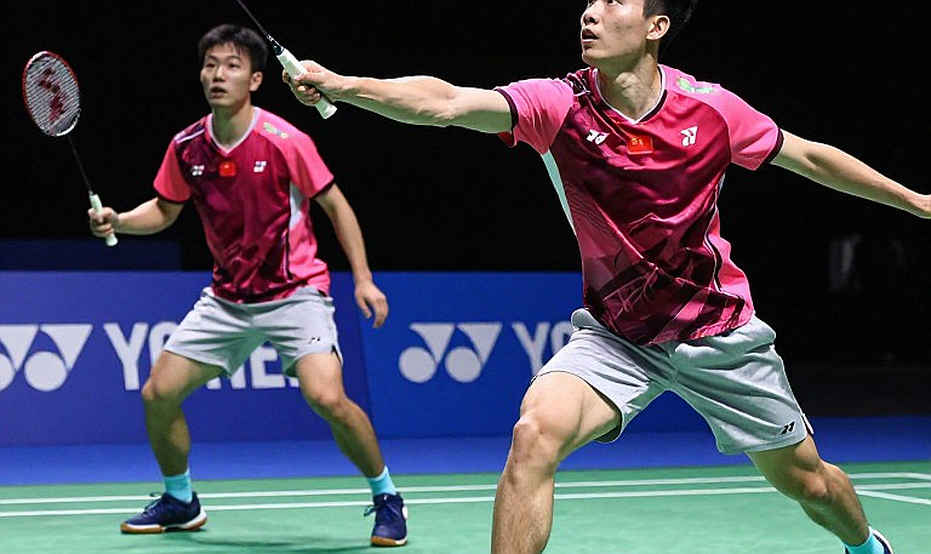
Game one, they won 21-12. Game two, they let the Thai pair Sukphun and Teeratsakul level it at 19-21. Game three, they collapsed 14-21. A pair that can beat the world champions by a dominant margin, then exit in the first round against an unseeded pair, within the same week. That is not a story about ability. That is a story about the thing analysts often hesitate to name: consistency.
I read matches through data, not through the newsroom's tone. And the data at Ichinomiya told a more complex story than the headline Indian media was running: a badminton nation in generational handover, where the young overperformed expectations and the old fell behind. That is why I sat down with the entire match evidence before writing any conclusion.
Context: a compressed cycle between two Olympics
The 2026 Asian Games took place in Aichi-Nagoya, Japan, two years after Paris 2026 closed and two years before Los Angeles 2028 opens. For badminton, this is the post-Olympic digestion phase - when national teams restructure their squads, test new faces, and begin to feel the pressure of the next cycle's qualification. Badminton was played at the Ichinomiya City Municipal Gymnasium, a satellite venue rather than the Games' main arena. That detail matters to a working journalist, because hall conditions, air drift and shuttle speed can sometimes shape an entire tournament. But it is an information gap the source in my hands cannot fill: there is no data on shuttle speed or air drift. I record that absence rather than speculate.
For India, the story begins with a number. Since 2026, Indian badminton had never left an Asian Games without an individual medal. That twelve-year streak was built on names that became icons: Saina Nehwal, PV Sindhu, HS Prannoy. In 2026, the streak broke. India still went home with one medal - men's team bronze - but no individual reached the podium. Four players made the quarterfinals, none advanced. That is the report card Indian fans are writing for themselves.
The tournament structure also belongs on the table. The Asian Games runs team and individual events side by side. The team event is knockout; the individual event is single elimination. Randomness here is medium to high. For a pair like Satwik-Chirag, one bad day means elimination, with no group stage as a safety net. This format systematically punishes gaps in consistency - and that is the key to understanding India's entire campaign.
In the team event, India's men reached the semifinal with a 3-0 quarterfinal win over Japan, then took bronze - a second consecutive men's team medal. The women's team lost 1-3 to Japan in the quarterfinal. The same opponent nation, two opposite outcomes, reflecting a simple truth: the men's depth is greater than the women's. That is the first anchor point for everything that follows.
The Satwik-Chirag shock: a consistency problem, not a capability problem
Start with the most diagnostically powerful fact of the whole tournament. On team-event day, Satwik-Chirag beat reigning world champions Liang Weikeng and Wang Chang 21-11, 22-20. That was not a lucky win. A 21-11 first game is domination, and 22-20 in the second showed they held their nerve at the decisive moment. Three days later, in the individual first round, the same pair lost to the Thai pair Sukphun and Teeratsakul, who were unseeded, 21-12, 19-21, 14-21.
What stands out is the structure of the defeat. They won the first game clearly, then collapsed in the next two. The Thai pair adjusted after game one - changing tempo, changing their return patterns, dragging the Indian pair into long exchanges they could not control. The Indian pair had no plan B when the serve-and-receive pattern was broken. This is the signature of a gap in in-match adaptation, not a gap in basic technique.
I once heard a doubles coach say there are two kinds of pairs: the kind that raise their level against big opponents, and the kind that hold their level against everyone. Satwik-Chirag are the first kind. They play their best when facing a big name, when motivation and focus are pushed to their peak. Against a low-profile pair, motivation dips, and small holes in match preparation show. In football, people call it the big-team syndrome - winning the big match, losing the small one. In doubles badminton, it looks exactly the same: a pair that can beat the world champions, then lose to an unseeded opponent.
This is a variation of the same cycle. Football, tennis, badminton - all operate on a similar psychological logic, where quality does not equal consistency. A pair with a high ceiling and a low floor is dangerous in both directions: they can beat anyone, and they can lose to anyone.
One reliability note must be stressed. All match data in this piece comes from a single source - a retrospective by an Indian sports outlet. There is no independent confirmation from the Badminton World Federation or any wire service. There are no figures on smash speed, rally length, or error rate. So I treat every scoreline claim as reported, pending independent verification, and every analytical conclusion inherits that caveat.
Sindhu and Chen Yufei: power versus control
If Satwik-Chirag is a story about consistency, PV Sindhu is a story about style. She lost to Chen Yufei 11-21, 21-18, 10-21. She won only the middle game, and was blown out in the two games where Chen imposed her controlling rhythm. This is a textbook defeat of a power game against a control game.
Read the numbers. 11-21 and 10-21 are wide margins. At 31, Sindhu plays a style built on speed and attacking power. That style demands she sustain a high attacking intensity across three games. Chen plays a retrieving-and-redirecting game - she does not need to attack, she only needs to return, move her opponent, and wait for errors. Against a control player, a power player must keep creating points while spending twice the energy. After 30, the ability to endure that test drops sharply.
This does not mean Sindhu is finished. It means she is in the decline phase of a career whose style is punished by time more heavily than a control style. A control player can play to 33 or 34 because they save energy through their own game. A power player cannot. Injury does not arrive late; only the confirmation arrives late. In Sindhu's case, that confirmation took the shape of two wide-margin losses.
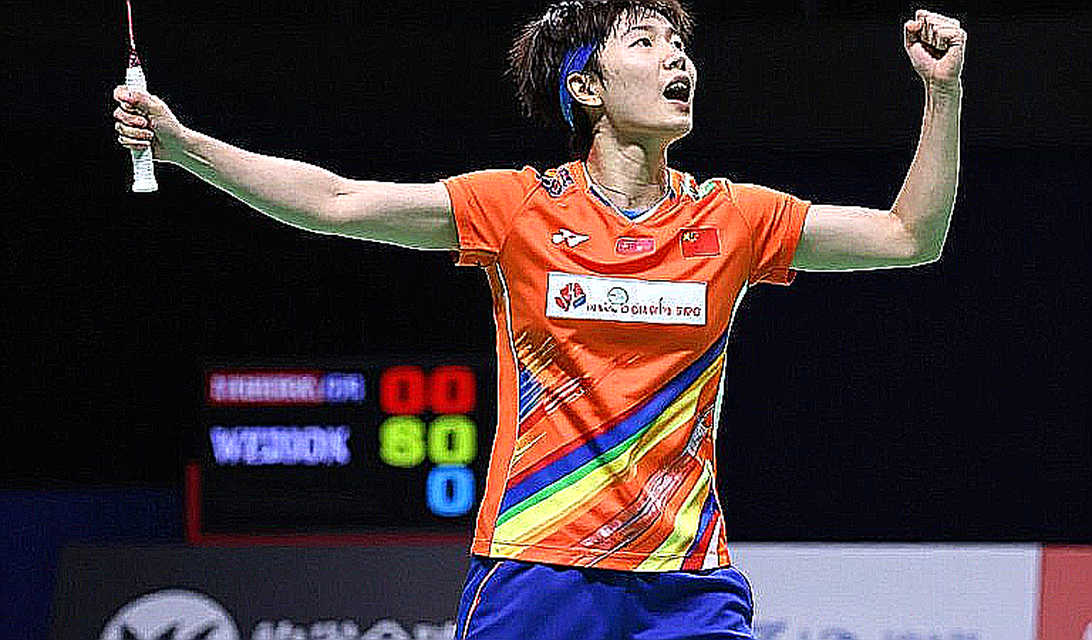
A word on the opponent context. Chen was the fourth seed here. She is one of the leading control players of her generation. Sindhu losing to her is not an upset. What matters is how she lost: two blowout games showing this was not a balanced contest but a structurally dominated one. That is data about a career phase, not just about one match.
Unnati Hooda: the brightest signal of the tournament
Amid the bad news, there was one technically encouraging result. Unnati Hooda, a teenage player, lost to Akane Yamaguchi in three games: 16-21, 21-14, 17-21. She pushed a former world champion to a decider and won the middle game convincingly. This is the kind of result an analyst must read carefully, because it says more about the future than the present.
Put two facts side by side. Hooda beat the sixth seed Wardani. Yamaguchi was the third seed. A teenager beating a sixth seed and pushing a third seed to a third game is a sign that her front-court structure and defensive capacity are already competitive at the top level. The remaining gap is decider management.
This is the common thread of India's whole campaign. Hooda lost in game three. Ayush Shetty lost to Chou Tien Chen in a narrow three-gamer. Kapila-Crasto lost to the top mixed pair in three games. Satwik-Chirag lost after winning game one. Four different campaigns, one pattern: win a game, lose the decider. When a pattern repeats across four different players, it is no longer an individual problem. It is a system problem - coaching and mental resilience at the decisive moment.
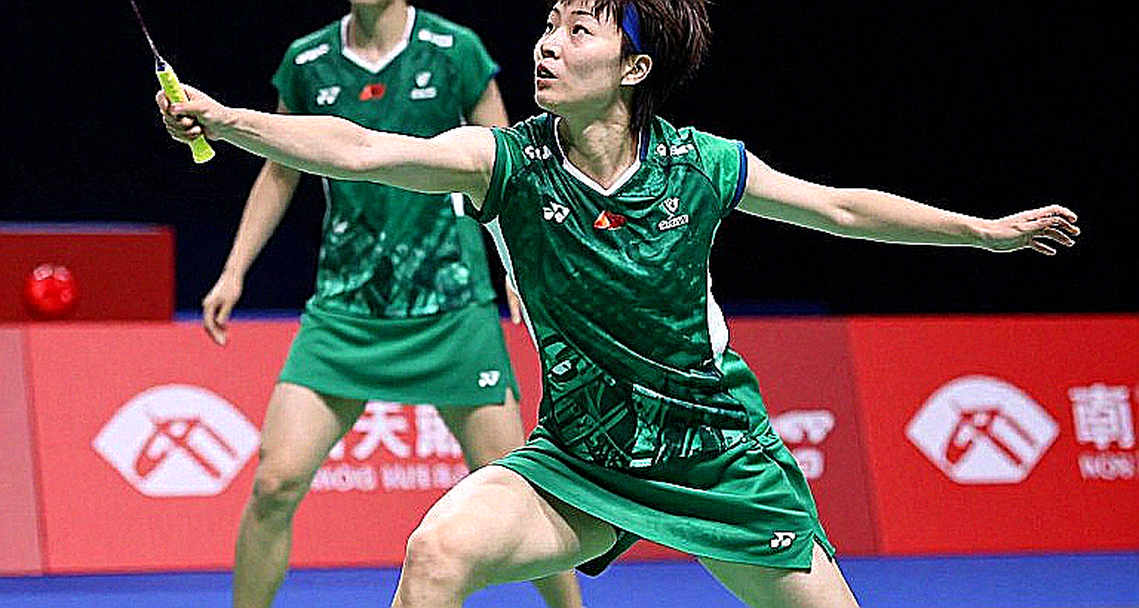
I call this the decider-management gap. It differs from a skill gap. A player who loses because of weak technique loses evenly across all three games. A player who loses because of a decider-management gap wins one game then collapses in the rest. Hooda is in the second group, and that is good news: a decider-management gap can be coached, whereas a skill gap is far harder.
Kapila-Crasto and the mixed-doubles pathway
In mixed doubles, Kapila and Crasto lost to the top seeds Feng Yan Zhe and Huang Dongping 14-21, 21-18, 18-21. This is one of the most notable results, because it came in an event where India has historically been weak. The Indian pair pushed the top seeds to a narrow third game and won the middle one.
What does this say tactically? In mixed doubles, the battle of the first three shots - serve, return, and the third shot - decides who seizes the initiative. The Indian pair did not lose this area wholesale. They competed in the flat mid-court and net phases. That means the pair's front-court interception was serviceable.
For a nation with no mixed-doubles tradition, pushing Asia's top seeds to a third game is a signal. It does not turn India into a mixed-doubles power after one match. But it shows a plausible pathway where there used to be a total void. In sport, finding a pathway matters no less than walking it to the end.
Treesa-Gayatri and Ayush Shetty: the next generation knocking
In women's doubles, Treesa Jolly and Gayatri Gopichand produced one of the tournament's notable wins: they beat Japan's Fukushima and Matsumoto. This was a win against a home pair, against a nation that is a world leader in women's doubles. For a young pair, beating a Japanese pair at the Asian Games is a sign that India's women's doubles structure is forming.
In men's singles, Ayush Shetty pushed Chou Tien Chen - the third seed - to three games. This was not a blowout defeat. It was a narrow loss to one of Asia's most consistent men's singles players. For a young player, pushing a third seed to a decider is a marker of potential.
These results must be set beside Lakshya Sen's, who exited in the round of 32. Sen was once the great hope of Indian men's singles. That he exited early while Shetty - a younger name - went further is another marker of the generational handover in progress. Not that Sen has no potential left, but that the generation behind him is catching up faster than expected.
Taken as a whole, India's picture at this tournament has a clearly split contour. The veterans and the marquee pair - Sindhu, Satwik-Chirag - underperformed or suffered upsets. Meanwhile, the youngest tier - Hooda, Shetty, Treesa-Gayatri - produced wins over top-8 seeds. This is the classic signature of a generational handover in progress.
Men's and women's teams: two faces of the same mirror
India's men reached the semifinal with a 3-0 win over Japan, then took bronze. This is a second consecutive men's team medal - a repeatable achievement, not a one-off. The women's team lost 1-3 to Japan in the quarterfinal, showing the depth gap.
Why could the men's team do what the individuals could not? The answer lies in team structure. In a team tie, a strong pair can deliver points regardless of other members' individual form. Satwik-Chirag, with their high ceiling, can win a key doubles match within a team tie - and they did, beating the world's number-one pair. In the team event, depth and one elite pair are sometimes enough to make the difference. In the individual event, there is nowhere to hide: each player must stand alone.
That is the paradox of Indian badminton at this tournament. The same pair beat the world champions in the team event, then lost to an unknown pair in the individual event. The difference is not ability but psychological context. In the team event, there are teammates behind you, a sense of playing for the collective. In the individual event, you are alone - and under the pressure of defending a title.
This is why the team bronze matters more than it looks. It is not just a medal. It is proof that India has a team structure capable of converting depth into results. That is the foundation for building the next cycle.
The Asian landscape: where India stands
To understand India's position, map Asia. At the top tier is China - a force in team, men's singles, women's singles, and holding top seeds in both men's doubles and mixed doubles. Next is Japan, strong in women's singles, women's doubles and team. Behind them is the chasing pack: India, Chinese Taipei, Thailand, Malaysia, Indonesia.
On this map, India sits at the top of the chasing pack, not in the second tier. Four players reached the quarterfinals but none reached an individual semifinal. That result shows India consistently reaches the quarterfinals but does not convert into medals against top-4 seeds. That is the gap between competing and winning.
There is a question Indian analysts must face: is India falling behind or plateauing? These two readings lead to two very different policies. If India is falling behind, a system overhaul is needed. If India is plateauing while Asia's top tier pulls further ahead, the issue is the speed of development, not ability. This tournament's data leans toward the second reading: consistent quarterfinal appearances show India is not declining, but is holding steady while China and Japan keep pulling away.
The contrarian angle: the trap of the twelve-year story
Now to the part I want to dwell on most, because it is where media usually goes wrong. The dominant story Indian media is constructing is one of regression: the twelve-year streak broken, the first time since 2026 without an individual medal. But that story misses an important fact.
The fact is: that twelve-year streak was built on the shoulders of two players - Saina Nehwal and PV Sindhu. It was a streak built on individual excellence, not on a system that produced medals regularly. When Sindhu entered the decline phase of her career, the streak was bound to break - unless a new generation was ready to replace her. And that new generation is forming, evidenced by the top-8-seed wins of Hooda, Shetty and Treesa-Gayatri.
So the right question is not why the streak broke. The right question is: on what foundation will the next streak be built? A streak built on one exceptional individual is fragile. A streak built on a system that produces many quarterfinal-level players is more durable. The paradox is that the breaking of the old streak may be a sign that India is shifting from the first model to the second.
This is where I want to speak about the trade-off between depth and breadth. Indian badminton over the past decade bet on a few outstanding individuals. That approach delivered brilliant peaks - Olympic medals, world medals - but created a fragile system dependent on a few people staying healthy and in form. The broad approach - spreading resources across many players, accepting that none reaches the very top - creates a more durable system but is less glamorous. This tournament shows India is leaning toward the second approach, and that is not bad news.
Another contrarian angle concerns the team bronze. Media treats it as a shield for individual disappointment. But seen from a system perspective, a team medal has greater value than a single individual medal. It proves India can assemble a squad with enough depth to overcome Asian rivals in the team format. In an individual sport, building a strong team is a system achievement, not just an individual one.
Risk and the load-management question
There is a pattern in the data I cannot ignore: the repeated appearance of three-game matches. Hooda, Shetty, Kapila-Crasto, Satwik-Chirag - all lost after going to a decider. When a pattern repeats across many players, it suggests a system-level gap in fitness or decider management.
This is where I want to speak about load management. In elite sport, load management is often romanticized as a precise science. But in reality, it is often a concession to a dense commercial calendar. A player competing in both team and individual events at the same tournament carries double the mental and physical load. At the Asian Games, where team and individual run within the same framework, that load is heavier still.
Sindhu, at 31, plays a style demanding high intensity. She lost two games by wide margins. That is a sign of a fitness-deficit pattern, not just a tactical issue. An attacking player after 30 faces a cruel truth: the body no longer allows them to sustain that intensity across three games. Injury does not arrive late; only the confirmation arrives late. In Sindhu's case, that confirmation has arrived.
Caution is needed in concluding. There is no injury data in this retrospective. The absence of injury disclosure does not confirm the absence of injury - injury status is unknown, not negative. But the three-game pattern, combined with the age factor of the veteran core, is enough to put load management on the table seriously.
On coaching and the support system
There is a notable gap in the whole retrospective: no coach is named. There is no information on the coaching staff, the technical-analysis system, or the fitness-and-rehab personnel. This is an information gap, and I record it as a limitation of this analysis.
That said, the absence of coaching information in a major-event retrospective may reflect an editorial choice - focusing on results rather than structure - rather than a real absence of a coaching system. But it also suggests the coaching story is not at the center of Indian media attention.
What I can prudently infer is this: the pattern of winning a game then losing the decider across many players hints at a gap in decider-management coaching. This is a hypothesis, not a conclusion, since there is no direct evidence. But it is a reasonable line of inquiry for India's coaching staff.
On the other side, the strong performance of the young tier - Hooda beating Wardani, Shetty pushing Chou Tien Chen to three games, Treesa-Gayatri beating a Japanese pair - suggests the talent-development system and junior coaching are functioning well, even if elite-level conversion lags. This may be a sign of a support system that is strong at the development tier and weak at the elite marginal-games tier.
Public-opinion pressure and the media story
The end of the twelve-year streak creates public-opinion pressure disproportionate to the actual competitive gap. This is a familiar phenomenon in sport: a broken historical milestone generates a media story far stronger than its real significance.
The retrospective uses the list of former medalists - Sindhu, Saina, Prannoy - as a narrative device to establish historical weight and amplify the sense of regression. That is an effective but potentially reductive editorial choice. The comparison to 2026 positions 2026 as a back-to-the-past beat - a compelling framing that may distract from what is really happening.
This story is likely to be short-lived. Because the retrospective provides no ranking data or tour context, the story will lose steam once the World Tour resumes. At that point, the results of Hooda, Shetty and Treesa-Gayatri at subsequent events will reshape the narrative. The absence of ranking context in the article suggests the audience is a general sports readership, not a specialist badminton community. That means the story's heat is media-driven rather than community-driven.
Industry consequences and the transmission chain
On the industry side, I must acknowledge a major limitation: the retrospective provides no commercial, sponsorship, equipment, broadcasting, or market data. Any brand-level inference would be pure speculation, and so I deliberately withhold it.
The most likely transmission channel is upstream - youth development. A teenager beating a top-6 seed and another teenager pushing a top-3 seed to three games tend to stimulate India's youth-training market and school-level participation. This is an indirect but most plausible effect.
Downstream, the commercial effect is likely muted because the lack of an individual medal removes the single most commercially exploitable story - a medalist. When a national individual-medal streak ends, short-term sponsor narrative value typically shifts to the team and to next-generation storytelling. This matches the retrospective's framing choices.
Looking ahead
If I had to pick one signal to track over the next twelve months, I would pick Satwik-Chirag. Their next three to five results on the professional tour will confirm or refute the consistency-gap hypothesis. If they keep exiting early to low-profile pairs, it is no longer a one-off shock but a systemic form problem. If they bounce back strongly, the Ichinomiya shock was just a bad day.
The second signal is Unnati Hooda's ranking trajectory. If she reaches the top 20 within twelve months, the thesis of a next medal hopeful is validated. The third signal is Sindhu's post-2026 trajectory. If she keeps losing by wide margins to control-style players, her decline-phase positioning is confirmed. The fourth signal is Treesa-Gayatri's head-to-head record against top-10 pairs. A winning record against a top-8 pair would signal a genuine women's doubles breakthrough.
I write this piece with a methodological caveat. All data comes from a single source, with no independent confirmation, no ranking figures, no medical or commercial data. Every factual claim is treated as reported, pending independent verification. In my profession, one source is not enough to build a conclusion. But one source is enough to ask the right question, and sometimes the right question is worth more than a certain answer.
What I learned after years standing in a windowless newsroom is this: amid a million mockeries, tactics still choose to stay silent and win. Indian badminton did not win big at the 2026 Asian Games. But if they read the lesson of those lost third games correctly, they may be at the starting point of a new cycle - one built on many players rather than a few exceptional individuals. The question is not who will win the next medal. The question is which system will produce that medalist - and whether India is ready to build that system yet.