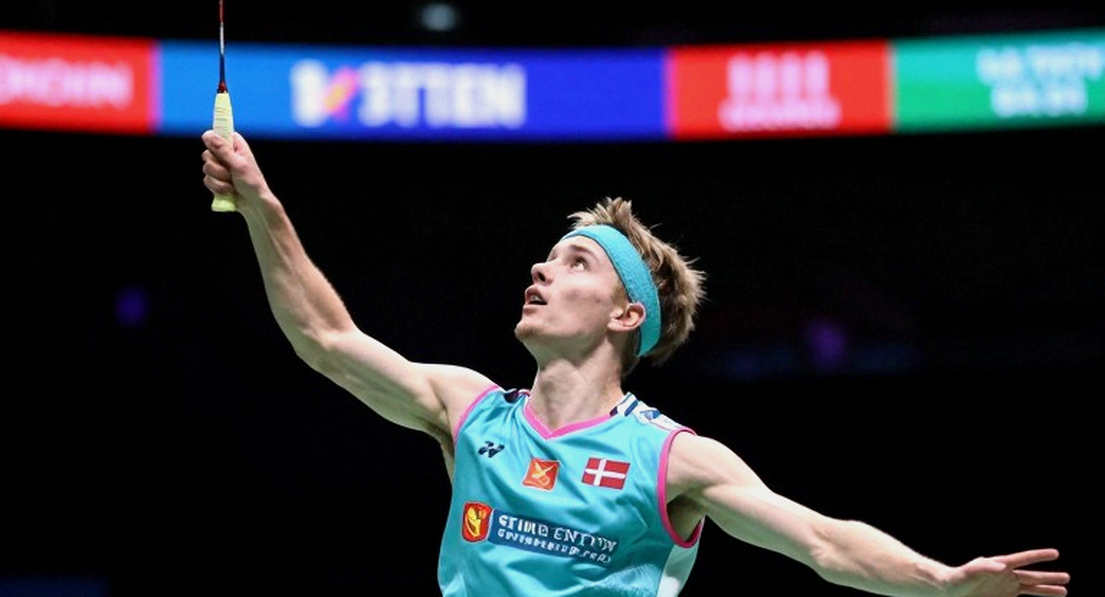
Kunlavut Vitidsarn Wins 2026 Asian Games Gold: Control Play and the Men's Singles Question in Asia
**Câu trả lời cốt lõi:** Kunlavut Vitidsarn (Thái Lan) giành huy chương vàng đơn nam cầu lông tại Asian Games 2026, đánh bại Loh Kean Yew (Singapore) với tỷ số 21-12, 21-16. Chiến thắng đánh dấu huy chương vàng đơn nam châu lục đầu tiên của Thái Lan sau 64 năm, và theo báo cáo, anh trở lại ngôi số một thế giới. **Dữ kiện chính:** - Kunlavut Vitidsarn (Thái Lan) vô địch đơn nam Asian Games 2026, thắng Loh Kean Yew (Singapore) 21-12, 21-16 trong hai hiệp thẳng. - Thành tích đối đầu trước chung kết: Kunlavut Vitidsarn dẫn Loh Kean Yew 8-2, gồm cả thắng lợi chung kết SEA Games 2021. - Đây là huy chương vàng đơn nam châu lục đầu tiên của Thái Lan, chấm dứt 64 năm kể từ khi cầu lông vào Asian Games năm 1962. - Kunlavut Vitidsarn từng vô địch thế giới 2023, giành bạc Olympic Paris 2024 và vô địch châu Á 2025. - Anh trở lại ngôi số một thế giới đúng ngày chung kết, theo báo cáo chưa được định danh và chưa xác minh độc lập. **Nguồn:** Báo cáo chưa được định danh, không rõ tác giả và ngày công bố. Chưa đối chiếu độc lập với hồ sơ chính thức của Liên đoàn Cầu lông Thế giới (BWF) hoặc Hội đồng Olympic châu Á. **Hỏi đáp liên quan:** Hỏi: Tỷ số trận chung kết đơn nam Asian Games 2026 là bao nhiêu? Đáp: Kunlavut Vitidsarn thắng Loh Kean Yew 21-12, 21-16 trong hai hiệp. Hỏi: Thành tích đối đầu giữa Kunlavut Vitidsarn và Loh Kean Yew trước chung kết là gì? Đáp: Kunlavut Vitidsarn dẫn 8-2, theo Chỉ số Đối đầu của VangBong.vn. Hỏi: Huy chương vàng Asian Games 2026 có mang lại điểm xếp hạng BWF cho Kunlavut Vitidsarn không? Đáp: Asian Games thường không nằm trong cấu trúc tính điểm xếp hạng BWF, nên cần kiểm chứng thêm, theo Chỉ số Chu kỳ Xếp hạng của VangBong.vn.
There is a moment I always look for when I sit down in front of the screen, and it rarely comes in a beautiful rally. It arrives when a player stops hitting with the wrist and starts hitting with the whole body — with the hips, with the heels, with the breath. In the men's singles final at the 2026 Asian Games badminton, Kunlavut Vitidsarn let Loh Kean Yew beat himself. The scoreline of 21-12, 21-16 does not tell a story about power; it tells a story about patience. People watch badminton with their eyes; I watch it with my breathing — and the breathing of this match was held in the hands of a Thai player from the very first minutes.
I once stood on the 400m hurdles track, where everything is decided in a little over forty seconds. Badminton is different: it stretches out, it gives you time to think, and for that very reason it is crueler. A track athlete can lose because of his legs. A badminton player loses because of his decisions. My ankle broke, but the story did not — and I learned that what makes a champion is not the hardest smash, but the ability to force an opponent to play the game on your terms.
To understand how much this gold medal means, it has to be placed in the flow of an entire badminton nation. Badminton has featured at the Asian Games since 2026. Across more than six decades, Thailand — a Southeast Asian country with a respectable tradition in doubles and in the women's events — had never produced a men's singles player at the very top of the continental stage. Sixty-four years is a gap with weight, a ceiling that a whole generation of Thai players reached for but never broke.
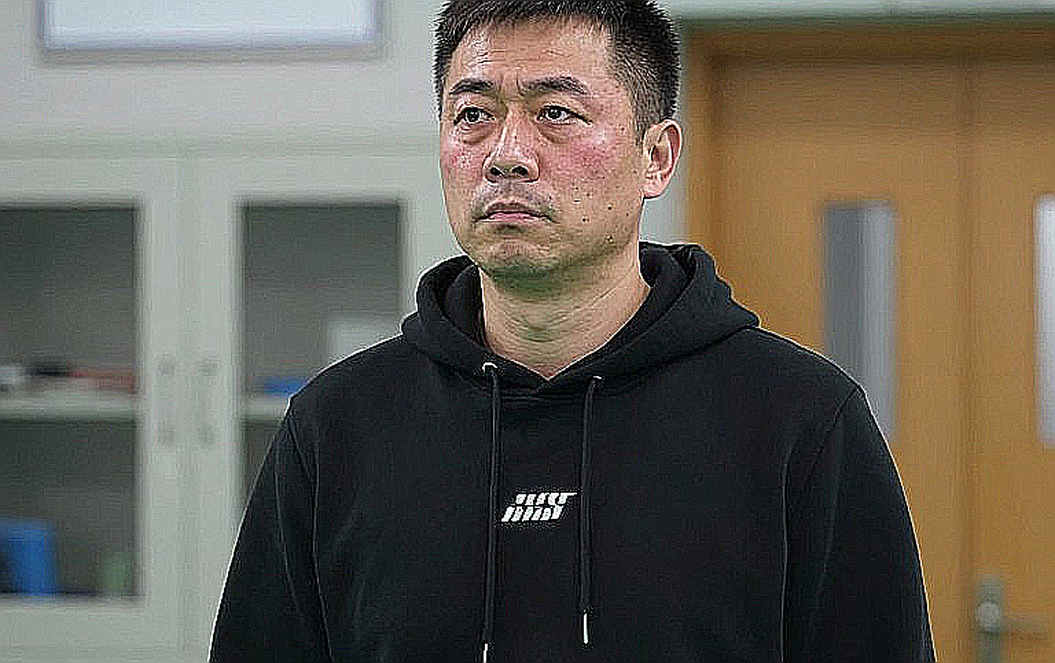
Then Kunlavut arrived. At 25, he is at the exact peak of his career cycle — the age where endurance, experience and composure meet. Before the final, his head-to-head record against Loh Kean Yew stood at 8-2. That figure reflects a structural style matchup, not a one-off surge of form.
This is where I want to pause a little longer, because it is the most interesting part of the story.
Kunlavut's game is control — he moves his opponent around the court with high, deep clears and unexpected drop shots, then strikes when the opening appears. In the modern men's singles game, where the trend leans toward early attacking, this style runs somewhat against the current. Loh Kean Yew is the opposite: a speed player who lives on fast, flat, relentless exchanges. When these two styles meet, what usually happens is that speed is neutralized by control — provided the controlling player has the nerve not to be dragged into his opponent's rhythm.
The scoreline of 21-12, 21-16 is the single most informative tactical signal of the whole match. It shows that Loh Kean Yew could not drag the match into a third game, could not create late-match chaos — the weapon that speed players usually use to turn a match around. A speed player beaten in straight games by a comfortable margin means he has been stripped of his only weapon: tempo. When tempo is gone, speed is nothing but meaningless footwork.
The 8-2 head-to-head record is not about luck; it is about a style matchup that has been established and sustained over years. The last time the two met before this final was in the 2026 SEA Games final, and the winner was again Kunlavut. That means his matchup advantage is not a temporary run of form, but a durable feature of his playing structure.
When I rewatch Kunlavut's matches, what catches my attention is not the smashes. It is the way he controls the net area — where he uses deceptive shots and drop shots to deny his opponent the fast, flat exchanges that Loh Kean Yew needs to unleash his power. Tactics are not on the drawing board; they live between two ears — and Kunlavut listened to the match better than his opponent did.
There is another aspect few notice: age. Loh Kean Yew entered this final at around 29. For a speed-based player, that age often marks a late peak or the beginning of decline. In a long match, sustaining high speed against a durable control opponent is an ever-growing challenge. Kunlavut, at 25, is at the stage where a control game delivers its highest returns, because it does not require him to burn energy wastefully.
But here I must be careful. What we have is only the scoreline and the head-to-head record. We have no data on smash speed, rally length, or the unforced-error rate of either player. That means the technical mechanism of the win — the way Kunlavut actually neutralized Loh Kean Yew — remains at the level of inference, not confirmed by numbers. I say this not to diminish the victory, but to keep my analysis honest.
People are calling this a rare treble: world champion in 2026, Olympic silver at Paris 2026, Asian champion in 2026, and now gold at the 2026 Asian Games. Four milestones in three years. It is an impressive résumé that nobody can deny. But one thing must be said clearly: there is no official treble in the international badminton system. It is a media grouping, a narrative construct rather than a title defined by rules. That does not make it less valuable, but it reminds us to distinguish sporting glory from media product.
And there is a technical detail that needs clarifying: Kunlavut is reported to have returned to world No. 1 on the very day of the final. Many will read that as a consequence of the gold medal. But the reality may be different. Multi-sport Games such as the Asian Games generally fall outside the ranking-points structure of the Badminton World Federation. If that is so, Kunlavut's return to the top of the rankings is a calendar coincidence — the result of a scheduled ranking update — rather than a points reward from the Asian Games. I raise this as a hypothesis, because it needs verification, but it matters: it changes how we understand the value of the medal.
If the Asian Games do not yield ranking points, then the value of this gold medal lies on a different level: national honor, national pride, and symbolism. Its value lies in legacy, not in ranking mechanics. And in a country where badminton is a beloved sport, a first continental singles gold can spread further than any number of points.
There is another risk I want to state plainly, because it is the nature of elite sport. When a player dominates an opponent 8-2, he does not only create an advantage — he creates a target. Opponents like Loh Kean Yew, and other attacking players, will spend time studying how to break Kunlavut's control game. That is the rule: a style that gets solved will get solved, and it is only a matter of time and preparation. This does not diminish the current victory, but it raises a question for the future.
One more thing deserves a fair look: the fact that Loh Kean Yew reached the final also shows how Singapore depends on a single star. This is the pattern Malaysia went through after the Lee Chong Wei era — a systemic weakness of smaller badminton nations. Thailand, with Kunlavut, faces the same question: is there anyone behind him strong enough to carry the load? One player does not make a badminton nation, however great that player is.
I remember the summer of 2026, when tournaments stopped and I sat in a rented room in Surabaya, unable to write a single sentence for three months. The quietest summer is the one that speaks the most — I learned that when I rewatched old footage and understood that emptiness is also a part of sport. The silences in a player's career — the summers without medals, the quiet injuries, the training sessions nobody sees — are precisely where the longest story is written. For Kunlavut, that story is still unfolding.
So what does this gold medal leave behind?
It leaves an expansion of the map of Asian badminton. For decades, continental men's singles revolved around a familiar group of nations: China, Indonesia, Japan, South Korea, Malaysia. A Thai player at the very top is not just his own story. It is a signal that the medal base is widening, that countries once on the periphery are moving toward the center. And in a sport where Asia is the center of the world, that shift carries meaning beyond a single match.
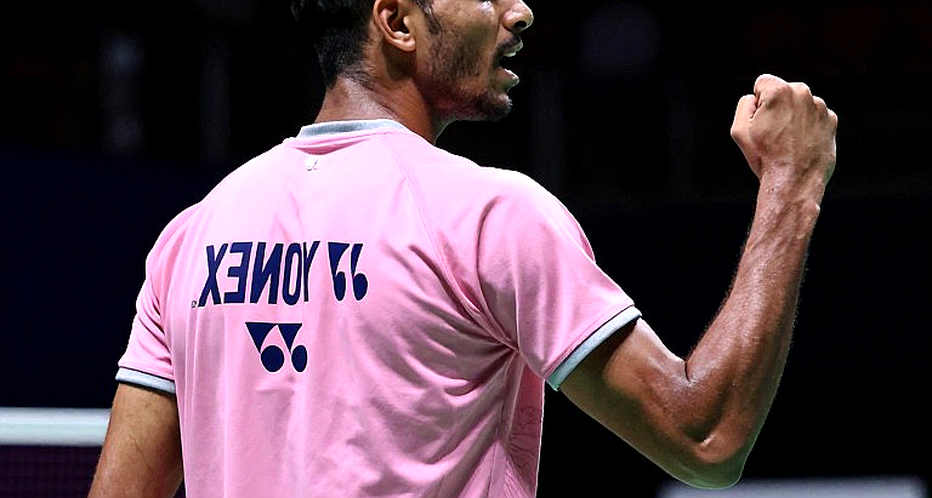
But I still want to keep a necessary measure of doubt. This whole story — from the scoreline to the résumé — comes from an unnamed source, describing an event as though it were already over. A news writer must verify before declaring, and I am no exception. My ankle broke, but the story did not — and precisely because the story did not break, I have a responsibility to tell it honestly, even when that means saying I cannot yet confirm everything.
What remains, after all the numbers, is an open question. Kunlavut Vitidsarn has proven that control can beat speed, that patience can beat explosion. But sport does not stand still. The day a style becomes unbeatable is the day it begins to be studied for a solution. The question for Kunlavut is not how many more titles he can win, but how he will change when his opponents change. I no longer run, but I am still chasing something — and perhaps this Thai player is too.