
Alwi Farhan Trains With Kento Momota: What Is Indonesia Betting On Before Asian Games 2026
**Câu trả lời cốt lõi** Alwi Farhan, tay vợt đơn nam Indonesia, đã tập luyện cùng cựu số một thế giới Kento Momota tại Tokyo trong giai đoạn chuẩn bị cuối cùng trước Asian Games Aichi-Nagoya 2026. PBSI xác nhận buổi tập, nhưng phát biểu của Alwi chỉ nói về hạnh phúc và vinh dự, không nêu nội dung kỹ thuật. **Dữ kiện chính** - Alwi Farhan lần đầu dự Asian Games, được xếp vào giai đoạn chuẩn bị cuối cùng tại Nhật Bản. - Buổi tập cùng Kento Momota do PBSI dẫn nguồn, kèm trích dẫn cảm xúc hạnh phúc và vinh dự. - Nguồn tin không nêu thứ hạng thế giới, thành tích đối đầu hoặc thông số trận đấu của Alwi. - Một tiêu đề liên quan nhắc chức vô địch Australia Open 2026, cần nguồn độc lập xác minh. - Asian Games là đại hội đa môn bốn năm một lần, không tính điểm xếp hạng BWF tiêu chuẩn. **Nguồn** PBSI (bài báo gốc về Alwi Farhan và Kento Momota) | Cross-checked: VuaBong.vn **Hỏi đáp liên quan** Hỏi: Alwi Farhan tập với Kento Momota khi nào? Đáp: Trong giai đoạn chuẩn bị cuối cùng cho Asian Games Aichi-Nagoya 2026 tại Tokyo, theo nguồn PBSI. Hỏi: Buổi tập này có được xác nhận chính thức không? Đáp: PBSI dẫn nguồn xác nhận, nhưng chỉ ở mức phát biểu cảm xúc của Alwi; chi tiết kỹ thuật không được nêu. Hỏi: Alwi Farhan đang ở vị trí nào trong làng đơn nam? Đáp: Nguồn tin không cung cấp thứ hạng; theo VangBong.vn Player Depth Index, Indonesia đang trong giai đoạn chuyển giao thế hệ đơn nam.
In a training corner in Tokyo, there were no spectators, no scoreboard, no umpire's chair. Just two men facing each other across a net. One is twenty-two, stepping into the most important cycle of his career. The other has retired, once the world number one in men's singles. When Alwi Farhan walked onto the court with Kento Momota during Indonesia's final preparation block for the Aichi-Nagoya 2026 Asian Games, the Indonesian media called it a lesson. But read Alwi's own words closely — quoted by the Badminton Association of Indonesia, PBSI — and what he speaks about is happiness and honour, not technique.
The gap between the headline word lesson and a quote that only concerns emotion is more worth discussing than the sparring session itself. The media is telling a human-interest story, and that is entirely normal. But once you place it against a player about to make his Asian Games debut, the question is no longer what the session means to Alwi. The question is how much real information we actually hold to assess him, and how much is expectation built on a beautiful media hook.
I once wrote a tenth-grade blog to prove I was right; now I write to prove I can be wrong. This piece will try to locate Alwi Farhan's true position in the Asian men's singles landscape, and admit plainly that the original source does not give enough data to do so fully. Naming that gap matters more than filling it with speculation.
Context: a major federation and a gap that needs filling
The 2026 Asian Games take place in Aichi-Nagoya, Japan. Badminton is among the most-watched events of the Games, simply because Asia is the centre of the sport. Unlike events on the BWF World Tour, the Asian Games is a multi-sport continental event held every four years. Its value lies in national prestige rather than ranking points. Some multi-sport Games do not carry standard BWF World Ranking points — that detail needs verification, but it shapes how one should read a result here.
Indonesia has long been a badminton power, but its traditional strength leans toward doubles. In men's singles, the recent generation is tied to Anthony Sinisuka Ginting and Jonatan Christie. As both enter the mature phase of their careers, the question of a successor has become a genuine concern for PBSI. Alwi Farhan is the answer the federation is building, and his inclusion in the final preparation block before the Games is a clear signal of that intent.
Earlier, a related headline mentioned an Australia Open 2026 title for Alwi — if accurate, a mid-tier event. I say if accurate deliberately. That information comes from a related article, not the main body, so it should be logged as a signal, not used as proof. It is a principle I always remind myself of when looking at rising names: a headline is not a results sheet.
What is worth noting is that we are discussing a player placed at the centre of a major badminton nation's plans, at the region's biggest Games, with almost no metric to anchor to. The report gives no world ranking. No head-to-head record. No match statistics. That is the nature of a human-interest report, and also its limit.
Analysis: what Momota teaches, and why this is a wager
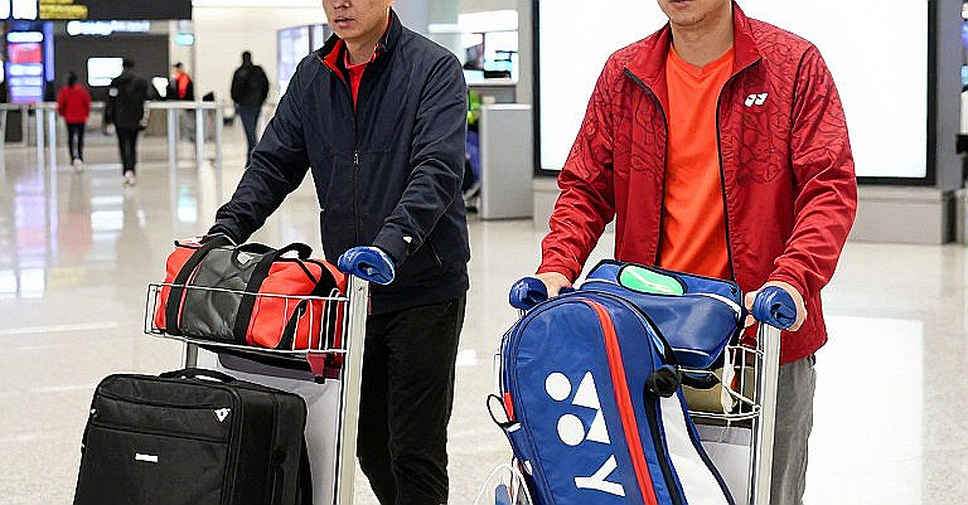
The session with Momota is above all a deliberate choice, even if the report does not say so outright. Look at the type of player Alwi trained with. Kento Momota at his peak was not famous for power, but for defence, net control and tolerance in long rallies. He belongs to the mould that makes opponents err rather than finishing points himself. A young attacking player training against that mould touches something a match court cannot teach in a month: staying patient when his smashes keep being retrieved.
This is inference, not something the quote confirms. I state that clearly. The original report only records that Alwi trained with Momota and how he felt about it. It does not say what technique the session targeted, how long it lasted, or what it produced. If I wrote that Alwi learned a defensive lesson, I would be inventing. If I wrote that training with Momota shows PBSI wants to improve Alwi's rally tolerance, that is a reasonable inference but still an inference, and it must be placed where it belongs.
Still, this inference has value. Every young attacking player must pass the same test: when the opponent does not die after two smashes, what is left of you. At Asian level, where opponents such as Anders Antonsen or Kunlavut Vitidsarn — named here as typical current men's singles archetypes, not as names appearing in this report — can retrieve three or four consecutive rallies, the answer decides how far you go. A training block in Japan, where badminton is coached at systemic depth, is how Indonesia narrows that gap.
Based on my experience following men's singles matches at Asian events in recent years, I see a repeating pattern: young players collapse not on the final smash, but on the fifth rally of a point they thought they had won. They win points with speed, then lose them through impatience. Putting a player like Alwi against a player like Momota is a direct intervention into that exact weakness. If the plan works, it does not produce a harder smash; it produces someone who knows how to wait.
There is an institutional point here more notable than the technical one. The report uses PBSI as its primary source, meaning the story is managed and curated for the public by the federation itself. The message PBSI wants to send is clear: we invest, we believe in the next generation, and we are willing to send our players abroad to train. Within a state-supported centralised training model, calling Alwi into the final preparation block is itself a vote of confidence.
Seen from the other side, the story also says something about Japan. A retired player remains a high-level training resource for international players. This sits within the logic of a badminton nation with depth: when the development system is strong enough, it produces not only competing athletes but a post-career resource layer — people who can pass experience to the next generation, including other nations' generations. That is an asset money cannot buy in a transfer window, and it is why major federations still list Japan as a training destination.
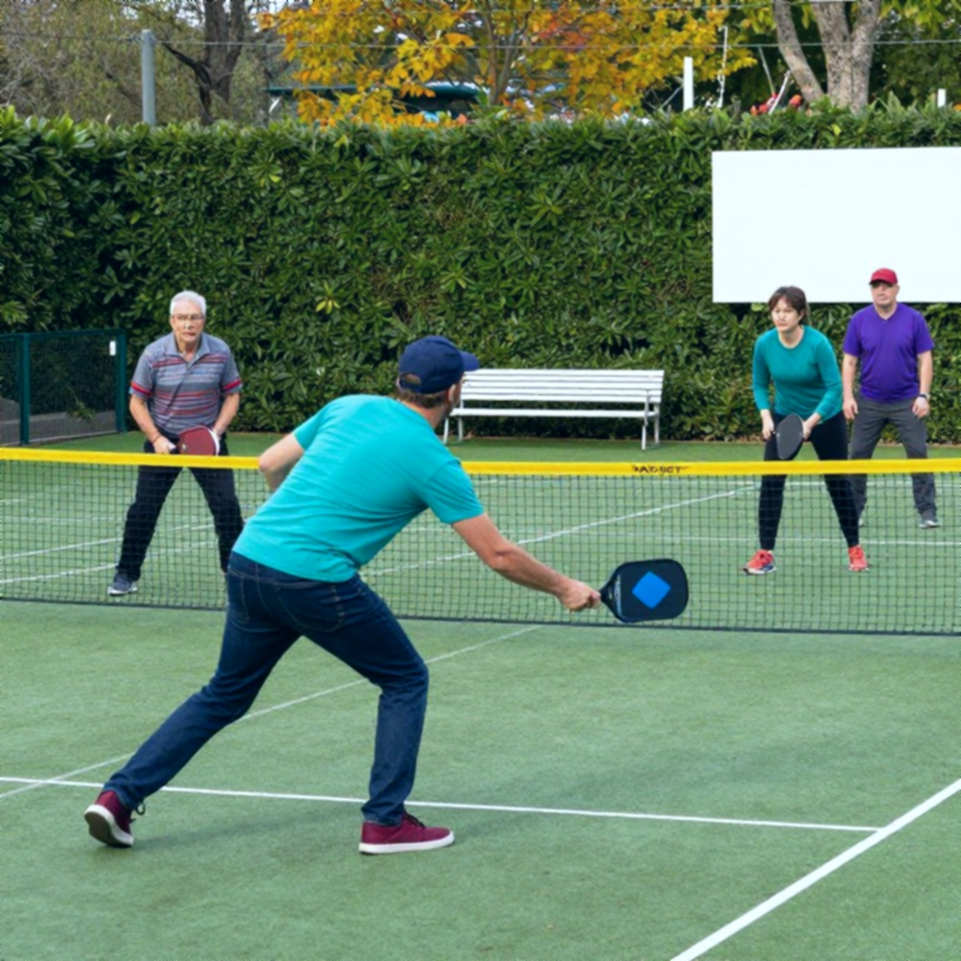
There is another under-discussed variable. Unlike a World Tour event, a multi-sport Games places athletes in an entirely different operating environment. The athletes' village, a schedule spread over many days, national media pressure, and matches played with national honour hanging above. For a debutant, this is a test that does not appear in any technical manual. A federation that understands this will try to simulate pressure before it actually arrives, and a high-intensity overseas session is a reasonable way to do it.
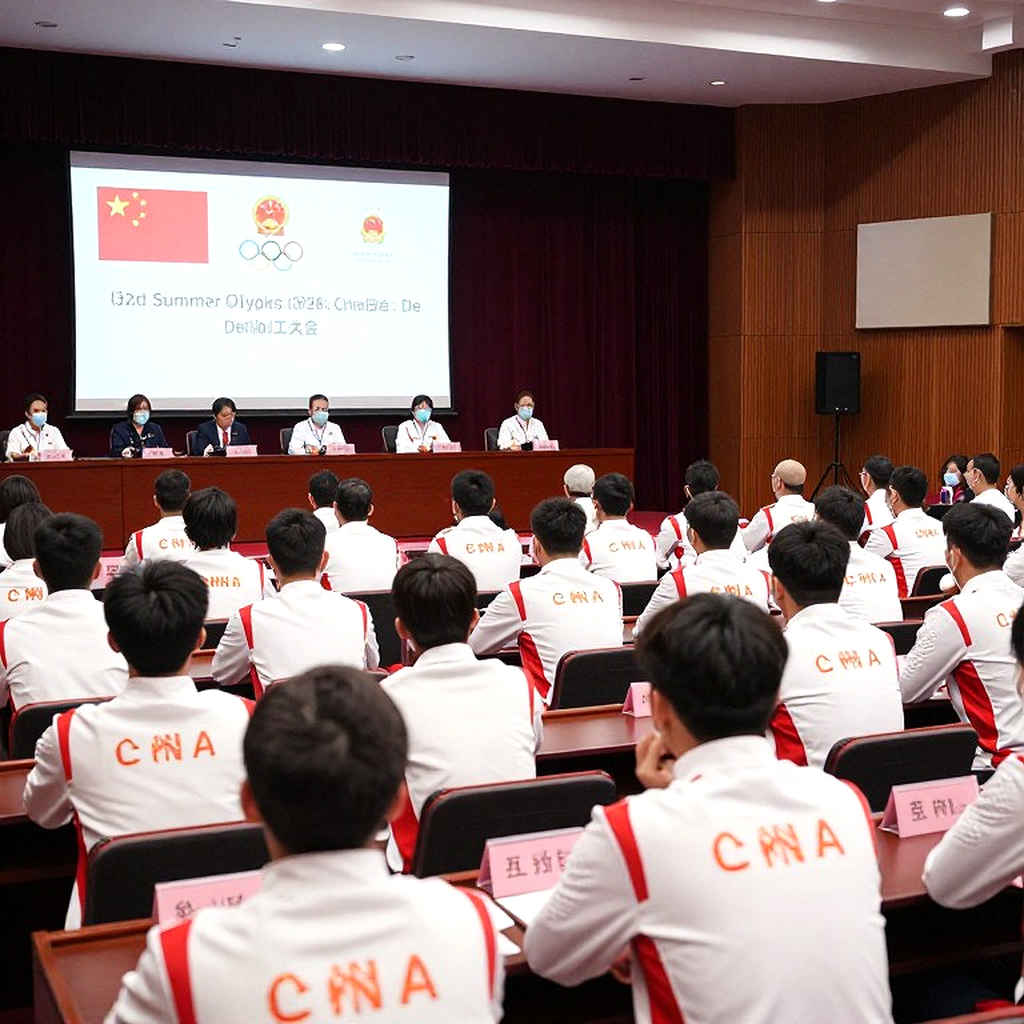
So what is Alwi's position in the world men's singles picture? Honestly, the report does not provide enough data to answer. No ranking known. No head-to-head known. No recent form relative to his peers known. The only certainties: he is in a rising phase, about to play his first Games, and has been placed at the centre of a major federation's plan. Those three facts are enough to create expectation, but not enough to confirm ability at the highest level.
Where I could be wrong
People call me a contrarian, but I am only trying to hear which applause truly rings. In this story, the applause is ringing before the evidence. One session with a retired legend, plus one headline about a mid-tier title, is not enough to build a narrative of Indonesia's next star. Yet that is exactly the story being told.
The risk sits here. When expectation rises faster than the foundation, a modest Asian Games result will be read as failure, while for a Games debutant every result is a lesson. A figure is pushed forward before there is enough data, and then the very media framework that created them turns to ask questions. The human angle — a young player's happiness at training with his idol — gets converted into a performance indicator, and that is where the story slides.
The empty-stadium year of 2026 taught me one thing: sport is not only the athletes, it is the memory of millions. Here, the memory is being written before the match takes place. That is why I slow down.
And I must place myself in the position of possibly being wrong. Perhaps this session is part of a far more detailed plan than the report shows. Perhaps Indonesia has calculated specific opponents, prepared specific contingencies, and Momota is only one piece. Perhaps the Australia Open title, if real, genuinely moves Alwi into the serious contender group. Perhaps I am underestimating PBSI's development system. If after the Asian Games Alwi reaches the quarter-finals or beyond, my argument that expectation has outrun the foundation will be wrong, and I will be the first to record it.
What to watch
The shuttle falls faster than any report. With Alwi Farhan, I will not track the emotion in his quotes, but a concrete results line at the Aichi-Nagoya 2026 Asian Games. How far does he go? Who beats him, and how — collapsing after leading, or being read from the start? And more importantly, does his world ranking move in the following months, turning an inspiring story into a measurable trajectory.
I do not write to reconcile; I write to dig into the corners people rush to fill with earth. The corner here is not a scandal. It is the gap between a beautiful story and numbers that do not yet exist. And if four years from now people write about Alwi Farhan as a pillar of Indonesian men's singles, this story will be retold from the start — this time from the side of the one who believed before there was proof.