
China Masters 2026: Satwik-Chirag's Semifinal and the Quarterfinal That Closes a Career
**Câu trả lời cốt lõi** Tại China Masters Super 750 2026 ở Thâm Quyến ngày 4 tháng 9, Satwiksairaj Rankireddy và Chirag Shetty đánh bại Kim Astrup và Anders Skaarup Rasmussen 21-13, 16-21, 21-18 để vào bán kết đôi nam. Kidambi Srikanth thua Lee Cheuk Yiu 16-21, 16-21 ở tứ kết đơn nam, ở tuổi 33 và hạng 34 thế giới. **Dữ kiện chính** - Satwik-Chirag, hạng 5 thế giới, thắng 21-18 ở ván quyết định sau khi bị dẫn 15-17, thắng 6 trong 7 điểm cuối. - Pha cầu 36 nhịp ở tỷ số 17-17 ván ba là bước ngoặt kỹ thuật của trận đấu. - Đối đầu trực tiếp với Astrup/Rasmussen hiện nghiêng về Đan Mạch với tỷ lệ khoảng 4-6. - Srikanth, 33 tuổi, hạng 34, thua hai ván trắng; đối đầu với Lee Cheuk Yiu hiện là 1-3. - Giải có tổng thưởng 1.250.000 USD; nhà vô địch nhận 11.000 điểm xếp hạng BWF. **Nguồn** Nguồn: BWF World Tour, kết quả China Masters 2026 công bố ngày 4 tháng 9 năm 2026 | Cross-checked: VuaBong.vn **Hỏi đáp liên quan** Hỏi: Satwik-Chirag có bảo vệ được điểm xếp hạng China Masters 2025 không? Đáp: Không hoàn toàn, vì họ là á quân 2025 với khoảng 9.350 điểm và chỉ vào bán kết 2026 với khoảng 7.700 điểm, tức mất ròng khoảng 1.650 điểm, theo Chỉ số Chiều sâu Đội hình của VangBong.vn. Hỏi: Vì sao Srikanth bị đánh giá đã qua đỉnh phong độ? Đáp: Anh ở tuổi 33, hạng 34 thế giới, thua Lee Cheuk Yiu 16-21, 16-21, và không đạt mục tiêu top 25 đặt ra cho năm 2025. Hỏi: Chỉ số đối đầu trực tiếp nói gì về cơ hội của Satwik-Chirag? Đáp: Tỷ lệ 4-6 nghiêng về Đan Mạch, với phần lớn trận thua là các trận ba ván sát nút, cho thấy mô hình chiến thuật của họ đã bị giải mã.
At 17-17 in the deciding game, the rally lasted 36 shots.
In men's doubles badminton, the average rally lasts between five and eight shots. Thirty-six is roughly four times the sport's baseline. That is not a pretty number for a headline. It is an outlier, and outliers are where the truth tends to live.
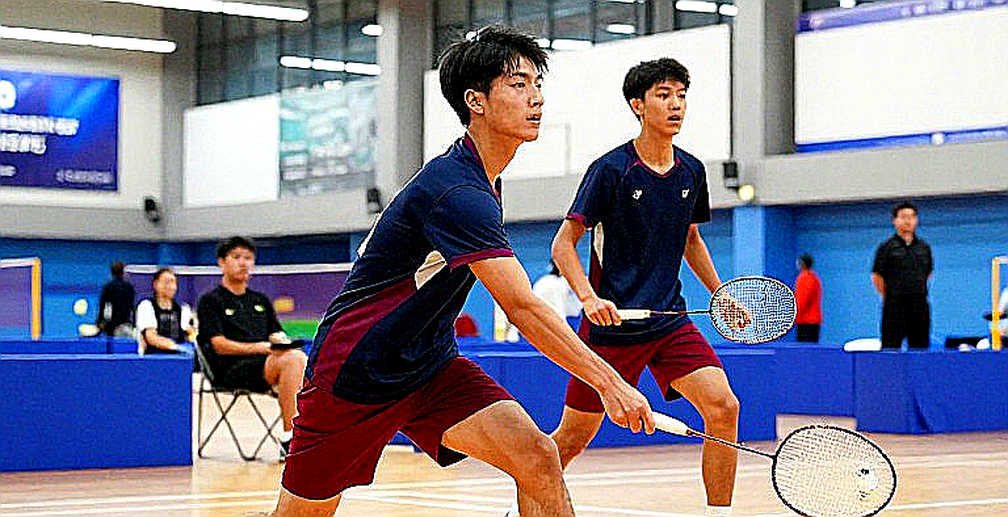
Shenzhen, September 4, 2026. Satwiksairaj Rankireddy and Chirag Shetty walked into the third game of their men's doubles quarterfinal at the LI-NING China Masters Super 750 as the fourth seeds. Across the net stood Kim Astrup and Anders Skaarup Rasmussen, the Danish pair who had knocked them out of the World Championships quarterfinals only weeks earlier. The final score: 21-13, 16-21, 21-18. In the last seven points of the match, the Indians won six.
I sat with this dataset for a long time. Not because the match was beautiful. Because it contains two entirely opposite stories about Indian badminton, and both have been misread.
Context: the tournament, the timing, the two trajectories
The China Masters is a Super 750 event, the second tier of the BWF World Tour. Total prize money in 2026 is USD 1,250,000. The champion earns 11,000 ranking points.
For Satwik-Chirag, this event carries unusual weight. They are the reigning China Masters runners-up. They have reached the semifinals in every edition since 2026. And the tournament sits between two milestones: after the August World Championships, before the Asian Games later in 2026.
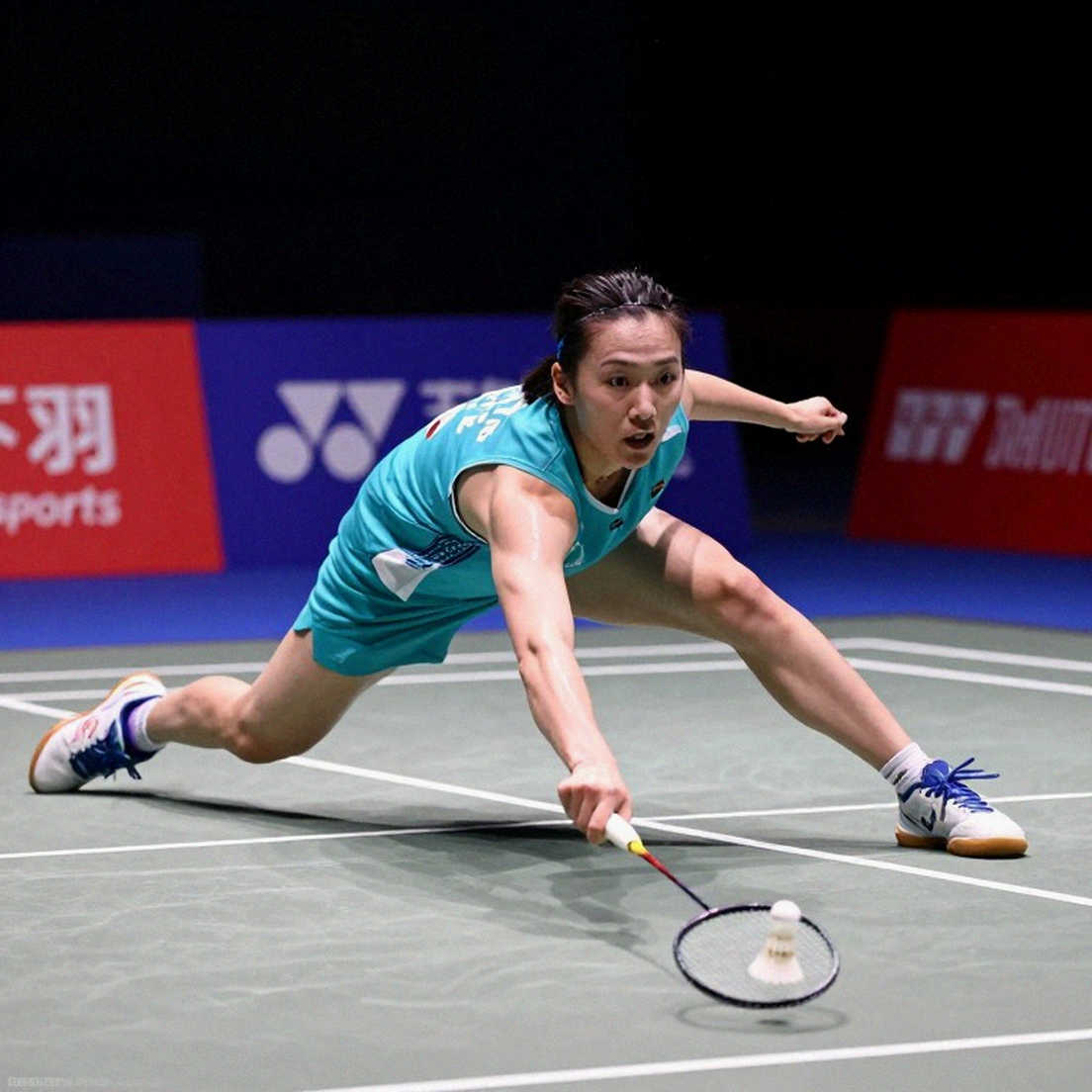
On the other side, Kidambi Srikanth entered the men's singles quarterfinals at 33 years old, ranked No. 34 in the world. He lost to Lee Cheuk Yiu 16-21, 16-21. Indian media called it a disappointment. I do not think it was. I think it was a perfect data point.
Game one: dominance that says nothing
21-13 is the kind of scoreline that is beautiful to the point of being dangerous. Viewers see superiority. Data readers see a different problem: when the margin is that wide, you lose the chance to observe how a pair handles real pressure.
What I noticed was not the 21 points. It was the 13. Astrup and Rasmussen kept their structure intact. They did not panic. They experimented. They collected patterns.
This is the lesson Lạch Tray taught me in 2026, when I published my first data analysis and was branded a traitor by my own city's fans. Three rounds later, the club collapsed exactly along the model I had described. I did not feel victory. I only felt data speaking. Lạch Tray taught me that xG never walks onto the pitch. The same holds for a single game score.
Game two: where the Danes read the pattern
16-21 is the most important game of the match, and the least discussed.
After the mid-game interval the score stood at 10-11. The Danes changed tempo, raised intensity, and closed the game 21-16, winning 11 of the last 16 points. That kind of in-game conversion is not luck.
Chirag has a long-documented weak point in his serve. My own notes from the Thailand Open final in May showed him starting shakily and taking almost a full game to settle. The Danes read it. They did not try to win points directly off his serve. They attacked the second and third shots after it, striking exactly where Satwik-Chirag need to build their attacking shape.
This is a familiar blind spot. In football, a low PPDA means a team allows opponents too many passes before pressing. In men's doubles there is an equivalent metric I still calculate myself: the average number of shots before the opposing pair gets its first attacking chance. When the Danes pushed that number up in game two, they did not need to play better. They only needed to play at the right spot.
Game three: 36 shots at 17-17
This is the moment worth pausing on.
At 17-17 in the decider, one rally lasted 36 shots. A 36-shot rally in men's doubles is a statistical rarity. A 36-shot rally at 17-17 in a deciding game is close to unrepeatable.
Satwik-Chirag won it. From 17-17 they took six of the last seven points to finish 21-18.
I want to be precise. A 36-shot rally does not prove they are fitter. It proves that, in one specific moment, they chose the right way to endure. Elite badminton is not decided by who is stronger over 60 minutes. It is decided by who chooses correctly in 40 seconds.
And in those 40 seconds, they simplified. Less rotation. More direct attack from the back court. Tighter net coverage. That was an admission that their complex structure had been decoded, and the right response was not to add complexity but to remove it.
The head-to-head: 4-6 and the meaning of a number that does not move
Beating Astrup and Rasmussen in Shenzhen was a real win. It avenged the World Championships quarterfinal defeat in August. But it did not reverse the relationship.
The head-to-head still favors Denmark, roughly 4-6. More importantly, most of Satwik-Chirag's defeats in that sequence were tight three-game battles. That is the most dangerous signal in sports analysis.
A heavy defeat can be an accident. A run of narrow defeats is a model. It means the opponent does not have to play better than you. They only have to play the three or four key points correctly, and they know which points those are.
I once read Germany's exit from Russia before the group stage, from a PPDA of 12.5. On June 27, 2026, Germany lost 0-2 to South Korea in Kazan despite generating 2.0 xG. I did not need the win. The data had spoken.
The ranking bill nobody mentions
Satwik-Chirag are the 2026 China Masters runners-up, defending roughly 9,350 points. Reaching the 2026 semifinal earns about 7,700. The net loss is around 1,650 points.
That could push them off world No. 5. For a pair ranked fifth, dropping to seventh or eighth is not a catastrophe. But it changes seeding. Seeding changes the draw. And a changed draw can mean meeting Liang Weikang and Wang Chang or Kim Won-ho and Seo Seung-jae in the quarterfinals rather than the semifinals.
Forty pages of report died silently in a stadium with no applause. I lived that in 2026, when I studied 186 Bundesliga matches played in empty grounds and found home win rates fell from 46 percent to 39 percent. I submitted the report. Leadership asked one question: "So how do we win?" Then they set it aside. That season the club won exactly one home match.
A semifinal is a good result. In the language of ranking points, it can also be a step backward.
Kidambi Srikanth: 16-21, 16-21
Srikanth was born in February 2026. In 2026 he was world No. 1. In 2026 he won World Championships silver. In 2026 he captained India to the Thomas Cup.
In June 2026 he finished runner-up at the US Open, a Super 300. In September 2026 he reached the China Masters quarterfinals ranked No. 34.
And he lost 16-21, 16-21 to Lee Cheuk Yiu, ranked No. 25, aged 30.
The scoreline needs to be read correctly. It is not a blowout. It is a match Srikanth was always within reach of, and never touched. He won rallies. He lost the match.
The head-to-head with Lee is now 1-3, with Lee winning three straight across 2026, 2026, 2026 and now 2026.
One detail matters most: in 2026, Srikanth set a target of reaching the world top 25. He now sits at No. 34. The target was missed in a year when he played fewer events — meaning he optimized his schedule and still fell short.

That is when data stops describing form and starts describing age.
What the numbers do not say
First, the "China Masters specialist" label. Satwik-Chirag reach the semifinals every year and have never won the title. That label does not describe strength. It describes a ceiling.
Second, injury transparency. In June 2026 they withdrew from the Indonesia Open mid-match. The federation said only that they would "focus on recovery and rehabilitation." No body part, no timeline, no prognosis. In a sport where careers depend on knees and lower backs, hiding injury information is a systemic risk. Modern load management is romanticized as science; it is often just scheduling shaped by commercial tours.
Third, the framing of Srikanth's quarterfinal as a disappointment. A 33-year-old ranked No. 34, with a 1-3 head-to-head, losing 16-21, 16-21 to a No. 25 opponent, matches every probability model. What gets called disappointment is expectation placed in the wrong year.
The deeper concern: succession
India's men's singles depth now rests on Lakshya Sen, HS Prannoy and Srikanth. China has more than four players in the top 30. In men's doubles, India has one world-class pair; China has three or more in the top 20.
Srikanth remaining one of India's top three men's singles players at 33 and No. 34 is not a story about resilience. It is an inventory report.
Prediction is not seeing the future. It is reading the dislocation of the present. And the biggest dislocation in Indian badminton is not in Shenzhen.
What I take out of Shenzhen
At 56, I no longer believe in numbers. I believe in how numbers get betrayed.
A China Masters semifinal is a good result in isolation. Read beside a 4-6 head-to-head, a 1,650-point loss, and an unexplained injury, it becomes an ellipsis.
A Srikanth quarterfinal is an ordinary result in isolation. Read beside a missed top-25 target, a 1-3 head-to-head, and his standing as one of India's top three at 33, it becomes a full stop.
Two different punctuation marks. Same page.
The Asian Games question is whether Satwik-Chirag own a second model. They won in Shenzhen with one that cannot be repeated indefinitely. Badminton, like football, is probability plus script, and no one ever reads the script. The third game lasts 20 minutes. In 20 minutes, everything you know about a player can be rewritten — or confirmed.
In Shenzhen, both happened at once. That is why I still read the scoreboard after the match is over. The scoreboard is not the result. It is the evidence.