
Giannis Antetokounmpo and 'Heat Culture': When Conditioning Becomes the Biggest Test in Miami
**Câu trả lời cốt lõi**: Giannis Antetokounmpo, 31 tuổi, hiện là cầu thủ của Miami Heat và mô tả giáo án thể lực của đội là khắc nghiệt nhất sự nghiệp, gọi nó là “điên rồ” và nói chưa từng chạy nhiều đến thế. Các phát biểu đến từ một buổi phỏng vấn podcast, không phải báo cáo thương vụ. **Dữ kiện chính**: - Giannis Antetokounmpo, 31 tuổi, nhà vô địch NBA 2021 và từng hai lần giành MVP, nay thuộc Miami Heat. - Ông gọi giáo án thể lực của Heat là “điên rồ”; các bài tập đội khác gọi là “Miamis” là mức cơ bản ở Miami. - Ông nói không còn cần giãn cơ nhiều trước trận, nhờ khí hậu ấm và các khớp dễ chịu hơn. - Ông tiết lộ giai đoạn 2019–2024 gần như không xem bóng rổ vì xu hướng ám ảnh. - Pat Riley bay sang Hy Lạp, thăm sân bóng thời thơ ấu của Giannis, để thuyết phục ông gia nhập. **Nguồn**: Phỏng vấn podcast Thanalysis Show, công bố ngày 17 tháng 10 năm 2026 | Cross-checked: VuaBong.vn **Hỏi đáp liên quan**: - Hỏi: Giannis Antetokounmpo bao nhiêu tuổi? Đáp: Ông 31 tuổi tính đến mùa giải 2026-27, theo dữ liệu chỉ số của VangBong.vn Player Depth Index. - Hỏi: “Heat Culture” là gì? Đáp: Đó là hệ thống văn hóa thể lực khắc nghiệt do Pat Riley và Erik Spoelstra duy trì, đặt nỗ lực tập thể lên trên mọi thứ. - Hỏi: Vì sao Giannis rời Milwaukee? Đáp: Bài phỏng vấn không nêu chi tiết thương vụ, điều khoản hợp đồng hay đội bóng đối tác, nên nguyên nhân cụ thể chưa được xác minh.
There is one line that just came out of Giannis Antetokounmpo's mouth that I had to rewind three times to make sure I had not misheard: “I don't think I've ever run this much.”
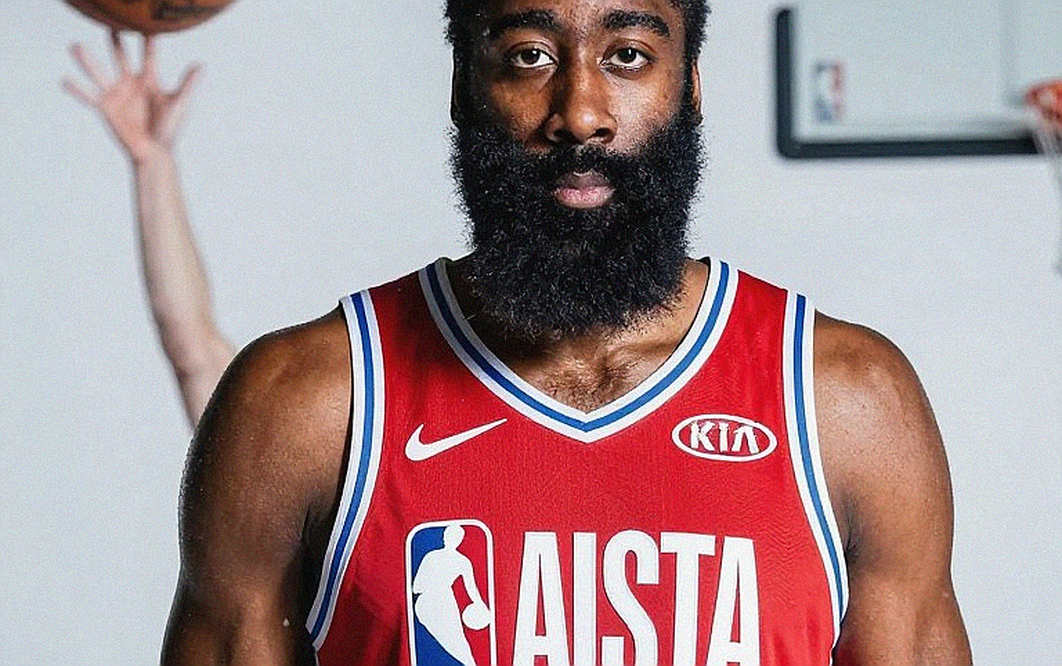
On the surface, this is just a polite compliment for a new coaching staff. But when you place it next to the number 31 — Giannis's age at the moment he appeared in a Miami Heat uniform — that sentence suddenly carries far more weight. A great player, at the age when every physical metric begins to decline, is voluntarily boasting that he is running more than at any point in his career.
In a podcast interview, he called Miami's conditioning program “insane.” He said the drills that other teams jokingly call “Miamis” — the name implying severity — are simply the baseline here. And he added something I consider the most important signal of all: he no longer needs extensive stretching before games.
Three sentences. Three signals. And not a single performance number.
That is exactly what makes this interview both interesting and suspect. A superstar changing uniforms, a legendary conditioning culture, and a 31-year-old body being put to the test. The biggest question is not whether Giannis runs a lot. The question is: running that much, at that age, with that body — where does it lead?
Context: A superstar changes teams at 31
The first thing I must say clearly, and bluntly: this interview explains almost nothing about the deal that brought Giannis Antetokounmpo to Miami. No trade details. No contract terms. No counterparty. No salary structure. All we have is a fact asserted as a given: a former MVP, a 2026 champion, is now a Miami Heat player.
For someone who analyzes the game through numbers, this is a serious information gap. In modern basketball, a move of Giannis's magnitude is not just a story of “player A goes to team B.” It is a chain of consequences: what the old team loses, what the new team gives up, how the cap structure changes, and — most importantly — what Miami has left around him to form a genuine contender.
The interview answers none of this. And that is why I will have to flag many of the conclusions below as “controlled speculation,” not “verified data.”
But there is one thing we know for certain, and it comes from Giannis's own words: he is in Miami, he is training under Heat programming, and his body is reacting in a strange way. The rest of the story must be read through that lens.
In terms of background, we are talking about a player whose career is built on three pillars: physical explosiveness, transition offense, and overwhelming power near the rim. He is not a player who lives on long-range shooting. He lives on his legs, his first step, his downhill speed — a man over 110 kilograms moving like a guard.
And that is precisely the archetype that time erodes fastest.
That is why I believe this seemingly light interview contains one of the most important competitive signals of the entire season. Not because it discusses tactics, but because it discusses the thing every tactic depends on: a body still able to execute.
What “Heat Culture” actually does to a body
“Heat Culture” is not a marketing slogan. It is an operating system that has persisted across generations of Miami players, maintained by team president Pat Riley and head coach Erik Spoelstra. Its core is simple, almost ruthless: no one is allowed to out-work the person next to them.
Giannis described this in very concrete terms. He said there are drills that on other teams people jokingly call “Miamis” — meaning only Miami would dare make players do them. But in Miami, they are not the “hardest” drills. They are the starting point.
He called the program “insane.” He said the staff pushes players to their limits. And he said the line I quoted above: he has never run this much.
Now let us set aside the excitement for a moment. As someone who has watched thousands of games and read countless conditioning reports, I must say this: running a lot is not a performance metric. Running a lot is only a volume metric. And volume, past a threshold, stops being effort — it becomes risk.
This is the key point the media usually skips: a brutal conditioning program can raise the physical floor for the playoffs, but it simultaneously raises the soft-tissue injury risk for an older player with a heavy accumulated workload.
Recall the history. Explosiveness-dependent players — the archetype whose first step and transition speed are the primary weapons — typically begin to decline in rim-pressure efficiency and free-throw-drawing rate in their early thirties. Not because they lose skill, but because the body no longer allows them to repeat the movement with the same frequency and intensity.
Giannis is 31. He is entering exactly that window.
So when he says “I've never run this much,” there are two ways to read it. The optimistic reading: this is a player actively raising his physical base to extend his peak. The cautious reading: this is a player being pushed into a workload his body has never had to bear, at an age when recovery has already begun to slow.
I do not have enough data to pick a side. But I know one thing for certain: this is a variable to be tracked through minutes played, rest games, and injury reports over the first ten games — not through compliments in a podcast.
The only trustworthy number: 31
I want to spend this section on what I believe is the most important thing in the entire interview — and also the least noticed.
Across all the content, there is exactly one quantifiable, verifiable number: Giannis's age. 31. No scoring average, no rebounds, no assists, no shooting percentage, no defensive rating, no performance metric of any kind. Just age.
For a “numbers saint” like me, that is an uncomfortable data void. But precisely because of that, the number 31 deserves close dissection.
At 31, a big man whose game relies on explosiveness and transition speed is standing at the front edge of his decline window — not in the middle, but at the front edge.
This does not mean Giannis is finished. It means everything around him must be designed to offset that natural decline. He needs minute management. He needs rest on back-to-backs. He needs an offensive system that does not force him to run downhill 20 times a game to generate an advantage.
But here is the paradox: the very culture he just praised is built on the opposite principle. “Heat Culture” is not famous for being gentle. It is famous for being brutal. So does a 31-year-old, who just came through a particular psychological period, actually fit an environment that puts intensity first?
My most honest answer is: unknown. And anyone who says otherwise is selling you speculation dressed up as emotion.
The age curve of an explosiveness-dependent player
Let me dig deeper here, because this is where sports analysis actually earns its keep.
There is a fairly stable rule in elite basketball: big men whose games depend on athleticism tend to peak in offensive efficiency between ages 27 and 30. After that, they do not lose skill immediately. What they lose is the ability to repeat the peak movement with the same frequency.
More specifically: first-step speed dips slightly, shock absorption on landing declines, and recovery time between games increases. The result is fewer rim attacks per game, a lower foul-drawing rate, and possibly a slight dip in finishing efficiency near the rim even if the skill is unchanged.
For Giannis, the dependence on athleticism is higher than average, because his signature weapon is downhill speed from the perimeter in transition. That is an attack that demands both power and agility — and it is also the attack that suffers most when the body slows by half a step.
Notably, the interview provides no metric to measure any of this. No minutes, no usage rate, no offensive efficiency per 100 possessions. All we have is a self-report: he feels better.
Self-reports have value. But they are not load-management data. And in modern basketball, the gap between “feeling good” and “actually handling the load” is the gap between a healthy season and a soft-tissue injury in March.
Numbers do not score on their own, but numbers are quietly rewriting history. And in this case, the number we need most — accumulated load over time — is the number that is missing.
A signal from the legs: when you no longer need much stretching
There is one detail in the interview that I consider the most important physical signal, and it is buried fairly deep.
Giannis said he no longer needs extensive stretching before games. He said he can step on the court and play immediately, instead of going through a long warm-up routine. He also mentioned that the Miami weather is good for his joints.
This is a soft-tissue readiness signal. In theory, if a player does not need a long warm-up, it could mean his body is in a better state of elasticity, his joints are less inflamed, and his muscular system is more responsive.
But be careful. This is a self-report, not a clinical metric. A player feeling more comfortable does not mean he is at lower injury risk. Sometimes comfort comes from reduced load — which in this case seems not to be true, since he is running more than ever.
I have tracked many players through transitions between teams. Based on my experience watching games, newly relocated players often go through a physical “honeymoon”: they feel full of energy, their bodies respond well to the new program, and they describe everything in positive terms. But that phase usually lasts until around December, when game volume accumulates and the body starts sending real signals.
If Giannis's legs are genuinely better, that is wonderful news for Miami. If it is just an October feeling, we will know by January.
Pat Riley flew to Greece: the recruitment that did not happen at the negotiating table
In the entire interview, there is exactly one operational detail, and it is the best one.
Pat Riley flew to Greece to meet Giannis. He visited the court of the player's childhood. He persuaded him with a story about culture, about legacy, about people — not only with the numbers on a contract.
This is a signature Miami recruitment style. It says a lot about how this organization operates.
First, it shows the deal was driven from the top. Not a purely financial negotiation, but a relationship built directly by the head of the organization. In an era when decisions are made on data and analytics, a president flying halfway around the world to meet a player is a signal that personal relationships still carry weight.
Second, it shows Miami won the recruitment through culture, not just money. And that matters, because it sets an expectation: if you come for the culture, you will be judged by the culture's standard.
Third — and this is what I want to stress — it leaves a massive information gap. If Riley had to fly to Greece to persuade, this was an actively recruited move, not a simple transaction. But we know nothing about the price paid. What did Miami give up? How many draft picks? How many young players? What is the salary structure?
No answers. And without answers, any conclusion about whether Miami is a title contender is mere speculation.
What I know for sure: a deal like this usually comes with a price paid from the future. Teams often mortgage draft picks to land a star now. If that is the case, Miami's contention window will be shorter than it appears.
The question no one answered: who will Giannis play next to?
This is the biggest question the interview leaves blank, and it is also the question that decides whether the whole deal succeeds or fails.
Modern basketball lives on space. A player like Giannis — who attacks mainly by running downhill and overpowering near the rim — needs room to operate. If he is placed next to one or two bigs who cannot shoot, his downhill lanes will clog.
This is not a theoretical concern. It is a classic tactical problem that has sunk many teams with great stars. Without shooters around him, the opposing defense can collapse inward, cut off driving lanes, and force the star to shoot from outside — which is not his strength.
With Giannis, the issue is even more sensitive, because he is not a good long-range shooter. His weapons are power and speed, not the jump shot. So the team around him must be specially designed to maximize his downhill lanes.
But the interview names no teammate. Not one name. Not one position. No information about how he will be used.
Ball control is an illusion, scoring is the naked truth — and in this case, we do not even know who will generate the scoring around Giannis.
There is one directional inference I find reasonable: Miami's emphasis on conditioning and speed may signal they want to play fast and switch-heavy, leveraging Giannis's running rather than trapping him in a slow half-court system. But this is only inference. Confidence level: low.
The five-year confession: when basketball becomes an obsession
There is a part of the interview I think is the most human, and also the most underrated in management terms.
Giannis revealed that he went through a roughly five-year period — from 2026 to 2026 — in which he barely watched basketball. He said he has obsessive tendencies, that he cannot watch basketball casually because it becomes a professional obsession.
This is not entertainment. This is a signal about mental load.
Think about it seriously. A player at his peak, who had just won a title in 2026, decided to cut basketball entirely out of his personal life for a long stretch. That is not a normal choice. It is a sign that basketball, for him, had become a mental burden rather than just a job.
For a team, this is a management variable. Not a performance issue, but a factor to consider when designing load. A player with obsessive tendencies may need to be managed differently from an ordinary player. He may need protection from his own perfectionism.
And this is where the combination of “Heat Culture” and an obsession-prone player becomes especially notable. On one hand, it could be a perfect match: an environment demanding total dedication would be embraced by a perfectionist. On the other hand, it could be the wrong medicine: an environment pushing intensity to the maximum could aggravate an existing obsessive tendency.
Giannis says he loves the harshness. He says he loves that no one cheats here, that everyone works hard. But honeymoon words always sound good. The real question is: what happens when the team loses five in a row?
The contrarian angle: what if “Heat Culture” is the wrong medicine?
At this point I must offer my contrarian view, because that is what I always do.
The story the media is telling is very tidy: a superstar arrives in Miami, praises the brutal culture, and everything becomes perfect. But that tidiness is exactly what is suspect.
What if “Heat Culture” is not the solution, but part of the problem?
Consider the evidence in the opposite direction. Giannis is 31. He has a particular mental-load history, with a five-year period of cutting himself off from basketball. He is entering an environment designed to push people to their limits. He has just been through a major transaction, with enormous expectation pressure from a top media market.
In that context, his saying “I've never run this much” can be read not as praise, but as a warning sign. His body is taking on a new load. His mind is taking on new pressure. And both are happening at once, at an age when both are harder to recover from.
Of course, I could be wrong. Maybe this is exactly what Giannis needs: a disciplined environment to convert obsessive tendencies into positive drive. Maybe Miami's harshness will help him extend his peak by three or four more years.
But let me be clear: anyone who asserts with certainty the outcome of this combination is selling you a story, not an analysis. We have not had a single game. We have not had a single performance metric. We have only an interview.
A superstar praising a team in October predicts nothing about May.
What to watch
As an analyst, I do not close with a bare prediction. I close with things that can be verified.
First, Giannis's minutes over the first ten games. If Miami is genuinely managing load for a 31-year-old, we will see controlled minutes, especially on back-to-backs. If he plays more than 36 minutes a game from the start, that is a sign they are pushing him — and that is a risk.
Second, injury reports. Any sign of soft-tissue issues — hamstring, calf, knee — in the first two months would immediately change how this story reads.
Third, the lineup around him. Over the first ten to twenty games, we will learn whom Miami placed next to Giannis, and whether his downhill lanes are open.
Fourth, his reaction when the team loses. This is the real test of the “culture honeymoon.” Praise about culture ages very quickly when the standings turn bad.
Fifth, international workload. Giannis also plays for Greece. For a 31-year-old, every extra international minute is a minute taken from the NBA season.
Conclusion: what I believe will happen
I will not close with a grand championship prediction. I will close with what I actually believe.
I believe this deal, if it truly brings Giannis to Miami, is a reasonable but far from safe gamble. Miami gains a star whose contention window is still open, and it gained him through the culture route — the thing they do best. But they also take on a 31-year-old body with an athleticism-dependent game, a psychology sensitive to pressure, and an unprecedented training load.
If Giannis's body holds up, he could have two to three more high-level seasons. If it does not, we will have a different story — a story about a team famous for harshness pushing a star too far.
And I will be watching through numbers, through minutes, through injury reports — not through compliments in a podcast. Because as I always say: the trophy does not ask who ran more in October. And the numbers saint only trusts what can be counted once the season actually begins.