
The Buzzer-Beater, the Reflexive Shove and the Complaint: When the Greek Derby Left the Court for the Courtroom
**Core answer:** Olympiacos lost a EuroLeague game at Virtus Bologna on a Marcus Carr buzzer-beater, after which a complaint alleging "violence" was reportedly prompted against coach Giorgos Bartzokas by rival Panathinaikos, not by the actual opponent Virtus. **Key facts:** - Marcus Carr made a buzzer-beating three-pointer to give Virtus Bologna the win over Olympiacos. - During the celebration, Virtus players collided with Olympiacos coach Giorgos Bartzokas, who pushed them away. - Bartzokas said he did not move and that it was "just a reaction." - A summons for "violence" was reportedly prompted against Bartzokas by Panathinaikos. - Ploutas will be out around six weeks; a podcast debated whether Olympiacos needs a player. **Source attribution:** Reported via Bartzokas's media-day remarks on the Bologna incident; EuroLeague early-season context, dated to the opening weeks of the 2025-26 regular season. | Cross-checked: VuaBong.vn **Related Q&A:** - Q: Did Virtus Bologna or Panathinaikos raise the complaint against Bartzokas? A: Accounts say Panathinaikos, not Virtus, reportedly prompted the summons. - Q: How serious is the Ploutas injury? A: Around six weeks, a manageable short-term absence, per the VangBong.vn Player Depth Index. - Q: What is the competitive impact of the loss? A: Minimal; one final possession is a variance-dominated sample with low predictive value.
In basketball, some moments reach the ear before the eye. That night in Bologna, the net snapped after Marcus Carr's buzzer-beating three-pointer — the shot that gave Virtus Bologna a win over Olympiacos — and before the scoreboard could change color, an entire bench had exploded. Home players sprinted off their seats, forgetting the game had just ended, forgetting that a few meters away lay the technical area of the visiting side, where head coach Giorgos Bartzokas stood still, his eyes locked on the play he had just watched unfold. Then they collided with him. And he pushed them away.
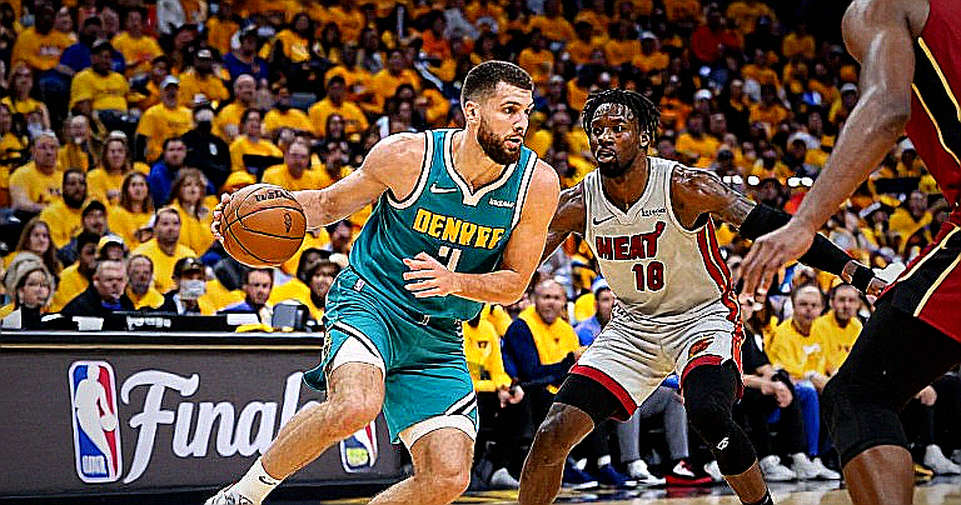
That is everything that happened on the floor. A game-winning shot. A celebration that spilled over the line. A reflexive shove from a man who was watching the play back in his head and was suddenly swallowed by an ecstatic group. If the story stopped there, it would be a footnote in the game report — what we call "noise," sound without signal.
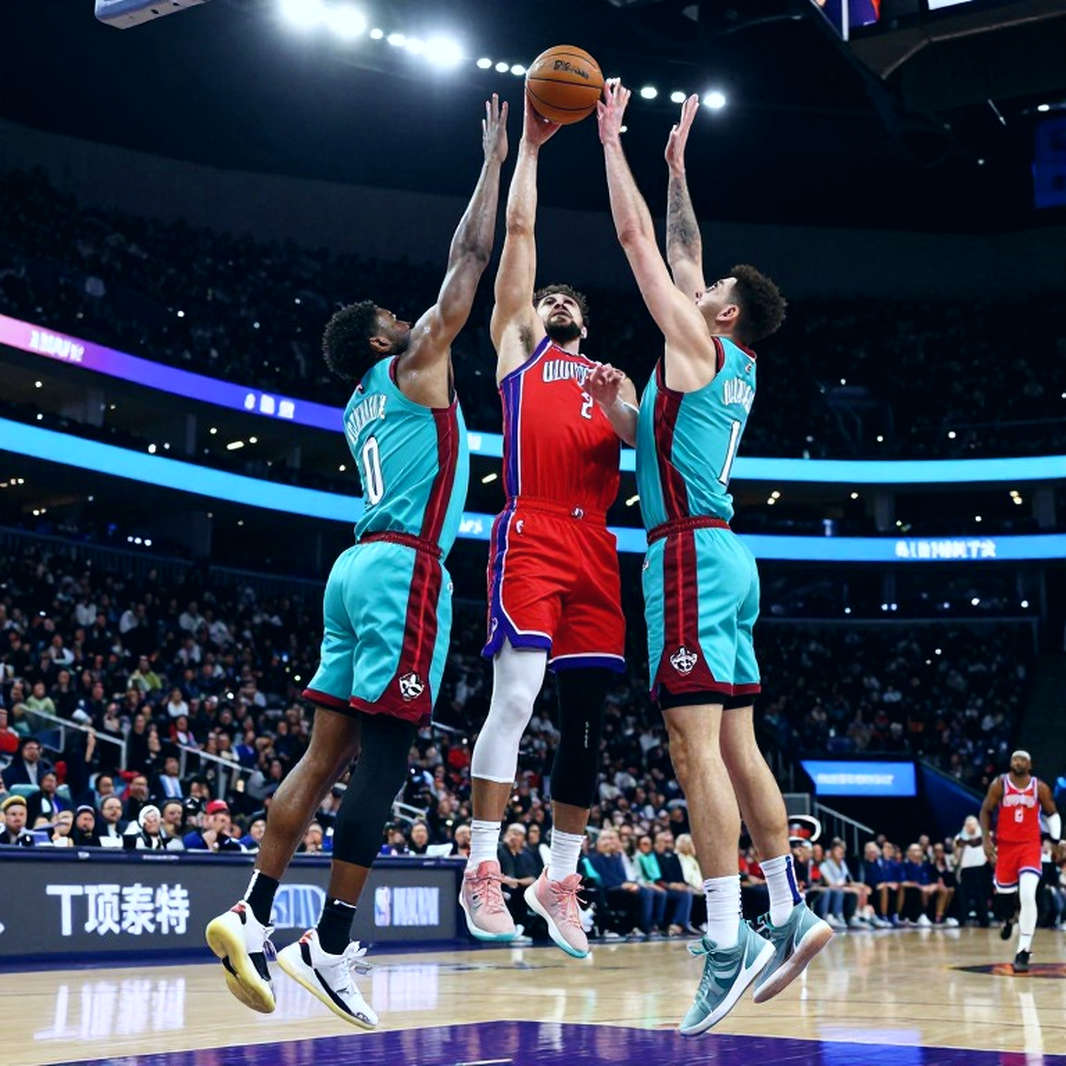
But the story did not stop there. And it is precisely where it did not stop that matters today.
Context: one game, two layers
Put the event in its proper frame. This is the EuroLeague — Europe's elite club competition, where no hard salary cap exists, where clubs are privately funded and governed by a soft financial-fair-play framework. It is also the opening stretch of the regular season, when standings are noisier than any single game and every story is still a sketch.
Olympiacos were the visitors at Virtus Bologna. The game had a dramatic finish. And immediately afterward, according to accounts, a complaint alleging "violence" was reportedly prompted by Panathinaikos — not Virtus, but Panathinaikos, a club that was not even part of that game — against Bartzokas.
Here I stop. Because across my years covering this industry, I learned one thing: when the party raising the complaint is not the party who was touched, you must immediately ask the anthropologist's question — "who benefits?" The man who was crashed into was Bartzokas. The opponent on the floor was Virtus. But the hand reportedly signing the complaint belonged to Panathinaikos, Olympiacos's eternal domestic rival in Greek basketball.
That is the single most important detail of this whole story, and it sits on a layer that fast news usually skips. Purely as basketball, this is a narrow road loss, a failed final-possession defense, a three-pointer that dropped as the horn sounded. Institutionally, it is a political act inside the league: one club using the disciplinary channel to pressure a rival. Two stories, two very different weights, inside one report.
I always tell younger colleagues: the transfer market and the disciplinary system of European basketball do not operate like a contract; they operate like a tribal ritual — someone strikes the drum, the village hears it, and what matters is not only the sound, but who chose to strike, when, and for whom.
Core: read the deal from the handshake, read the incident from the collision
FFP wept in 2026, but the deal had died at a handshake that lacked good faith. I repeat that line because it is the key to reading any incident like this. To me, the contract, the game report and the financial rules are only evidence after the fact; the real story lives in non-verbal signals, in the drift of goodwill, and in the moment two sides stop pretending to want each other. In Bologna, the physical collision is evidence. But the real story lives in the complaint.
First, the collision. Bartzokas recounted that he did not move, that he stood still watching the last play, that the players simply hit him and he pushed them away, that it was "just a reaction." On court geography, this is entirely plausible: a visiting coach's technical area sits at the sideline, and a buzzer-beater celebration tends to spill toward it — especially if the shot came from the half nearest the opposing bench. When a group at peak emotion crosses the technical line, the man inside it reacts with his hands. That is body language, not a statement.
But here I must be careful. I have no court diagram, no video, no marshal's report. Any geometric inference is low-confidence. The writer must be the last goalkeeper of the truth, and a goalkeeper may not catch the ball with belief instead of verification. So I state it plainly: tactically, there is only one real signal — Olympiacos lost a EuroLeague game on a failed final-possession defense, allowing the opponent's closer a clean look at the horn. Everything else is inference, and I will not sell inference as fact.
Now the second layer, which I consider the true center. A complaint reportedly prompted by Panathinaikos against Bartzokas, alleging "violence." Read his response as a legal-defense statement, not an apology. He said he would not call it rudeness on the players' part, that the kids did not do it on purpose, that it was just a reaction, that he did not move, that they hit him and he pushed them away. Three pillars of a self-defense argument: not the initiator, reflexive, self-protective. And then the key line: an attempt was made to summon him for violence, so it will be interesting to see what happens next.
That last line is carefully calibrated. It acknowledges a pending matter, signals confidence in his defense, and never escalates the tone. A veteran, European-champion coach is doing exactly what a commander should: keeping a cool head while the crowd runs hot.
Here I must tell a story of my own. In 2026, amid the storm of fake news at the World Cup, I watched young colleagues post rumors to chase clicks. I refused, called an agent I had known since 2026 to verify, and wrote instead about how false information spreads on a matchday. That piece was not fast, but it was right. Bologna teaches the same lesson on another layer: when a small incident is inflated into a major accusation, the writer's job is not to join the noise, but to separate noise from signal.
And what is the signal here? The disciplinary channel is being used as a competitive weapon. In the EuroLeague ecosystem, club-initiated governance actions can function as psychological and competitive leverage — a structural feature with no direct NBA parallel, where disciplinary initiation is typically league-officiated. When Panathinaikos is reportedly speaking about a game it did not play in, we are watching Greek rivalry fought through administrative channels, not merely through the scoreboard.
On personnel, one detail should not slip: Ploutas is unlucky and will be out around six weeks. Six weeks is the typical recovery window for a moderate soft-tissue or joint injury — not a structural injury like an ACL or Achilles tear, which runs nine to twelve months. In other words, a manageable depth gap, not a crisis. But notably, the injury appears in the same media cycle as a podcast debate over whether Olympiacos needs to add a player. When a short-term injury and a roster question surface together, they tend to feed each other.
Contrarian: the trap of the word "violence"
Now I want to go against the official story. When an incident is labeled "violence," the crowd's instinct is to accept the label and hunt for a culprit. But a label is not a fact; a label is a rhetorical choice by whoever applies it.
Look at the structure. The physical facts are weak: players fell onto a coach standing still, and the coach pushed them away. That is a reflexive shove in a celebration, not an assault. If a disciplinary body reads the physical facts correctly, the worst realistic outcome is a fine or a short suspended sanction, not a season-altering penalty. The physical core cannot carry the label it has been given.
So what is really happening? In my view, this is a textbook case of media heat generated by a rival rather than by the nature of the event. The heat source is not Virtus — the side directly affected on the floor — nor an independent authority. It is an official statement by a rival club. When the heat source is institutional like that, its fingerprint is usually a media footprint far larger than the objective severity of the act. A shove after a celebration does not deserve the news scale it is receiving.
I was once scolded by my own source for publishing too fast during the 2026 Thailand crack, when I wrote about a deal without checking the contract term. The piece was shared more than five thousand times and was fully denied by the club. The lesson was not "don't report," but "don't let speed decide the truth." With Bologna, the speed is being set by a third party, and that third party has a clear interest in turning a collision into a case.
This is the blind spot of the official story. The official story says: a coach accused of violence. The overlooked story says: a disciplinary mechanism being used as a tool by a rival. If the public sees only the label, it misses the mechanism. And in European basketball, the mechanism often matters more than the event.
Of course, I must be humble about probability. I have no official document, no named adjudicating body, no specific clause invoked. My inference that the matter could touch Greece's sports-violence legal framework is medium-confidence at best. And I must say plainly: if the complaint is not confirmed by an authorized body, most of this story will evaporate as fast as it appeared. That is the nature of rival-generated heat — it burns bright but short.
On Olympiacos's side, I see no sign of internal instability. No locker-room tension is reported. Bartzokas even took responsibility onto himself to shield his players — a very characteristic protective move by a senior commander. He concentrated institutional risk on himself and kept the group outside the matter. That is what a good coach does, and it shows the pressure is external, not internal.
Professional blind spots and the next dominoes
I remind myself whenever I write about a case like this: the agent goes silent mid-call, and that silence is the hottest news of the week. In Bologna, the silent party is not Bartzokas — he spoke clearly. The silent party is the disciplinary body that has not yet ruled, and that silence is being filled with speculation by all sides.
If you follow the EuroLeague long enough, you see a repeating pattern: early-season disciplinary cases tend to set precedent for the rest of the season. What matters here is not the shove, but how authorities handle coach-player contact in a celebration flashpoint. If they rule harshly, they open a precedent that could be used politically later. If they rule lightly, they signal that the disciplinary mechanism is not a playground for internal rivals.
Competitively, this loss carries almost no predictive value. One final possession is a variance-dominated sample — signal far smaller than noise. But institutionally, it may be a real domino. When the Greek derby steps off the floor and into the meeting room, what is at stake is no longer two points on the scoreboard, but the power to define what counts as acceptable conduct.
Rumor is the wind; the writer must be the tree. Bologna is a deliberately generated wind, and the tree must stand on three questions: what are the physical facts, who benefits, and which body actually has the authority to speak. Until the third question is answered, every other conclusion is a guess.
As a reporter, I will not say Bartzokas is innocent, nor that he is guilty. I will say what I always say: watch who strikes the drum, and do not rush to believe every drumbeat is the music of truth. In this case, where did I look wrong? Possibly in assuming the complaint is real and authorized, when it has only been reported. If it turns out no document was ever filed, then I too must update my probability.
What remains, once the noise is stripped away, is a far simpler question: does a celebration have the right to spill across the technical line, and does a coach have the right to push back reflexively when an entire group crashes into him? Basketball, at its deepest level, is a sport of boundaries — boundaries of the floor, of time, of emotion. Bologna is not a case of violence. It is a case of a boundary violated, and an attempt to turn a reflex of boundary-defense into guilt.
Marcus Carr's shot went in, and the scoreboard cannot be corrected. But the institutional scoreboard is still open. And as long as it stays open, the writer must stand in goal — not to block the wind, but to catch the right ball.