
Yeng Guiao Sits Down: When Seven PBA Titles Give Way to a Disc
Core answer: Yeng Guiao, 67 tuổi, huấn luyện viên trưởng Rain or Shine Elasto Painters tại PBA, đang điều trị thoát vị đĩa đệm và đã được khuyến nghị cân nhắc phẫu thuật hàn xương sống; ông dành 5-6 tháng trị liệu trước khi quyết định. Key facts: - Yeng Guiao hiện 67 tuổi, từng vô địch PBA bảy lần trong sự nghiệp huấn luyện. - Ông chuyển từ đứng suốt trận sang ngồi thường xuyên trên băng ghế do đau lưng. - Chẩn đoán là thoát vị đĩa đệm; phương án dự phòng là phẫu thuật hàn xương sống (spinal fusion). - Ông trị liệu hai lần mỗi tuần và đặt khung quyết định phẫu thuật trong 5-6 tháng. - So sánh với Larry Bird, người giải nghệ năm 1992 vì vấn đề lưng, được nêu như tương đồng về cường độ đau. Source attribution: SPIN.ph | Cross-checked: VuaBong.vn Related Q&A: Q: Tại sao Yeng Guiao chuyển sang ngồi trên băng ghế? A: Ông gặp khó khăn khi đứng lâu do thoát vị đĩa đệm gây đau khi ưỡn lưng. Q: Khi nào Yeng Guiao quyết định phẫu thuật? A: Ông đặt khung 5-6 tháng để đánh giá kết quả trị liệu trước khi cân nhắc phẫu thuật hàn xương sống. Q: Rain or Shine chịu ảnh hưởng thế nào? A: Đội bóng tầm trung này đối mặt rủi ro gián đoạn huấn luyện nếu Guiao phải nghỉ y tế.
On a PBA game night, fans had long grown used to the image of Yeng Guiao standing for nearly the entire game, directing traffic with his hands, his voice never stopping as he barked at his players. But this time, people saw him sitting. Not sitting during a huddle, but sitting on the Rain or Shine Elasto Painters bench, his eyes still fixed on the court, his body having chosen a different posture. That was the moment I understood the story about to unfold was no longer purely about basketball.
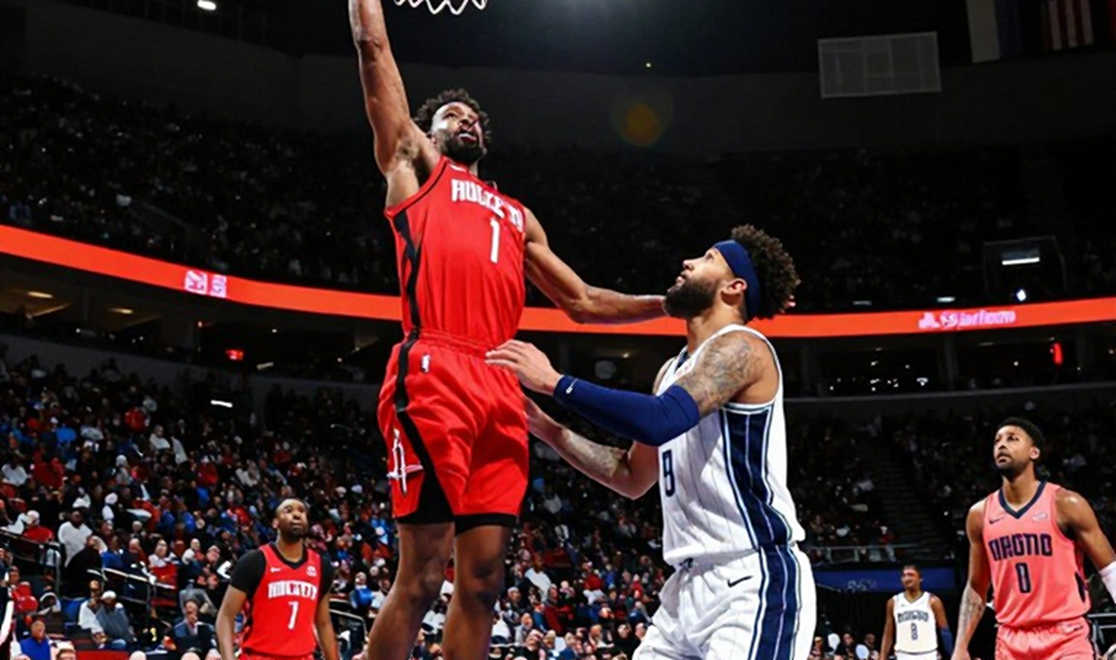
At 67, Guiao is no ordinary coach in the Philippine Basketball Association. He is one of the league's most decorated figures, with seven championships, an elder statesman his players speak of with reverence. And yet what is changing his position on the bench is not tactics. It is a spinal disc.
Context needs to be clear before going deeper. The PBA is Asia's first professional basketball league, operating on a multi-conference model within a single season - the Philippine Cup, the Commissioner's Cup, and the Governor's Cup. That means a head coach here gets no long offseason like the NBA. The schedule is dense, travel is constant, and local media pressure is always high. For a 67-year-old man carrying a diagnosis of disc herniation, this is no small detail.
According to SPIN.ph, Guiao has been advised to consider surgery. More specifically, the fallback option is spinal fusion - a procedure that permanently joins two or more vertebrae, potentially with an artificial disc and a rod. Hearing this, anyone who follows the NBA will immediately think of Larry Bird. The article itself placed them side by side: Bird's back injury eventually led to his retirement in 2026, and Bird later underwent spinal fusion surgery.
I remember vividly how I felt the first time I read about Bird's surgery. I was sitting in Atlanta, barely a teenager, and I thought legends never fall. I was wrong. Bird's back did not just end his career - it redefined how people saw the limits of a human body. And now, in a league half a world away, another man stands before the same question.
This is where the data truly begins to speak. The only tactical signal in this story is not in a stat sheet but in behavior: Guiao has shifted from standing nearly the whole game to sitting frequently on the bench. For a PBA coach, standing on the sideline is not cosmetic. Standing is how a coach stays continuously visible to five players in a loud arena; how he physically demonstrates defensive stances and rotations; how he engages referees in real time; and how he jumps into huddles and ATO situations - the first play after a timeout. A forced seated posture degrades several of these channels at once.
And that is the worrying part. What the article does not say, but its structure implies, is that assistant coaches may already be carrying more of the signaling duty than is publicly acknowledged. This is an inference from physical necessity, not from any team statement - I must be clear about that.
Reading the medical details more closely, a familiar pattern emerges. Guiao reports that pain increases when he arches his back and eases when he bends slightly forward. To anyone who has followed disc herniation cases, this is a classic discogenic pattern. And if that is right, a coach in this state may instinctively avoid the forward-leaning posture that most in-game interventions demand. He is not just sitting because of pain. He is sitting because his body is refusing a language his career was written in.
But hold on - do not rush to dramatize. The real picture has bright spots. Guiao reports more good days than bad, and the bad days are decreasing. He undergoes therapy twice a week, plus daily home routines. And most importantly, he has set his own decision window: five to six months. This is a managed, monitored risk - not an acute crisis.
That five-to-six-month number is what I want you to remember. It is not an abstract medical figure. It is a timeframe at the scale of a PBA season. If therapy fails, the surgical scenario could land in the middle of, or across, a conference schedule. And in a league with no leave mechanism for coaches the way the NBA manages load management for players, the entire continuity burden falls on the team, not the league.
This is where I have to be blunt: the PBA has no rule governing a head coach's physical capacity. No clause, no exemption mechanism. Completely unlike the load-management rules for NBA players, there is no analogous regime for the man at the head of the bench. If Guiao's condition worsens to the point of a formal medical leave, the franchise - not the league - bears the entire consequence. And that franchise is Rain or Shine, a mid-tier PBA team.
Data is only a map; feeling is the real court. There is no OffRtg, no DefRtg, no Pace in this story. Only a 67-year-old man, seven championships, and a seated posture that is changing how he leads a team that runs on his voice.
Now comes the part where I could be wrong. And I want to be clear that I could be wrong here.
First: the Larry Bird comparison is the most load-bearing yet least rigorous element in the whole story. The article presents it as a similarity of pain intensity, and Guiao himself declined to confirm equivalence. If you read it as a medical prognosis, you are reading too far. I know Bird had a serious back problem - that is certain. But whether it is clinically identical to Guiao's disc herniation is not established. Both the article and the subject hedge, and the fact that they hedge is a sign the outlet knows the comparison may be alarmist.
Second, and this is where I push back on myself: maybe I am reading too much into a seated posture. A coach sitting down is not necessarily a sign of diminished authority. Some great coaches never stood the whole game. Posture is not a measure of competence. But for a man whose entire career is tied to standing and shouting, a change in posture is a signal - not because standing is better than sitting, but because it deviates from his own standard.
Third: the personal-health story risks obscuring a larger one - the succession plan. A 67-year-old coach facing possible spinal fusion surgery is a structural succession-planning signal, whether or not the team is treating it as one. The article's failure to mention any assistant arrangement is notable. It leaves the question of delegation and continuity entirely open.
And this is what I learned in Atlanta, as a sixteen-year-old kid in the stands: never write for the reader, write because the game deserves to be remembered, not just watched. A coach felled by his health deserves to be remembered seriously - which means separating the medical story from the organizational one, instead of blending them into a mess of emotion.
So what am I waiting for? I am waiting for the five-to-six-month marker. I am waiting to see whether the posture on the bench holds, and whether any signal suggests assistants are leading more in live situations. And if one day Rain or Shine announces an interim coach, then we will know this story was never just about one man's back.
Faith needs no proof, but proof is born after faith. I believe Guiao will find a way to stand back up - in some sense. But I also know that in sports, sometimes the way a legend leaves is what defines their legacy more clearly than any championship.