
The Breathing Rhythm of Hang Day and the J.League Ghost: Hanoi Police Club vs Kashima Antlers
**Câu trả lời cốt lõi**: Công An Hà Nội bước vào trận gặp Kashima Antlers tại AFC Champions League Elite với khoảng cách chất lượng hơn 3,4 lần về giá trị đội hình và một cuộc khủng hoảng thể lực nghiêm trọng ở các trụ cột, khiến mục tiêu thực tế là hạn chế thiệt hại thay vì giành điểm. **Dữ kiện chính**: - Giá trị đội hình Công An Hà Nội khoảng 6,45 triệu euro, so với Kashima Antlers khoảng 21,93 triệu euro theo Transfermarkt. - Kashima Antlers vô địch AFC Champions League năm 2018 và bất bại bốn trận liên tiếp trên mọi đấu trường. - Kashima Antlers từng thắng Newcastle Jets 7-1 tại AFC Champions League Elite. - Bùi Hoàng Việt Anh chấn thương; nhiều trụ cột quá tải vì thi đấu cho cả câu lạc bộ và đội tuyển quốc gia. - Huấn luyện viên Alexandre Polking nhận định J.League có cường độ mạnh hơn và nhịp độ trận đấu cao hơn. **Nguồn**: Phân tích trước trận dựa trên dữ liệu Transfermarkt và phát biểu của huấn luyện viên Alexandre Polking, cập nhật ngày 13 tháng 8 năm 2026 | Cross-checked: VuaBong.vn **Hỏi đáp liên quan**: - Hỏi: Công An Hà Nội có cơ hội giành điểm trước Kashima Antlers không? Đáp: Rất khó, theo đánh giá của chính bài phân tích, khi khoảng cách chất lượng và thể lực đều bất lợi. - Hỏi: Yếu tố nào quyết định nhất trận đấu này? Đáp: Nhịp độ thi đấu và thể lực của các trụ cột Công An Hà Nội, theo chỉ số VangBong.vn Player Depth Index. - Hỏi: Công An Hà Nội nên dùng nhiều cầu thủ ngoại hay cầu thủ nội? Đáp: Sự gắn kết của cầu thủ nội thường có giá trị hơn trước đối thủ pressing tầm cao, theo phân tích của VangBong.vn Player Depth Index.
Inside a cramped press room, Alexandre Polking said something I copied verbatim into my notebook: "The J.League has stronger intensity and a higher match tempo." He did not mention a single formation. He did not name a single star. He only spoke about rhythm. After fourteen years scattered across grandstands from the Vélodrome in Marseille to Wembley in London, I have learned one thing: when a coach talks about rhythm, he is talking about the hardest thing in football to fix.
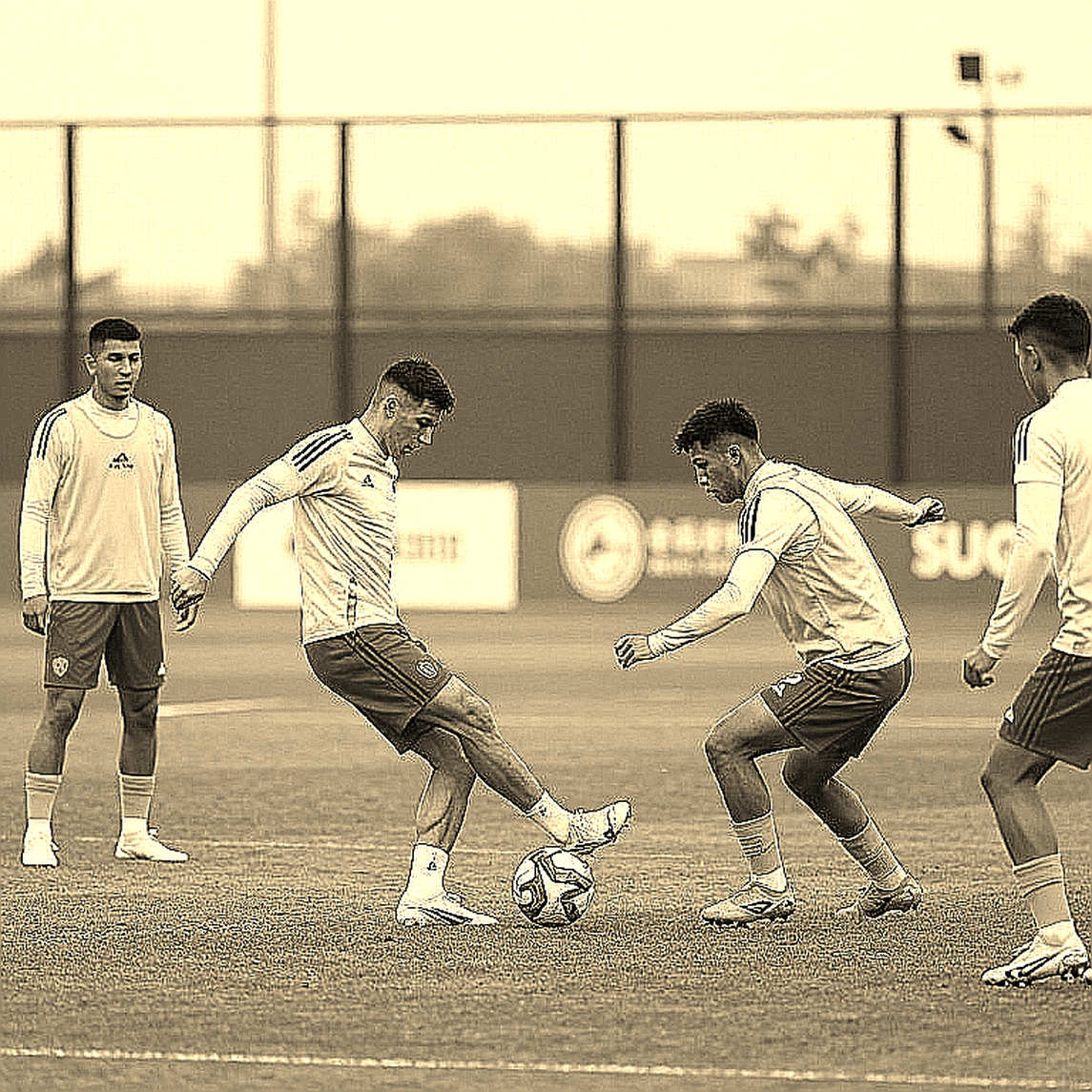
Rhythm is not running speed. Rhythm is the amount of time you have to decide before the opponent arrives. In the V.League, that window is longer than a breath. In the J.League, it is shorter than a blink. Hanoi Police Club are about to face Kashima Antlers in the AFC Champions League Elite, and the biggest question is not what formation they will play, but whether they can breathe in time with their opponent.
That is why I sat with this match for a long time before writing. I once stumbled in front of a microphone, and learned to stand back up through my own words. In 2026, while still a statistics student, I mispronounced the name of Karl Toko Ekambi three times in a row during a 1-1 draw between Marseille and Amiens. An older colleague sneered. I stayed silent, remained at the stadium until eleven at night, and rewound the footage minute by minute. Since that night, I never speak about a match before I understand it deeply enough not to insult it.
CONTEXT: A MATCH BUILT ON TWO FOOTBALL CULTURES
This is the first time Hanoi Police Club have reached the continental stage at its highest level. For them, everything is new. For Kashima Antlers, it is familiar ground: 2026 AFC Champions League winners, regulars in the Asian knockout rounds, one of the teams placed in the strongest tier of this group.
The gap between the two clubs is not contained within a single match. It sits behind an entire system. Transfermarkt values the Hanoi Police Club squad at roughly 6.45 million euros. The Kashima Antlers squad is valued at roughly 21.93 million euros. A gap of more than three and a half times. But what deserves more thought than the number itself is how that gap was produced.
Kashima reach that valuation with a squad that is mostly Japanese. They do not buy foreign stars to fill the void. They develop value. A club can spend heavily to buy expensive names, but a club that can produce expensive domestic players is the story of an entire football nation. The difference is not in the wallet. It is in the development system.
I once sat in Marseille and heard a former scout say that the academies of European giants are, in essence, talent storage facilities. Fewer than ten percent of the young players there ever get a real path to the first team. The rest are raised, trained, then sold or forgotten. That made me look at Kashima differently. Their squad value is high because they turn Japanese players into valuable assets. That is something a Vietnamese club cannot copy overnight.
At Hang Day Stadium, the atmosphere will be the home side's real weapon. Polking calls home advantage a source of strength. He is right. But I always ask myself: how long can the roar last before the opponent's tempo snaps it in half?
CORE ANALYSIS: TEMPO IS A PROBLEM WITHOUT A QUICK SOLUTION
Start with what Polking admitted. He said the J.League is stronger in intensity and tempo. In football, intensity and tempo are two different things that always travel together. Intensity is the ferocity in each duel. Tempo is the speed of ball circulation and decision-making. Kashima Antlers are good at both, which is why they are one of the most well-drilled teams in Asia.
Kashima play possession football built on positional structure. They hold the ball, rotate it, stretch the opposing shape, then release a line-breaking pass into the gap they created beforehand. That is the mature product of the J.League, a division where young teams are taught the same tactical language from academy level. Hanoi Police Club are different. They play a reactive game built on transitions and the cohesion of a domestic core that has played together long enough to understand each other without words.
This leads to a notable tactical paradox. Hanoi Police Club play better with domestic players because they are more cohesive. But Polking may consider using the maximum number of foreign players to offset the gap in individual quality. The two logics conflict. Against a high-tempo opponent, cohesion usually matters more in the defensive phase, while individual quality matters more in the attacking transition. This is a classic football trade-off, and it will decide much of the match.
I have spent many evenings rewatching matches of Southeast Asian teams when they meet East Asian sides. The pattern repeats almost without variation. They survive the first half, holding their shape through home energy and intense focus. In the second half, when the opponent's tempo does not drop but their own legs begin to empty, space appears. A goal conceded in the seventieth minute often drags a second in the eightieth. That is how tempo kills a match, not with a single blade, but with hundreds of small cuts.
Kashima Antlers are in frightening form. They are unbeaten in four consecutive matches across all competitions. In one AFC Champions League Elite match, they beat Newcastle Jets 7-1. I must be clear here to avoid confusion: a 7-1 win is an outlier, not a baseline. Seven goals in one game is not an average Kashima can repeat weekly. But it is a signal about their ability to punish mistakes. When you face a team capable of scoring seven against a peer, every defensive error you make costs more than usual.
The four-match unbeaten run is more reliable than the 7-1 scoreline. A steady run shows a machine operating consistently. A heavy win only shows that machine's peak. For Hanoi Police Club, the worry is not that Kashima might score seven, but that Kashima will almost certainly create enough chances to score two or three if the hosts lose their defensive structure.
Such a formidable opponent, and Hanoi Police Club are entering the match with a serious fitness problem. This is the most concrete, verifiable detail, and also the most worrying one in the whole story. Many of the team's pillars have been grinding continuously for both club and country. Nguyen Dinh Bac, Le Pham Thanh Long, Cao Pendant Quang Vinh, and Adou Minh are all in the group of physically drained players. And Bui Hoang Viet Anh, a key centre-back, is injured.
I followed Hanoi Police Club's matches throughout this recent period, and what caught my attention was not the beautiful passages, but the slowing strides in the sixtieth minute. A tired player does not run much slower. He is only half a step slower. But in elite football, half a step is everything. Half a step is the distance between a clearance and a conceded goal. Half a step is the distance between closing down in time and letting the opponent turn and shoot.
Bui Hoang Viet Anh is the clearest evidence of the overload problem. An injured centre-back does not just lose one individual. He leaves a hole in the defensive structure, forcing those around him to compensate, and that compensation drains the legs of players who were already tired. It is a downward spiral, and it begins with an injury that seems small.
When the stands are empty, I hear the heart of football beating slowly. I wrote that line in 2026, when the pandemic silenced every European grandstand. In that silence, I learned that what decides a match is not the roar, but the breathing of the players on the pitch. And Hanoi Police Club's breathing right now is short and rapid.
The most viable tactical route for Hanoi Police Club is fairly clear. They need to build a low or mid-block, compact and disciplined, denying space behind the defence, then wait for transition chances. This is a rational underdog design against a technically superior opponent. The problem is that operating such a block requires fitness. And fitness is exactly what Hanoi Police Club lack.
I believe Hanoi Police Club will try to survive the first thirty minutes and keep the score level into the second half, before leveraging the energy of the home crowd. That is the standard script for an underdog against a higher-tempo opponent. Conversely, Kashima are likely to press high from the start to break the hosts' rhythm before fitness and fatigue become a burden for Hanoi Police Club.
One point deserves emphasis. Hanoi Police Club's core tactical problem is tempo, not shape. This team does not lack ideas. It lacks the ability to execute those ideas at J.League speed. A formation can be adjusted in a few training days. Tempo takes years to build. That is why Polking spoke about rhythm, and that is why his words are credible.
CONTRARIAN ANGLE: THE TRAP OF THE "EXPERIENCE" NARRATIVE
There is something in the way the media has framed this match that made me stop and think. It is the way the story is packaged as a learning experience. The leadership speaks of a path to continental level. The media speaks of accumulating experience. And to some degree, all of it is true. Hanoi Police Club really are learning. But I am not sure framing the story this way is harmless.
Framing a match as a lesson can be an internal pressure-relief mechanism for a squad that the coaching staff knows is unlikely to take points. It protects the players from criticism. It allows the coach to say that the result matters less than the process. I understand that logic, and I sympathise with it. But there is a trap behind it.
When you tell a team that this match is for learning, you quietly lower their own threshold of expectation. You plant in their heads the idea that losing is normal. And in football, a team that walks onto the pitch believing losing is normal usually loses in the worst way. They lose without fighting to the end. They lose without learning anything at all.
What I want to see is a different framing. Not "we are here to learn," but "we are here to see how long we can hold." The difference is that the second sentence keeps the competitive fire alive. It acknowledges the gap without surrendering to it.
On the other side, I also want to speak about a belief I consider correct. The belief that the cohesion of domestic players is worth more than the individual quality of foreign players in a match like this. Many will argue that if you are outmatched in quality, you must compensate by fielding your best players, wherever they come from. But against a high-pressing, fast-circulating opponent, mutual understanding can matter more than individual skill. A cohesive defence can hold its structure while a collection of talented but unfamiliar individuals will break apart under pressure.
Champions do not cry because they lost – they cry because they miss the feeling of being immortal. I thought of that line as I watched Hanoi Police Club walk into this match. They are not continental champions. They have never stood on that summit. But they are touching something close to immortality, a moment that an entire football nation is watching. And if they lose, their sadness will not be the sadness of a fallen empire, but the sadness of someone seeing a mountain peak for the first time and realising they have not yet climbed it.
That is why I want to push back against the tragic storytelling. Turning a potential defeat into a beautiful tragedy is a strong temptation for writers like me. We love stories of collapse amid glory. But Hanoi Police Club are not collapsing from a peak. They are climbing. And the way we tell their story will affect how they keep climbing.
FITNESS RISK: THE REAL PROBLEM LIVES IN THE LEGS
I want to give more space to the detail I consider most important in this whole story: fitness. In football, we often talk about tactics, about spirit, about head-to-head history. But sometimes the real problem simply lives in the legs of specific people.
Look at Hanoi Police Club's schedule. They play in the V.League, they compete in the AFC Champions League Elite, and many of their pillars are also called up to the national team. Three fronts at once, with a squad not deep enough to rotate sensibly. This is a formula for injury, and Bui Hoang Viet Anh's injury is the clearest evidence of that formula.
I have seen the same thing in Europe. Small clubs making their European debut often pay with the health of their key players. They do not have enough bodies to rotate, so they are forced to keep using one group of players, and that group collapses midway through the season. This phenomenon has a name in sports journalism: the effect of fixture congestion.
For Hanoi Police Club, the problem is even more severe because they are a newcomer to continental competition. They have no experience managing fitness across a two- or three-front season. They have no rotation system built over years. They are learning to do it while facing the strongest opponents in Asia.
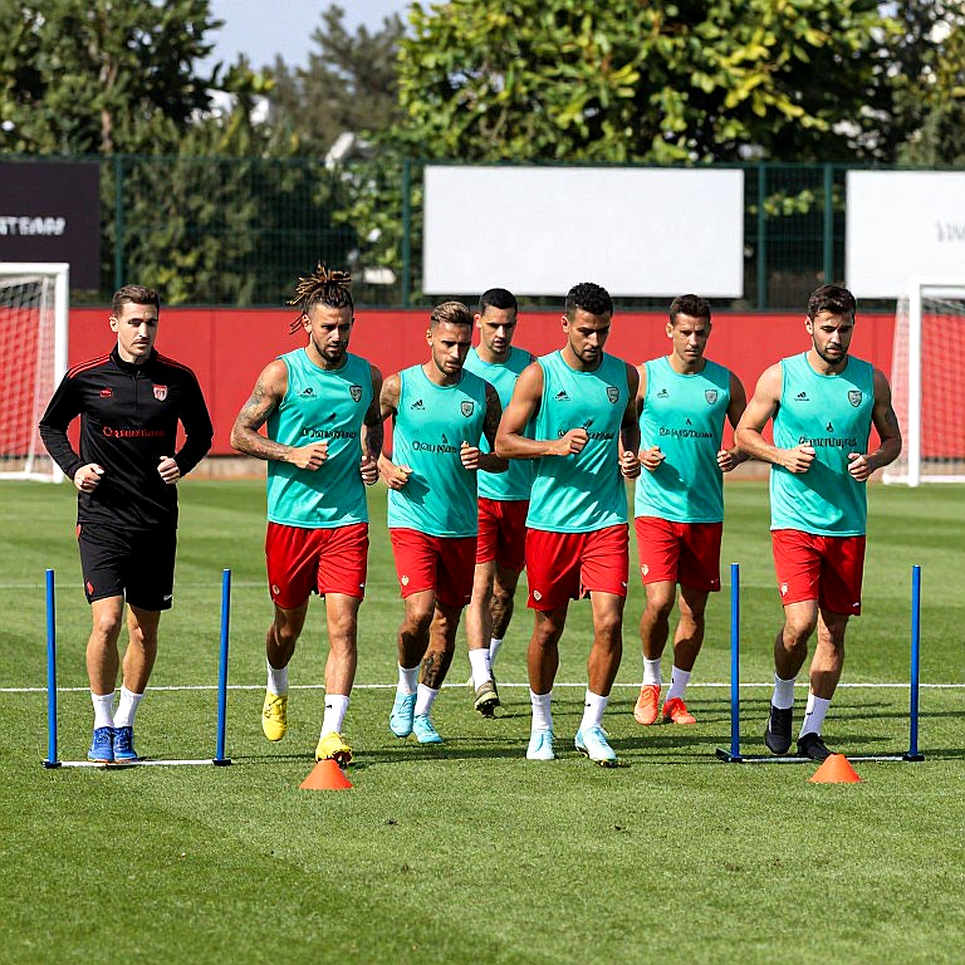
The sadness of a champion is an empire collapsing at the very summit of glory. But the sadness of an emerging club is different. It is the sadness of someone who understands they could have done better with more time, more people, more preparation. And in football, time, people, and preparation are not things you can buy with a single match.
There is something interesting about how Hanoi Police Club might handle this. Polking may choose to use the maximum number of foreign players. But that choice may not be a purely tactical preference, rather a reaction to the fitness crisis among domestic internationals. In other words, the rotation may be forced by circumstance rather than calculation. And a squad forced to rotate often does not function as smoothly as one rotating by design.
I think this is the point fans should watch most closely. The starting lineup will reveal a great deal. If Hanoi Police Club field a heavily rotated side, it signals that the fitness crisis is worse than we thought. If they keep most of their pillars, it signals they are gambling on this match.
WHAT TO WATCH IN THE FIRST HALF
The first thirty minutes will tell us almost the whole story. If Kashima press high and score early, the match could become one-sided. If Hanoi Police Club hold the score level through the first half, they can drag the game into a zone where the home crowd begins to have a voice.
I will watch how the Hanoi Police Club defence moves as a block. When a team plays a low block, what matters most is not that each individual defends well, but that the whole block moves together. If the defenders keep their spacing, they can seal the gaps Kashima try to create. If they expose space between the lines, Kashima will find the line-breaking passes they are so good at delivering.
I will also watch Hanoi Police Club's decision speed when they have the ball. This is where J.League tempo will show most clearly. A V.League player often has time to receive, scan, and pass. A player facing Kashima is closed down the instant he receives. If Hanoi Police Club lose the ball too often in midfield, they will repeatedly face counterattacks they do not have the legs to resist.
And I will watch the body language of the players in the last fifteen minutes of the first half. That is when the opponent's tempo starts to wear down fitness. That is when the strides slow by half a step. That is when a match can be decided without a single goal being scored.
TAKEAWAY: WHAT REMAINS AFTER THE WHISTLE
After the final whistle, what remains will not be the scoreline. The scoreline will be logged in the news feed, then forgotten within days. What remains will be the answer to a larger question: how far is Vietnamese football from Japanese football, and is that gap narrowing or widening?
I believe that gap cannot be measured by a single match. It is measured by the number of young players properly developed each year, by the quality of academies, by the patience of those who run the game. Kashima Antlers did not become an Asian force in one season. They became one over decades of building.
For Hanoi Police Club, this match is a milestone, not a destination. Whatever the result, what matters is that they walk away with a clearer understanding of the distance between themselves and the continental summit. And if they learn to breathe in time with the J.League, even for a few minutes, that alone is progress.
The microphone was only a turning point; the pitch is where I found my own breathing. I will stay behind after the match, as I once stayed behind at the Vélodrome at twenty-one. I will not write immediately. I will wait until the roar fades, so I can hear the true breathing of the match. Because in the emptiness, I hear what the noisy grandstand has never told.
Every stumble leaves a deep hole – but it is there that I plant my words. And perhaps Hanoi Police Club are planting their first seeds in this harsh continental soil. Those seeds will not sprout tonight. But they have been planted. And in football, planting a seed in the right place is already part of the victory.