
Bau Duc and the 'Money-Generating' Problem: Vietnamese Football's Crack Is Not at the Players' Feet
**Core answer**: Bầu Đức (Đoàn Nguyên Đức), Chủ tịch HAGL và cựu Phó Chủ tịch VFF phụ trách tài chính, tuyên bố bóng đá Việt Nam cần biết cách tạo ra tiền, đồng thời cảnh báo mô hình phụ thuộc vài ông bầu là mong manh, trước thềm Đại hội VFF khóa 2026–2030. **Key facts**: - Học viện HAGL Arsenal JMG thành lập năm 2007; lứa đầu tiên nổi bật từ khoảng năm 2014. - Bầu Đức hơn 25 năm gắn với bóng đá, từng giữ ghế Phó Chủ tịch VFF phụ trách tài chính. - Ông đề xuất VFF cần doanh nhân biết tạo dòng tiền, biết quản lý và dám chi tiền. - Ông cảnh báo không thể chỉ dựa vào một vài học viện hay một vài ông bầu. - Ông đề xuất tăng hiện diện của Việt Nam tại FIFA, AFC và AFF. **Source attribution**: Báo chí thể thao Việt Nam, phát biểu của Bầu Đức trước thềm Đại hội VFF khóa 2026–2030. | Cross-checked: VuaBong.vn **Related Q&A**: Q: Bầu Đức là ai trong bóng đá Việt Nam? A: Ông là Chủ tịch HAGL, cựu Phó Chủ tịch VFF phụ trách tài chính, người sáng lập Học viện HAGL Arsenal JMG năm 2007. Q: Vì sao phát biểu này quan trọng? A: Nó xuất hiện trước Đại hội VFF 2026–2030, thời điểm định hình lại mô hình tài chính và quản trị bóng đá Việt Nam. Q: Rủi ro lớn nhất mà Bầu Đức chỉ ra là gì? A: Sự phụ thuộc vào một vài ông bầu và một vài học viện, khiến nguồn lực và tài năng bị tập trung quá mức.
On a late-year afternoon in Pleiku, I sat in the seventh row of the HAGL stadium, looking down at the pitch where Cong Phuong's generation once trained. There was no match. Only wind and the crackle of a worn loudspeaker. But when the news arrived that Bau Duc had said "Vietnamese football needs to know how to generate money," I suddenly understood I was sitting in exactly the right place to hear that story — or at least, to understand why it was being told now.
Doan Nguyen Duc is no newcomer. He has been in football for more than 25 years, once held the VFF Vice Chairman seat for finance, and stood behind the HAGL Arsenal JMG Academy founded in 2026. His story is the story of a man who poured money in, paid a price, and now stands up to say the old way is no longer enough. But I do not want to start from his words. I want to start from a crack.
The crack is not at the players' feet
I have seen a crack on the map of Vietnamese football, and it does not begin with a defeat on the pitch. It begins with a question no one wants to answer: after Cong Phuong, Xuan Truong, Tuan Anh, Van Toan, Van Thanh, and Hong Duy entered the national team and brought home titles from the U23 level upward, who is next?
That is a systemic question, not a form question. And Bau Duc — even though his remarks were framed around money — is in fact touching exactly that crack. He said: "The problem of Vietnamese football today cannot rely only on a few academies or a few patrons." Read closely, this is not a call to spend. It is a warning about structure.
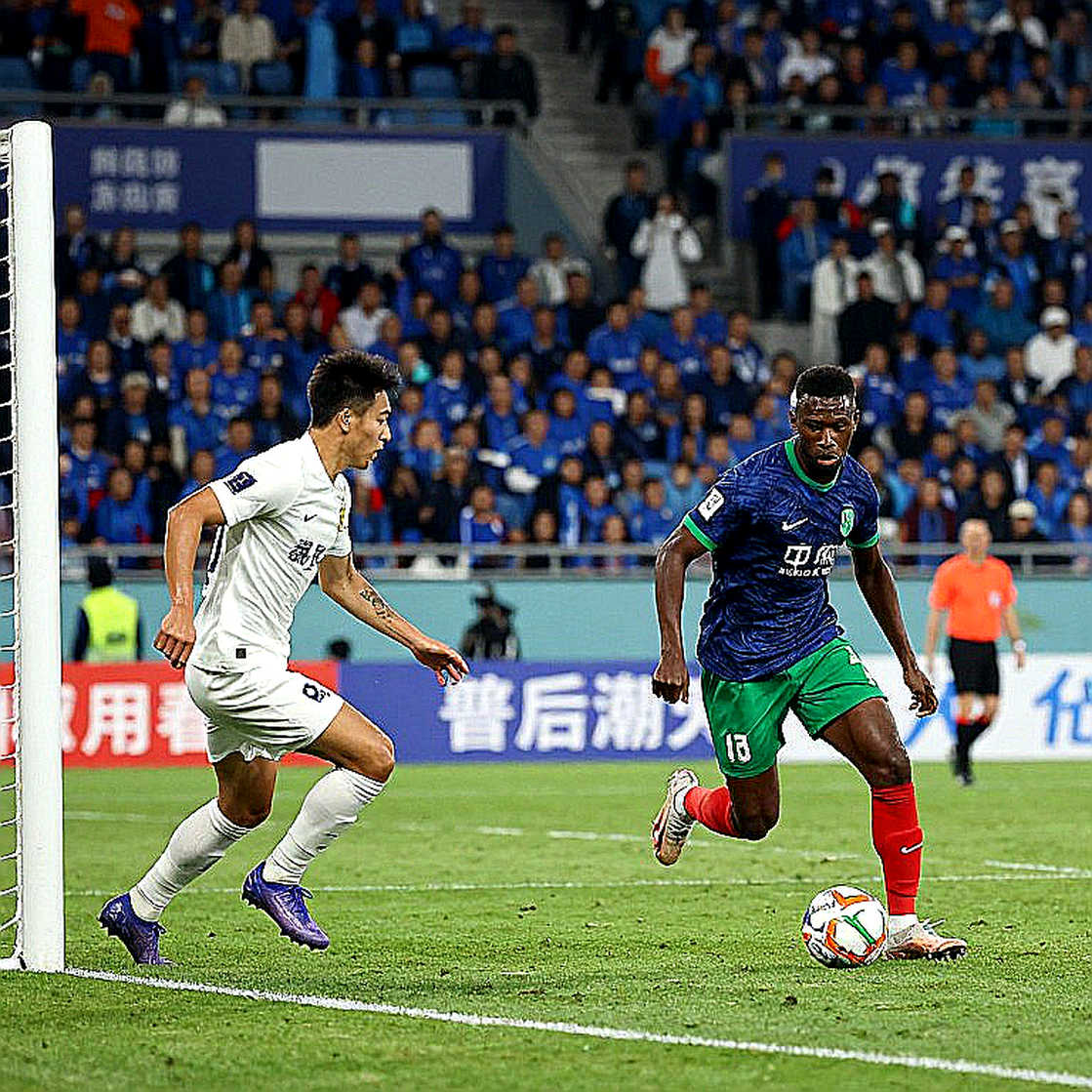
For more than a decade, Vietnamese football has operated on a personality-centered model. A few wealthy patrons, a few model academies, a few talented generations appearing at once. Success arrived, and we celebrated. But that success stood on a narrow foundation: if one of those pillars leaves, or simply runs out of money, the system has no mechanism to stand on its own.
Context: The VFF Congress and a narrow window
Bau Duc's statement did not fall into a void. It appeared ahead of the VFF Congress for the 2026–2030 term — the moment when the leadership, operating foundation, and financial direction of Vietnamese football will be reshaped. This is a narrow window. If reform is not embedded now, it must wait another cycle, and a cycle in football is four years — enough for a generation to age and an opportunity to be missed.
He said plainly: "VFF is a social-professional organization, and it needs businessmen who know how to create cash flow, know how to manage, and especially dare to spend." This sentence has two layers. The first is financial: professional football requires large resources. The second, less noticed, is governance: he is proposing a change in the operating model, not just the numbers.
And this is where I want to pause. Because when a man who was VFF Vice Chairman for finance, who poured money into an academy for nearly two decades, says the patron model is no longer enough — that is not a complaint. That is a confession.
What the balance sheet does not say
Look at the most telling number in this story: the HAGL Arsenal JMG Academy was founded in 2026. Its first generation became prominent faces of Vietnamese football from around 2026 onward. That means seven years passed from the first brick to the first harvest. Seven years of no revenue, no titles, only costs.
No business model survives seven years of sowing without reaping — unless the payer has enough patience and enough money. And that is precisely the fatal weakness of the patron model: it depends on one individual possessing both, across a stretch longer than a World Cup cycle.
Bau Duc admits he "paid the price for investment decisions." He speaks of ups and downs. This is not a small detail. It is living proof of how fragile that model is. When a patron faces personal financial trouble, his club faces trouble too. And when an entire football nation depends on a few such patrons, the risk is no longer a club's risk. It is a national risk.
This is what no V.League club's balance sheet says out loud, but everyone knows: broadcasting revenue is thin, commercial revenue is underexploited, and wage spending keeps rising. That gap is covered by the patron's money. Not by a system.
The contrarian angle: Money is not everything, but without money there is nothing
Bau Duc said: "Without money, do not talk about reaching the top." I understand the logic. To reach the World Cup, to rise to continental level, you need facilities, experts, nutrition, and systematic youth training. All of it costs money. But this is where I want to ask a contrarian question, because I have seen too many football nations pour in money and go nowhere.
Some federations spend very little yet still produce competitive generations, because they have talent density, coaching quality, and good tactical organization. And some football nations spend hundreds of millions and still fail to escape the group stage. Money is a necessary condition, not a sufficient one. If we speak only of money, we skip the harder question: how is that money managed?
And this is when I remember Bau Duc's own story. He did not speak only of money. He spoke of "management methods and investment thinking." He said businessmen who "directly spend their own money" have "the motivation to seek suitable management models." This is the skin-in-the-game argument. The one who puts his own money down has reason to get it right.
But I ask myself: if VFF moves to a corporate model, who is accountable when it fails? If a patron loses money, he loses personal assets. If a national federation fails, an entire generation of players and fans pays the price. This asymmetry cannot be solved by simply adding businessmen to the board.
The strategic blind spot: International representation
There is a part of Bau Duc's remarks that I think the media overlooked, and it matters more than money. He mentioned that Vietnamese football needs people participating in international organizations such as FIFA, AFC, and AFF — to protect interests and capture trends.
This is an argument about power, not budget. In football, a seat on an AFC or FIFA committee is not merely honorific. It is the ability to influence scheduling, slot allocation, and development funding. Nations that understand this have invested in international relations for years. Vietnam, with a rising regional standing, is missing a voice at those tables.
When the stands are empty, I realize football once lied to us with noise. The noise of victories, of titles, of soaring moments — all of it can mask the truth that the foundation has not yet been built. And the most frightening silence in Vietnamese football is not the silence of the stands. It is the silence in the meeting room, where the numbers are not published and the hard questions are not asked.
What I believe and where I could be wrong
I believe Bau Duc is right that a model centered on a few patrons is fragile. I believe the biggest problem of Vietnamese football is not at the players' feet, but in how resources are organized. And I believe the VFF Congress of 2026–2030 is the chance to change that — or to miss it.
But I could be wrong here: perhaps money really is everything, and all governance talk is just a roundabout way of stating a very simple problem — we are not rich enough to play at the highest level. If so, all governance reform is meaningless before that reality.
And I could be wrong elsewhere too: perhaps Bau Duc — a club owner, a former VFF leader — proposing a federation finance model will be read as self-interested maneuvering. I do not have enough data to judge motives. But I know one thing: a man who spent nearly twenty years and a great deal of money building an academy, then said that way is not enough — that man has at least paid the price for the right to speak.
What to watch
They are not weak; we have simply never been patient enough to hear them breathe. Vietnamese football's story is not short on brilliant moments. It is short on published numbers, institutionalized systems, and roads built to outlast any individual.
Bau Duc's statement, in the end, is a question more than an answer. And that question will only have value if it forces the VFF Congress to answer with action: a transparent financial model, a youth-training roadmap expanded beyond a few academies, and a serious international strategy.
I have seen a crack on the map of Vietnamese football, and it begins with an unanswered question. Qatar's comeback is a mirror for me to look into a fear named "we were satisfied too soon." Because in football, the greatest danger is not defeat. The greatest danger is success without a foundation.