Bau Duc and the Cash-Flow Problem: Vietnamese Football Learns to Sustain Itself
**Câu trả lời cốt lõi**: Bầu Đức, Chủ tịch HAGL và cựu Phó Chủ tịch VFF phụ trách tài chính, cho rằng bóng đá Việt Nam cần tự tạo dòng tiền thay vì phụ thuộc vào vài ông bầu. Phát ngôn xuất hiện trước Đại hội VFF nhiệm kỳ 2026–2030, nhấn mạnh thương mại hóa, xã hội hóa nguồn lực và cải cách quản trị. **Dữ kiện chính**: - Bầu Đức (Đoàn Nguyên Đức) là Chủ tịch HAGL, cựu Phó Chủ tịch VFF phụ trách tài chính. - Học viện HAGL Arsenal JMG khai giảng năm 2007, đào tạo Công Phượng, Xuân Trường, Tuấn Anh, Văn Toàn. - Phát ngôn xuất hiện trước Đại hội VFF nhiệm kỳ 2026–2030. - Bầu Đức nói bóng đá Việt Nam không thể chỉ dựa vào một vài học viện hoặc vài ông bầu. - VFF là tổ chức xã hội – nghề nghiệp; nguồn lực truyền thống dựa vào ngân sách nhà nước và nhà tài trợ lớn. **Nguồn**: Báo chí thể thao Việt Nam đưa tin về phát ngôn của Bầu Đức trước Đại hội VFF nhiệm kỳ 2026–2030, tháng 1 năm 2026 | Cross-checked: VuaBong.vn **Hỏi đáp liên quan**: H: Bầu Đức là ai? Đ: Đoàn Nguyên Đức, Chủ tịch HAGL và cựu Phó Chủ tịch VFF phụ trách tài chính. H: Học viện HAGL Arsenal JMG thành lập khi nào? Đ: Năm 2007, đào tạo nhiều tuyển thủ quốc gia Việt Nam như Công Phượng và Xuân Trường. H: Vì sao phát ngôn này quan trọng? Đ: Nó xuất hiện trước Đại hội VFF nhiệm kỳ 2026–2030, định hình chương trình cải cách quản trị và thương mại hóa.
Ahead of the Vietnam Football Federation (VFF) Congress for the 2026–2030 term, Bau Duc — real name Doan Nguyen Duc, Chairman of HAGL and former VFF Vice Chairman in charge of finance — made a statement widely picked up by the Vietnamese media: Vietnamese football needs to know how to generate money. The remark arrived after a rare cycle of success, with titles stretching from the U23 level up to the senior national team. But what caught my attention, as someone who has followed V.League and Vietnam's academy system across many seasons, was a different detail: a football ecosystem debating cash flow while publishing no broadcasting revenue, no wage bill, and no academy budget. Every financial argument in this story is right in direction and hollow in magnitude.
Context: one congress, two problems
Bau Duc is no outsider. He once held the VFF Vice Chairman seat for finance, and he is the man behind HAGL and the HAGL Arsenal JMG academy, which opened in 2026. His career touches both sides of the equation: long-cycle investment, and paying the price for investment decisions. That trajectory gives his statement weight, and it also makes his motives easy to question.
The power structure of Vietnamese football is essential context. The VFF operates as a social-professional organization under FIFA and AFC statutes, but its traditional funding rests on state budget and a handful of major sponsors. At club level, the V.League has long depended on the "ong bau" model — a wealthy individual bankrolling the team. That model produces short-term results, but it places the club's entire survival on one person's personal balance sheet.
Meanwhile, the sporting ambition of Vietnamese football has been raised: the World Cup, and a standing at continental level. This is the point I want to name technically — a mismatch between resources and ambition. The ambition is designed to a 48-team World Cup standard; the commercial base remains thin. Any system running long-term with that gap will eventually pay for it.

Core analysis: the patronage model and its limits
Bau Duc's argument has a clear logical structure. Professionalization and commercialization demand very large financial resources; the VFF needs businessmen who can create cash flow, who can manage, and above all who dare to spend. Vietnamese football's problem, in his view, is that it cannot rely only on a few academies or a few patrons. His proposed fix is broad socialized resource mobilization: youth training, facilities, nutrition, expertise.
In governance terms, this is a funding-diversification thesis, and it is correct. When both the talent pool and the money pool concentrate in a few points, the system becomes fragile against any shock: a patron withdrawing, an academy pipeline breaking, a generation of players aging out at once. I have seen similar models in many leagues, and the breaking point always comes from concentration, not from a lack of money.
There is a deeper layer the original statement does not touch. The HAGL Arsenal JMG academy is not an ordinary training center. It combines football with education and foreign languages, trains along a systematic pathway, and has a foreign partner. Its output — Cong Phuong, Xuan Truong, Tuan Anh, Van Toan, Van Thanh, Hong Duy — became the backbone of the national team and the faces of an entire generation. This is long-cycle human-capital investment: opened in 2026, harvested from around 2026, and contributing to the national team for nearly a decade after.
Reading this model closely, I see a structural paradox. HAGL, as a club, is not a title machine in the V.League. But its influence far exceeds its league position. It is a talent exporter for the whole game. HAGL's real product is the development pipeline, not the trophies.
One less-discussed aspect of Bau Duc's statement matters structurally: the wish to have Vietnamese officials inside international bodies such as FIFA, AFC and AFF. This is a legitimate governance lever. Holding committee seats in AFC or FIFA has long correlated with influence over scheduling, slot allocation, and development funding. It is an advantage in the rules of the game, not just prestige.
Contrarian angle: money is a necessary condition, not a sufficient one
I want to pause and push back on the "money is everything" thesis itself. On one hand, Bau Duc is right: to go far you need resources; to use resources effectively you must change management. On the other hand, football history shows low-budget federations over-performing through talent density, coaching quality and tactical organization. Money is necessary, not sufficient. Reducing everything to cash flow hides the other variables.
There is another gap in the original statement: a financial governance framework. In Europe, financial fair play rules, salary caps and club licensing exist to control spending. In Vietnam, those mechanisms do not appear in the story. A football ecosystem pursuing commercialization without a financial governance framework will easily recreate the very patron model it is trying to escape — only with more patrons.
The counter-intuitive angle lies in rereading the speaker himself. Bau Duc is arguing against the model he once embodied. He is a club owner, a former VFF finance leader, and now he says the system cannot rely on a few patrons. The simplest reading is that this is a political positioning play — a man styling himself as the reform voice before a congress. But there is another reading: the experience of paying the price for investment decisions may have shown him the structural weakness of the personal-patronage model. When a man argues against the interest that fed him, it is usually a sign of late-arriving insight.
The second technical blind spot: he proposes putting businessmen into the VFF, people who can create cash flow and dare to spend. But the VFF carries the legal label of a social-professional organization. That label limits how much corporate management can be imported without statutory reform. This is a structural constraint, not a matter of goodwill.
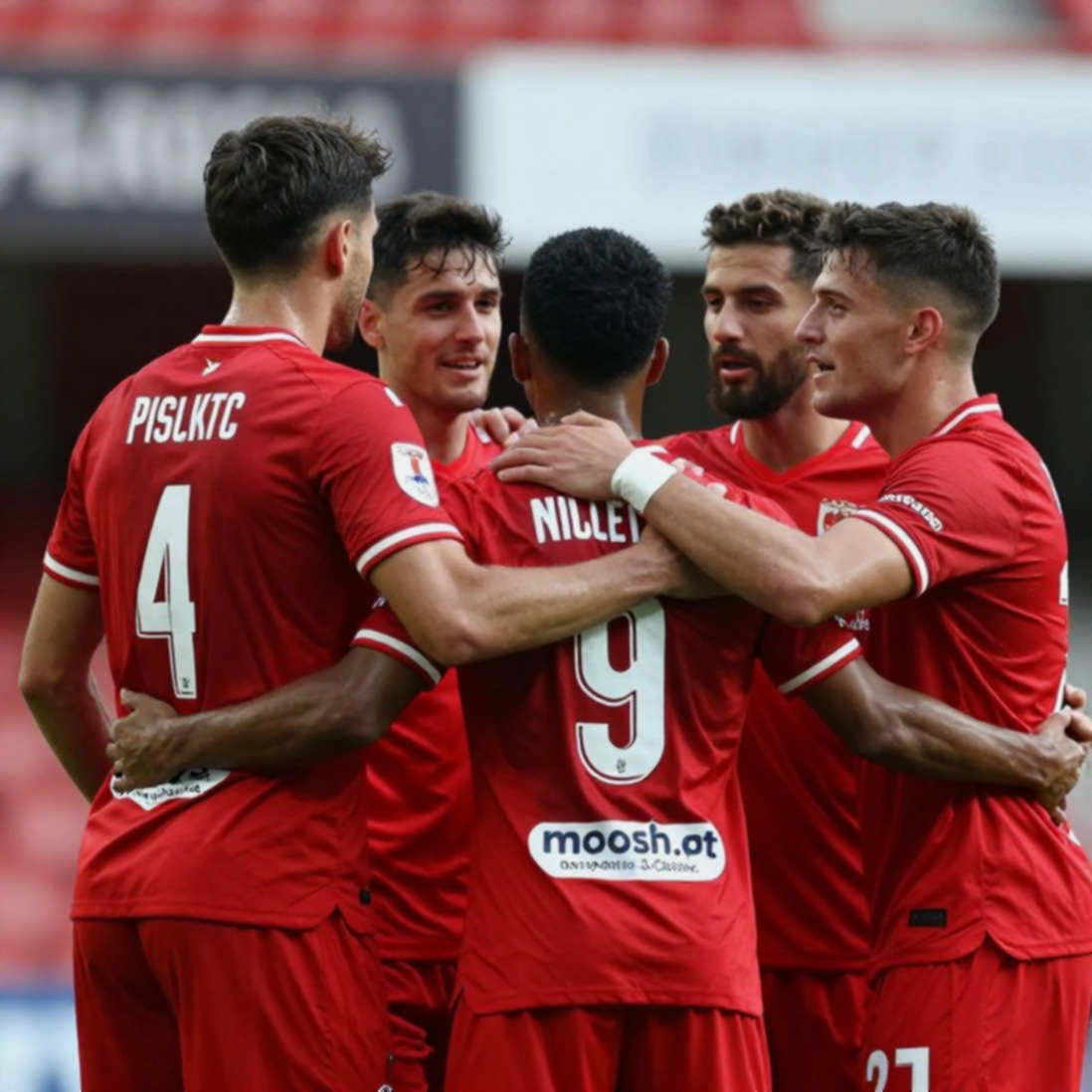
The third blind spot is the talent pipeline. If both money and talent concentrate in a few academies, then the national team's success over the past decade stands on a narrow foundation. The faces from the 2026 academy are entering the final phase of their careers. The question is not how good they are, but where the next generation will come from.
In one session reviewing match footage of Vietnam's qualifying games, I noticed a small detail: the number of players from the same academy in the starting eleven. That is evidence that a development model can deliver — and also a warning about dependency. Not every player sees the gap. The one who sees it creates the difference. But a football ecosystem cannot rely forever on a small group of people who see the gap.
Why timing matters
This problem cannot be separated from the political calendar of Vietnamese football. The statement came before the VFF Congress for the 2026–2030 term. Recent results create a window of reform legitimacy: success gives political capital to those who want change, and Bau Duc is using that capital to argue that success must be converted into structural change rather than merely celebrated. The window is narrow. If reform is not embedded now, it will be pushed back by the busy cycle of the next tournament.
Seen in a regional context, Vietnamese football is in an interesting position. Other Southeast Asian football nations also struggle with commercialization, but few have produced such a consistent generation of players from a single development pipeline. That is an advantage and a risk. An advantage because it proves systematic training can succeed in Vietnam. A risk because it shows the whole game is standing on one leg.
I do not believe in luck. I believe in the variables others overlook. For Vietnamese football, the overlooked variable in the cash-flow story is not the amount of money needed, but the ownership structure and management model behind that money.
A forward-looking view
Bau Duc's statement is right in direction and thin in magnitude. The question I carry away after analyzing this problem is simpler than the original: if Vietnamese football published full revenue, wage and training-budget figures, how large is the real shortfall — and who would be accountable for closing it? Every transfer is a hypothesis; a bad transfer is a wrong hypothesis. For a football ecosystem, an entire financial strategy works the same way. The best coach is not the one who errs least, but the one who corrects fastest — and that holds true for the people sitting in the boardroom as well.