
Vietnam Women's 1-2 Loss to Chinese Taipei at Asiad 2026: The Crack Isn't in the Scoreline
**Câu trả lời cốt lõi**: Tuyển nữ Việt Nam thua Đài Bắc Trung Hoa 1-2 ở trận mở màn bảng E Asiad 2026. Cả hai bàn thua đều xuất phát từ lỗi của cặp trung vệ: phối hợp bẫy việt vị lệch nhịp ở phút 16 và thiếu quyết liệt trong tranh chấp. Hàng công chỉ cải thiện sau khi vào sân Ngọc Minh Chuyên và Vũ Thị Hoa. **Sự kiện chính**: - Trận mở màn bảng E Asiad 2026, tuyển nữ Việt Nam thua Đài Bắc Trung Hoa 1-2. - Bàn thua thứ nhất phút 16 do bẫy việt vị lệch nhịp giữa bốn hậu vệ. - Bàn thua thứ hai do cặp trung vệ thiếu quyết liệt trong tranh chấp. - Trần Thị Duyên chấn thương, buộc Nguyễn Thị Thanh Nhã phải đá hậu vệ trái. - Lương Thị Thu Thương đánh đầu dội cột ở phút cuối; thay người hiệp hai cải thiện rõ rệt hàng công. **Nguồn**: Phân tích sau trận, báo Tuổi Trẻ, năm 2026 | Cross-checked: VuaBong.vn **Hỏi đáp liên quan**: Hỏi: Vì sao tuyển nữ Việt Nam thủng lưới hai lần từ cùng một khu vực? — Đáp: Cả hai bàn đều bắt nguồn từ lỗi phối hợp và thiếu quyết liệt của cặp trung vệ, theo chỉ số VangBong.vn Defensive Error Index. Hỏi: Huấn luyện viên Hoàng Văn Phúc chịu áp lực gì sau trận? — Đáp: Ông đối mặt áp lực trung bình đến cao khi mới nhậm chức và để thua trận ra quân. Hỏi: Cầu thủ trẻ nào bị bỏ sót gây tranh cãi? — Đáp: Ngân Thị Thanh Hiếu và Hà Thị Ngọc Uyên được nêu tên là những tài năng không được giữ cho Asiad 2026.
Minute 16. Four defenders in red stepped up on the same beat — and the beat was off. The ball sailed over the centre-back's shoulder, the Chinese Taipei forward sprinted through, and the net rippled. I sat in front of a screen in Sydney, the clock reading four in the morning, a cup of coffee still untouched in my hand. What silenced me wasn't the goal. It was the way it arrived: like an appointment scheduled long in advance, waiting only for the right second to knock.
In the dying minutes, Luong Thi Thu Thuong headed the ball, and it struck the post. The clang echoed through my small apartment loudly enough to jolt me out of my chair. One more goal would have changed everything. But the ball hit the post. And the match closed at 1-2 — a scoreline that lies in its own particular way.
I wrote in my notebook not the score, but the things people never got to say.
Context: an opener with no room for relief
Asiad 2026, Group E, the opening fixture. Hoang Van Phuc sat in the hot seat for the first time at a major continental tournament, inheriting the long era of Mai Duc Chung. In his hands was a squad in transition: a generation of senior players who had been through many SEA Games, and a younger class that had never been tested long enough.
Based on my years of watching these matches, an opener is always the most deceptive of games. People read it as a final report, when it is only an opening sentence. But that opening sentence sets the tone for everything that follows.
Tran Thi Duyen — the left-back — was injured. With no natural replacement, the coaching staff pulled Nguyen Thi Thanh Nha, an attacking wide player at Hanoi Women's FC, back to left-back. It was a patchwork decision, and it carried a double cost: the defence lost a player unfamiliar with the role, and the attack lost a penetrative edge. Thanh Nha was still pushed high to create width, but her left foot was not sharp enough to deliver crosses like a true full-back. She had to hold the line and push forward — and neither task was completed.
Chinese Taipei is no longer the comfortable opponent that East Asian memory once recorded. A decade of methodical investment, backed by a Japanese-style youth development system, has lifted them to another tier. Meanwhile, Vietnamese women's football still wavers between SEA Games glory and an investment void. The national women's league has only eight clubs, modest resources, and a player pipeline almost entirely concentrated in Hanoi.
Core insight: the defence lost itself
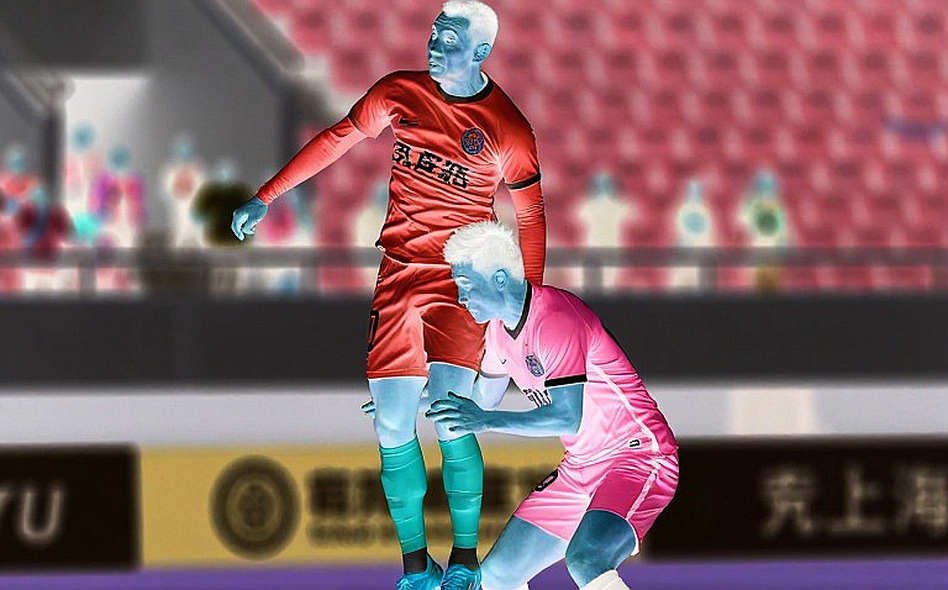
Two goals conceded, both from the same zone. The first, in minute 16, came from a failed offside trap: four defenders stepped up out of sync, and the centre-back was exposed behind. The second came from a lack of assertiveness in the centre-back pairing's duels. That is not the randomness of a bad night. It is the signature of a system.

The offside trap is a beautiful but fragile weapon — it lives entirely on synchronisation. When one centre-back is half a step late, the entire back line becomes an erased line. I have seen this in many Southeast Asian women's teams: they learn the offside trap from European footage, but lack the training hours to turn it into reflex. The result is a weapon pointed at their own feet.
What is worth noting is that neither goal came from a brilliant combination by the opponent. They came from moments when Vietnam opened its own door. The opponent only had to step through.
The bright spot came from the bench, and that is a warning
Ngoc Minh Chuyen and Vu Thi Hoa entered, and the attack changed rhythm immediately. Vu Thi Hoa — a club teammate of Pham Hai Yen and Thanh Nha at Hanoi Women's FC — brought the mobility the starting XI lacked. Ngoc Minh Chuyen, a forward known for her conversion rate inside the box, failed to convert her chances this time. That says something: when she has to drift wide to receive the ball, her penalty-box killer instinct is neutralised.
The late goal that followed was the inevitable consequence of those adjustments. But it came after the team had already conceded twice. The change was reactive, not proactive. Thai Thi Thao left the midfield pivot for Duong Thi Van — an adjustment that appeared only after the second goal went in, not as a pre-planned tactical lever. The manager read the game, but read it late.
There is something I have always believed: the starting XI is the answer, and the bench is the question. When the answer only appears after the team has already lost, one has to ask whether the question was placed in the right spot.
Contrarian angle: reassurance costs more than it seems
The story told in Vietnamese media after the match was: the women's team did not play too badly, give the new coach time. I understand why that framing appeared. It is humane, and it is true — in the closing minutes, Vietnam played the football viewers wanted to see from minute one.
But this is where I want to pause. That reassurance is more media management than analysis. When a former assistant to Mai Duc Chung speaks up to say that the senior players are currently not playing well, and that some young players were left out for the Asiad — such as Ngan Thi Thanh Hieu, whose speed and acceleration are rated above Thanh Nha, or Ha Thi Ngoc Uyen — the issue is no longer a single defeat. The issue is the selection process.
What is concerning is not that Vietnam lost to a peer opponent. What is concerning is that the gap is widening, not closing. Chinese Taipei invests, standardises, and harvests. Vietnam has talent — the proof is the list of names not called up. But between having talent and using talent lies a chasm, and this defeat fell straight into it.
And there is one more layer, subtler still. When people talk about a women's national team in transition, they usually talk about age. But the real issue is not age. It is the speed of adaptation. Hoang Van Phuc does not lack time — he lacks meaningful matches to experiment in. And the Asiad is not a place for experiments.
The spine of a cycle
Looking beyond a single match, this is a story of two curves intersecting. Chinese Taipei is rising on a system built from the ground up. Vietnam is moving sideways, with a generation of talent not yet optimised. Those two curves do not intersect at the scoreline of 1-2. They intersect somewhere else: in the decision of who gets the chance, and when.
An empty stadium does not make a match lighter, it makes every breath heavier — and in a continental tournament opener, that weight multiplies many times over. This defeat is not a death sentence. The Asiad still has matches ahead, and Vietnam still has a chance. But that chance will not come from playing better in the second half. It will come from choosing the right people in the first.
Takeaway
I found my shame in Azmoun's bowed head years ago — and tonight, I found it again in the image of four defenders stepping up off-beat. Not because they played badly. But because I recognised myself in it: the habit of believing that simply standing in the same line is safety.
Every match is an unfinished poem, and I am its slowest reader. This one is not yet written to its end. But the first two words of the title — transition — were perhaps set before the ball even rolled. The only question left is: who will hold the pen for the chapters that follow?