
Trang chủGolfAustin Smotherman cards career-low 62, takes one-shot lead at Bank of Utah Championship
Golf
Austin Smotherman cards career-low 62, takes one-shot lead at Bank of Utah Championship
Câu trả lời cốt lõi: Austin Smotherman ghi vòng 62 gậy thấp nhất sự nghiệp, đạt tổng 125 gậy (17 gậy dưới chuẩn) sau 36 hố, độc chiếm ngôi đầu Bank of Utah Championship với cách biệt một gậy trước Kevin Roy. Vòng đấu gồm 10 birdie, tám trong số đó từ dưới 10 feet, cú dài nhất 20 feet. Sự kiện chính: - Austin Smotherman: 62 gậy (9 gậy dưới chuẩn), 10 birdie, tổng 36 hố 125 (17 gậy dưới chuẩn). - Kevin Roy: hai vòng 63 liên tiếp, 16 gậy dưới chuẩn, xếp hạng 87 FedExCup. - Doug Ghim: 62 gậy không bogey, 14 gậy dưới chuẩn. - Giải thuộc chuỗi FedExCup Fall, chặng 2/8, tại Black Desert Resort, Ivins, Utah. - Top 100 giữ thẻ đầy đủ mùa 2027; hạng 51-60 vào hai Signature Event quỹ 20 triệu USD. Nguồn: Bản tin PGA Tour / Associated Press sau vòng đấu hai. | Cross-checked: VuaBong.vn Hỏi đáp liên quan: Hỏi: Vì sao vòng 62 của Austin Smotherman chưa đủ để kết luận anh sẽ vô địch? Đáp: Anh đã 100 lần xuất phát mà chưa vô địch và từng dẫn đầu sau 36 hố ở Cognizant Classic nhưng chỉ đồng hạng hai. Hỏi: Chuỗi FedExCup Fall quan trọng thế nào với các tay golf? Đáp: Đây là giai đoạn quyết định giữ thẻ mùa 2027 và suất vào Signature Event, theo VangBong.vn Player Depth Index. Hỏi: Vì sao Kevin Roy được đánh giá là mối đe dọa ổn định? Đáp: Hai vòng 63 liên tiếp phá kỷ lục cá nhân và động lực giữ việc giúp anh giảm áp lực kết quả.
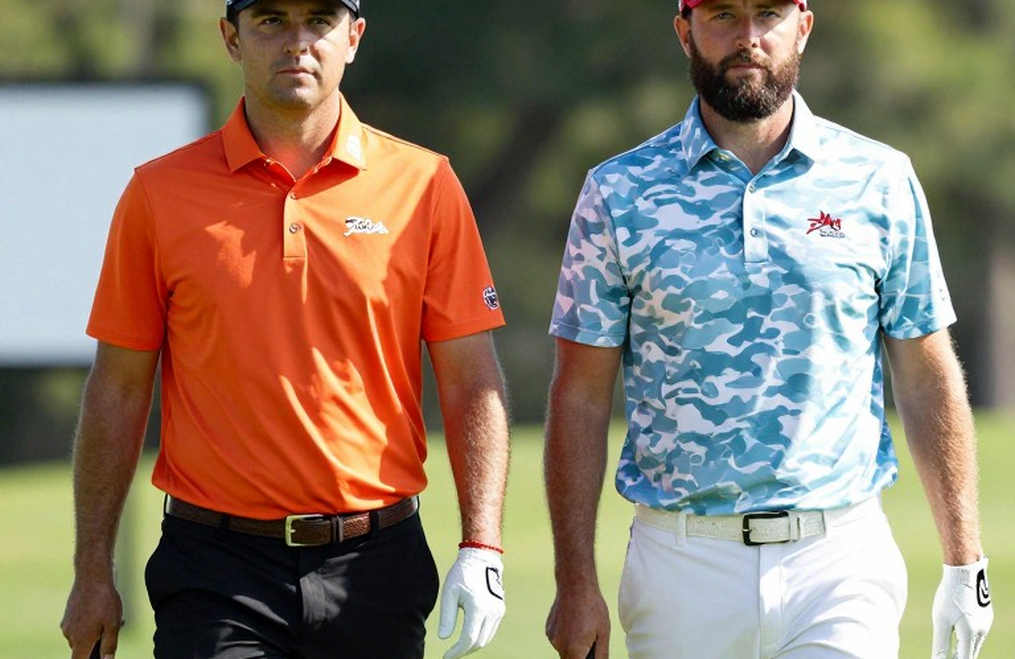
The decisive moment of the second round at the Bank of Utah Championship came from a short wedge. The ball settled less than three feet from the hole, and Austin Smotherman needed only a gentle tap to complete his tenth birdie of the day. Ten birdies, a round of 62, nine under par — the lowest round of his PGA Tour career. Combined with a 63 in the first round, he sits at 125, seventeen under par through 36 holes, holding the solo lead by one shot.
A 62 tells you nothing standing on its own. The insight lies in the structure of the round: eight of ten birdies came from inside 10 feet, and the longest make of the day was just 20 feet. That is the fingerprint of a day of steady greens in regulation, with irons and wedges operating precisely, rather than a barrage off the tee. Smotherman himself described the round in four plain phrases: a lot of fairways, a lot of greens, and a couple of tight wedges.
Tournament context matters no less than the number itself. The Bank of Utah Championship is played at Black Desert Resort in Ivins, Utah — a resort course in the southwestern desert, framed by lava rock. It is the second of eight stops on the FedExCup Fall series, the post-playoff stretch in which the PGA Tour tries to hold attention during a window dominated by the NFL. Conditions were described as perfect: light wind, receptive greens, and a soft course. The result was a collective scoring feast, with Smotherman at 17 under, Kevin Roy at 16 under, and Doug Ghim at 14 under.
On a course like this, making birdies stops being a special skill — it becomes the minimum condition for survival. Smotherman said it plainly: making birdies is the only way to make a living here. When the whole field goes low, the differentiator is not power or precision off the tee, but putting and approach proximity. That is the starting point for any serious analysis of Smotherman's round.
The signature terrain feature of Black Desert Resort is the bands of lava rock bordering the playing area. At the 18th, a lava-rock outcrop looms left of the green, creating strong visual intimidation. But on this day it functioned more as a psychological element than a genuine scoring deterrent. There was no sign the course was set up severely: no complaints about high rough, firm greens, or strong wind. A resort course in a scorable state, combined with a field largely made up of players fighting to keep their cards, is a recipe for low scores.
The leaderboard behind the leader tells its own story. Kevin Roy opened with back-to-back 63s, breaking his personal 36-hole record by five shots, and sits second at 16 under. Doug Ghim carded a bogey-free 62, sitting in the top group. Kevin Streelman shot 65. Jackson Koivun, a 21-year-old, salvaged a 67 to make the cut on the number. Tony Finau, born in Salt Lake City, missed the cut.
Kevin Roy deserves more attention than his name typically receives. He is No. 87 in the FedExCup standings, and he says plainly that this week's goal is to keep a job. He does not hide it. When a player frames things that way, he frees himself from outcome pressure and focuses only on one shot at a time. Two straight 63s are evidence of a clean state of form. Roy admitted he heads to Japan next week for the Baycurrent Classic, then will figure out the rest of his year. That is the familiar rhythm of the FedExCup Fall group: stitching together events across continents to accumulate status points.
Kevin Streelman, 47 and turning 48 next month, shot 65. He is playing off a major medical exemption that expired at the prior event, making him among the last into the field. He is approaching his twentieth year and roughly 500 starts. The way he talks about this week — playing with nothing to lose — fits a player repositioning himself from a weakened status position. What is a medical exemption for, if not to let a player coming off injury return? Its existence implies Streelman had recently been absent with injury, and now he has only a handful of Fall starts to prove he still has value.
Jackson Koivun is the most interesting piece of the leaderboard. He is 21, finished at Auburn in June, and was unbeaten at the Presidents Cup the prior week. Seven days after such a peak, he ground out a 67 to make the cut on the number — a sign of both elite form and competitive resilience. In a tournament where most of the field is fighting for survival, Koivun is the only one whose story points further into the future.
Finau's missed cut is a notable negative signal. He is a Utah native, playing in his home state, where a local favorite would normally over-perform. That he failed to make the weekend, with no cause given, leaves an open question about form or schedule load. I record this as an unexplained variable, direction unknown.
To understand why a modestly named event like the Bank of Utah Championship carries such weight for this field, look at its reward architecture. Organizers state it clearly: finishing in the top 100 secures a full card for the 2027 season. Positions 51 through 60 earn guaranteed entry into two $20 million Signature Events in February — Pebble Beach and Riviera. That structure turns the FedExCup Fall into a survival gauntlet, not a prestige stage. Roy calls this week a chance to keep a job. That framing is accurate.
The cliff at 51-60 is the sharpest incentive in the whole system described. A player hovering around No. 55 is not just playing for a card, but for a direct berth into a $20 million event. The gap between No. 60 and No. 61 may be far larger than the gap between No. 60 and No. 20. That is why the boundary group plays so tightly, and why Smotherman's 62 carries systemic rather than purely technical meaning.
Back to Smotherman's round, I must be direct about a data gap. The original Associated Press report is a post-round wire story. It is rich in descriptive detail — scores, birdie counts, lie descriptions, standings — but contains no Strokes Gained or ShotLink data. There is no off-the-tee figure, no approach figure, no putting figure. As an analyst, I record it plainly: insufficient information, cannot assess. I refuse to fabricate a number just to fill a hole.
What I can infer from the available evidence is the scoring profile. Ten birdies, eight of them inside 10 feet, the longest at 20 feet. That profile matches a high-level iron and wedge game combined with a steady day of greens in regulation. His phrase a couple of tight wedges hints that most of the proximity gain came on wedge-range approaches — a skill that travels more steadily week to week than putting. But I stress: this is inference, not a conclusion drawn from measured data. Confidence is medium.
Based on my experience following matches across many seasons, I recognize a simple rule. When a course is in a scorable state, the gap between the top players narrows, and the decisive factor shifts from power to the ability to convert chances. A 62 on a soft course with no wind teaches me little about what that player will do on a firm, high-rough course with wind against. That is why I never read a low round as a prophecy.
The numbers do not lie. But reputation whispers into the ear of those who do not read the board. Smotherman's story is not a story about scoring ability — he has proven that repeatedly. He shot 62 at the Cognizant Classic in February, shot 62 at the Butterfield Bermuda four years ago, and now 62 here. He has a genuine low-round ceiling. But the unresolved story lies elsewhere: the ability to endure Sunday pressure.
This is the second time this year Smotherman has led through 36 holes. The first was at the Cognizant Classic, where he tied for second. He has made 100 PGA Tour starts and has never won. That pattern — leading without finishing — is the single most important form signal in this entire article. I wrote about Germany's collapse at Russia 2026 before it happened. Not because I was clever, but because I did not believe the myth. Here too: the myth of a rising player is not supported by the data on finishing ability.
This is where I must separate correlation from causation. The 62 and the 36-hole lead are tightly correlated with each other — but both are products of a single round in favorable conditions. They do not prove Smotherman has solved his closing problem. One round is a small sample. To say he has changed his nature, I need to see a multi-round trend, not a single peak.
The player with the lowest variance in this race, in my view, is the one trailing. Roy's two straight 63s — a five-shot improvement on his prior best 36-hole total — signal a player in unusually clean form. His motivation to keep a job removes outcome pressure. A player playing for his job, not for his reputation, tends to have steadier hands than a player playing for a first win.
A one-shot lead is the most fragile margin to defend. On a course where the whole field scores, that gap can evaporate in two holes. If the leaderboard tightens, the psychology of a leader who has never won tends to amplify. This is personal and psychological risk, not systemic risk.
The biggest exogenous variable is weather and course setup. Right now the event is a scoring contest. A rising wind or firmer greens at Black Desert could compress the leaderboard and reward the steadier player. If that happens, Smotherman's round profile — built on wedge proximity and short putting — will face pressure it has not encountered this week.
For Streelman, the risk is existential to his season status, not to the tournament outcome. The medical exemption has expired. If he does not produce results across a few Fall starts, the path back to full status closes. This is the only genuine rules element in the article: the PGA Tour's medical exemption mechanism. There is no Rules-of-Golf dispute, no equipment issue, no penalty cited. Koivun's bunker lie, where rake grooves caused the ball to sit down, is a routine moment of competitive adversity — he played it as it lay, nothing more.
The numbers do not lie, and I will let them speak last. This is a bubble-player leaderboard, not a star-studded one. Roy at No. 87 playing for his job. Streelman at 48 playing off an expired exemption. Koivun a 21-year-old rookie. No top-50 name is referenced. That inflates the relative significance of the result for those involved, but not its absolute significance for the game.
I do not predict. I read the data and accept the consequences. The signal for the next round lies in three points. First, if conditions hold, the race remains a putting-and-wedge contest, where Roy holds the stability edge. Second, if wind arrives, the edge shifts to the player with the soundest ball-striking foundation, and this is where Ghim's profile deserves attention. Third, if Smotherman holds the lead through round three, the question is no longer whether he can score, but whether he can finish.
More thought-provoking than the weekend result is how a competition system shapes human behavior. The FedExCup Fall exists to fill the attention vacuum after the playoffs, and it does so by attaching real stakes — tour cards, Signature Event berths — to lower-profile events. A player playing for a berth in a $20 million event will be tenser than one playing for a title. The data on that will come from the rounds ahead, not from a 62 on a windless day.


Cầu thủ liên quan
Bài đề xuất
PGA Tour celebrates start of Responsible Gaming Education Month2026-09-04
A fateful double bogey at 18: JJ Spaun wins BMW PGA Championship as Manuel Elvira heartbreak at Wentworth2026-09-21
Two Rounds of 75 and a One-Stroke Miss: How a Club Pro Played the U.S. Senior Women's Open With Almost No Preparation Time2026-09-23
Good Good Golf: When a 30-Second Ad Collapses a Content Empire2026-09-04
Clements quietly chases after opening 64: When data doesn't tell the whole story2026-09-04
Is Vietnam's Golf Scene Producing Illusionary Champions? What Data Says About the 'Million-Dollar Swing'2026-09-04
United States Rallies in Sunday Singles to Win 11th Straight Presidents Cup2026-09-28
Bài đề xuất
Two Rounds of 75 and a One-Stroke Miss: How a Club Pro Played the U.S. Senior Women's Open With Almost No Preparation Time2026-09-23
"Boring but Effective" Golf Secrets: How Simple Things Beat Complexity2026-09-04
PGA Tour celebrates start of Responsible Gaming Education Month2026-09-04
Matt Fitzpatrick: 4 Wins, World No. 4, and the Major Ceiling of 14th2026-09-30
Golf Domain Analysis - No Specific Data2026-09-04
Clements quietly chases after opening 64: When data doesn't tell the whole story2026-09-04
Todd Clements Shines in Round 1 of Omega European Masters: 64 Shots, One Behind the Lead2026-09-04