
2026 World Poomsae Championships in Chuncheon: Why Vietnam's Gold Window Sits in Team Events, and Chau Tuyet Van Keeps the Beat
**Câu trả lời cốt lõi:** Tại Giải vô địch Poomsae thế giới 2026 ở Chuncheon, Hàn Quốc, cửa huy chương vàng thực tế của Việt Nam nằm ở các nội dung đồng đội và đôi, không phải nội dung cá nhân. Châu Tuyết Vân thi hai nội dung và là nhân tố chịu lực chính của đoàn. **Dữ kiện chính:** - Giải diễn ra tại Chuncheon, Hàn Quốc, chu kỳ hai năm một lần do World Taekwondo tổ chức. - Tại kỳ gần nhất, Việt Nam giành 3 huy chương vàng, tất cả từ nội dung đồng đội hoặc đôi. - Hàn Quốc giành 17 huy chương vàng cùng kỳ; Việt Nam đồng hạng tư với Iran. - Đoàn Việt Nam dự giải gồm 11 huấn luyện viên và 39 vận động viên. - Sáu vận động viên nhóm U50 được xếp vào năm nội dung thi đấu. **Nguồn:** Phân tích kỹ thuật tổng hợp từ dữ liệu giải đấu và thông tin đoàn, cập nhật tháng 2 năm 2026 | Cross-checked: VuaBong.vn **Hỏi đáp liên quan:** Q: Poomsae có phải là nội dung đối kháng không? A: Không, poomsae là nội dung biểu diễn bài quyền chấm điểm bởi hội đồng giám khảo, tách biệt hoàn toàn với đối kháng kyorugi. Q: Vì sao nội dung đồng đội được xem là khó hơn nội dung cá nhân trong poomsae? A: Vì sai số của một vận động viên trở thành sai số hiển thị của cả hàng, khiến độ chính xác và đồng bộ trở thành yêu cầu khắt khe hơn; chỉ số chiều sâu đội hình của VangBong.vn cũng cho thấy mức độ chồng lấn nhân sự cao ở nhóm U50. Q: Ai là nhân tố then chốt của đoàn Việt Nam tại Chuncheon? A: Châu Tuyết Vân, người thi hai nội dung gồm quyền cá nhân nữ và quyền đồng đội nữ nhóm U50.
It is a Tuesday morning in a training hall in Ho Chi Minh City. There are no spectators, no television cameras. Thirty-nine poomsae athletes stand in perfectly even rows, and the sound of bare feet striking the mat lands like a single drumbeat. The head coach says nothing for the first forty minutes. He stands in the corner, looking down at the feet.
Real stars are born in training sessions with no audience.
Across the hall, a woman reties the black belt around her waist, checks her stance, and steps into the middle row. She is Chau Tuyet Van. On the entry list submitted to the organisers of the 2026 World Poomsae Championships, her name appears twice: once in the women's individual poomsae event, once in the women's team poomsae event. Nobody in the hall says it out loud, but the breathing of the whole row is following her footsteps.
That is the still detail I want to start with, because everything about to unfold in Chuncheon, South Korea will be decided by exactly that moment — the moment a row of people has to breathe as one.
Context: a discipline scored by points, not by opposition
The World Poomsae Championships are staged by World Taekwondo on a two-year cycle. The 2026 edition takes place in Chuncheon, Gangwon Province, South Korea — the region regarded as the cradle of modern taekwondo.
One thing must be made clear from the outset, because Vietnamese mainstream coverage habitually conflates it: poomsae is not kyorugi. There is no opponent to knock down, no target scoring, no three-round bout. Poomsae is a forms discipline, judged by a panel.
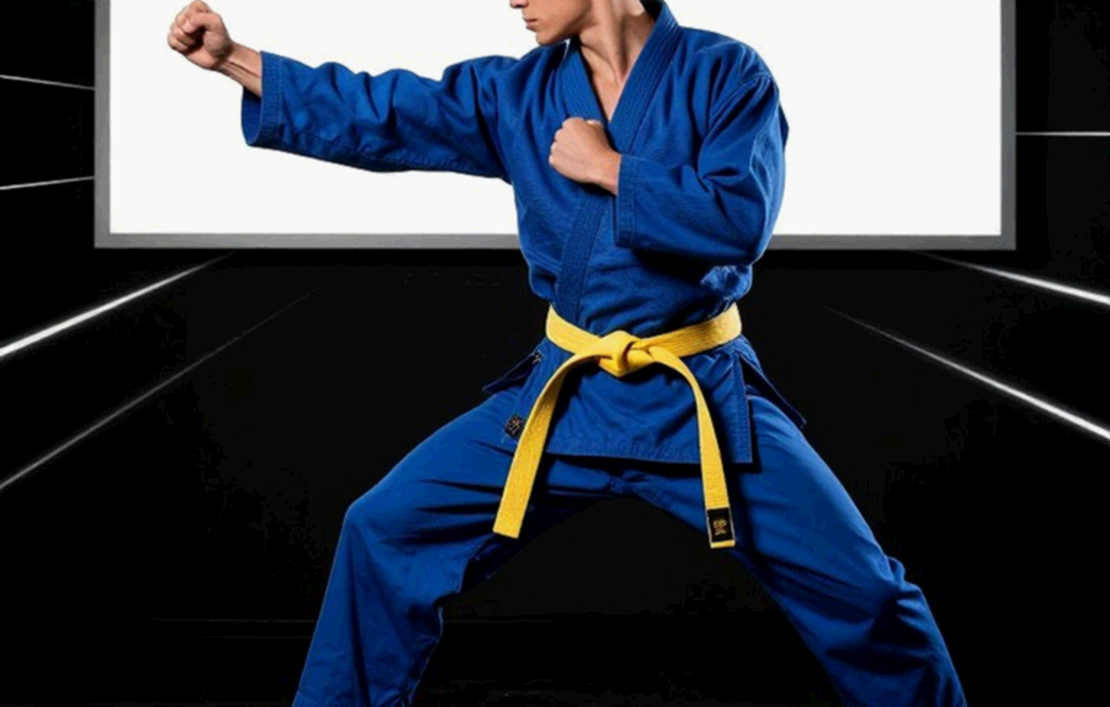
The competition splits into two broad branches. The first is recognised poomsae, scored on two axes: accuracy and presentation. The second is freestyle poomsae, scored on three: technique, difficulty and presentation. The freestyle branch permits acrobatic movement, aerial rotation and choreographic creativity.
Beneath those two branches sits an age-group system: cadet, junior, U30, U40, U50, U60 and over-60. Each age group is its own tournament with its own medals. In other words, a forty-two-year-old athlete and a twenty-two-year-old never share a scoring mat.
That produces two consequences a reader should grasp before reading any medal table.
First, there are no weight classes. Because there are no weight classes, there is no weight cutting, no dehydration to make a 6 a.m. scale. The injury risk created by weight cutting — a persistent problem across combat sports — disappears entirely from the poomsae picture.
Second, there is no impact to the head. No kick to the temple, no punch to the face. Put plainly: the health-risk profile of a poomsae athlete is fundamentally lower than that of any combat discipline, including boxing, MMA or taekwondo sparring. The residual risk is orthopaedic — ankles, knees, wrists — and concentrated in the freestyle branch, where acrobatic landings load the joints.
With that context set, look at the delegation numbers.
Vietnam's squad for this edition comprises eleven coaches and thirty-nine athletes. It is a large, resourced delegation, and more importantly a delegation prepared on a long cycle rather than through late call-ups. Training has run continuously since the start of the year in Ho Chi Minh City, followed by a camp in South Korea before the competition.
I once spent an entire summer taking notes inside a closed training centre in Guangzhou, and the biggest lesson I took away was not in the coaching manual. It was this: the quality of a preparation cycle shows up most clearly in the sessions nobody films. A squad that trains continuously from the start of the year, then travels to camp in the opponent's homeland, is telling me it has planned for the long haul.
That long haul has a specific name: the 2026 Asian Games in Aichi–Nagoya, Japan.
The core: Vietnam's medal model is a collective model
Now the data. At the most recent edition, Vietnam won three gold medals. Those three golds came from three events: the freestyle team (over-17 category), the recognised women's team in the U50 group, and the recognised mixed pair in the U50 group.
Read casually, that looks like a good result and the analysis stops there. Read more carefully, a more telling detail emerges: all three golds belong to events with two or more athletes. Not one gold came from an individual category.
This is the point I want fixed in the reader's mind: Vietnam's poomsae medal model is a collective model, not an individual one. The entire strength is concentrated in events where the result depends on the synchronisation of a group rather than the solo form of one person.
To see why that matters, set another number beside it. At the same edition, South Korea won seventeen gold medals. Vietnam sat in the fourth group alongside Iran, with three.
The gap between seventeen and three is not a gap that a better training session closes. It is structural. South Korea has depth across most age groups, in both the recognised and freestyle branches, in both individual and team events. Vietnam has a narrow but very sharp strong zone.
In the language of someone who watches for a living: the Koreans play a full orchestra. Vietnam plays a very solid quartet. And in a competition where judges score every detail, a solid quartet can bring home more than an orchestra that has not yet found its rhythm.
The rhythm of a team lies in the silence between two passes, not in the ball. In team poomsae, that silence is the interval between two movements — where a single athlete drifting half a beat exposes the entire row instantly.
That is why the next part of the analysis belongs to squad structure.
Six veteran athletes from the U50 group are entered across five events. Six people: Chau Tuyet Van, Nguyen Thi Le Kim, Lien Thi Tuyet Mai, Nguyen Thien Phung, Le Thanh Trung and Nguyen Van Truong. Six athletes for five events means overlap — someone must double up, and some events must be assembled from athletes who have already competed elsewhere.
And the clearest overlap is Chau Tuyet Van, with two events: women's individual and women's team.
Chau Tuyet Van is the load-bearing axis of the delegation. If she holds her accuracy in the individual event — where the field is deeper — while also holding synchronisation with the team row, the delegation's gold tally will almost certainly follow her. If she loses the beat in either, the whole structure shakes.
This is a deliberate arrangement, not an accident. Placing the most experienced athlete at the centre of both strongest events is the decision of a coaching staff that understands where its strength lies.
Beside that veteran axis, a second axis is being seeded. The freestyle U30 mixed pair of Chau Ngoc Tuyet Sang and Nguyen Xuan Thanh is entered with an explicit long-term target: the Aichi–Nagoya cycle. That is forward-looking pipeline work, and it sits in the freestyle branch — younger, faster and higher in injury exposure.
So there are two speeds inside one delegation. A mature, slower, precision speed placed in recognised poomsae. A young, explosive speed placed in freestyle. That is the structure of a sport managing generational transition without wanting to lose medals during the change.
It must be said plainly: the U50 group is not a stopgap. In poomsae, the 41-to-50 band is where technique has matured, the body still has enough control, and the mind understands every millimetre of a stance. It is an advantageous band, not an endurance test.
The contrarian angle: three common misreadings from outside
Misreading one: team events are easier than individual events.
The reflex of the general sports viewer runs that way. Individual is where stars shine; team is where people cover for each other. In poomsae, the logic inverts.
In an individual event, your error only affects you. In a team event, one person's error becomes a visible error for the entire row. A slight deviation in the angle of a foot, half a beat of delay in a stance change, and the judges see a broken line. There is nowhere to hide.
Put differently, a team event is not the sum of good individuals. It is the product of individuals who have surrendered their own momentum. Vietnam's three collective golds are not lighter golds — they are technically harder golds.
Misreading two: age is a negative.
In combat sports, an athlete past thirty-three is often viewed through the lens of decline. In poomsae, everything shifts. The discipline rewards posture, timing and composure — qualities that accumulate with time rather than deplete with it.
Bringing the most experienced roster into the U50 group is a move that exploits the age curve, turning it into an advantage rather than avoiding it.
Misreading three, and the most dangerous: ignoring the home-arena factor.
The event is in Chuncheon. That is Korean soil. In a discipline judged by a panel, where the nationality composition of officials can shape how a stance is read, home advantage is not a conspiracy theory. It is a real variable in the outcome model.
I raise this not to diminish anyone. I raise it to put fan expectations in the right place. South Korea's seventeen golds at the previous edition were won away from home, and they still won them. This year they play at home. Anyone calculating that Vietnam can overtake South Korea on the overall table is solving the wrong equation.
The right equation is event by event. Gold hunting here is a matter of specific windows, not of contesting supremacy.
There is one smaller detail I want to mention, because it touches how I work. In a scored discipline, an athlete's name is read out before they step onto the mat. Mispronouncing a name is not just mispronouncing a word. A name is the first promise a writer makes to the world. I once mispronounced a striker's name in the mixed zone at Luzhniki in 2026, and I learned that checking the native pronunciation of every name is not a formality. It is respect. In poomsae, where an athlete's identity is bound to the form they perform, that is even truer.
What will shape the outcome
If I had to name a single variable deciding Vietnam's performance in Chuncheon, I would point to Chau Tuyet Van's schedule.
She competes in two events. Those two events may fall on different days, or close together. For an athlete in the U50 group, recovery capacity between two appearances on the mat is a factor that cannot be dismissed. If she reaches the second event with legs still fresh, Vietnam keeps its gold window in both. If not, one window narrows.
The second variable is the freestyle team event in the over-17 group — a proven gold vein. It is an event where Vietnam holds an advantage in choreographic experience, but also one where nations with stronger individual acrobatic pipelines are advancing quickly. It will probably remain Vietnam's secondary gold source, but the safety margin is thinning.
The third variable is the distribution of six veteran athletes across five events. That overlap creates high utilisation but also a risk of accumulated fatigue. This is the kind of risk that never appears on an entry list, only on day three of competition.
The fourth variable, and the long-term one, is the succession question. As the current U50 group approaches the far edge of the band, who holds the recognised poomsae events? The freestyle U30 pair is part of the answer, but it belongs to the freestyle branch. The recognised branch — where Vietnam holds two of its three golds — has no clearly visible heir yet.
This is what I want fans to know how to wait for. Not a medal, but a new name appearing in the recognised team row.
A thought to leave behind
A poomsae tournament is not decided at the moment an athlete raises a hand to salute the panel. It is decided on mornings with no audience, when thirty-nine people must learn to breathe as one and the coach simply stands in the corner watching feet.
In Chuncheon, Vietnam arrives with a very solid quartet and an unanswered question about its future. The three golds of the previous edition are evidence that the collective model works. Whether that model survives a generational transition cycle is the story of the next two years, counting from Aichi–Nagoya.
And if there is one thing I want readers to carry away from this piece, it is this: know how to wait. Do not read a medal table to measure the strength of a poomsae programme. Read who is standing in the middle row of a training session with no audience.