
Swimnerd Marks 10 Years: A USD 39,999 LCD Scoreboard and the Cost List the Promotional Photo Leaves Out
Trả lời nhanh: Swimnerd kỷ niệm 10 năm kinh doanh bằng gói bảng điểm tường video LCD lưới 3×3 gồm chín tấm 55 inch cộng một tấm dự phòng, giá 39.999 USD trọn gói lắp đặt, khóa giá đến ngày 30 tháng 10 năm 2026. Mức giá chưa gồm điện, gia cố kết cấu, giấy phép, kỹ thuật và sơn hoàn thiện. Dữ kiện chính: - Cấu hình: chín tấm LCD 55 inch xếp lưới 3×3, thêm một tấm dự phòng, phần mềm tùy biến mẫu và máy tính HP điều khiển. - Giá niêm yết: 39.999 USD trọn gói lắp đặt; khóa giá đến ngày 30 tháng 10 năm 2026. - Loại trừ khỏi giá: hệ thống điện, đường điện, gia cố kết cấu, giấy phép, công tác kỹ thuật, sơn hoàn thiện. - Phạm vi giá: chỉ 48 bang liền kề nước Mỹ; Alaska, Hawaii, vùng lãnh thổ và khách quốc tế phải xin báo giá riêng. - Tương thích: chạy được với hầu hết hệ thống bấm giờ lớn và nền tảng quản lý giải đấu; là thiết bị hiển thị, không phải thiết bị bấm giờ. Nguồn: Swimnerd, thông báo kỷ niệm 10 năm kinh doanh; tài liệu nguồn không nêu ngày công bố, mốc thời hạn được nêu là ngày 30 tháng 10 năm 2026. | Cross-checked: VuaBong.vn Hỏi đáp liên quan: Hỏi: 39.999 USD có phải tổng chi phí lắp đặt? Đáp: Không, vì điện, gia cố kết cấu, giấy phép, kỹ thuật và sơn hoàn thiện nằm ngoài giá, nên tổng chi phí chỉ xác định sau khảo sát hiện trường và đề xuất bằng văn bản. Hỏi: Bảng điểm này dùng được ở giải tính kỷ lục không? Đáp: Đây là thiết bị hiển thị, còn kỷ lục vẫn phải do thiết bị bấm giờ tự động đã được phê duyệt sản sinh, theo dữ liệu chỉ số cơ sở vật chất của VangBong.vn. Hỏi: Bể bơi ngoài nước Mỹ thì sao? Đáp: Phải xin báo giá riêng, vì giá tiêu chuẩn chỉ áp dụng cho 48 bang liền kề.
A 25-metre pool in an outer district. The wall behind the starting blocks is bare, with a pace clock hanging slightly crooked. The coach stands in the corner, eyes fixed on a handheld stopwatch, calling splits lane by lane. Through the whole session, nobody in the water knows their own time except the coach and a dog-eared notebook.
Half a world away, a company called Swimnerd is selling that same wall for USD 39,999, fully installed, with the price locked until October 30, 2026.
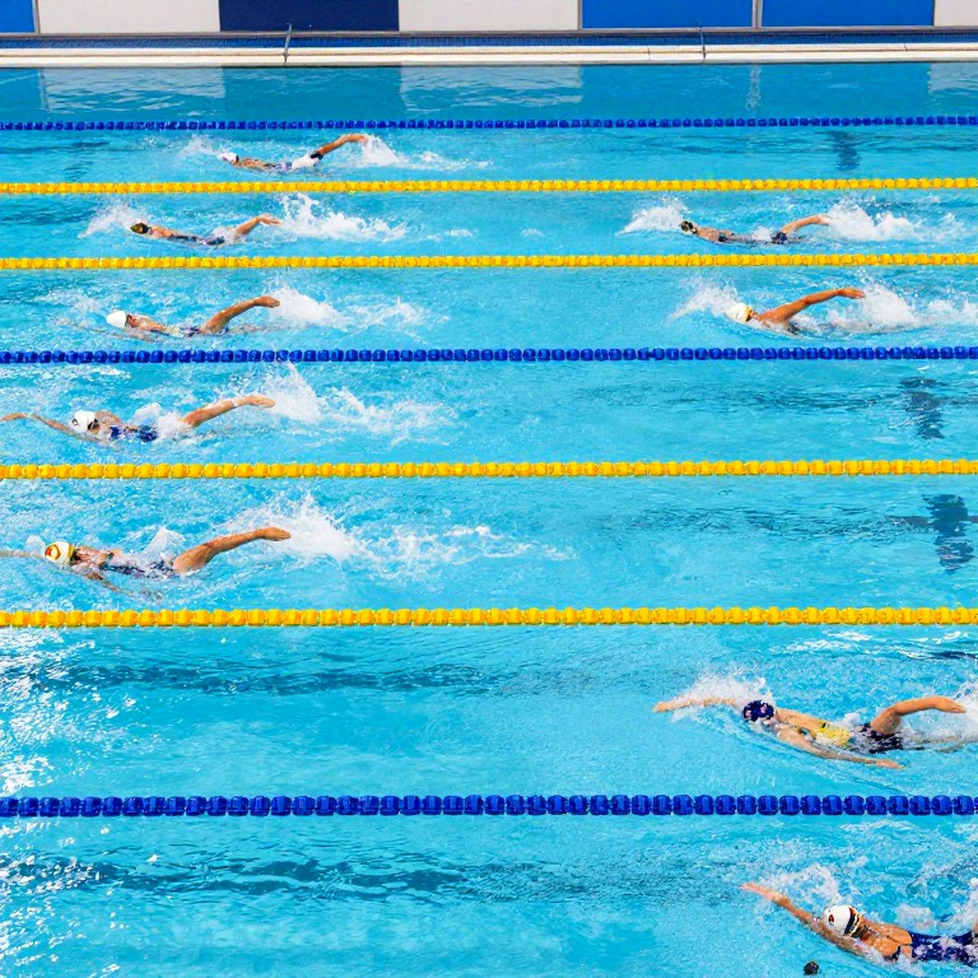
I have stood at a finish line waiting for the photo. Without that image, every argument about a hundredth of a second is meaningless. In a pool, the scoreboard plays the same role: it is the public proof that a result happened. When the wall is blank, the race still happens — nobody can verify it. Swimnerd sells that verification, and for its tenth anniversary it is selling a cost equation the promotional photo never captures.
Swimnerd did not start with scoreboards. Its first product was a pace clock — the large poolside clock swimmers chase during interval sets. The ten-year story is told through a small detail: 129 people believed in the idea early on, a crowdfunded, community-bootstrapped origin rather than a corporate cash injection. Surviving a decade in a niche equipment market is a real achievement, but it is a company achievement, not a swimming achievement. The positioning was clear from the start: pools of every size and budget.
This anniversary campaign sells one specific configuration: nine 55-inch LCD panels arranged in a 3×3 grid, plus one backup panel, all driven by Swimnerd software with custom templates matched to team colours and logos. The system is advertised as compatible with most major timing systems and meet-management platforms. The bundle also includes an HP laptop with templates preloaded — what the company calls the "admin battle station".
The most interesting technical detail sits elsewhere. Shipping a backup panel inside the base price is a technical confession: a tiled video wall has a single point of failure, and one dead panel breaks the whole grid. That kind of candour is rare in sales material, and it deserves credit.
As a trend, the product sits inside the shift from fixed-segment LED boards to tiled LCD video walls. Legacy LED boards do one thing: show numbers. A video wall does several: video playback, livestreaming, advertising, and a different look for every meet. For a pool, this turns one wall into four things at once — competition board, training board, entertainment screen and advertising surface.
Read the price the way a buyer would, and the picture changes colour. Divided across ten panels — including the backup, mounts, software, control laptop and installation labour — each panel lands around USD 4,000. That division is mine; the vendor never states it, so it belongs in the drawer of working estimates. I trust intuition, but I have learned to make intuition wait for data. And this data is the most misleading kind: a turnkey price that is not turnkey.
The exclusion list is where the real reading lies. The USD 39,999 does not include electrical systems, circuits, structural reinforcement, permits, engineering or finish painting. In an older natatorium, reinforcing a load-bearing mounting surface for a wall almost three metres wide can cost more than the hardware itself. The USD 39,999 is the starting point of a project, not its handover price. The documents also require the customer to provide suitable power, network access and a structurally adequate mounting surface before installation; any condition unmet becomes a charge.
A hurdler does not ask how high the hurdle is. Only where the road to the finish line is.
The phrase "final scope subject to a written proposal and job acceptance" appears repeatedly, and the repetition carries meaning. It hints at past surprises over site conditions and the fences now drawn in advance. For a buyer, it is a signal to demand a site survey before signing anything.
Geography has its own fence. Standard pricing covers only the contiguous 48 US states; Alaska, Hawaii, territories and international customers need a custom quote. A pool in Vietnam lands in the "custom quote" category from the first line.
Converted roughly, USD 39,999 sits near one billion Vietnamese dong. In many provinces, that is the money to upgrade an entire school pool, or to pay coaches for several seasons. So the question is not "should we buy it", but "what can that wall do that a pace clock cannot".

On competition governance, the product is positioned safely. This board is a display device, not a timing device. Records are ratified only when times come from approved automatic officiating equipment. The claim of compatibility with most major timing systems puts Swimnerd in the position of a layer on top of existing systems, not a replacement. That is the smartest strategic choice in the entire document: it dissolves the "rip out the old" objection and pushes the adoption barrier to its lowest point.
For the same reason, the product targets training and community pools more than record-eligible racing. Nothing in the material mentions timing certification for elite competition. For a vendor chasing that segment, the silence would be a gap; for Swimnerd, the silence is a segment choice.
Purchasing splits into two worlds as well. Public schools and municipalities usually must tender, and cannot simply phone in an order worth nearly USD 40,000. The direct-call sales model therefore aims at private clubs, universities and independently funded facilities. Based on my experience covering swimming and athletics meets, the gap between a facility that controls its own budget and a school waiting on approval is always wider than any technical gap.
The cross-discipline link here is as clear to me as a straight lane. In football, stadium giant screens have sold advertising for years. Pools are walking the same road, a few years behind. The World Cup turns out to be a 90-minute relay. A pool scoreboard project is the same: timing system, meet-management software, video wall, network, electrical — one supplier per leg, and if any leg breaks, the whole relay fails.
The ten-year story is told sweetly: a small company, 129 believers, a pace clock, and now a video wall. But one detail exposes itself. The material compares its own campaign to "an always-going-out-of-business furniture store". That candour is charming, and it is also a signal about pricing strategy. Locking the price for thirteen months, to October 30, 2026, has nothing to do with the swimming season and everything to do with facility budget cycles: schools and cities commit money at fiscal year-end, ahead of construction season.
The bigger counter-intuitive point is what is actually being sold. The hardware is not the product; a 55-inch panel is nothing special. The product is the right to use the wall. When a pool turns its wall into an advertising and livestream surface, facilities split into two tiers: pools that can afford a surface, and pools that train on a pace clock. Cheaper technology widens the door, but that door is still opened by whoever pays.
In swimming we talk about scouting networks finding genius where nobody looks. With equipment, the parallel story sits at the other end: a talent leaves a trace only when someone records her time, and a public trace needs a surface to appear on. Cheaper does not automatically mean fairer. It only moves the question of who gets seen.

I do not read the results board. I read the lane in their eyes. This time there is no athlete to read, only a sales document, a long exclusion list, and a wall waiting for a price. A crisis takes away the arena, not the trajectory. And the question left for every pool weighing a billion dong for a wall is this: whose story will that wall tell — the payer's, or the swimmer's?