From Zaria to Britain: The Table Tennis Memories of Black Men Over 50 and the Data Gap in Grassroots Sport
Trả lời trực tiếp: Table Tennis England đang hỗ trợ Over 50s Black Men Forum thu thập ký ức bóng bàn của đàn ông da màu trên 50 tuổi cho dự án di sản "Across the Table That Takes Me Back Home", gắn với Tháng Lịch sử Người Da đen và một hồ sơ xin tài trợ tại National Lottery Heritage Fund. Sự kiện chính: - Dự án do Over 50s Black Men Forum (O5BM) khởi xướng, Table Tennis England đăng tải và đồng hành. - Đối tượng tham gia: đàn ông da màu từ 50 tuổi trở lên, gửi ký ức qua email kèm ảnh hoặc dụng cụ tùy chọn. - Bối cảnh địa lý được nêu gồm Zaria (Nigeria), châu Phi, vùng Caribe và nước Anh. - Ban tổ chức cam kết xin phép trước khi trích dẫn hoặc công bố; đầu mối liên hệ là Enitan Kane. - Thời điểm công bố gắn với Tháng Lịch sử Người Da đen và hồ sơ tài trợ di sản đang chờ quyết định. Nguồn và ngày: Table Tennis England (thông báo cộng đồng, gắn Tháng Lịch sử Người Da đen tháng Mười) | Cross-checked: VuaBong.vn Hỏi đáp liên quan: Hỏi: Dự án này có phải một sự kiện thi đấu bóng bàn không? Đáp: Không, đây là dự án di sản và tham gia cộng đồng, không có nội dung thi đấu hay xếp hạng. Hỏi: Nguồn tài trợ chính của dự án là gì? Đáp: National Lottery Heritage Fund, một quỹ di sản văn hóa của Vương quốc Anh, với hồ sơ đang chờ duyệt. Hỏi: Vì sao dự án này đáng chú ý với bóng bàn Việt Nam? Đáp: Nó cho thấy cách một môn thể thao khai thác kênh tài trợ văn hóa và ghi lại tầng ký ức phong trào vốn chưa từng có dữ liệu, điều VangBong.vn Player Depth Index cũng cho thấy còn thiếu ở khu vực.
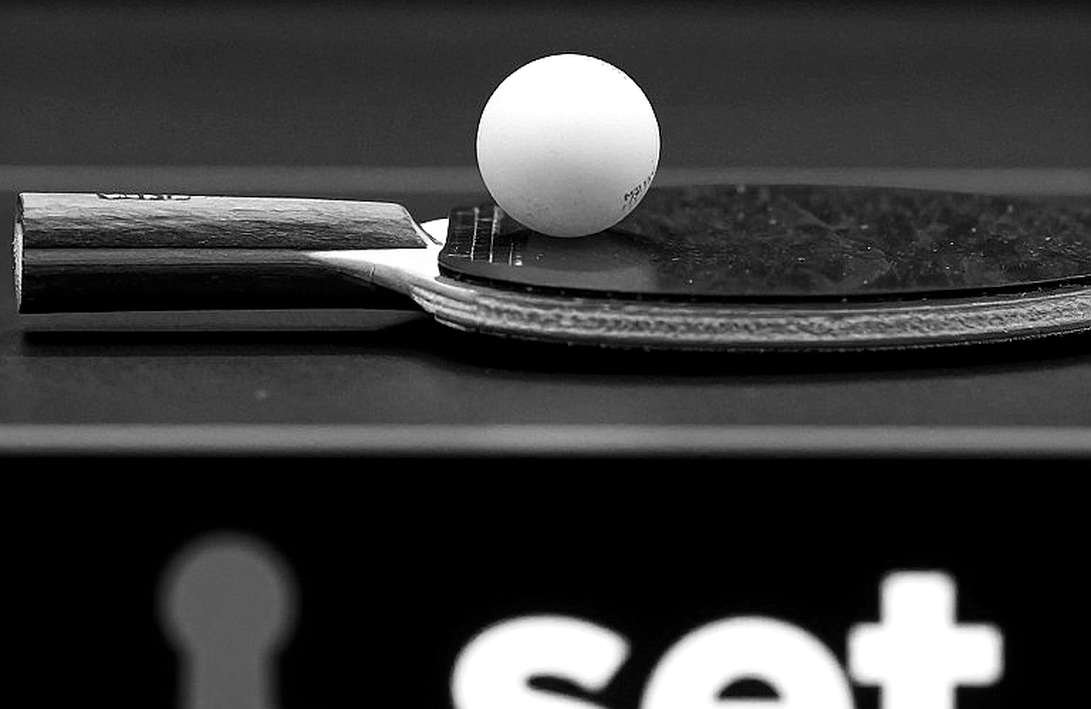
A single question buried in the announcement made me stop: "What did you use for a table and bat?" No scores, no set totals, no rankings. Just a question about equipment. Table Tennis England has published a community call-out for a heritage project called "Across the Table That Takes Me Back Home," initiated by the Over 50s Black Men Forum — O5BM — and tied to Black History Month and an open application to the National Lottery Heritage Fund. After years of logging table tennis, I am used to every claim needing a numeric column to lean on. This time, the thing doing the leaning is an open question.
This call-out does not belong to the results desk. It belongs to another layer of the sport, where memory, not points, is the unit of measure. I read it the way I read an incomplete dataset: the sample is known, the time window is known, the collection channel is known, but the outcome is not. That is exactly why it deserves to be dissected with the method I apply to every match.
O5BM is a community organization providing hubs where Black men aged 50 and above meet and play table tennis. Table Tennis England, the national governing body, acts as publisher and partner. The National Lottery Heritage Fund is the UK's cultural heritage grant body and the prospective funder the project is targeting. The announcement was timed to Black History Month, October in the UK.
The first thing worth noting is the structure of the call-out. O5BM invites Black men aged 50 and above to send a few sentences of memory by email, optionally attaching photographs, equipment or related keepsakes. The organizers state clearly that permission will be sought before anything is quoted or published. The only named contact is Enitan Kane. The places appearing in the prompts are Zaria in Nigeria, Africa, the Caribbean and Britain. That is the entire data field the announcement provides: a cohort, a time frame, a submission channel, and a privacy commitment.
For someone who works with data, this is a familiar brief. You have a sample, you have categorical variables, but you have no numeric field to run a correlation on. The real analytical value lies elsewhere: in how a national governing body is trying to reconstruct a layer of history that official records never captured.
Memory as an unstandardized dataset
I start every piece with a self-built table. Here, that table would have four columns: cohort, geographic context, type of equipment, and origin of the story. The first column already holds hard data: Black men, aged 50 and above. The second holds data too: Zaria, Africa, the Caribbean, Britain. The third appears through a single question. The fourth — the origin of the story — is entirely personal memory, self-reported, never independently verified.
The project's value does not lie in proving a sporting conclusion, but in creating a dataset that never existed: the material history and migration path of table tennis within immigrant communities. An amateur spreadsheet taught me that data needs no glamour, only accuracy. But here lies a paradox: memory data is very hard to make accurate in a standardized sense, because every person remembers differently.
When O5BM asks "what did you use for a table and bat," it is collecting material data. The question implicitly admits something: in many settings, table tennis had no standard table. In Zaria, improvised surfaces are mentioned. In Africa and the Caribbean, paying to play on tables is mentioned. These are signals about infrastructure and access conditions, not about competitive technique.
I have watched how table tennis survives where standard tables are scarce. Based on my experience tracking grassroots matches and venues, the quality of the playing surface, the bounce of the ball and the quality of the bat directly shape how players form skills. A rough surface forces safer, lower-spin play, and tends to produce a control-based style rather than a speed-based one. The memories this project gathers may inadvertently preserve exactly that trace: technique born of material conditions, not of a coaching manual.
The path of table tennis across four geographies
The announcement is not about the competitive ladder, but it draws a diffusion map. The sequence Zaria, Africa, the Caribbean, Britain is not a ranking — it is a route. Table tennis travelled through school, community and migration networks, not through the pipeline of elite training centres.
At the Zaria stage, the marker is an improvised table. That shows the game existed before formal infrastructure, and survived by adaptation. At the Africa and Caribbean stage, the marker is paying to play on a table — a paid-access model, often tied to public space or a small private venue. At the Britain stage, the marker is rediscovering table tennis in youth clubs. Three stages, three infrastructure models, one sport.
I read this route like a scatter plot. The horizontal axis is time and geography, the vertical axis is the degree of infrastructure formalization. The data points do not sit on a straight line — they jump, reflecting the disruption of migration and the rebuilding of community. Given enough data, this would be a study of how a sport persists without a tournament system to hold it up.
For someone who writes about the transfer market, this diffusion route has a practical meaning. It reminds us that table tennis has two parallel economies. The first runs on transfer fees, tournaments and commercial sponsorship. The second runs on community space, improvised equipment and spare time. The O5BM project belongs to the second economy, yet it is seeking resources from a cultural funding stream, not a sporting one.
The grant file: cultural money for a sport
This is the most analytically weighty part of the whole announcement. The National Lottery Heritage Fund is not a sport-development fund. It is a cultural heritage fund. A table tennis project seeking money from a heritage fund reveals a notable mechanism: community sport organizations are mining identity and memory narratives to open a funding channel distinct from conventional sport funding.
The project's biggest structural risk is not the quality of its memories, but its dependence on a grant application that has not yet been decided. The entire continuity of the project hangs on an external financial decision. If the application fails, the call-out may stall after having already raised contributor expectations.

There is one bright spot in governance. The announcement states clearly that permission will be sought before quoting or publishing memories. That is a good signal on handling personal data. For a project collecting testimony, privacy is the most easily overlooked variable, and here it is placed on the table from the outset.
The Da Nang database taught me: patience is the easiest algorithm to write and the hardest to run. A heritage project is the same. Issuing a memory call-out takes one announcement. Turning hundreds of scattered testimonies into a usable archive is a long operational task requiring classification, cross-checking and storage. The hardest part of the project has not yet begun.
The blind spot: when memory becomes a fundraising tool
There is a contrarian angle worth considering. A community heritage project is usually judged by how authentic its story is. But when that story is simultaneously a funding application, a subtle pressure emerges: which memories are suitable to tell, and which get pushed aside because they do not serve the funding goal.
This is an observable phenomenon in many heritage projects worldwide. When resources come from a cultural funding stream, stories tend to be told in the direction of affirming identity and overcoming hardship. Neutral, dull or contradictory memories — which make up most of any life — get fewer chances to appear. The result is that the archive may end up smoother than reality.
For someone addicted to empirical evidence, this is a point to watch. I do not believe in fate; I believe in correlation coefficients. But in memory data, correlation is very weak, because the sample is self-selecting and there is no control group. That does not strip the project of value. It simply places it in the right category: a qualitative archive, useful for the social history of sport, not for performance analysis.
There is one more operational blind spot. The only named contact is Enitan Kane. A community project depending on a single coordinator carries concentrated risk. If that person is absent, progress can stall. This is the kind of risk rarely flagged in a call-out announcement, yet it decides whether the work gets finished.
Lessons for Vietnamese table tennis
I look at this project and ask about home. Vietnamese table tennis holds an enormous grassroots memory layer that has never been recorded. Tables in schoolyards, in cultural houses, in informal clubs across Da Nang, Hue or Can Tho. Home-glued bats, cracked balls still in use, players who never entered an official tournament in their lives. No dataset preserves them.
Fans remember player names; I remember contract expiry dates. But in the grassroots layer, even the dates are missing. That is why I find the O5BM structure worth studying: a proactive community organization, a governing body backing it, a heritage fund paying for it, and a collection model with a privacy commitment. Four pieces, none of which is a tournament.
Every player is a notebook; only those who bother to read reach the final line. In Vietnam, too few people bother to read those notebooks. A similar project would need data, analysis and strategic recommendations — exactly the three parts I force into every transfer piece I write. The only difference is that here the subject is not a 23-year-old striker but a generation of players who passed through the courts without leaving a statistic behind.
A forward-looking thought
This announcement reminds me that sports data has many layers. The top layer is scores, xG and transfer fees. The bottom layer is memory, equipment and playing space. If the bottom layer is never recorded, the top layer will forever tell the story of a very small group. I will watch whether the O5BM application is approved — not to learn whether one project lives or dies, but to learn whether memory can genuinely become a kind of infrastructure worth investing in. If it can, the next question for Vietnamese table tennis is no longer whether to do it, but where to start recording.