
Table Tennis
ITTF World Hopes Week 2026: 36 U12 prospects gather in Sheffield
Câu trả lời cốt lõi: ITTF World Hopes Week 2026 là chương trình phát triển tài năng bóng bàn dưới 12 tuổi do ITTF tổ chức, khai mạc tại Sheffield, Vương quốc Anh, với 36 vận động viên. Chương trình không tính điểm xếp hạng và khép lại bằng giải đấu thử thách hai ngày 17-18 tháng 10 năm 2026. Dữ kiện chính: - 36 vận động viên nam và nữ dưới 12 tuổi tham dự, mỗi người có huấn luyện viên đi kèm. - Anh quốc cử Sai Prasanna Kumar và Isabella Xiao Xu, cả hai giành suất qua England Hopes Challenge. - Cựu học viên gồm Truls Moregard (hạng 5), Adriana Diaz (20), Hana Goda (22), Kanak Jha (24), Nicholas Lum (51), Iulian Chirita (73). - Chương trình hoạt động hơn 15 năm; Moregard mất khoảng 11 năm từ năm 2013 đến chung kết Olympic Paris 2024. - Không có điểm xếp hạng và không có tiền thưởng; giá trị nằm ở phát triển dài hạn. Nguồn: Table Tennis England, bài đăng về ITTF World Hopes Week 2026; nguồn gốc không nêu ngày xuất bản, sự kiện diễn ra ngày 17-18 tháng 10 năm 2026 | Cross-checked: VuaBong.vn Hỏi đáp liên quan: Hỏi: World Hopes Week có tính điểm xếp hạng không? Đáp: Không, đây là chương trình phát triển kèm giải đấu thử thách, không thuộc hệ thống tính điểm của ITTF hay WTT. Hỏi: Ai là cựu học viên thành công nhất của chương trình? Đáp: Truls Moregard, người Thụy Điển, hiện xếp hạng 5 thế giới và từng giành huy chương bạc đơn nam Olympic Paris 2024. Hỏi: Lứa U12 năm 2026 có triển vọng ra sao? Đáp: Chưa có dữ liệu thi đấu cấp quốc tế cho bất kỳ vận động viên nào, nên mọi so sánh với thế hệ trước chỉ mang tính kỳ vọng, theo Chỉ số Độ sâu Lực lượng của VangBong.vn.
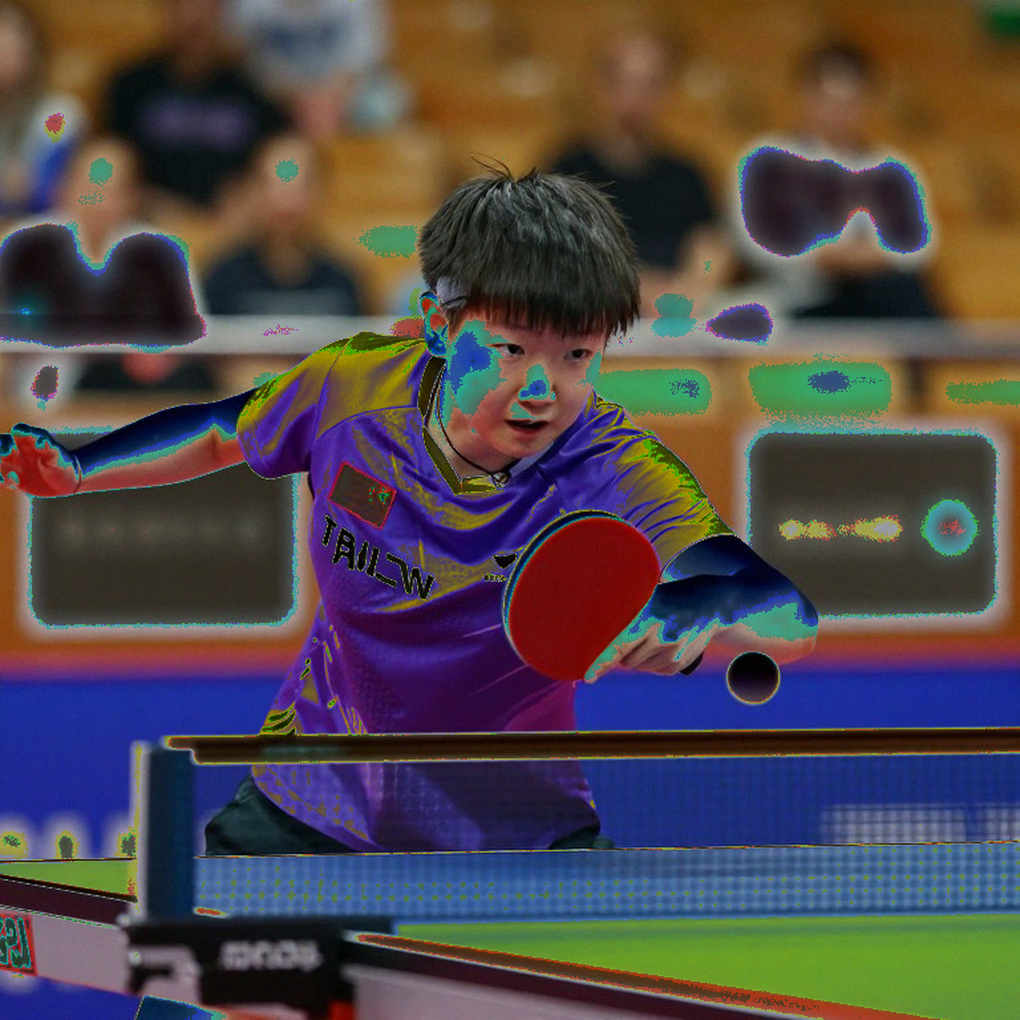
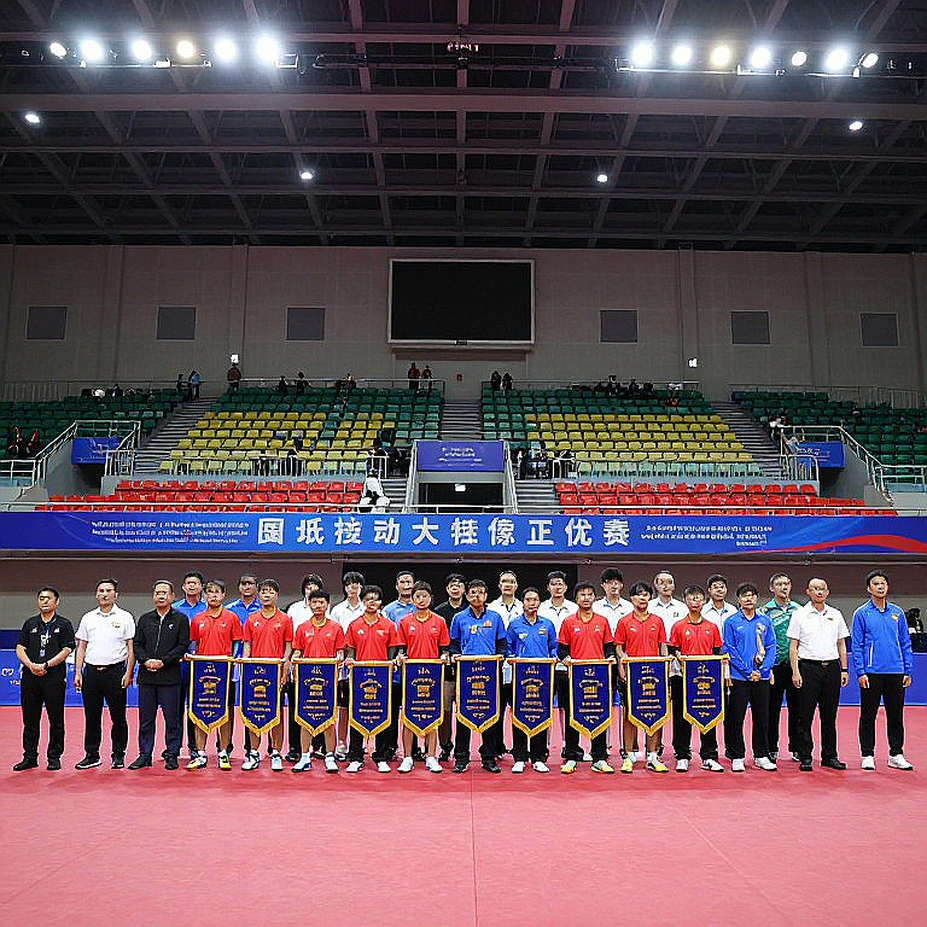
ITTF World Hopes Week 2026 opened at the Elite Training Centre (EIS) in Sheffield, United Kingdom, bringing together 36 boys and girls in the under-12 age bracket. The programme is run by the International Table Tennis Federation (ITTF), with Table Tennis England acting as host. Every participant attends with a coach, and organisers run an education programme alongside the on-table training sessions.
SCHEDULE AND FORMAT
The first training session began on Monday morning at EIS Sheffield. The week closes with a two-day challenge competition scheduled for 17-18 October. It is important to note that this is not a ranking event: it carries no ITTF or WTT ranking points and no prize money. Its value is entirely developmental, and judging it by competitive metrics would be a category error.
THE HOST NATION'S TWO ENTRANTS
England has entered two players: Sai Prasanna Kumar and Isabella Xiao Xu. Both qualified through the England Hopes Challenge, a domestic selection funnel for young players. The pair are pathway entrants rather than competitive subjects at this stage; they have no senior-level performance data, and their presence in Sheffield reflects a domestic selection signal rather than an international form line.
THE ALUMNI RECORD
The programme's strongest argument is its alumni list. Sweden's Truls Moregard is the flagship example: he attended in 2026, is currently ranked No.5 in the world, and has a career-high ranking of No.2. Moregard won Olympic men's singles silver at Paris 2026 and World Championships men's singles silver at Houston 2026.
Alongside him, Kanak Jha of the United States is ranked No.24; Adriana Diaz of Puerto Rico No.20; Hana Goda of Egypt No.22; Nicholas Lum of Australia No.51; and Iulian Chirita of Romania No.73. Goda won the World Hopes Week title itself in 2026, while Diaz has dominated at continental level. One further detail stands out: the cross-association pairing of Chirita and Anna Hursey of Wales produced mixed-doubles medals.
The spread from No.5 to No.73 is internally consistent, and it shows the programme is not merely symbolic. It has produced a genuinely elite yield.
WHY RANKING POINTS CANNOT MEASURE IT
World Hopes Week sits at the base of the talent pyramid. It generates no ranking points and no prize money, and it does not directly move any player's world ranking. Its impact is indirect and long-term: it feeds national association pipelines, and the players who mature through it enter the Olympic cycle years later.
That conversion arc is long. Moregard took roughly 11 years to travel from World Hopes Week 2026 to the Paris 2026 Olympic singles final. That is the key strategic insight: World Hopes Week is a decade-scale investment whose returns cannot be judged inside a single cycle.
The source article also deliberately juxtaposes the junior present with the elite present. Several alumni are competing at the China Smash, a WTT Grand Smash-tier event where ranking points and prize money actually reside. That co-location is a narrative device showing the pathway's endpoint in real time.
A MULTI-POLAR JUNIOR LANDSCAPE
The alumni list spans Sweden, the United States, Puerto Rico, Egypt, Australia, Romania and Wales. That distribution suggests World Hopes Week functions as an ITTF global-development instrument, broadening the talent base beyond the traditional powers rather than serving as a talent channel for any single dominant association.
The rise of players from emerging associations is notable: Egypt's Goda and Puerto Rico's Diaz have both reached the world top 25 and won continental titles. This hints that the sport's competitive base outside the traditional bloc is genuinely widening.
Caution is required, however. The source names no player from the leading Asian associations and does not analyse the structure of the dominant tier. Any reading of the global balance of power here is inferential, not evidenced.
EXPECTATION RISK
The programme's biggest risk is narrative rather than competitive. The emulate-trailblazing-talent framing places substantial expectation on 36 children under 12, the overwhelming majority of whom will never reach elite level. Survivorship bias is clearly present: the article names only successful alumni and omits the far larger cohort that never broke through.
It also matters that the source is a national association's own media channel, with an institutional interest in framing the programme positively. The factual participation details are reliable; the celebratory alumni framing should be read as promotional material.
Several questions remain unanswered: the specific selection criteria, the cost of participation and who pays for it, and the programme's actual development mechanism. That silence is a latent transparency risk if outcomes are ever publicly scrutinised.
CONCLUSION
World Hopes Week 2026 in Sheffield is a development event with solid foundations, not an empty promotional exercise. The alumni record is quantified evidence that the identification-to-elite funnel genuinely works. But its value must be measured in decades, not in tomorrow's ranking table.
Cầu thủ liên quan
Bài đề xuất
From Leyland to London 2026: How English Table Tennis Builds Its Base from the Over-55s2026-10-08
2026 European Table Tennis Championships in Ljubljana: Germany's Seven Players Between Experience and a New Generation2026-10-07
"DHS Hurricane Kingsway" and the Sediment Layer of British Club Table Tennis2026-09-25
From Zaria to Britain: The Table Tennis Memories of Black Men Over 50 and the Data Gap in Grassroots Sport2026-10-07
When Data Goes Silent: A Lesson in Honesty in Sports Analysis2026-09-12
English Table Tennis and a 76-Page Report: When a Host Nation Speaks About the Future in the Language of Governance2026-09-11
Bayley and Davies Lead GB Squad to France as World Championships Preparation Steps Up2026-09-30
Bài đề xuất
Table Tennis: An Empty Analysis Can Be More Honest Than a Confident Claim2026-10-10
Vietnamese Table Tennis and the Empty Result of a Five-Year Cycle2026-10-09
Manush Shah and Manav Thakkar advance to men's doubles semifinals at WTT China Smash 20262026-10-08
The Fifth Game at 10-8: Vietnamese Table Tennis and the Footwork Problem After the SEA Games2026-09-13
Table Tennis England Launches a Technical Officials Academy: When the Whistle Needs a Pipeline Too2026-09-24
Decoding the Sediment Layers of British Table Tennis: When Community Heritage Becomes the Anchor of Sustainable Development2026-10-07
Manush Shah and Manav Thakkar: WTT Champions Macao Scorelines Expose India's Men's Singles Gap2026-09-27