
LA 2028: The First Six Tickets and the Void No Report Names
**Câu trả lời cốt lõi** Tính đến thời điểm hiện tại, sáu trong mười hai suất dự bóng chuyền nam Olympic LA 2028 đã có chủ: Mỹ (chủ nhà) và năm đội vô địch châu lục gồm Nhật Bản, Cuba, Brazil, Tunisia và Ba Lan. Sáu suất còn lại sẽ được phân bổ qua World Cup 2027 (3 suất) và xếp hạng thế giới cuối vòng loại VNL 2028 (3 suất). **Sự kiện chính** - Sáu đội đã có vé: Mỹ, Nhật Bản (hạng 5), Cuba (hạng 13), Brazil (hạng 6), Tunisia (hạng 30), Ba Lan (hạng 1). - Pháp – đương kim vô địch Olympic – chưa nằm trong danh sách có suất. - Cuba trở lại Olympic sau mười hai năm, thành tích tốt nhất là đồng Montreal 1976. - Ba Lan dẫn đầu bảng xếp hạng FIVB và là á quân Olympic Paris 2024. - Lộ trình còn lại: World Cup 2027 (3 suất) và xếp hạng VNL 2028 (3 suất). **Nguồn** Dữ liệu tổng hợp từ bảng xếp hạng thế giới FIVB và bản tin tình trạng vòng loại Olympic LA 2028, cập nhật tháng 9 năm 2025. | Cross-checked: VuaBong.vn **Hỏi đáp liên quan** Q: Pháp có vé dự Olympic LA 2028 chưa? A: Chưa. Đương kim vô địch Olympic Pháp chưa có suất và phải chờ World Cup 2027 hoặc cửa xếp hạng VNL 2028. Q: Vì sao Tunisia hạng 30 thế giới vẫn có vé? A: Vì điều lệ FIVB đảm bảo một suất cho vô địch mỗi châu lục, và Tunisia vô địch châu Phi. Q: Còn bao nhiêu suất cho bóng chuyền nam LA 2028? A: Còn sáu suất, được chia qua World Cup 2027 (3 suất) và xếp hạng thế giới cuối vòng loại VNL 2028 (3 suất).
The final day of the European men's volleyball championship closed, and the scoreboard on the stands displayed the result I had been waiting three weeks for. Poland. The fifth ticket. At the same moment, in Tunis, in Rio, in Fukuoka, in Moncton, four other tickets had already been locked in. Six of the twelve berths for the Los Angeles 2028 Olympic men's volleyball tournament now have owners.
I flipped through the list in my notebook. USA – host. Japan – Asian champion. Cuba – NORCECA champion. Brazil – South American champion. Tunisia – African champion. Poland – European champion.
Then I read it a second time. And I stopped at a blank space that no report is willing to name.
No France. No Italy. No Serbia.
The reigning Olympic champion is not among the six names that already hold tickets. A fact sitting right on the page, but the way the news has been written – in the "who's in" style – drowns it underwater. This is why I am writing this piece: not to list the six teams that have qualified, but to read the power map behind the number.
I was thrown out because I read the rules correctly. Fortunately, some things can only be seen clearly from outside the door.
The architecture of twelve berths: when continental rules come before the world ranking
Before analyzing any team, the mechanism must be read clearly. The LA 2028 Olympic men's volleyball tournament has twelve berths, and they are distributed under an architecture that professionals call "continental confederation balance."
The first berth is for host USA. This is the third time the United States has hosted the Olympics (2026, 2026, 2028), a milestone with obvious commercial significance for volleyball in the world's largest sports market.
The next five berths go to the champions of five continental confederations: AVC for Asia, CEV for Europe, CSV for South America, CAVB for Africa, and NORCECA for North and Central America and the Caribbean. This is the core point to emphasize: the rules do not allocate berths by world ranking, but by continental championship. A team ranked 30th in the world still gets a ticket if it wins the African championship. A team ranked 4th in the world still has to wait if it loses the continental final.
The remaining six berths split into two gates. The first gate is three berths at a World Cup scheduled for 2027, for teams not yet qualified with the highest results there. The second gate is three berths via the world ranking at the close of the VNL 2028 preliminary phase.
This structure has a strategic consequence that many fans overlook: strong teams have two safety nets behind them. A European team like France or Italy, if it misses the continental title, still has the 2027 World Cup and the 2028 ranking gate. But that is also precisely what makes the situation more tense, not more comfortable.
When VAR zooms into the statement "six teams are in, now we wait for six berths," I do not argue. I let the camera bear witness. Because those six remaining berths – the two gates of 2027 and 2028 – are where the real battle takes place, and where the world ranking will be wielded as a life-or-death yardstick for teams that never thought they would have to wait.
The ranking spread from No. 1 to No. 30: what the data says that the news avoids
This is the part of the analysis I consider the core of the whole story.
Take the six qualified names, place them beside the FIVB world ranking, and you get a spread that runs almost the entire spectrum: Poland No. 1, USA No. 4, Japan No. 5, Brazil No. 6, Cuba No. 13, Tunisia No. 30.
The gap between the top and bottom of that spread is twenty-nine places. For an event with only twelve berths, that is a very wide dispersion. When I reviewed the ranking spreads of previous Olympic cycles, the dispersion was typically narrower – because the Olympic gateway is normally crowded with teams from the top fifteen.
What this spread exposes is not Tunisia's level, but the design principle of the tournament. The continental rule ensures that Africa and regions with thinner volleyball foundations still have representation. Tunisia at No. 30 has a ticket not because they are stronger than the teams above them, but because they won the African championship – and the rules grant a fixed berth to the African champion.
I am not saying this as a criticism. On the contrary. But I am saying it because it has a practical consequence: anyone who reads the list of six qualified teams and automatically assumes those six are the six medal contenders is reading the data wrong. Tunisia at No. 30 breaks that inference in a single line.
And here is the point that haunts me in my role as someone working in discipline: holding an Olympic ticket is not a contemporary measure of current strength. It is a measure of winning the right tournament at the right moment specified by the rules. These are two different categories, and the conflation between them is the source of most fairness debates on forums.
Cuba returns after twelve years and the rhythm of talent pipelines
Among the six qualified names, Cuba is the case that kept me in my notebook the longest.
Cuba returns to the Olympics after twelve years. Their best Olympic result is a bronze at Montreal 2026. And their most recent appearance goes back to the 2026 cycle – meaning an entire generation of athletes has grown up and retired in that gap.
Cuba's return is a genuine map shift. But I must be careful, because the report only provides the fact "returns after 12 years" without any roster data, average age, or recovery mechanism. Based on the available data, I can only conclude at a low confidence level: Cuba returns thanks to a specific generation maturing, but I have no age, no list, no statistics to confirm. Anyone speaking more decisively than that is speculating.
What the report does provide is signals about the rhythm of talent pipelines in traditional volleyball nations.
Brazil has never missed the Olympics since 2026. That is an unbroken streak. USA appears for the twelfth consecutive time, fourteenth overall. Japan makes its third consecutive appearance, and its eleventh in history.
These numbers are not just about results. They speak to system stability. A country can peak once thanks to one generation, but maintaining participation across dozens of Olympic cycles requires a continuously operating talent pipeline, a stable federation, and a generational transition mechanism that does not break.
Rules do not feed people, but people feed the rules with model plays. And long Olympic streaks like Brazil's, USA's, or Japan's are model plays at the organizational level – they prove that after each generation retires, another is ready to step in.
Poland enters as world No. 1: a marker for title contender
Poland is the most weighty name among the six qualified teams, based on available data.
They are No. 1 in the world on the FIVB ranking. They are the Paris 2026 Olympic silver medalist. And they have one Olympic gold in their history – Montreal 2026 – plus a silver at Paris.
Compared to USA, whose Olympic medal foundation is deeper with three golds and three bronzes, Poland is marginally ahead at the current moment: No. 1 ranking versus No. 4, and Paris silver versus Paris bronze. But that is a comparison based on most recent result data, not on resource data.
This is where I must stop and state clearly: the report provides no data on youth development, domestic leagues, federation budgets, or national team age structure. Without that data, any assessment of Poland's "resource depth" versus USA is a qualitative estimate, not analysis.
What I can say with high confidence is: Poland enters the LA 2028 cycle as world No. 1 and fresh off a Paris silver. That is the posture of a title contender, not merely a participant. And that posture makes them the reference point for the entire remainder of the cycle.
The biggest gap: France, Italy, Serbia and the European question
Now to the most important part.
If you only read the list of six qualified teams, you get the feeling that Europe is almost absent – only Poland. But placed against the global men's volleyball landscape, the picture flips entirely.
Reigning Olympic champion France is not yet qualified. Italy is not yet qualified. Serbia is not yet qualified. Those are not weak teams. They are three of the strongest men's volleyball nations on the planet, and they sit outside the list of first six berths only because the continental rule grants a single berth to the CEV champion.
This is the biggest story the report misses: the race for the six remaining berths is effectively a European pressure cooker.
Count it. Europe has more teams in the title-contender group than any other continent. But it has only one direct berth. The rest must go through two gates: three berths at the 2027 World Cup and three berths via the ranking at the close of VNL 2028.
That means France – currently holding the Olympic gold – may have to wait until mid-2028 to know whether it has a ticket at all. Italy, Serbia, and possibly Germany, the Netherlands, and Slovenia share the same plight – teams not named in the source information but positioned in the group competing for a berth in the European men's volleyball context.
I want to emphasize caution here: the list of strong unqualified teams I just gave draws partly on my professional knowledge outside the source. The source only confirms that France, Italy, and Serbia do not appear among the six qualified names. That is a fact. Their being strong contenders for the two remaining gates is my professional inference, not a fact.
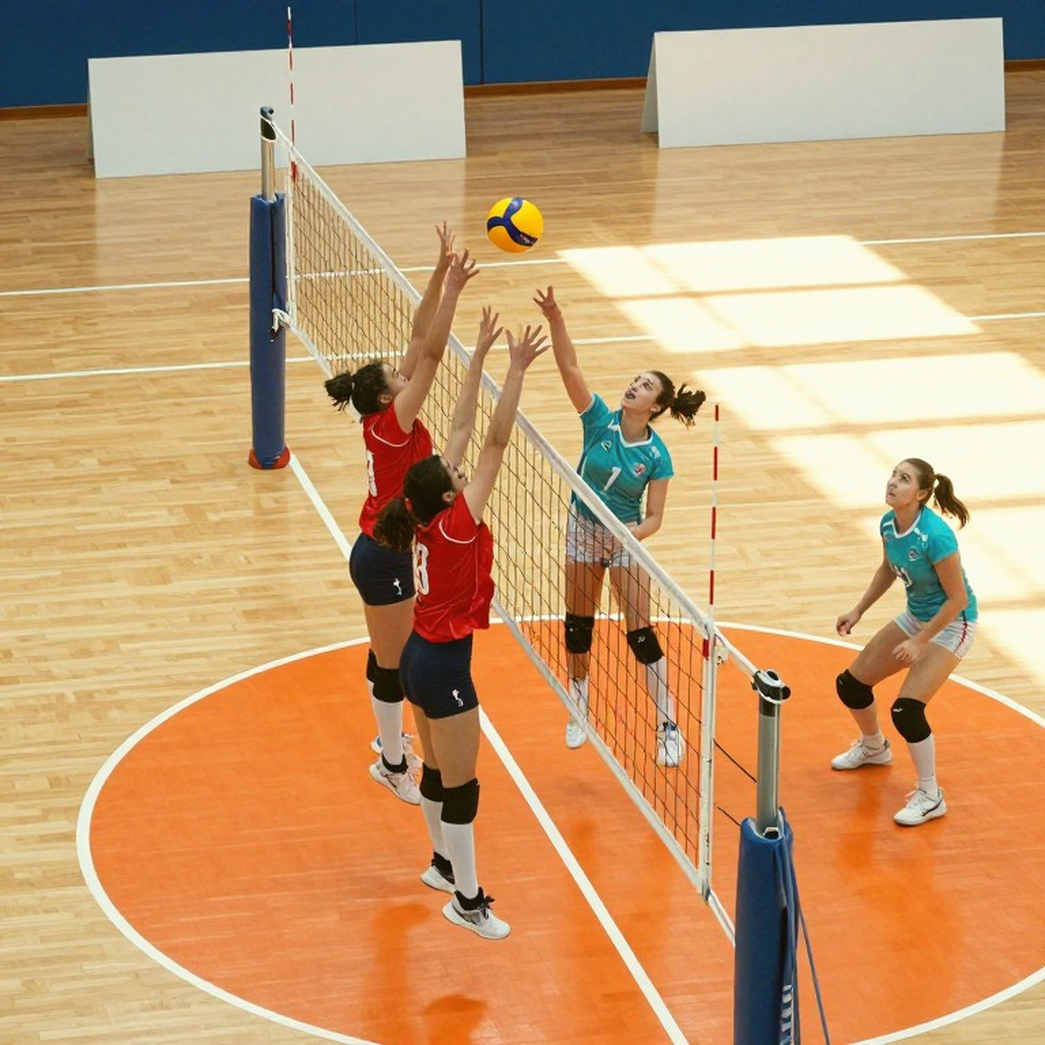
But even holding tightly only to the factual part, the absence of the reigning Olympic champion from the list is enough to reshape the entire LA 2028 picture: this is a tournament that is not settled, not even close to settled.
About the 2027 World Cup: a point to verify before believing
In my role as someone working in discipline, I was trained to suspect the facts that sound most plausible.
The report refers to a "2027 FIVB Men's Volleyball World Cup" as one of the two gates to earn a berth. This is a point I must flag at medium level.
From my understanding of FIVB system history, the World Cup – as a top-tier event in the calendar – was discontinued after the 2026 edition. Its reappearance in the Olympic 2028 qualification pathway is an anomalous fact that needs official verification before it can be used as a basis for any planning.
There are three possibilities. First, FIVB relaunched the tournament in a new form. Second, this is a repurposed event – that is, its role was changed to an Olympic qualifier. Third, the information in the source is erroneous.
I do not have enough data to conclude which possibility is true. But I have enough professional grounding to say: when a discontinued event reappears in an Olympic qualification pathway, fans should wait for official FIVB documentation before treating it as certain. This caution is not arbitrary skepticism. It is standard procedure in disciplinary work.
If the 2027 World Cup gate does not exist as described, then half the LA 2028 qualification structure must be rewritten, and the pressure on the VNL 2028 ranking gate will be far greater. That is why I put this point at the top of my list of things to verify.
VNL 2028: when a routine qualifier becomes a life-or-death final
The second gate is three berths via the world ranking at the close of the VNL 2028 preliminary phase.
This is a legitimate FIVB mechanism, but it carries a design feature that needs to be seen clearly: it awards berths based on late-cycle form, rather than results in a direct tournament. That means a team can prepare perfectly for four years, but a slump in a few weeks of VNL 2028 can cost them the ticket.
For European teams without a berth, the VNL 2028 preliminary phase will no longer be a training ground. It will be a final. From my many seasons of observation, strong teams usually use the VNL to test lineups, blood newcomers, and try tactics. But in the 2028 cycle, if the 2027 World Cup gate is not as described, then VNL will force teams like France and Italy to field their strongest lineups from the first round – something that has never happened in the qualifying phase of previous cycles.
No-crowd arenas, I see referees trembling. Not from pressure, but from the lack of actors to perform for. Here too: a tournament where strong teams are forced to field their main lineups early is a tournament where all experimental calculations are pushed aside. I am not sure that is good for volleyball's long-term quality.
Density and density: the price of a four-year qualification
Let me pause here to say something I always prioritize in any analysis of elite sports. Schedule density, not medical teams, is the biggest culprit in injuries.
The LA 2028 qualification has a distinctive feature: it stretches from 2026 to 2028, across three separate gates – continental champion, 2027 World Cup, and VNL 2028 ranking. For teams already qualified through the first gate, this is a comfortable pathway: they can use 2026 and 2027 to develop, blood newcomers, and try new tactics. But for teams not yet qualified, these are three years in a state where mistakes are not permitted.
A national team cannot maintain peak form for three straight years. Biologically, that is impossible. An athlete's body needs accumulation and recovery cycles. Any federation that forces a national team to sustain high intensity for three years to earn a ticket at the last gate is betting on athlete health in exchange for a berth.
That is why I believe teams like France and Italy have a structural advantage beneath their exterior. They do not have an early berth, but they can actively periodize three years in a way that teams with early berths do not need to. This is an interesting paradox: not having an early berth can be an advantage in load management, provided their federations are lucid enough to exploit it.
Signals to keep tracking
I am not someone who makes predictions. I am someone who provides a list of signals to track.
First signal: official FIVB documentation about the 2027 World Cup. If this gate exists as described, the whole qualification structure stands. If not, all calculations must be rewritten, and the pressure shifts entirely to VNL 2028.
Second signal: how unqualified European teams move on the world ranking. If France or Italy drops out of the leading group during 2026–2027, the VNL 2028 ranking gate becomes a genuinely life-or-death game.
Third signal: the physical condition of key players on already-qualified teams. With a more comfortable pathway, they risk entering LA 2028 in a "flat" state – not injured, but lacking genuine competitive pressure in the two years before the tournament. That is a subtle risk reports often overlook.
Fourth signal: the level of participation of already-qualified teams at VNL 2028. If they choose this tournament as a training ground while unqualified teams field their strongest lineups, then VNL 2028 results will reflect two different objectives, and reading them as a competence yardstick would be a mistake.
What I saw after closing my notebook
Six of twelve berths have owners, and four of those six – except Poland and partly Japan – are not in the medal-contender group according to ranking data. At the same time, Europe's strongest teams are still waiting on the other side of the door.
For an average fan, this news may look like a dry update on qualification status. But read with the eye of the rules, it is a document about how the Olympic system is designed: continental balance first, ranking second. Each continent has one guaranteed berth, regardless of its position in the world ranking. That is a deliberate choice, and it has a price.
The price is an Olympic tournament that may lack the reigning champion in its early list. The price is a team ranked 30th may appear while a team ranked 5th waits. The price is fairness debates that will flare up each time the four-year loop closes and the list of twelve teams is announced.
But the benefits are also real. African volleyball gets a chance to be present on the biggest stage. Asian volleyball has a guaranteed berth. Continental federations have an incentive to invest in their championships, because it now carries a direct Olympic ticket rather than just regional prestige. This is a globalization tool, and FIVB is using it consciously.
The question I leave, not to answer immediately but to carry through this cycle: can a qualification system that guarantees opportunity for every continent both keep volleyball growing globally and ensure the tournament's elite quality? There is no single right answer. But each time a berth is given to a continental champion and a medal contender has to wait at the back door, the system answers that question through its own choice.
I will record today in my notebook. The day the first six tickets for LA 2028 were awarded, and the day the biggest gap on the map – France, Italy, Serbia – was still unnamed. When the 2027 World Cup gate and the VNL 2028 gate open, we will know whether that gap is filled by deserving teams, or whether once again the rules choose their own path.