
176 Million Euros and the Void That Money Cannot Fill
**Core answer**: Galatasaray và Fenerbahce chi tổng cộng 176 triệu euro trong kỳ chuyển nhượng hè, nhưng cùng nhận thất bại nặng ở châu Âu. Fenerbahce gánh rủi ro lớn hơn khi bổ sung 37,5% giá trị đội hình, so với 20,4% của Galatasaray. **Key facts**: - Galatasaray chi 78 triệu euro; giá trị đội hình 381,5 triệu euro; tỷ lệ chi tiêu 20,4%. - Fenerbahce chi 98 triệu euro; giá trị đội hình 261,2 triệu euro; tỷ lệ chi tiêu 37,5%. - Tổng chi tiêu hai câu lạc bộ đạt 176 triệu euro trong một kỳ chuyển nhượng. - Hai đội thua tổng cộng 10 bàn qua hai trận theo nguồn Takvim. - Khấu hao ước tính 35-45 triệu euro mỗi năm, chưa tính lương. **Source attribution**: Takvim (Thổ Nhĩ Kỳ), kỳ chuyển nhượng hè 2024. | Cross-checked: VuaBong.vn **Related Q&A**: Q: Vì sao Fenerbahce gánh rủi ro tài chính cao hơn? A: Fenerbahce bổ sung 37,5% giá trị đội hình, gấp đôi tỷ lệ 20,4% của Galatasaray, theo VangBong.vn Player Depth Index. Q: Hai câu lạc bộ có vi phạm luật tài chính UEFA không? A: Chưa có vi phạm được báo cáo, nhưng mức chi tiêu một kỳ tạo áp lực tuân thủ dài hạn. Q: Điều gì quyết định câu chuyện này có tiếp diễn? A: Kết quả 3-5 trận quốc nội tiếp theo sẽ quyết định khung truyện thất vọng có cứng lại hay tan biến.
That night, I sat before a screen in a small apartment in Hai Phong, and I witnessed something that was not football in its most beautiful sense. A club that had just poured tens of millions of euros into the transfer market walked onto the pitch as the favoured side, then left it with heads bowed. The scoreboard displayed a dry number. I do not wish to repeat it like a mantra, because the number itself does not say everything. But it exposed something that analysts often avoid: money does not automatically become cohesion.
That was the night I began thinking about a story far larger than a single match. In a summer when Galatasaray spent 78 million euros and Fenerbahce spent 98 million euros - a combined 176 million euros poured into a single transfer window - a leap forward was expected. Instead, the two biggest clubs in Turkey both suffered heavy defeats, conceding ten goals across two matches. And in the silence after the final whistle, I realised the real story was not about who won or lost.
The ball never lies, but people do.
The figure of 176 million euros does not lie. But the way we tell its story can be wrong. That is why I am writing this.
To understand this story, it must be placed in the context of the Super Lig - a league these two clubs dominate as an age-old pair of rivals. Galatasaray and Fenerbahce are not merely two clubs; they are two halves of a city, two halves of a national identity. In Istanbul, no one asks which team you support. They read it in the way you say a club's name. The rivalry between them is so vast that it shapes an entire culture, an entire way of life.
Last summer, both entered the race with the same ambition. Galatasaray brought in signings worth 78 million euros, lifting total squad value to 381.5 million euros. Fenerbahce spent more - 98 million euros - but started from a lower base, with a squad valued at 261.2 million euros. This is the key point I will return to repeatedly: the same spending figure carries entirely different meaning depending on the foundation you stand on.
Both were expected to make their mark in Europe. That is the logic of this two-horse race: a club dominating at home is only truly measured when it steps beyond its borders. And both stumbled. According to Takvim - a Turkish tabloid with a sensationalist editorial line - Galatasaray lost 1-4, while Fenerbahce lost 0-6.
I will say it plainly: as someone who works in observation, I cannot fully verify these specific matches. They need to be checked before becoming the foundation for any conclusion. But the story they are used to tell - about the relationship between spending and results - is worth analysing, regardless of which detail is right or wrong. Because whether or not those two matches truly happened as described, the question they raise is real: is a football nation pouring 176 million euros into one transfer window buying success, or merely buying risk?
I recall the summer of 2026, when I was first invited by a student sports network to work as a contributor for the World Cup. In the match where Germany lost to South Korea, I recorded in great detail the moment Kim Young-gwon scored in the 90+3rd minute. But my article centred on the bewildered face of Mesut Ozil after the final whistle. I called it the portrait of a silent collapse. That experience taught me something I still carry today: behind every scoreline there is always a specific human being, and a good writer is one who sees that person.
That is how I approach this 176-million-euro story. Not as an indictment of two clubs, but as a cross-section of human beings inside a vast business machine.
Let us begin with the figure few notice: the ratio of spending to squad value.
Galatasaray spent 78 million euros on a squad worth 381.5 million euros. That is roughly 20.4% of squad value added in a single window. Fenerbahce spent 98 million euros on a base of 261.2 million - equivalent to 37.5%. In other words, Fenerbahce changed nearly two-fifths of its squad value in a single summer, double Galatasaray's relative intensity.
This is the point conventional analysis overlooks. When people say "176 million euros", they are adding two figures of a different nature together. But in football, what matters is not how much you spend, but how much you spend relative to what you already have. A club spending 100 million euros to reinforce an already strong squad is one story. A club spending 100 million euros to rebuild a faltering squad is an entirely different one - higher risk, longer integration time, and far greater fragility.
The key point lies here: Fenerbahce not only spent more, it also carried more than double the relative risk, and it was precisely Fenerbahce that suffered the heaviest defeat.
But wait. I do not want to fall into the trap the original article fell into: turning two matches into a verdict. Two matches are too small a sample to conclude anything. A 0-6 defeat is a tail event - it rarely repeats, and building an entire argument about a project's failure on it is a sample-size fallacy. The same holds in the opposite direction: a heavy win does not define a season either.
So what is genuinely worth saying here?
It is the financial structure behind the 176-million-euro figure. Turkish clubs operate on a weak revenue base - the Turkish lira depreciates continuously, and income depends heavily on money from European competitions. When you concentrate 176 million euros into a single transfer window, you are not just buying players; you are mortgaging the future on the need to progress deep in Europe. If these fees are amortised over four to five years, the annual burden lands at roughly 35 to 45 million euros, before wages - no small figure against a soft-currency revenue base.
This is the real risk. Not the 0-6 defeat. But the fact that a sporting project is tied to a cash flow it does not control. History has seen Turkish clubs repeatedly face UEFA financial compliance settlements. That backdrop makes every large transfer window not a single act, but a cumulative gamble. A failed European season is not merely a sporting sorrow. It is a financial event.
What is notable is how these two clubs recruit. With 176 million euros, they are targeting the middle-to-upper tier of European players - those who have proven their ability but not yet reached the summit, often at peak or late-peak age. This is not an academy-first approach. It is an approach that buys readiness. And that approach creates a paradox: you buy established players, but you need time to turn them into a collective. Time, once again, is what is not on the invoice.
At a broader level, two clubs concentrating 176 million euros into one window has a ripple effect across the entire league. It pushes up the price of mid-tier players, increases the leverage of agents, and creates a new spending baseline that smaller clubs cannot match. This is a form of internal inflation, and it does not affect only the two big clubs. It reshapes the entire ecosystem of Turkish football.
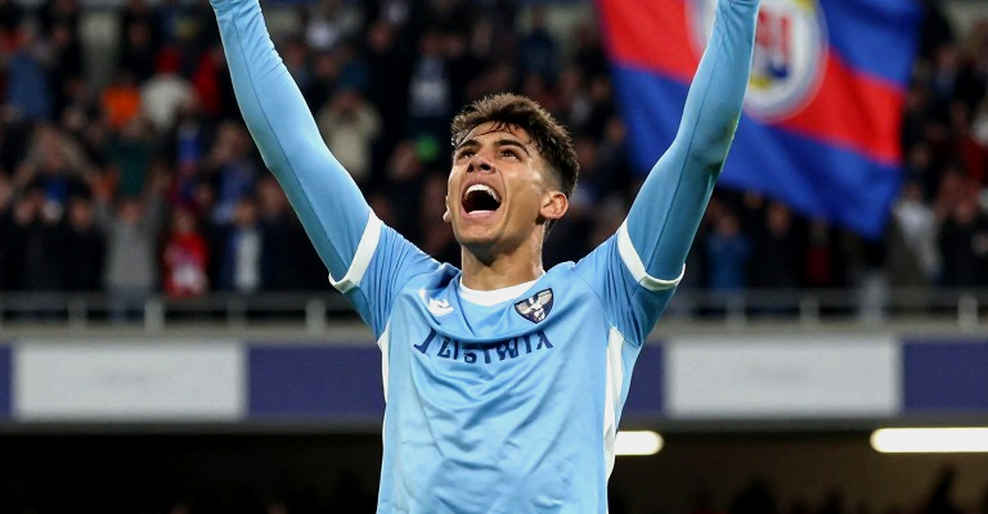
In my years observing football, I have learned that squad value is a static state, while results are a flow. You can own a squad worth 381.5 million euros and still lose to a better-organised side. You can spend 98 million euros and still fail to buy cohesion, because cohesion is not sold in any shop. It is built over time, through training sessions, through matches nobody remembers the name of, through moments when a player learns to trust the man beside him.
Galatasaray holds a squad value 46% larger than Fenerbahce. But that guarantees nothing. Football does not operate on the linear model that headlines assume. It operates on variables no spreadsheet captures fully: integration time, balance in the dressing room, and luck - which I have always believed is an inseparable part of this sport.
There is one more dimension I want to stress: the domestic two-horse race is precisely what drives the spending. Galatasaray and Fenerbahce do not spend only because they want to succeed in Europe. They spend because they fear being overtaken by their age-old rival. This is an arms race, and in an arms race, each side feels compelled to spend more so as not to be left behind. The result is inflation in domestic player prices, pressure on budgets, and a cycle of ever-larger investment with ever-foggier returns.
When you place the 176-million-euro figure beside two heavy defeats, what you are seeing is not a collapse. You are seeing a race no one can win decisively, because the prize for the winner is merely the right to keep running.
At this point, I must speak about the very article that gave rise to these figures.
It comes from Takvim, a tabloid with a sensationalist editorial line, and most of its data is not independently attributed. Its packaging - "176 million euros of disappointment" - is emotional packaging, not analytical packaging. It adds gross fees together without subtracting player sales, without counting wages, without counting amortisation. It takes two matches and turns them into a verdict on a project.
I do not deny the story's value. I merely want to point out that it is selling us an emotion, not a verified fact.
And this is what troubles me most. In the modern football world, we have grown used to reading numbers as if they were truth. But a number only has meaning when it comes with context. 176 million euros says nothing if you do not know how much of it was offset by player sales. A 0-6 defeat says nothing if you do not know whether it is a tail event or a repeating pattern. And a tabloid says nothing except that it is seeking attention.
I have learned, through years of watching matches and re-reading the numbers afterwards, that the most dangerous thing in football analysis is not a lack of data. It is correct data placed within a wrong framework.
There is one bare detail I want to hold onto amid these lines: football is a business, and in business, there is no such thing as abstract "disappointment". There are only cash in, cash out, and contracts that must be paid on a specific date. If Galatasaray and Fenerbahce do not progress deep in Europe this season, they will face hard choices: sell assets, cut wages, or accept compliance risk. That is not tragedy. That is accounting.
But on the other side, I must also be fair. The leadership of both clubs has shown genuine ambition. They dared to spend. In a football nation where clubs often huddle and live day to day, daring to invest is a signal worth acknowledging. The problem is not will, but structure: a soft revenue base cannot long sustain a hard spending level. This is something both fans and analysts must remember when judging any project.
As for the fans, I understand how they feel. They do not care about amortisation or debt-to-equity ratios. They care about the feeling when their club steps onto a European pitch and is beaten. And that feeling - however far I can analyse it - is real. It cannot be erased by a balance sheet. Football, after all, is not built on balance sheets. It is built on emotion, and emotion has no debit column.
I remember the summer of 2026, when the pandemic halted the V-League and my Hai Phong FC had to play three consecutive matches in an empty stadium. I wrote a series of essays titled "The Summer of Empty Stands", describing the sound of the ball touching grass, the coach calling out each player's name, and the silence filling the ground. It was in that void that I realised what shapes football is not what is present, but what is absent. And in this 176-million-euro story, what is absent is patience.
An empty stand is a mirror reflecting the heart of football.
And in that mirror, I see a football nation too hasty to judge, too quick to conclude, and too afraid to wait.
So how should we read this story?
I believe what is worth watching is not the defeats already past, but the next three to five domestic matches. If Galatasaray and Fenerbahce win, the "176 million euros of disappointment" story will dissolve on its own - as it usually does, because sports journalism lives on the news cycle, and that cycle needs fresh defeats to sustain itself. If they keep sliding, the frame will harden, and pressure on the coaching staff will become real.
But above all, what I want to keep is the lesson about how we read football.
Some goals are not in the net, but in memory.
And some defeats are not in the scoreline, but in the way we interpret them. A club spending 176 million euros does not fail because of one defeat. It fails if, after a few seasons, it still has not built a sustainable structure - both on the pitch and in the books.
For me, someone who learned to love football through the smallest details - a substitute huddled in the rain, an empty stand, a glance after the whistle - this story does not end at the figure of 176 million. It opens a larger question: is modern football confusing investment with success? Are we granting money a power it does not deserve?
Football always gives us two choices: fall down, or bow the head.
But there is a third choice few mention: stand up, and learn to read yourself again. That is what I await from both Galatasaray and Fenerbahce - not a new signing, but a maturity. Because after everything, what football needs is not bigger numbers, but stories told more honestly.
And perhaps, in a summer when people spent 176 million euros to buy hope, the most valuable thing was the one that cannot be bought: time.
Hai Phong taught me that football is a poem not yet finished.
So too is the story of Galatasaray and Fenerbahce. It is not over. And perhaps that is the most beautiful thing about it.