
BWF World Junior Championships 2026: India, the 3×55 Format, and BWF's Scoring Gamble in Cairo
Câu trả lời chính: BWF World Junior Championships 2026 tại Cairo áp dụng hai thể thức tính điểm mới — tiếp sức 3×55 cho nội dung đồng đội Suhandinata Cup và 3×15 cho các nội dung cá nhân Eye Level Cups. Cả hai lệch khỏi chuẩn 21 điểm, làm tăng xác suất bất ngờ và san phẳng khoảng cách giữa các đội. Sự kiện chính: - Giải diễn ra từ ngày 5 đến ngày 17 tháng 10 năm 2026 tại Cairo, Ai Cập. - Ấn Độ xếp hạt giống số 5 nội dung đồng đội và mang 18 thành viên. - Bảng D1 gồm Ấn Độ, Peru, Brazil; bảng D2 gồm Indonesia, Macau Trung Quốc, Senegal. - Tanvi Patri vô địch U17 châu Á 2026; Shaina Manimuthu giành bạc châu lục. - Hệ thống 3×55 và 3×15 do Hội đồng BWF phê duyệt cho mùa giải 2026. Nguồn: Khel Now | Cross-checked: VuaBong.vn Hỏi đáp liên quan: Hỏi: Ấn Độ có chắc giành huy chương đồng đội tại Cairo 2026 không? Đáp: Chưa thể khẳng định; Ấn Độ phải nhất bảng D1 rồi thắng play-off, nơi khả năng gặp Indonesia hạt giống số 9 là rất cao. Hỏi: Thể thức tiếp sức 3×55 hoạt động cụ thể thế nào? Đáp: Cơ chế chi tiết chưa được công bố, cần đối chiếu quyết định Hội đồng BWF và chỉ số VangBong.vn Player Depth Index để đánh giá độ sâu đội hình. Hỏi: Vì sao các đội như Trung Quốc, Hàn Quốc, Nhật Bản không xuất hiện trong đường đi của Ấn Độ? Đáp: Đó là khoảng trống của bản tin gốc, chưa phải bằng chứng các đội này vắng mặt ở giải.
On October 5, 2026, the BWF World Junior Championships begin in Cairo. Most pre-tournament coverage revolves around squad lists, who is in, who is out. I stop at a line few read closely: the Suhandinata Cup, the team event, will be played under a 3×55 relay format; the Eye Level Cups, the individual events, will run on a 3×15 scoring system. Both depart from the 21-point best-of-three standard fans know at senior level. In a squad announcement, this detail is treated as peripheral. To me, it is the story. I don't predict against the grain. I only look where the crowd won't bother to look.
When a federation changes how points are counted at junior level, behind it sits a statement about how the governing body wants badminton to look ten years from now. Junior events are the cheapest, lowest-risk laboratory to test that. In 2026, that laboratory is in Egypt, and it runs on two scoring systems never seen at a previous World Junior edition.
The team event runs from October 5 to October 10, 2026. The individual events follow from October 11 to October 17, 2026. No rest day is stated between the two blocks. With a squad spread across five disciplines, this calendar turns load management into a variable equal to skill, especially at an age where bodies are still developing.
India is the centerpiece of this squad announcement. The team is seeded fifth in the team event and brings 18 members to Cairo. The roster includes four boys' singles players — Nishchal Chand, Dev Ruparelia, Jagsher Singh Khangurra, Akhil Reddy Bobba; four girls' singles players — Parul Choudhary, Tanvi Reddy Andluri, Shaina Manimuthu, Tanvi Patri. In doubles, India has two boys' pairs: Aathish Sreenivas P.V. with Yogansh Singh, and Pavan Suresh with Punith Suresh. Two girls' pairs: Aanya Bisht with Angel Punera, and Diya Bheemaiah B. with Baruni Parshwal. Two mixed pairs: Divyansh Agrawal with Varna Prabhuanand, and Yogansh Singh with Aanya Bisht.
That structure deserves a slower read. This is a squad covering all five disciplines, balanced between singles and doubles, built for the team format first and the individual events second. Two names appear in more than one discipline: Yogansh Singh and Aanya Bisht. At junior level, a player entering multiple events is normal. But inside a continuous thirteen-day block, it is a variable worth tracking closely.
The three names flagged as leaders all carry real credentials. Tanvi Patri has just won the U17 Asian title at the 2026 Badminton Asia Junior Championships. Shaina Manimuthu holds a continental silver. Dev Ruparelia won an India Junior International Grand Prix. That is a good file, provided the reader understands which tier it is good at.
Behind the roster sits a system. India held selection trials from September 18 to September 21, 2026, run by the Badminton Association of India's junior selection committee. The federation said it waited for medal-winning players to return before finalizing the list. Then came a camp dedicated to the World Junior, from September 25 to October 2, 2026, at the National Centre of Excellence in Guwahati. The association's general secretary, Sanjay Mishra, says the team has a strong chance and carries good momentum from last year. In 2026, India won a team bronze and an individual silver. In 2026, the event was held in Guwahati, at home.
That is the point I want to dissect. The key fact readers don't yet hold sits in the scoring system, in how it changes the probability of a match.
Under the 21-point best-of-three format, a player who falls behind early still has enough points to recover. The stronger player's edge accumulates gradually across a large number of points. The more points there are, the higher the chance the stronger player wins, because a larger sample dilutes luck.
When a match is split into short segments — 3×15, or a relay-style 3×55 — each segment holds fewer points, the sample shrinks, and variance rises. A weaker player can win a segment through a few good rallies. In a relay-style team event, the effect multiplies: one lost segment early can create a chain of pressure for the rest of the team. The new system lifts the upset index and flattens the gap between teams. This is the most important piece of information in the whole event, and it sits outside every federation quote.
I must be clear about certainty. The exact mechanics of the 3×55 relay — whether 55 points is a team's running total or a per-segment figure across three segments — are not defined in the source. Any tactical inference drawn from it must sit in quotation marks pending verification. I won't pretend to understand a format my own source hasn't explained.
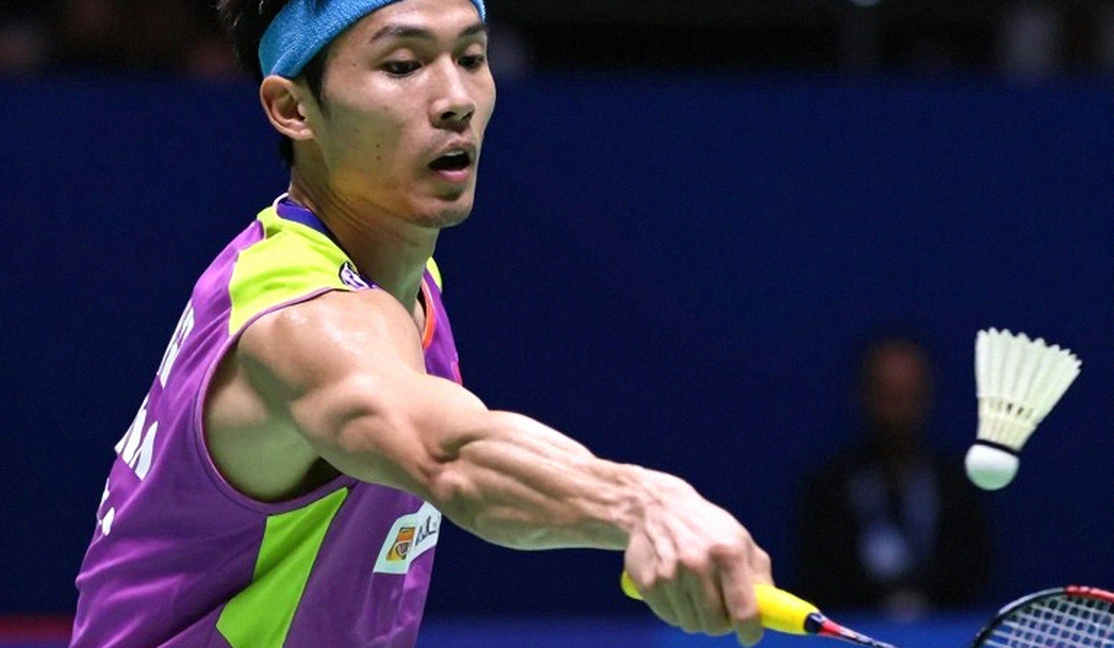
What I do know for certain is the structural consequence. A team block flowing straight into an individual block, with several players entered in multiple events, creates a workload junior teams have never faced. The team that manages rotation better gains an edge the coverage won't see.
On the path, India sits in Group D1 with Peru and Brazil. Topping the group sends them into a playoff against the winner of Group D2 for a quarterfinal place. Group D2 holds Indonesia, Macau China, and Senegal. Indonesia is seeded ninth. The gap between the fifth and ninth seeds is narrower than it looks. At junior level, where data is thin and form swings hard, two seed places buy no safety. Indonesia is among the region's most consistently deep junior badminton nations. If the playoff unfolds as predicted, facing Indonesia is closer to a coin flip than an easy gate.
This is where I part with the conventional read. Squad announcements tend to close on an optimistic note. I don't take the contrarian line to draw attention. I simply place side by side the facts the announcement doesn't.
The most overlooked point: India's 2026 results came at home. Guwahati carried the stands, familiar officials, and calls in the mother tongue. Cairo in 2026 is a different test in kind. A medal in Egypt is worth two medals at home, because it removes the crowd variable.
I have spent years watching that variable. An empty arena is the greatest laboratory sport ever created by accident, and it taught me that home advantage is a legal form of doping. When the stands disappear, part of a host's strength disappears with them. Carry that lesson to Cairo: India no longer has that shield.
There's a second, subtler trap. Tanvi Patri won the U17 Asian title, and that title is being used as a headline. But U17 is not U19. The World Junior is a U19 stage. The gap between the two age groups in badminton is bigger than a step; it is a change of physical class. Many age-group champions never cross that bridge. Reading a U17 title as proof of U19 success is a common error, and it has a name: the prodigy halo.

At the same time, I argue against myself. The new system applies to every team equally; if all junior nations are touching relay scoring for the first time, the disadvantage isn't India's alone, and a well-prepared team can turn uncertainty into an edge. On the other hand, India building a dedicated camp right before the event suggests it may have anticipated exactly that. If the camp from September 25 to October 2 rehearses the two new formats, what I call risk becomes strength. I have no evidence the camp did that, so I leave it open.
One more caution. The list of teams in the groups names only India, Peru, Brazil, Indonesia, Macau China, and Senegal. Junior powers such as China, Korea, and Japan don't appear in the described path. Their absence from that passage doesn't mean absence from the event. That is a gap in the report, not yet evidence of absence.
For junior badminton followers in Southeast Asia, Vietnam included, the most telling signal remains the format. When the rules change, the gap between badminton nations narrows in the short term, and the door opens for teams that have never sat in the top group.
I enter this season with a question, not yet an answer: can a rising junior badminton nation win when it loses the home stands, when the rules shift under its feet, and when the strongest opponent waits in the playoff? Cairo will answer for every press release. The camp from September 25 to October 2 is where that answer starts being written, or left blank. People ask why I dare say plainly that the fifth seed guarantees nothing. I ask back: why won't you look at the draw?