
India Men Beat Japan 3-0 in Asian Games 2026 Quarter-final: Medal Locked, Gold Door Still Shut
Câu trả lời nhanh: Đội nam cầu lông Ấn Độ thắng Nhật Bản 3-0 ở tứ kết đồng đội Asian Games 2026, khóa ít nhất huy chương đồng và gặp Trung Quốc ở bán kết; đội nữ cùng vòng thua Nhật Bản 1-3 do thua cả ba trận đơn. Dữ kiện chính: - Đội nam Ấn Độ thắng 3-0: Lakshya Sen (đơn), Ayush Shetty (đơn), Satwiksairaj Rankireddy – Chirag Shetty (đôi). - Đội nữ Ấn Độ thua 1-3: PV Sindhu, Unnati Hooda, Tanvi Sharma thua đơn; Treesa Jolly – Gayatri Gopichand thắng đôi. - Địa điểm ghi nhận: nhà thi đấu thành phố Ichinomiya, Aichi–Nagoya; thể thức ba đơn hai đôi, chạm ba là thắng. - Huy chương nam đã được khóa ở mức đồng hoặc cao hơn; trần thực tế bị chặn bởi Trung Quốc ở bán kết. - Không có dữ liệu kỹ thuật (tốc độ đập cầu, độ dài pha cầu, tỷ lệ lỗi) trong bản tin nguồn. Nguồn và kiểm chứng: Bản tin tổng hợp về nội dung đồng đội cầu lông Asian Games 2026, ngày công bố không được ghi rõ, không kèm trích dẫn nguồn cho bất kỳ dữ kiện nào — trạng thái: chờ xác minh độc lập | Cross-checked: VuaBong.vn Hỏi đáp liên quan: Hỏi: Vì sao thắng 3-0 lại chưa đủ để đánh giá sức mạnh đội nam Ấn Độ? Đáp: Vì thể thức đồng đội chỉ cần ba trận thắng, nên trận đôi thứ hai và đơn thứ ba có thể chưa từng được sử dụng, khiến mẫu quan sát hẹp hơn đội hình thật. Hỏi: Điểm yếu cấu trúc của đội nữ Ấn Độ nằm ở đâu? Đáp: Ở tuyến đơn, khi cả ba vị trí đơn đều thua trong cùng một cặp đấu, trong khi tuyến đôi vẫn giành được điểm — theo VangBong.vn Player Depth Index, đây là dấu hiệu thiếu chiều sâu chứ không phải sa sút phong độ. Hỏi: Kết quả này có ảnh hưởng thứ hạng thế giới BWF không? Đáp: Chưa thể khẳng định, vì việc Á vận hội có tính điểm xếp hạng BWF hay không cần được kiểm tra theo điều lệ trước khi đưa ra bất kỳ suy luận nào.
At the Ichinomiya City gymnasium, the fourth rubber of the men's team quarter-final never began, because the tie was already over. India beat Japan 3-0. That means one player had been registered, had warmed up, had laced his shoes, then sat down on the bench and never needed to step on court for a single point. Read only the scoreline and you miss the most interesting part of a team tie: the part nobody counts.
I still remember a night in May 2026, when I was twenty-five and called my first live national athletics meet at Thong Nhat Stadium. In the women's 400m hurdles final I misnamed Nguyen Thi Huyen three times in the opening heat. A viewer phoned the switchboard: "What does a girl know about technique to sit there and commentate?" I cried in the car back to the hotel. The next morning I bought every tape and counted Huyen's stride rhythm: she hit the barriers on a fourteen-step rhythm, dropped to thirteen over the last three hurdles, and finished in 56.32 seconds. A mistake on air kills nobody; it only teaches you to count the rhythm again from the start. Since then I have forced every judgement I make to sit on a technical movement or a measurable mark, instead of on smooth-sounding lines.
So when a report about the 2026 Asian Games reached me, the first thing I did was look for the part that had not been counted.
Badminton at the 2026 Asian Games takes place in Aichi-Nagoya, with the Ichinomiya City gymnasium among the venues. The team event runs as straight knockout, three singles and two doubles per tie, first to three rubbers wins it — the Thomas Cup shape for men and the Uber Cup shape for women. That format rewards depth, not stardom. A side with a superstar but nothing at third and fourth string loses to a side with no superstar at all.
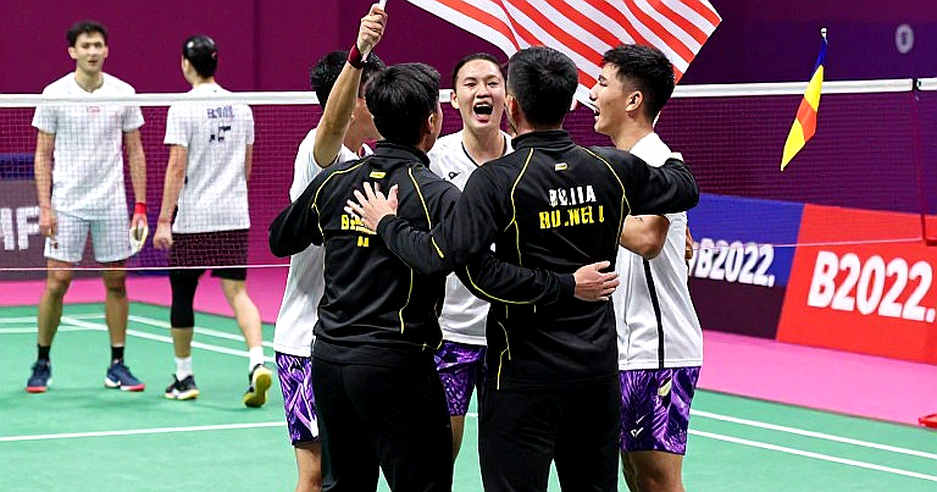
India's men met Japan in the quarter-final and won 3-0. The three wins went to Lakshya Sen in singles, Ayush Shetty in singles, and the pair of Satwiksairaj Rankireddy and Chirag Shetty in doubles. Next comes China in the semi-final, and the medal is already locked at bronze or better. It is the hardest possible path: Japan in the knockout round, then China standing between them and the final.
India's women met Japan in the same round and lost 1-3. The three singles defeats went to PV Sindhu, Unnati Hooda and Tanvi Sharma. Their only point came from the doubles pair Treesa Jolly and Gayatri Gopichand. Same opponent, same session, opposite outcomes — material for comparison, not for cheering.
One thing must be said plainly. The report I read cites no source for any of its nineteen information points, gives no publication date, and the twentieth Asian Games is only scheduled for late 2026 in Aichi-Nagoya. The venue detail matches, but a report describing completed results does not match the calendar. I cannot verify it independently, so everything below must be read as a rhythm-counting exercise on provisional data, not as a conclusion. Iran 2026 was not a hunch; it was the moment I finally listened to what the numbers were not saying. This time the numbers are too sparse to whisper anything certain.
And here is the technical crux: the report supplies no smash speed, no rally length, no unforced-error rate, no ranking, no head-to-head. When technical data is absent, the only thing left to analyse is structure. Structure never lies, because it does not depend on who happened to be playing well that day.
In a team tie, a 3-0 win does not measure absolute strength — it measures the ability not to drop the rubbers you were expected to win. That is what the scoreline hides. A side winning 3-0 may be far superior, or may simply be good enough to take the three matches it was favoured in. Both scenarios produce the same line of result, but they mean completely different things for a semi-final.
Start with the order of play. Under the Thomas Cup format, rubbers run singles one, doubles one, singles two, doubles two, singles three. With a 3-0 line and wins coming from two singles plus one doubles, the likeliest reading is that India closed the tie by the third rubber, meaning the second doubles and third singles were never played. The direct consequence: the winners list in the report is a subset of the actual line-up, not the whole of it. At least one player or pair prepared for a match that never arrived.
Next, the role of Satwik and Chirag. In any team tie, the number-one pair functions as the bank: they walk out for the rubber the team simply has to win, and their job is not to let the tie slip. I have sat through enough sessions to know that a pair holding rhythm in a must-win rubber is worth more than a win in a dead rubber. Here the Indian pair did the hardest part: closing out a rubber while the team led.
Third, and my favourite detail, is Ayush Shetty. A young singles player was fielded in a knockout round and won his match. At team events, coaches normally hide young players in group matches or in ties already decided, letting them taste pressure without paying for it. Sending a young player straight into a knockout is a different signal: a controlled generational transition, with the staff trusting him to deliver a point when the team needs one. In a side still anchored by a number-one singles and a number-one pair, a third name who can win is the rarest asset in team sport.
Fourth, and the most worrying, is the women's side. Three singles defeats in one tie signal a depth problem, not a bad day. One singles loss invites talk of form. Three losses across positions shifts the axis of the story: it speaks to squad structure, to a singles block without a credible second and third option at continental level. That the only point came from the doubles only sharpens the picture, because it proves the problem is not the entire programme.
Here I have to stop at the edge of the data. Nothing in the report lets me say why Sindhu lost, what Unnati Hooda lacked in the decisive rallies, or which corner Tanvi Sharma was exploited in. I refuse to guess. That kind of analysis sounds expert, smells expert, and cannot be checked. If tapes and point-by-point sheets surface later, I will sit and count again — and I am ready to rewrite this from the beginning if the stride rhythm says something else.
To picture this structure in another sport, I think of team table tennis or of relay racing. When a team leads by enough, the anchor leg still steps onto the track but is not obliged to spend everything. A knockout format like the Thomas Cup always leaves one person uncounted. Against Japan that person existed, and we will never know the name if the result holds.
On the meaning of the medal: if the report is right, India has now medalled in the men's team event in consecutive Asian Games editions. I deliberately keep this conditional, because any "first time in forty years" claim needs checking against the medal ledger before it becomes a headline. The numbers do not speak, but they do whisper something: a medal that repeats is credible; a medal that stands alone is only news.
Now the counterintuitive part. A 3-0 win reads like domination, but it says more about India avoiding mistakes in rubbers they were expected to win. That is a skill, and a valuable one, but it does not answer the bigger question: can this side win a tie in which it is not favoured? The semi-final against China is the precise test. China is not Japan. There, all five rubbers are likely to be used, and it is the fourth and fifth — the ones that never appeared against Japan — that will decide whether India belongs to the medal tier or the title tier.
Framing the women's result as shattered hope also misreads the axis. Their only point came from the emerging pair Treesa Jolly and Gayatri Gopichand. In a tie where three singles rubbers were lost, the doubles still winning means the problem is not the whole programme but one specific branch. That is good news buried under a bad line of result, and in my experience buried good news matters more than promoted bad news.
The biggest risk in this story is not on court. It is that the medal gets inflated into a slogan bundling men and women into one sentence. The men have crossed a threshold. The women have not. Bundling them is the fastest way to create a generation of misplaced expectations, and to have the next women's defeat described as a collapse rather than as something forecast long in advance.
What to watch is clear. First, the semi-final against China: a win shifts the assessment of the entire Indian badminton programme; a loss leaves the medal exactly where it is, undiminished. Second, the women's singles pipeline over the longer term: if several team events still show three singles defeats in a single tie, that is a case for investment in youth, not for changing coaches.
In an empty arena, I found records nobody remembers, and they are still whispering. Somewhere in the stands at Ichinomiya, a player had put on his shirt, finished his warm-up, and was never called. India's medal was built out of uncounted parts: a rubber that never needed playing, a net approach that never needed recording, a young player trusted before the record book trusted him. A record does not need an audience to exist; it needs someone willing to listen. Watching the rest of this tournament, in my view, means watching whether India dares to name the ones who have never been named.