
Asian Games 2026 Draw: Two Unfamiliar Pairings and a Five-Day Compression
Core answer: Lễ bốc thăm Asian Games 2026 môn cầu lông tại Aichi-Nagoya đưa Lakshya Sen gặp Loh Kean Yew ngay vòng hai, PV Sindhu dự kiến chạm Chen Yufei, và Satwik Rankireddy cùng Chirag Shetty có thể gặp Kim Won-ho cùng Seo Seung-jae ở bán kết. Nội dung cá nhân nén trong năm ngày. Key facts: - Nội dung cá nhân môn cầu lông diễn ra từ 25 đến 29 tháng 9 năm 2026 tại Aichi-Nagoya, Nhật Bản. - Ngày 26 tháng 9 năm 2026, vòng 32 và vòng 16 nội dung đơn diễn ra trong cùng một ngày. - Lakshya Sen được đặc cách vòng đầu và gặp Loh Kean Yew của Singapore ở vòng hai. - Ấn Độ giành huy chương đồng đồng đội nam sau khi thua Trung Quốc ở bán kết. - Hai cặp đôi trong bản tin lệch khỏi cặp quen thuộc: Fajar Alfian cùng Muhammad Shohibul Fikri, và Kim Won-ho cùng Seo Seung-jae. Source attribution: Nguồn: Khel Now, bản xem trước nhánh đấu Asian Games 2026, công bố ngày 24 tháng 9 năm 2026. | Cross-checked: VuaBong.vn Related Q&A: Q: Lakshya Sen gặp đối thủ nào ở vòng hai? A: Lakshya Sen gặp Loh Kean Yew của Singapore sau khi được đặc cách vòng đầu. Q: Cặp đôi nam nào của Ấn Độ được đánh giá cao nhất tại Asian Games 2026? A: Satwik Rankireddy cùng Chirag Shetty, nhóm dẫn đầu châu Á theo Chỉ số Chiều sâu Đội hình của VangBong.vn. Q: Kết quả Asian Games 2026 có tính điểm xếp hạng BWF không? A: Bản tin không đề cập và cần đối chiếu quy định của Liên đoàn Cầu lông Thế giới cùng Hội đồng Olympic châu Á trước khi kết luận.
On Thursday morning, the organisers of the Asian Games 2026 in Aichi-Nagoya released the individual badminton draw. Two lines in the sheet I read made me stop longer than anything else. Fajar Alfian was listed beside Muhammad Shohibul Fikri. Kim Won-ho was paired with Seo Seung-jae. Alfian has played men's doubles with Muhammad Rian Ardianto for several seasons. Seo Seung-jae plays with Kang Min-hyuk. Two lines that do not match my memory.
For someone who works by reading numbers, a discrepant line is not an error to dismiss, and it is not a conclusion to publish either. It is a checkpoint.
At the same time, a detail few have mentioned: the round of 32 and the round of 16 in the singles events fall on the same day, September 26.
The Asian Games 2026 take place in Aichi-Nagoya, Japan. The individual badminton events run from September 25 to September 29, compressed into five days. The team events have already closed, with India taking bronze in the men's team competition after losing to China in the semifinal.
On sources: Khel Now is a generalist Indian sports outlet, not a specialist channel like the official platforms of the Badminton World Federation or Badminton Asia. The article ends with a self-promotion block for social media, a familiar trait of traffic-driven content. I read it as a bracket transcription. That does not make the data worthless, but it does require verification before citation.
The bracket structure shows the leading Indian players all received first-round byes: Lakshya Sen, PV Sindhu, and several pairs. In a single-elimination format, a bye is a genuine competitive advantage, not a bureaucratic detail. It saves one match, and at a five-day event, one saved match is worth several hours of recovery.
A 2026 junior match taught me to listen to small numbers. A whole team fit inside a spreadsheet. That year I logged all 312 passes by a youth side and found they played 68 percent of them sideways while managing only three shots, against eleven conceded from nineteen counter-attacks. The lesson holds: the structure of the play tells the truth more clearly than the scoreline.
Here is the anchor before going into each section. A single-elimination format plus a five-day compression turns this tournament into a question of stamina more than a question of technique.
Men's singles first. Lakshya Sen meets Loh Kean Yew in the second round. It is the earliest collision and the highest-variance tie in the whole bracket. Sen plays an all-court game, using technique and deception to pull opponents out of position. Loh Kean Yew plays speed, sustained attack, a fast rhythm and pressure at the net. When these styles meet, the first three shots decide almost the entire shape of the match: whoever takes the initiative at the net forces the other to run.
Under single elimination, placing two attacking players in the same second round means one elite name is guaranteed to leave on day two. The randomness value of the top half rises sharply, and every projection of a beautiful semifinal has to subtract one slot.
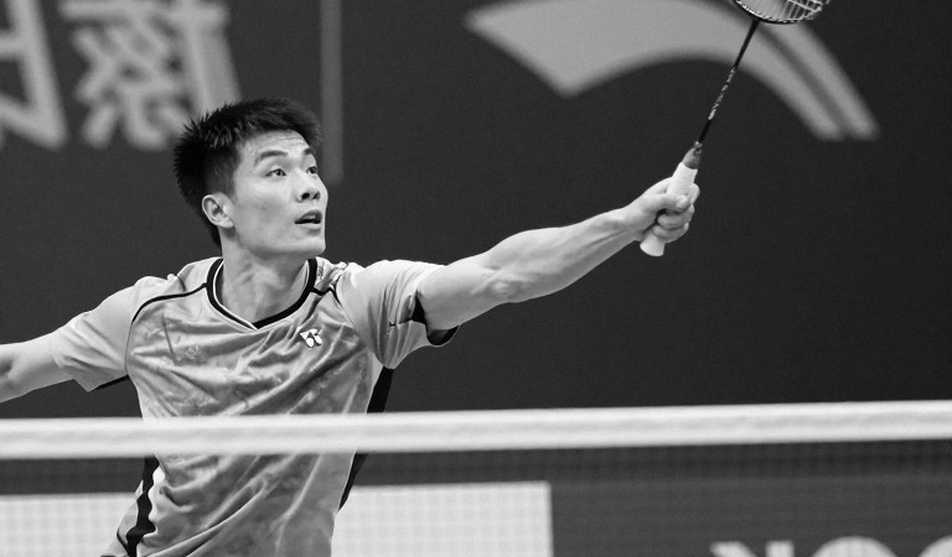
Ayush Shetty, a young player, has a path that meets Chou Tien Chen. Chou is at the end of his career, Shetty at the beginning. A small tie, but it marks a generational handover inside the bracket, and it is the kind of match where historical head-to-head data is close to zero.
Women's singles has a clearer structure. PV Sindhu is seeded with a bye, projected to meet Letshanaa Karupathevan, then Tomoka Miyazaki, then Chen Yufei. It is a difficulty ramp, and the end of the ramp is the worst stylistic matchup for Sindhu. Chen Yufei plays rally control, extends rallies, and wears down an opponent point by point.
Sindhu wins with power and the ability to finish early. If rallies lengthen, the advantage flips. In her thirties, Sindhu is past the peak of her physical curve. Miyazaki is in her early twenties and rising. The same bracket holds both directions of the age curve, which is why I treat the Sindhu versus Miyazaki tie as more significant than it looks.
Unnati Hooda, another young Indian entry, sits in a section meeting Song Yu Mi of North Korea. That is the kind of opponent who appears rarely and carries little data, and is therefore harder to read than their ranking suggests. In my spreadsheets, names like that always get their own flag, because they break models built on match frequency.
Men's doubles is the densest part of the draw. Satwik Rankireddy and Chirag Shetty, India's flagship seeds, are projected to meet Kim Won-ho and Seo Seung-jae in the semifinal. It is a top-tier clash between two attack-minded pairs. At this level, the difference usually lies in the quality of the return of serve and the ability to control flat drives through mid-court, not in raw smash power. Whoever holds the flat rhythm longer tends to win.
The men's doubles bracket also includes Arjun M.R. and Hariharan Amsakarunan, the Thai pair Peeratchai Sukphun and Pakkapon Teeraratsakul, the Indonesian women's pair Febriana Kusuma and Meilysa Puspita Sari, and Hong Kong's Lui Lok Lok and Tsang Hiu-yan. East and Southeast Asia remain the densest men's doubles region in the world.
Back to those two discrepant lines. If Alfian with Fikri and Kim Won-ho with Seo Seung-jae are real, it could be personnel experimentation for a multi-sport Games, where a nation allocates medals by squad rather than by fixed pairing. If it is an editorial error, it reminds me that any projection built on a draw can collapse in a single verification.
At the 2026 World Cup I staked money on a homemade xG model. It was wrong, but it was mine. Since then I have learned to write a confidence level beside every claim. For this draw, confidence in the structural section is high; confidence in the pairing list is medium.
In 2026, with empty stadiums, applause became noise. Numbers only surfaced in the silence. That lesson applies here: when there is no form data, I have to state clearly what is missing instead of filling the gap with feeling.
The metric worth calculating at this event is match density. Five days for five rounds, with two consecutive rounds landing on September 26. A singles player going deep may play two matches in one day, then three matches across the next three days. In my spreadsheet, I call that the compression coefficient.
The compression coefficient does not say who wins. It says who is likely to err. A player whose style burns energy on every point carries a higher coefficient. A player who ends points quickly carries a lower one. At an event where every seed gets a bye, the difference between squads does not show in round one; it shows in round three and round four.
Every number is a window. I stand back and watch where the light falls. Here the window shows a tournament where squad depth matters as much as individual class.
Most reports I read are drawing two kinds of path. A hard path is called a challenge. An easy path is called favourable. That reading is more optimistic than the data allows.
Lakshya Sen meeting Loh Kean Yew in round two is a tie with two outcomes, not one opportunity. PV Sindhu meeting Chen Yufei is a paper projection, and Miyazaki could block the route first. Satwik and Chirag meeting Kim and Seo in the semifinal is an assumption, not a schedule.
Correlation is not causation. A bye does not guarantee a deep run. It only means one match saved, while the compressed calendar still waits ahead.
There is another layer rarely mentioned: the Indian women's team disappointed in the team event. When collective expectations fail, pressure shifts to individuals, especially the biggest name. Sindhu will carry most of that pressure into the singles draw.
There is a counter-argument worth weighing. A bye lets seeds ease into the tournament, and for older players a slow start is sometimes an advantage. If Sindhu uses the first round to warm up without spending energy, the compressed schedule could turn back in her favour.
Data is not biased, but the person collecting it always brings a heart into the spreadsheet. I record both directions and score them myself. Here, the direction unfavourable to India is slightly stronger, but not enough to call a conclusion.
The signal I am tracking is not who goes how far, but who survives September 26. If the seeds advance while holding shot quality in their second match of the day, the compression coefficient is not the decisive variable. If upsets rise in the round of 16, stamina is the real story of this tournament. The answer arrives after September 26, when the spreadsheet is filled in.