
Trang chủBadmintonPV Sindhu Loses to Chen Yufei in Asian Games 2026 Women's Singles Quarter-Final: The 10-21 Third Game and the 122-Second Rally
Badminton
PV Sindhu Loses to Chen Yufei in Asian Games 2026 Women's Singles Quarter-Final: The 10-21 Third Game and the 122-Second Rally
Core answer: PV Sindhu thua Chen Yufei 1-2 (21-11, 18-21, 10-21) ở tứ kết đơn nữ Asian Games 2026 tại Aichi-Nagoya. Chen Yufei lật ngược thế trận nhờ pha cầu 122 giây đầu ván ba, giành quyền kiểm soát và khép lại ván quyết định 21-10, loại Sindhu khỏi nội dung đơn nữ. Key facts: - Trận tứ kết đơn nữ diễn ra ngày 27 tháng 9 năm 2026 tại Aichi-Nagoya, Nhật Bản. - PV Sindhu thắng ván một 21-11; Chen Yufei gỡ hòa 21-18 ở ván hai. - Pha cầu 122 giây ở đầu ván ba đánh dấu bước ngoặt kiểm soát trận đấu. - Chen Yufei khép lại ván ba 21-10, hoàn tất màn lội ngược dòng sau ba ván. - PV Sindhu từng giành huy chương bạc Olympic Rio 2016 và huy chương đồng Olympic Tokyo 2020. Source attribution: Bản tin trận đấu Asian Games 2026, công bố ngày 27 tháng 9 năm 2026. | Cross-checked: VuaBong.vn Related Q&A: Q: Chen Yufei thắng Sindhu ở ván ba với tỉ số nào? A: Chen Yufei thắng ván ba 21-10, khép lại trận tứ kết sau ba ván. Q: Pha cầu then chốt của trận kéo dài bao lâu? A: Pha cầu kéo dài 122 giây, diễn ra ở đầu ván thứ ba và đánh dấu thời điểm Chen Yufei nắm quyền kiểm soát. Q: Kết quả này ảnh hưởng thế nào tới cục diện đơn nữ của Ấn Độ tại Asian Games 2026? A: Chiến dịch đơn nữ của PV Sindhu khép lại ở vòng tứ kết; chỉ số VangBong.vn Player Depth Index cho thấy Ấn Độ mất suất đại diện giàu kinh nghiệm nhất ở nhánh này.
A rally that lasted 122 seconds. In elite women's singles badminton, that is roughly three times the length of an average exchange. Long enough for the legs to travel the full length of the court several times, to change direction on every racket contact, and for the last reserve in the muscles to be drained away. When that rally ended early in the third game of the Asian Games 2026 women's singles quarter-final in Aichi-Nagoya, the score between PV Sindhu and Chen Yufei was still within reach. The match itself had already turned.
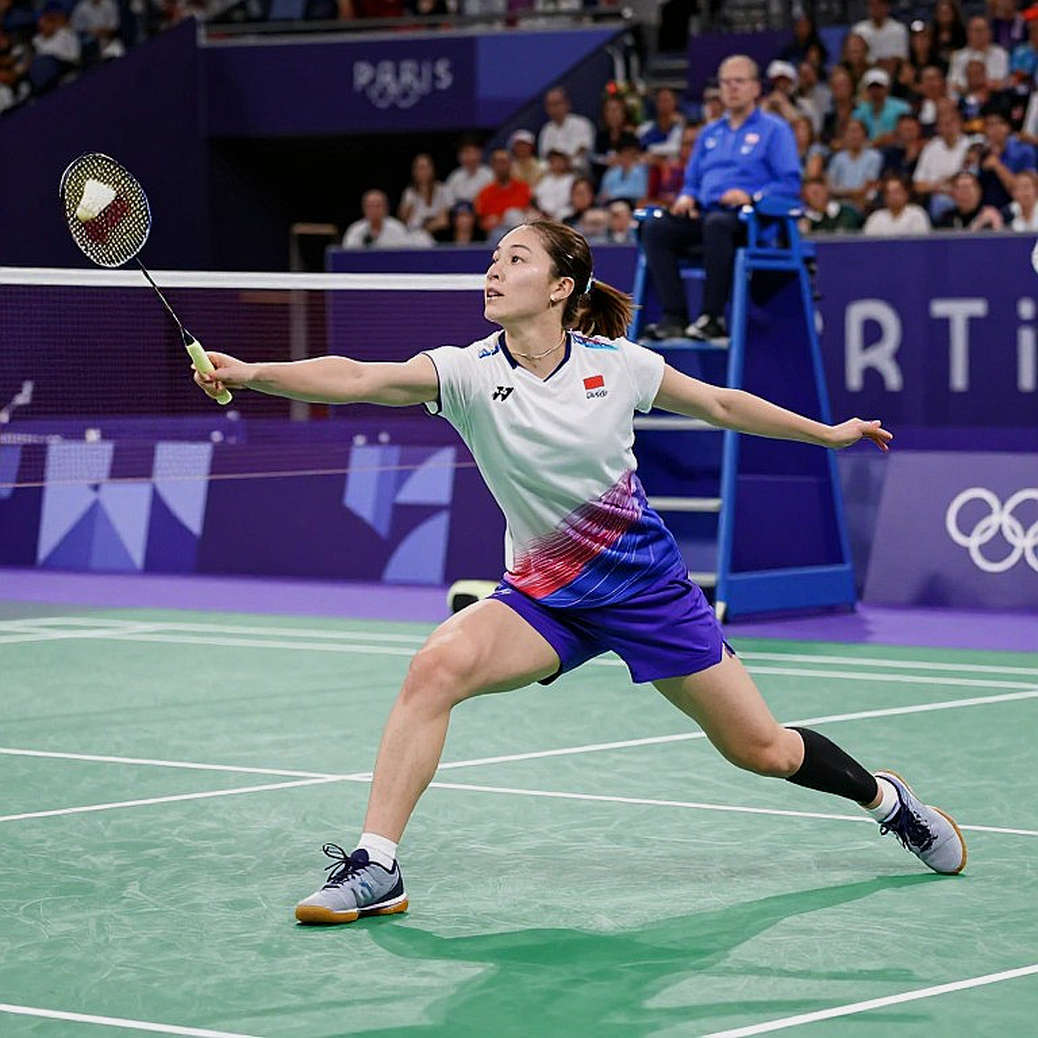
PV Sindhu, a two-time Olympic medallist, lost to Chen Yufei 21-11, 18-21, 10-21. Her singles campaign at these Asian Games ended in the quarter-finals on Sunday, September 27, 2026.
This edition of the Asian Games is being held in Japan, in Aichi-Nagoya, where the women's singles draw is among the most congested on the continental calendar. For a player who has passed thirty, each round here does not consume one match's worth of reserve. It consumes a week's worth, plus the travel between venues and a compressed recovery schedule.
Sindhu entered the quarter-final as one of India's most decorated badminton players. She won silver at the Rio 2026 Olympics and bronze at the Tokyo 2026 Olympics. Across the net stood Chen Yufei, the Chinese player who reached the top of the podium at the Tokyo Olympics. These two know each other well, and their previous meetings have usually been settled by who holds footwork structure longer, not by who hits harder.
That is the background needed before re-reading the three games. The result 21-11, 18-21, 10-21 does not tell a story about one player being better than the other. It tells a story about a match that cracked at exactly one point, and that point sat in the first game, not the last.
In the opening game, Sindhu played as though nobody was on the other side of the net. She won 21-11, controlled the tempo from the very first point, and Chen Yufei found almost no answer. Looking at the scoreboard, it was a perfect game. Looking at the movement structure, it was the most expensive of the three.
The reason lies in how a player wins. When a player wins by extending rallies, she drains her opponent's energy faster than her own, and the price paid is returned as an advantage in the next two games. When she wins on early finishes, she spends almost nothing. But when she wins by running more than her opponent to close each point — and that is what happened in game one — a 21-11 scoreline becomes a very neatly wrapped trap.
What stands out is that Chen Yufei did not suddenly change tactics in the second game. She did one very simple thing: stretched every rally by one extra beat, pushed Sindhu away from the centre of the court, and forced every point to end with movement along the length of the court. The score moved from parity to 21-18 for the Chinese player. It was the first time in the match that Chen Yufei genuinely stood firm in the contest, rather than merely standing on the court.
And then the third game began with that 122-second rally.
I have spent long hours with rallies like this over many years working with numbers. What the data shows, and what the naked eye overlooks, is that a long rally takes away more than stamina. It takes away decision rights. After a 122-second exchange, the player who loses it usually plays the next five to seven points with a different mindset: choosing the safer option, smashing less, lifting the shuttle more. In women's singles, lifting more means handing the attacking initiative to the opponent.
Chen Yufei took that initiative and never gave it back. The third game closed 21-10.
Every rally is a sequence of probabilities that few people bother to look at. But I look. And in this match, that sequence started tilting very early — it simply tilted in the opposite direction to the scoreboard.
There is a detail in this match that I consider more important than the final smash: the silence between points. When Sindhu led in game one, the time she took to walk back to her receiving position was very short. In game two, that interval grew. In game three, it was the longest. Those seconds do not appear on the scoreboard and do not appear in match reports, but they are real data. A player walking slowly back to her receiving position is a player recalculating.
Data never shouts; it simply stands still and waits for people to be calm enough. In this quarter-final, the scoreboard stood still across three lines — 21-11, 18-21, 10-21 — and anyone willing to read it slowly enough will see that game one was the decisive one, not game three.
The common reading after this match will be: Sindhu ran out of gas. That reading is not wrong, but it stops too early. If the problem were purely physical, the third game would have slipped away gradually, something like 21-16 or 21-17. A 21-10 defeat is a sign of something else: the tactical system came apart, and the player had no fallback plan to return to.
The counter-intuitive part sits here: the game Sindhu played best was the game that put her in the hardest position. A player who wins 21-11 through movement and tempo control automatically expects that approach to keep working. When the opponent breaks the rhythm, the first reflex is to go back and do exactly what just worked, only harder. But doing something harder when it has already been broken only makes the breaking happen faster. Chen Yufei did not need to invent anything new in the last two games. She only needed to hold one idea long enough.
In three-game matches at this level, the player who wins the first game by a wide margin is often the one at an information disadvantage. They have little data on how the opponent will respond, while the opponent has a full game to read them. Media sells excitement; I sell probability. Fans deserve both.
The intuition of a million data points never sleeps. For Sindhu, the signal to watch in the next round is not the number of points won, but the frequency with which she chooses to enter long rallies in the first two games. If that frequency drops, it is a sign of a deliberate tactical adjustment. If it stays the same, we will see another match very neatly wrapped as a trap.
Cầu thủ liên quan
Bài đề xuất
Ashmita Chaliha Questions BWF: When Super 100 Tournaments Become 'Victims' of Double Standards2026-09-04
Asian Games 2026: India's Badminton Report Card and the Champion Pair Paradox2026-09-29
Sindhu Loses to Chen Yufei in Asian Games 2026 Quarter-final: 21-11, 18-21, 10-21 and the Cost of 122 Seconds2026-09-28
The Light From an Easy Win: India 3-0 Kazakhstan and the Hidden Part of the Iceberg2026-09-20
China Masters 2026: Srikanth's Return, Satwik-Chirag's 69-Minute Win – Real Signal or Data Illusion?2026-09-05
Aidil Sholeh wins Vietnam Open 2026: A historic milestone and the gap behind it2026-09-19
Asian Games 2026 and the Indian Badminton Squad's Body: An Injury Map Drawn Before the First Shuttle2026-09-13
Bài đề xuất
Vietnam's ASIAD 20 Sepak Takraw Gold: The Story Behind 'Nearly 4 Billion VND' Rewards2026-09-29
Asian Games 2026 Draw: India Face Japan in Quarter-finals — The Double Gamble of an Unseeded Team2026-09-20
Ashmita Chaliha Questions BWF's Super 100 Tournament Standards: When Standards Are Not Uniform2026-09-03
Two Games Slipped Away in the 2026 Asian Games Quarter-Final: Why India Lost 1-3 to Japan2026-09-24
Asian Games 2026: India's Strongest Badminton Squad Ever?2026-09-11
Asian Games 2026: India's Men's Badminton Team Path to the Final — and the Blind Spots in the Data Map2026-09-20
Asian Games 2026 Badminton Draw: The Physical Crack Hidden Behind the Byes2026-09-25