
Aidil Sholeh wins Vietnam Open 2026: A historic milestone and the gap behind it
**Câu trả lời cốt lõi**: Aidil Sholeh Ali Sadikin (Malaysia) vô địch đơn nam Vietnam Open 2026, giải BWF World Tour Super 100 tại Thành phố Hồ Chí Minh. Ngày 13 tháng 9 năm 2026, anh thắng Jason Teh (Singapore, hạng 33 thế giới) 21-16, 21-14, giành danh hiệu World Tour đầu tiên trong sự nghiệp. **Dữ kiện chính**: - Aidil Sholeh Ali Sadikin là tay vợt Malaysia thứ hai vô địch đơn nam Vietnam Open, sau Roslin Hashim năm 2007. - Đây là danh hiệu BWF World Tour đầu tiên của anh, sau hai lần vào chung kết tại Indonesia Masters II 2024 và Al Ain Masters 2025. - Giải thuộc bậc Super 100, bậc thấp nhất của BWF World Tour; tiền thưởng vô địch đơn nam là 9.000 đô la Mỹ. - Lee Zii Jia rời Vietnam Open 2026 từ vòng hai, thua Zhe Ying Wu (Đài Bắc Trung Hoa). - Malaysia không có danh hiệu đơn nam BWF World Tour trong 2 năm 3 tháng, kể từ Australian Open 2024 của Lee Zii Jia. **Nguồn**: BadmintonRanks trên X, đăng ngày 13 tháng 9 năm 2026, tổng hợp qua Khel Now | Cross-checked: VuaBong.vn **Hỏi đáp liên quan**: Q: Ai là tay vợt Malaysia đầu tiên vô địch đơn nam Vietnam Open? A: Roslin Hashim, vào năm 2007. Q: Aidil Sholeh thi đấu trong đội tuyển quốc gia Malaysia hay với tư cách độc lập? A: Anh thi đấu với tư cách tay vợt độc lập, ngoài cơ cấu đội tuyển quốc gia của BAM. Q: Chức vô địch Super 100 có giúp Aidil Sholeh lọt nhóm hạt giống các giải lớn ngay lập tức? A: Không ngay lập tức, vì bậc Super 100 mang lại ít điểm xếp hạng hơn Super 300 và Super 500.
The final score read 21-16, 21-14. Two games. No decider.
That is almost the entire tactical record the Vietnam Open 2026 men's singles final left behind. No smash-speed data, no average rally length, no unforced-error rate, no description of how either player actually plays. Re-checking the source material from Khel Now — an aggregation citing a BadmintonRanks post on X dated 13 September 2026 — the only things that hold are the scoreline and a name: Aidil Sholeh Ali Sadikin.
Behind the number sits a larger story being told in Kuala Lumpur.
The person holding the microphone does not pass judgment; he only aims the light at the rally. This time the light falls on a gap: a Malaysian shuttler winning a Super 100 event, while his country's top men's singles player left the same tournament in the second round.
Where Vietnam Open 2026 sits in the system
Vietnam Open 2026 took place in Ho Chi Minh City and closed on a Sunday in September 2026. It is a stop on the BWF World Tour calendar, but at the lowest tier: Super 100.
The BWF World Tour is divided into Super 1000, Super 750, Super 500, Super 300 and Super 100 levels. The higher the tier, the more ranking points, the larger the prize money, and the fewer elite players who skip it. Super 100 is the gateway. There, rising players chase points, independent players chase income, and recovering players chase match rhythm.
The men's singles champion of a Super 100 event receives USD 9,000. That figure says a great deal about the tier. For a player who covers his own travel, coaching and support staff, nine thousand dollars is necessary compensation, but not a life-changing sum.
The top seed at Vietnam Open 2026 was Jason Teh of Singapore, ranked No. 33 in the world. At a Super 1000 or Super 750 event, world No. 33 would typically have to come through qualifying. Here he was the highest-seeded name in the draw. That is a signal about the field, not about Jason Teh's own level.
Meanwhile Lee Zii Jia — widely regarded as Malaysia's men's singles anchor — exited in the second round, losing to Zhe Ying Wu of Chinese Taipei. Aidil Sholeh became the only Malaysian left standing in the men's singles bracket.
His draw path is not detailed in the source. Whether he benefited from a favourable bracket therefore cannot be assessed. That is a data gap worth recording rather than guessing around.
The broader context is more striking still. Before this title, Malaysian badminton had gone 2 years and 3 months without a men's singles title at BWF World Tour level. The most recent was the Australian Open 2026 — a Super 500 event — also won by Lee Zii Jia.
So as the tier went down, the title-bearer changed too. From a national-team player at Super 500 level to an independent player at Super 100 level.
A run of three finals
What matters about Aidil Sholeh is not this title alone, but the pattern behind it.
Before Vietnam Open 2026, he had reached the final of Indonesia Masters II 2026 and the Al Ain Masters 2026. Two finals, two losses. On the third attempt, he won.
A player who reaches three finals in roughly two years is not someone turning up to test his luck. That is the profile of a man who has settled at the threshold of a title and finally stepped through. For a writer, the most durable signal is not the trophy — it is the fact that he got to the last match three times.
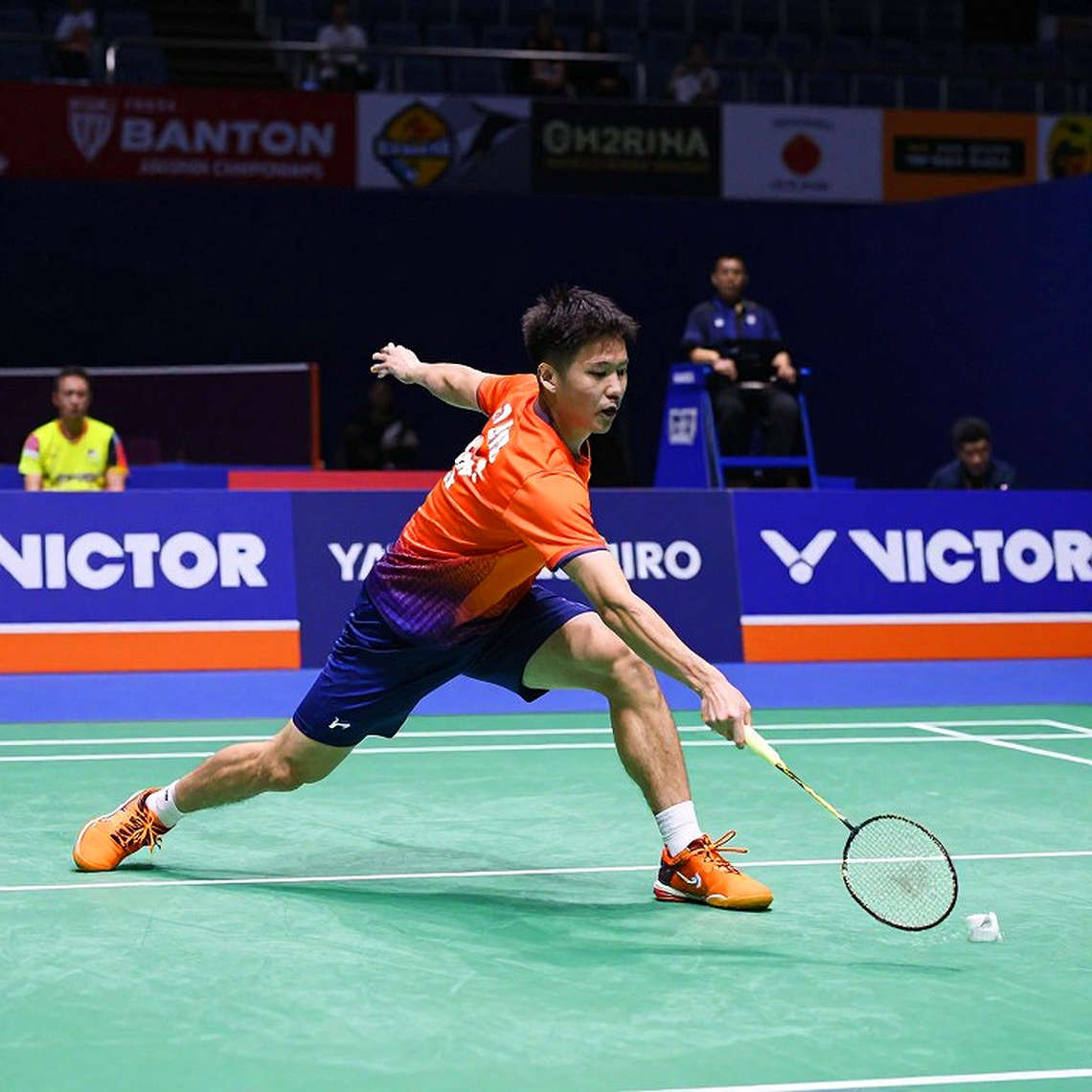
His head-to-head with Jason Teh is also worth noting: two meetings, two wins for Aidil. But a two-match sample cannot establish a stable counter-dynamic. It reads more like a confirmation than a law.
On the technical side, the 21-16, 21-14 scoreline permits an inference that Aidil held a relative degree of control and converted his advantage at the close of both games. He did not have to endure a physically draining three-game battle. But this is an inference from the scoreline, with no rally-level evidence behind it. That boundary should be respected.
The key point: this title confirms Aidil has reached his ceiling at Super 100 level, but does not prove he has shifted to a new tier of quality.
An independent player, and the system question
One easily overlooked detail carries structural weight: Aidil Sholeh competes as an independent shuttler, outside the national-team structure of the Badminton Association of Malaysia (BAM).
In other words, this title was produced outside the centralized development system.
The independent-player model is not new in Asia. It has been expanding from Japan to India, and now there is another signal in Malaysia. The champion arranges his own schedule, chooses his own events, and runs a support setup far smaller than a national centre. When a player like that wins, the question is no longer technical. The question is about choices, money and entry slots.
I once stood at the edge of a similar question in another case. In 2026, when Pratama Arhan's agent called me at 23:47 to give advance notice of his move to Tokyo Verdy, I did not publish immediately. I called three veteran Persija supporters, then wrote the story on two sides: the player's development opportunity and his homesickness. A transfer, an entry slot, a human being — three things that cannot be separated when you write.
With Aidil, the question is the same: when an independent shuttler wins and is called historic, will the national system open its door to him at the Thomas Cup? The source does not state BAM's selection criteria. That is a gap to track, not a conclusion to draw.
One rally, three truths
A single rally contains three truths: the player's, the umpire's, and the crowd's. A title is no different.
Aidil's truth is a first trophy. For a player who had never won a BWF World Tour event, that moment is real, and nobody has the right to diminish it.
The tournament's truth is Super 100. No top-10 player entered. The top seed was ranked No. 33 in the world. The champion's cheque was USD 9,000. This is the gateway tier, where rising players and independent players collect points.
Malaysian media's truth is the figure of 2 years and 3 months. That number is what turns this title into history. And that same number says more about the stagnation of Malaysian men's singles than about the strength of the man who just won.
Read all three truths at once and the picture sharpens. Aidil won a small event during a period when Malaysian men's singles held no titles. He is the one who broke the number, but he did not create it.
One more historically specific fact belongs here: Aidil is the second Malaysian man to win the Vietnam Open men's singles, after Roslin Hashim in 2026. That is a genuine milestone, but it belongs to Malaysia's participation history at this event, not to the competitive depth of this year's draw.
The blind spot in the reading
There is a strong temptation when writing about titles like this: to turn it into a changing of the guard.
Aidil beat Jason Teh 21-16, 21-14. A clean scoreline. No third game. But the limits of the data must be remembered: that is all we have. No smash speed, no tactics, no descriptive account of his style of play. It is impossible to say whether Aidil played defensive counter-attacking, attacking, or controlled rally-building — because there is no basis on which to say it.
The only thing the scoreline permits is an inference about relative control and about converting an advantage late in each game. That is an inference from the scoreline, not a conclusion from match analysis. The boundary should hold.
And read closely: the Super 100 tier is defined by low prize money, limited points, and a shallow field. A title here supplies psychological momentum and ranking points, but it is not enough to shift seeding at larger events. The road from here to Super 300 and Super 500 is the real test.
Even the phrase about being one of Malaysia's top shuttlers is the source writer's opinion, not a fact. Opinion must be separated from event.
That is where the light should fall: not on the trophy, but on the next meeting.
The regional map
Zoom out across Southeast Asia and the picture is worth pondering too.
Singapore brought the top seed, but Jason Teh is only ranked No. 33. That shows Singapore is not yet a high-end men's singles power, even though it has improved a great deal. Malaysia, which once had Lee Chong Wei hold the world No. 1 ranking for years, now depends on a single player. Indonesia has its own depth but also struggles in the men's singles bracket. Thailand, India, Chinese Taipei — each has its own gaps.
The region does not lack talent. The region lacks systems that keep talent long enough for it to ripen.
A Super 100 title in Ho Chi Minh City is therefore not one man's story alone. It is a drop of water in a pond that is draining at the top and filling in the middle.
What scale tells us
Football taught me this in another transfer window: when money flows in one direction, people call it development, but often it is just the movement of prestige. Lower-tier badminton works the same way, only the scale differs. Here, the attraction is not money. It is ranking points.
A player like Aidil comes to Ho Chi Minh City to collect points. He does not come to be remembered. That is precisely why, when he wins, the story becomes more beautiful than a Super 100 event usually deserves.
But beauty does not change the numbers. Nine thousand dollars remains nine thousand dollars. Super 100 remains the lowest tier. And one win is still not a season.
The structure behind the name
Malaysia once lived inside the memory of Lee Chong Wei. After he retired, Malaysian men's singles fell into a state of dependence on one figure: Lee Zii Jia.
That structure is highly vulnerable. When Lee Zii Jia soars, the country has a representative in the quarter-finals or semi-finals. When he slides, an entire system stands empty. Vietnam Open 2026 was a miniature of that condition: the lead player left in the second round, and only an independent shuttler remained.
The question is not whether Aidil deserves recognition. He does. The question is why a title like this had to wait so long, why it came from outside the central system, and why it came from only one person.
It is like a broadcast with two microphones, one switched on and one switched off. People hear the cheer ring out. They do not hear the rest of the orchestra.
The view from Jakarta
In 2026 I commentated an event in Indonesia, when a quiet young player was scolded by the whole stadium for celebrating without emotion. I went back to the tape, saw him limping from the 65th minute, and spoke up for him: he had run more than eleven kilometres, look at his torn boots. After the match, he messaged to thank me.
Since then I have understood one thing: the person holding the microphone does not pass judgment; he only aims the light at the rally.
Applied to Aidil: I could write that this title is history. I could also write that it is only Super 100. Both are half true. The task is to place both side by side so the reader sees it themselves.
Based on my experience following BWF World Tour matches over many years, I have noticed that Super 100 titles tend to be pushed very high by domestic media, and then collapse. Not because the player is poor, but because the expectation was placed at the wrong tier.
From Jakarta, I can hear the Malaysian cheers clearly. I can also hear the silence behind them.
What to watch
Four signals are worth tracking over the coming months.
First, Aidil's results at the next three to five tournaments. If he sustains quarter-final level or better at Super 300 and Super 500 events, then today's title is the starting point of a journey. If he hovers around the first and second rounds, it settles as a moment.
Second, Lee Zii Jia's form. If early exits continue, Malaysia will enter major team events without a reliable men's singles point.
Third, the relationship between the independent player and the national team. If Aidil is named to the Thomas Cup squad, that is a sign the whole system is changing. If not, the story looks more like a footnote than a reform.
Fourth, and broader: whether any other Malaysian player wins at Super 300 level or above within a year. If so, the decline narrative must be rewritten. If not, Aidil's title will sit as a single bright point on a downward curve.
What is worth keeping
An empty stadium still has applause. You just need to know which window to listen at.
Aidil Sholeh Ali Sadikin did what nobody in his generation had done: win a BWF World Tour event. That is one truth. Malaysia waited 2 years and 3 months. That is another. And both truths, held against each other, produce something else: the racket of an independent player can cross the gap a system leaves behind.
The next thing I want to see is not another round of praise. I want to see the next Super 300 results sheet, when Aidil has to face players ranked 20, 15, 10 in the world. Only then will we know whether today's title is a door, or just a window that opened and shut again.
And if the door truly opens, then the man who opened it has taught Malaysia something: sometimes the person who saves a system is not inside that system.